The verdict
Three different questions, three different answers, and most disappointment on this island comes from assuming they are one. The easiest beach is Jimbaran Bay: a horseshoe of wide sand with no real current, where you simply walk in. Jimbaran Puri from around $325, Four Seasons Jimbaran Bay (No. 11) from around $700. The best swimmable water is Nusa Dua and the southern tip, where a reef spends the swell before it arrives, and the best of it is at Samabe (No. 16), from around $575 all-inclusive. The best beach to walk is Seminyak, where you cannot swim and will not mind by the second evening: The Oberoi (No. 14) from around $350, The Legian (No. 5) from around $450. And the best beach to simply look at is Amankila's (No. 4, from around $1,300), black volcanic sand with almost nobody on it. Beautiful hotels where you will not be swimming, and should book anyway: Alila Villas Uluwatu, COMO Uma Canggu, Regent Bali Canggu, W Bali, Alila Seminyak and Komaneka at Keramas.
People arrive in Bali with the Maldives in their heads. White sand, water clear enough to read through, straight in before breakfast. What they meet is an island where every beach comes with conditions attached: swimmable but not clear, spectacular but not swimmable, idyllic at seven in the morning and a field of exposed rock by four in the afternoon. Nobody hands them those conditions in advance, and that, rather than the beaches themselves, is where the disappointment comes from. Bali's beaches are not bad. They are conditional, and the conditions are never in the brochure.
I once spent two weeks here with my in-laws at the InterContinental in Jimbaran, and most days came down to one decision, taken from a garden bale: the pool or the sea, both at roughly the same distance, neither obviously better. That is rarer than it sounds. On this island it happens at perhaps four addresses. Everywhere else the pool wins, and the hotel knows it, which is why the pool is the thing they photographed.
So here is the manual, coast by coast. With a warning about my own judgement first: my favourite beach in Bali is certainly not the best one.
Every coast, at a glance
| Where | Can you swim? | The sand | Getting to it | What it is for |
|---|---|---|---|---|
| Jimbaran Bay | Yes, easily. No real current | Wide, gold, backed by trees | Flat, straight off the lawn | The one beach that behaves like a beach |
| Nusa Dua & the south tip | Yes. Calmest water on the island | White, imported, immaculate | Flat, or 250 steps at The Apurva | Swimming, children, no surprises |
| Seminyak & Kuta | No. Heavy surf and rips | Broad, gold, miles of it | Flat, and busy | Walking, watching, the sunset |
| Sanur | At high water only | Small bays, rock and moss at low tide | Flat, six kilometres of promenade | The walk, the cafes, the sunrise |
| Uluwatu & the Bukit | At Melasti, Pandawa, Thomas and Padang Padang | White, with rock shelves and reef | Cliff stairs, and the tide decides | The clearest water and the best views |
| Canggu & Pererenan | No. Rips, and surfers everywhere | Gold, going black at Pererenan | Flat, straight off the street | Beach clubs, surf, walking into lunch |
| East and west coasts | Rarely, and that is the point | Black volcanic, rocks, real waves | 150 steps at Amankila; a path at Soori | Looking at, walking, having to yourself |
Based on our own stays and on driving this coast with Wayan. Conditions move with the tide and the season, so treat this as a starting point rather than a timetable.
Why doesn't Bali feel like the beach destination you booked?
Because most of this island faces the open Indian Ocean with nothing in front of it. Where a reef or a bay breaks the swell first, you can swim. Where nothing does, the ocean arrives whole, and a five-star hotel on the sand changes that not at all. The west and south coasts take it full in the face. The southern tip and the east sit behind reef. That single fact decides more about your holiday than the hotel you choose, and it explains the island's cruellest joke: some of the most beautiful hotels in Bali sit above some of the worst swimming water on it.
Which beach is the easiest to use?
Jimbaran Bay, and it isn't close. It is a horseshoe rather than a coastline: wide, backed by real vegetation, with no serious current anywhere in it. The water is not the clearest on the island, but you can walk into it without thinking, which is more than most of Bali offers. Between sunrise and sunset it is quiet enough to feel tropical in the way people expect.
Walking the whole bay is a proper morning. You start in the energy around Sundara at the Four Seasons end, pass thirty-three years of hotels that have grown into the sand rather than onto it, and finish where the fishing boats lie in rows and small trade goes on much as it did before anyone booked a villa. Planes come in low over the runway at the far end all day, which ought to ruin it and instead makes it real.
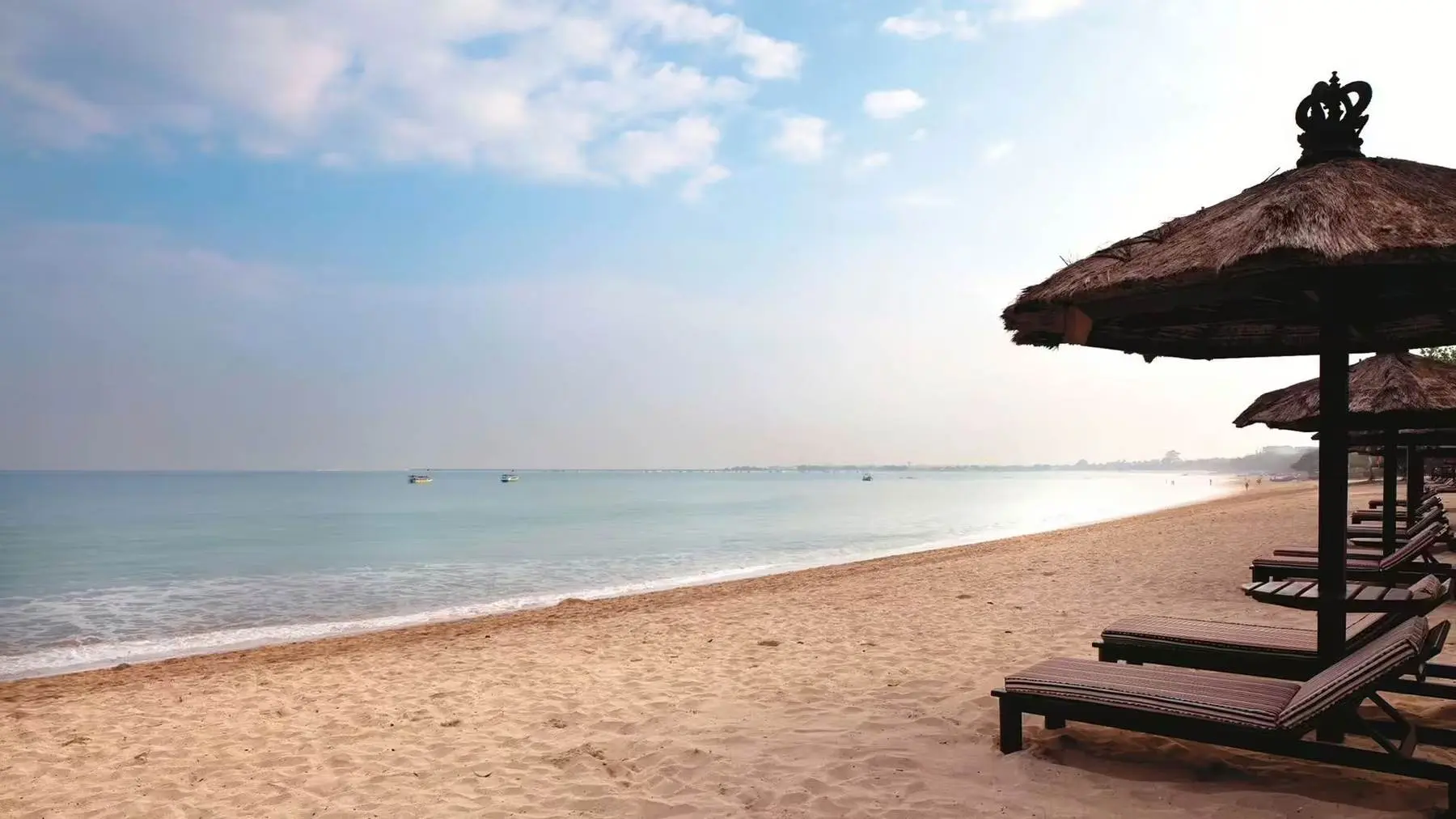
Jimbaran is famous for its seafood barbecues, tables carried onto the sand at sunset, people driving in from across the island. The atmosphere is genuinely good and reasonably authentic. The fish, I have to admit, is often dry and dull, and fifteen years of inspecting restaurants does not switch off on holiday. Sleep on the sand and eat up the hill, and you have the best of this bay.
It is my favourite beach in Bali. It is not the best one.
Where can you actually swim?
Nusa Dua, where the reef sits far enough out that the sea arrives spent. The sand is white, imported and maintained that way, which is worth knowing before you arrive, and the enclave is groomed to a standard no public beach here approaches. On paper it answers everything this article has been warning you about.
What the paper does not tell you is that I have slept in eight beach resorts in this enclave, and reading back what I wrote about each one, the water I keep describing is a pool. At the St. Regis we barely touched the beach and spent our days in the lagoon with my parents. At The Laguna we were always at one of the seven lagoons or at Kulkul Beach House, still the best beach bar I have found in Bali. At the Conrad the lagoon pools, not the beach, are where you want to be, with Tanjung Benoa's jet skis passing at the waterline. At the Ritz-Carlton you come out of the lift and swimming is not the first thing you want. Eight stays, and I apparently agreed with myself every time without noticing.
That is the trade. Nusa Dua gives you beaches and no beach culture. No kites, no local family arriving at five with a cool box, no fishing fleet at one end and football at the other. The promenade is pleasant, the hotel beach bars are good and in one case excellent, and the whole thing is faintly airless.
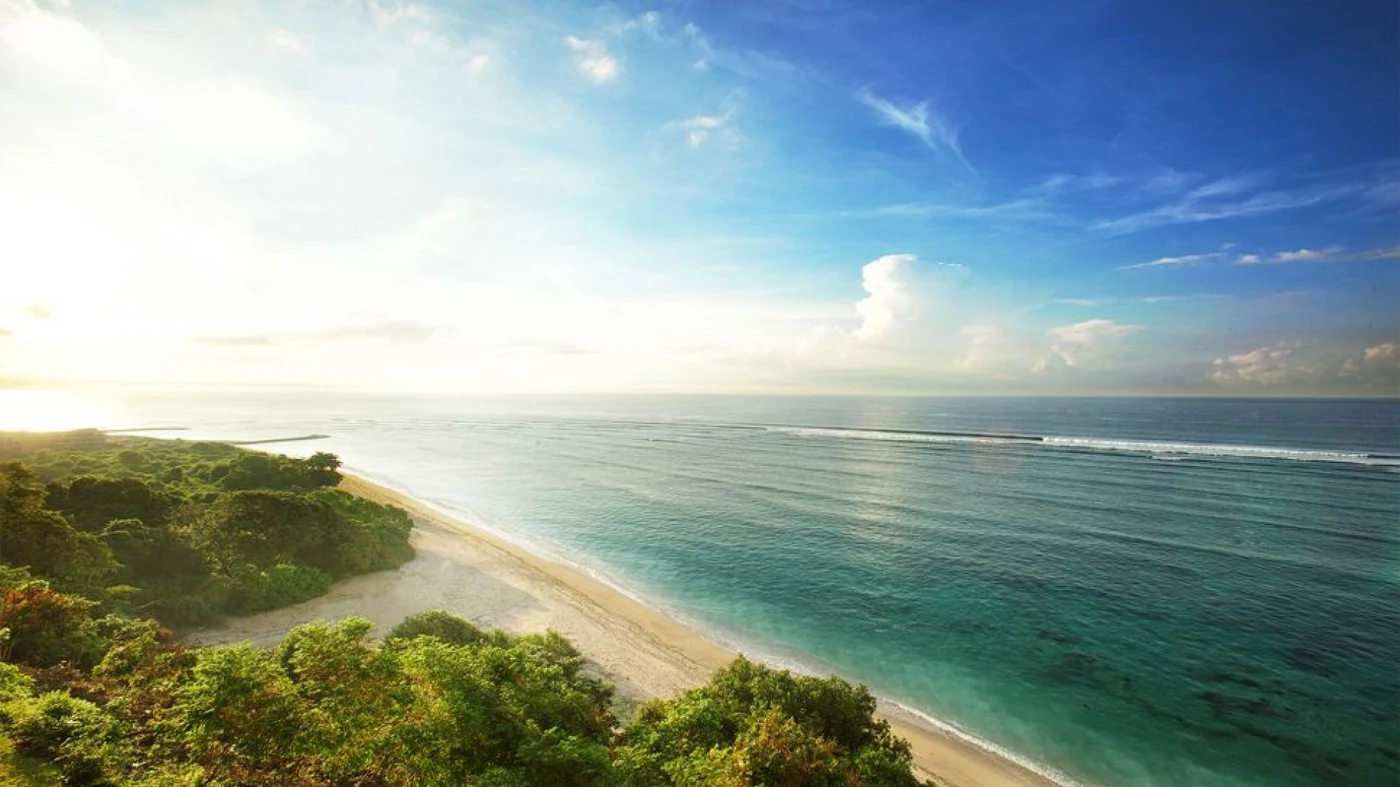
One address breaks the pattern, and it is the one nobody has heard of. At Samabe, on its own clifftop at the southern end, a reef takes the worst of the swell just offshore, the sand is wide and genuinely white, and given the choice I went down to the beach more often than I stayed at the pool. The only time in this enclave I have done that. The best beach in Nusa Dua is the one that does not feel like Nusa Dua at all.
So what is Seminyak's beach actually for?
Walking, watching, and the best sunset in Southeast Asia. Not swimming. The surf is too heavy and the rips are real, and that stops mattering the moment you know what you came for. What Seminyak and Kuta have is a broad open stretch of sand, a line of bars and hotels behind it, and at sunset the whole island turning up at once: local children playing football, kites going up, couples, families strolling, tourists sunk into beanbags with a cocktail, everything mixed together.
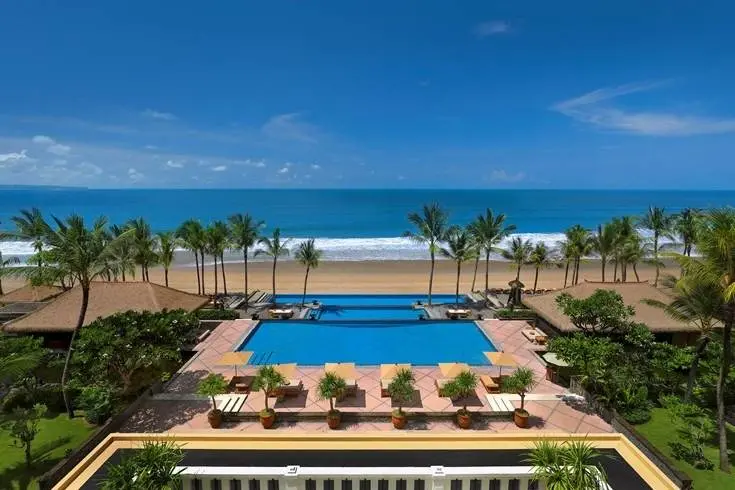
I would not walk the shopping streets of Kuta for anything; that is the version of this island I find hardest to love. The beach at six in the evening is a sight worth seeing, as long as crowds are something you enjoy rather than endure, and I enjoy them there more than anywhere else in Bali. When I stay in Seminyak I walk that sand twice a day, morning and sunset, usually towards a bar and often towards lunch at La Lucciola. The Legian and The Oberoi sit on the best of it.
Is Sanur the calm one everyone says it is?
Calm, yes. A good beach, only at the right hour. There are no waves here; they break far out, which is a lovely thing to watch. But the tide moves further in Sanur than anywhere else I have stayed, and your whole impression depends on which half of the cycle you walk into. At high water, with the outriggers pulled up on the sand, Nusa Penida out on the horizon and Agung up the coast on a clear morning, it is idyllic. At low water the same stretch turns bare and faintly apocalyptic: exposed rock, moss, the residue of sixty years of seaweed farming. Nobody photographs that version.
It is also not one beach but a string of small bays, which is why it never quite feels like a beach resort, whatever stands behind it. Hyatt Regency has five hundred metres of coast and the grounds to carry it. Andaz turns inward and builds a village square instead. At the InterContinental you look out on the least inviting stretch of sea I have found in Bali.
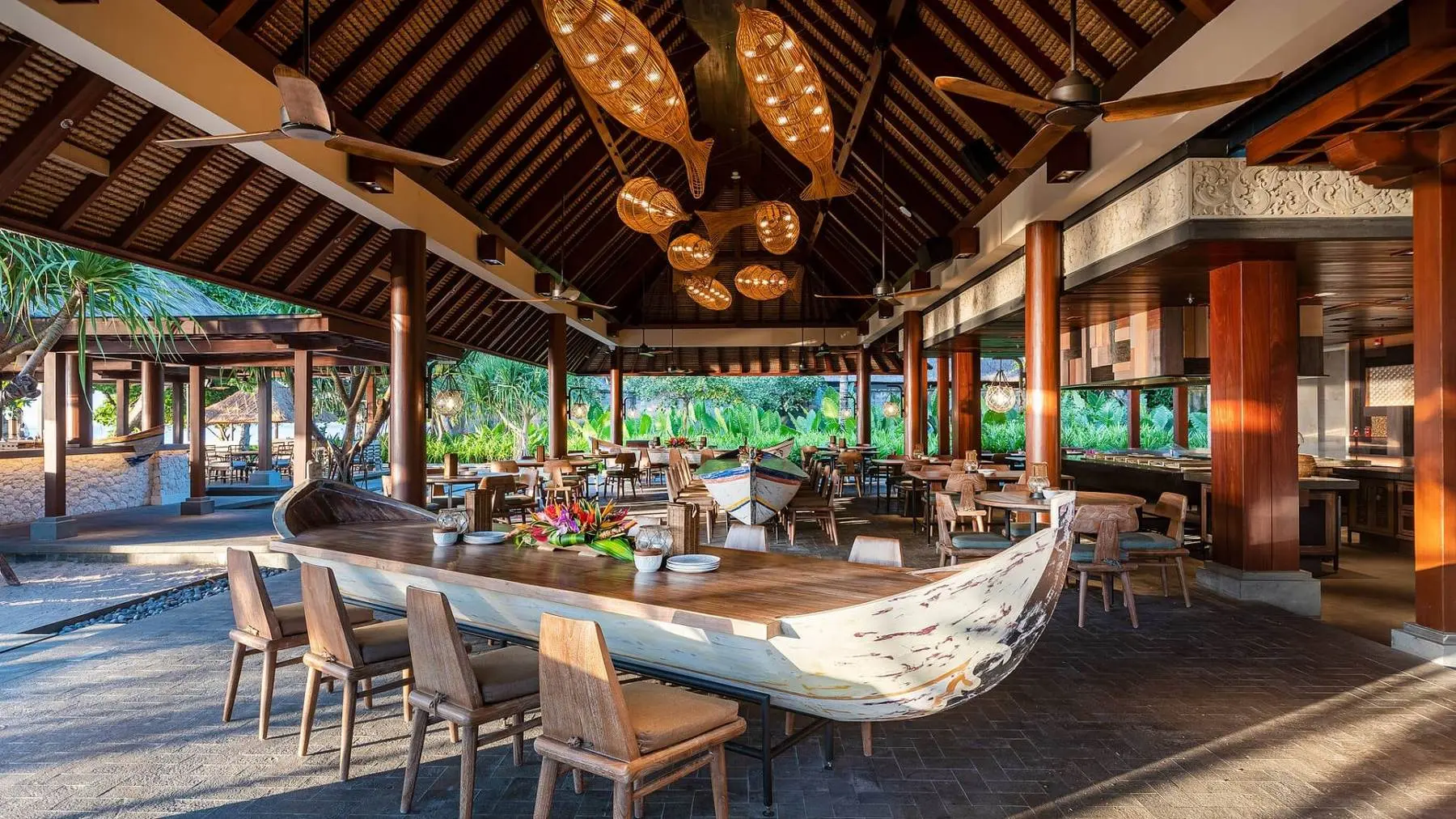
So I never come to Sanur for the beach. I come for everything directly behind it: around six kilometres of promenade, the only stretch in Bali that feels like a small coastal town in southern Europe, cafes and terraces on one side, fishing boats on the other, people cycling past at a speed suggesting nobody is late for anything. The waterfront has been rebuilt over the last few years, with an international hospital and a large mall now part of it, and Sanur's reputation as the island's dull address has not survived the renovation.
And the cliffs of Uluwatu?
The best-looking water on the island, at the bottom of a staircase, on a timetable you don't control. I learned this coast the slow way, driving it with Wayan and stopping at one public beach after another. The sea is clearer here than anywhere else in the south, and the seascape actually varies: waves, rock shelves, boulders, coves that look nothing like the cove twenty minutes away. These beaches are at their best from the sand looking back, with the limestone rising behind you.
The catch is the steps and the clock. Almost everything is reached by stairs cut into the cliff, and at several of them the tide decides whether there is a beach at all. Melasti is the exception, with a road cut through the limestone nearly to the sand, and Pandawa is close behind; those two, with Thomas and Padang Padang, are where you can swim. Suluban, Bingin and Impossibles are reef breaks for people who know what they are doing, and at Balangan the reef comes up far enough at low tide to end the question. Dreamland is the one I return to: an atmospheric surfers' beach rather than a resort beach, a little scruffy with whatever the tide left, and it works anyway. Jumeirah sits above it, which is better luck than that hotel is usually given credit for.
One warning your guidebook has not caught up with. In July 2025 the provincial government demolished 48 structures along the cliff at Bingin, the warungs and homestays that were the entire point of the place, ruling them illegal construction on state land. The rubble sat for the best part of a year, and a staged rebuild was announced starting in 2026, beginning with new access and a wider staircase. Go for the sand. Do not go for the lunch you read about.
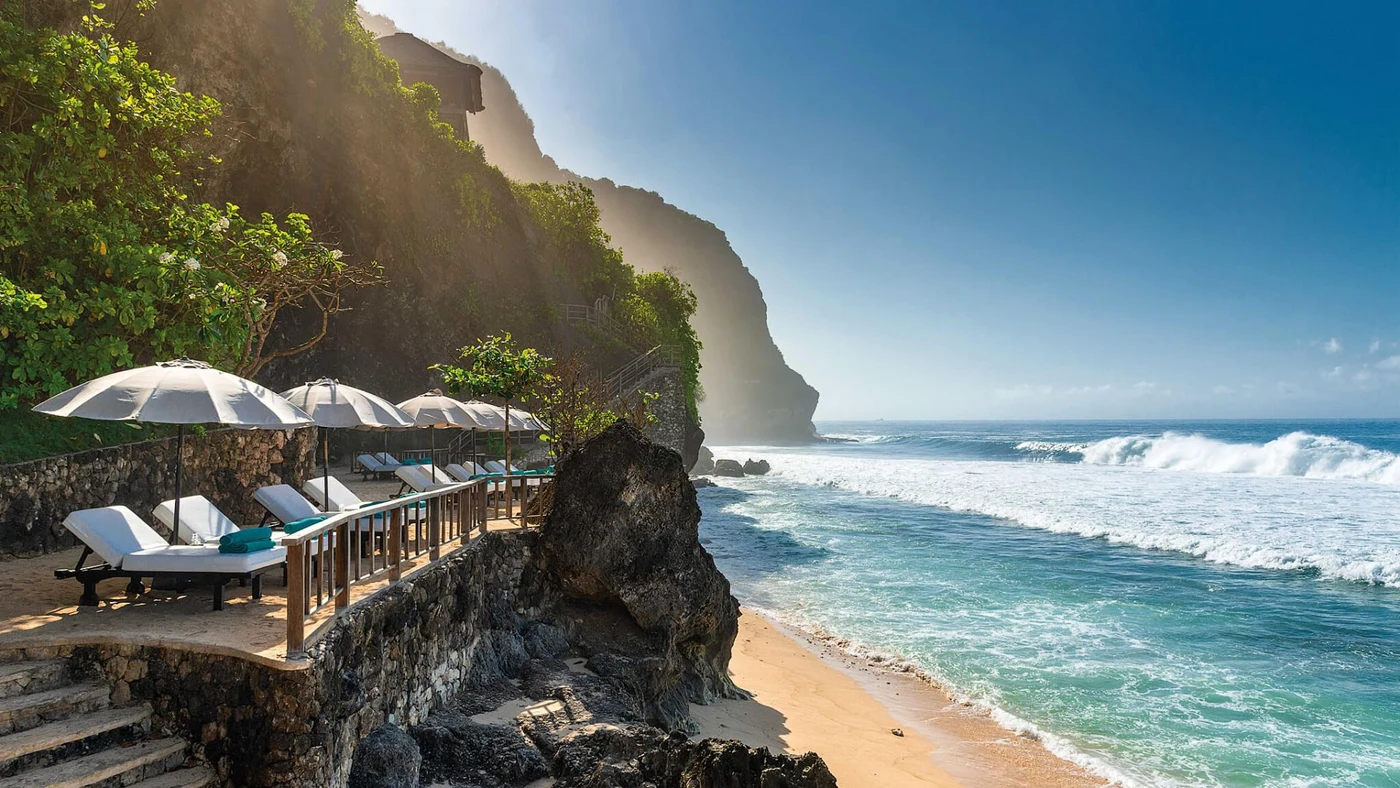
As for the hotels: Alila Villas Uluwatu has no beach at all, which surprises people who have studied the photographs. Bvlgari has an inclined lift down the cliff to a private beach only guests can reach, and I cannot tell you what it is like, because it was out of service for a long renovation throughout our stay. It has reopened since. If that beach is part of why you are booking, ask whether the lift is running before you pay.
Where does the island stop pretending to be a beach destination?
In Canggu, where nobody swims and nobody minds, because the beach is really a street. Canggu resembles Seminyak until you start walking it. In Seminyak you walk past hotels; here you walk past warungs, coffee places and bars, which is most of why it reads younger, cooler and rather less finished. The sand only turns black and volcanic at the Pererenan end; along the rest of it the beach looks much like Seminyak's. Either way the water has rips in it, and the surfers are the point rather than the scenery. What you get instead of swimming is a coast that changes character every few hundred metres, and the freedom to walk straight off the sand into Echo Beach or Berawa for lunch.
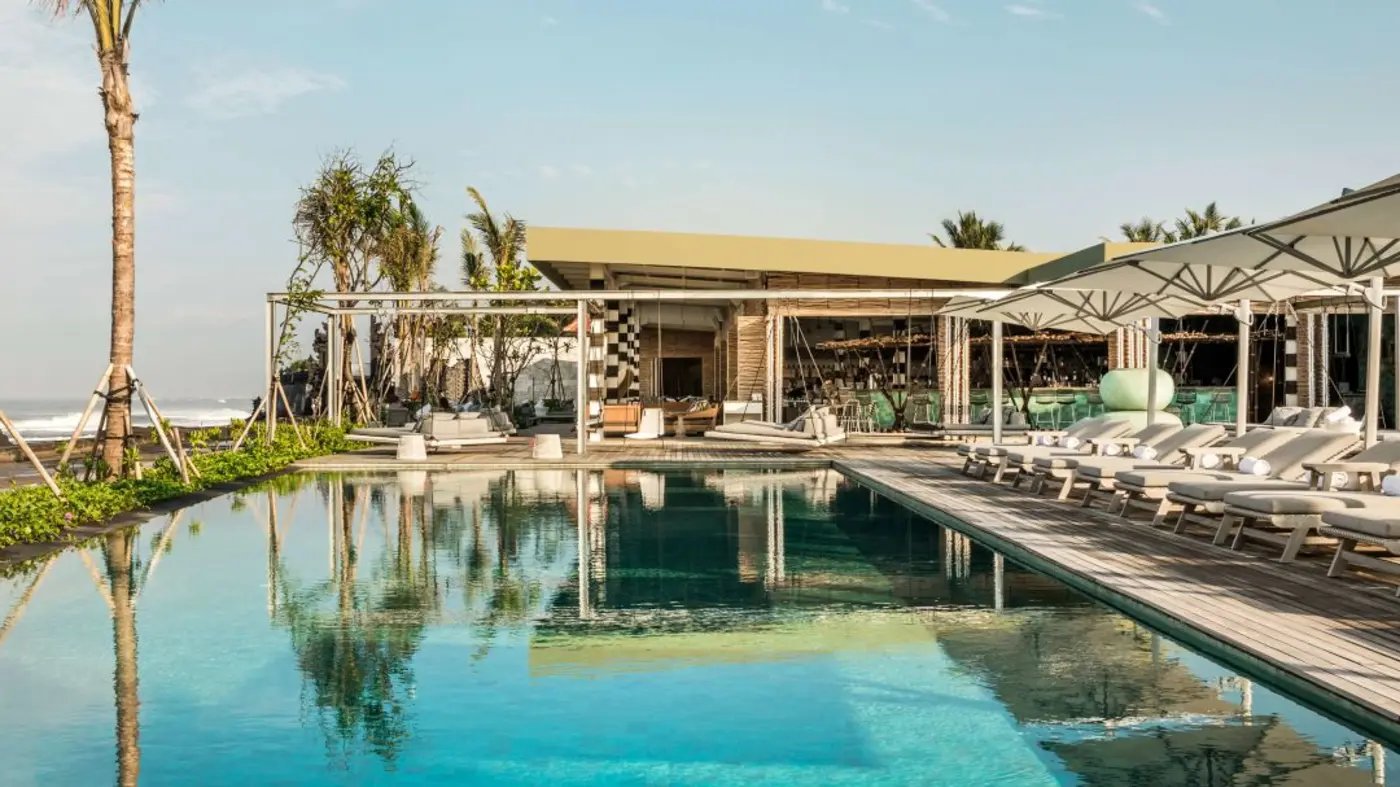
I sit at the Pererenan end, where the sand turns black, the warungs are local, the surfers outnumber everyone and a little of the old hippie Bali is still holding on. La Brisa is the proof: a big beach club that draws an extremely fashionable crowd and is still noticeably more rustic than Finns down at Batu Bolong, which is the young, modern, thoroughly finished version of the same idea. My other seat is COMO's beach club, the best in town and arguably the best thing that hotel has. Shore Amora sits three minutes from the Pererenan sand, which is the whole reason to stay there.
Canggu is less polished than anywhere else on this list and I keep going back for exactly that. It also never stops changing, so treat anything you read about it, including this, as a snapshot.
Which beaches are worth seeing rather than swimming?
The black-sand coasts east and west, where the sea stops inviting you in and the island stops performing. These are the beaches I think of as the old Bali, the one that existed before the island was discovered in bulk. On the sand at Soori, at Komaneka at Keramas and below Amankila I have seen almost no tourists at all. What you get instead is local families, the occasional fisherman, and dogs going wherever they like. Nothing is raked into position, nobody offers you a lounger, and the sea is rough enough that the question of swimming does not really arise.
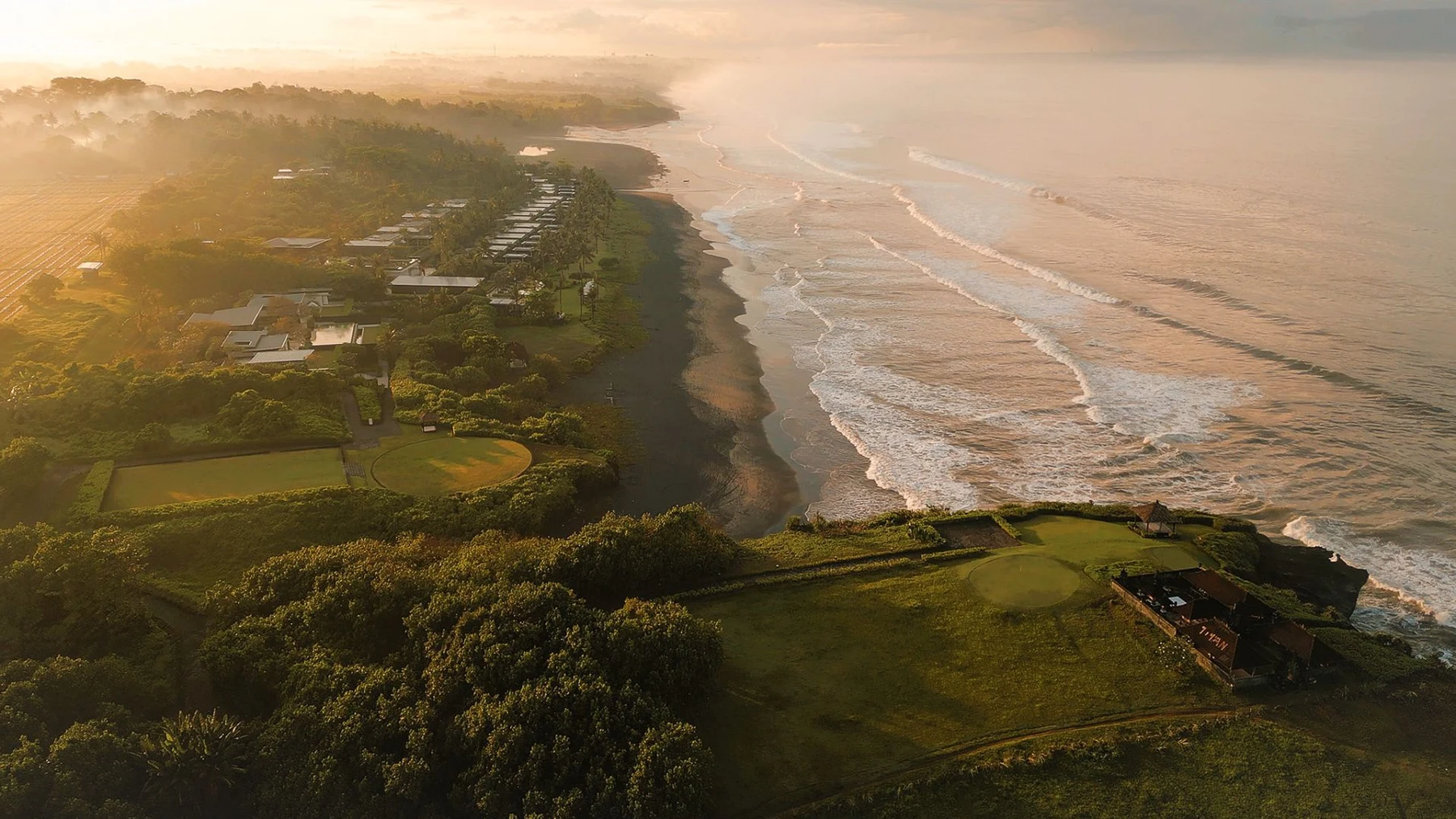
At Soori the beach is stony and grey-black, better to walk than to lie on, and you can go along it to breakfast with the Indian Ocean on your left. It sits close enough to a temple that the sand plainly has a ceremonial job as well as a scenic one, which is a strange and good thing to be reminded of on your way to eggs. At Keramas it is rougher still, all rock and real surf, and I spent an afternoon there simply staring, which is not something I do at a hotel beach.
But the one I keep going back to is Amankila's. A hundred and fifty steps below the terrace pool there is a stretch of black sand flanked by a rock outcrop, usually close to deserted. It is a public beach, so fishermen land on it whenever they need to, and nobody at the hotel would dream of suggesting otherwise. Somebody clears it of whatever the tide brought in, every morning, before the guests are awake. There is a bale set back in the bushes looking out over all of it, and after forty-two stays on this island that is still my favourite place on it. Not the best beach in Bali. The best place to sit and look at one.
And if you want to snorkel?
Not from your hotel. Drive twenty minutes up the east coast and it becomes the best water of your trip. Snorkelling is the clearest illustration of the whole problem. People arrive expecting it, try it off a beach in the south, see nothing, and conclude the island has no reef. The reef is simply somewhere else. Twenty minutes from Amankila we have been out to the same reef several times, always with a local guide, which costs very little and is the entire difference between a good morning and a wasted one. The Aman brochure lists a string of others along that coast, and I have no doubt there is a great deal more out there than the one we kept going back to.
So the deal here is a fair one: an early start and a boat, instead of a towel and ten metres of walking. It is also, as it happens, the coast beneath Amankila, which means the best snorkelling in Bali sits at the bottom of the hill from the most beautiful hotel on the island.
Bali will not hand you the Maldives. It will hand you seven different coastlines, each with its own instructions, and almost every disappointment on this island turns out to be a gap between what somebody expected and what nobody told them. Read the conditions and you get the good version: the walk at sunset, the reef at the right hour, the steps taken slowly, the black sand raked clean before you wake. And on the best days you get the rarest version of all, the one I keep going back to in Jimbaran, where you sit in a bale at ten in the morning and genuinely cannot decide between the pool and the sea.
Tell us how you want to spend your days and we'll put you on the right stretch of coast.
PLAN A BEACH STAY →