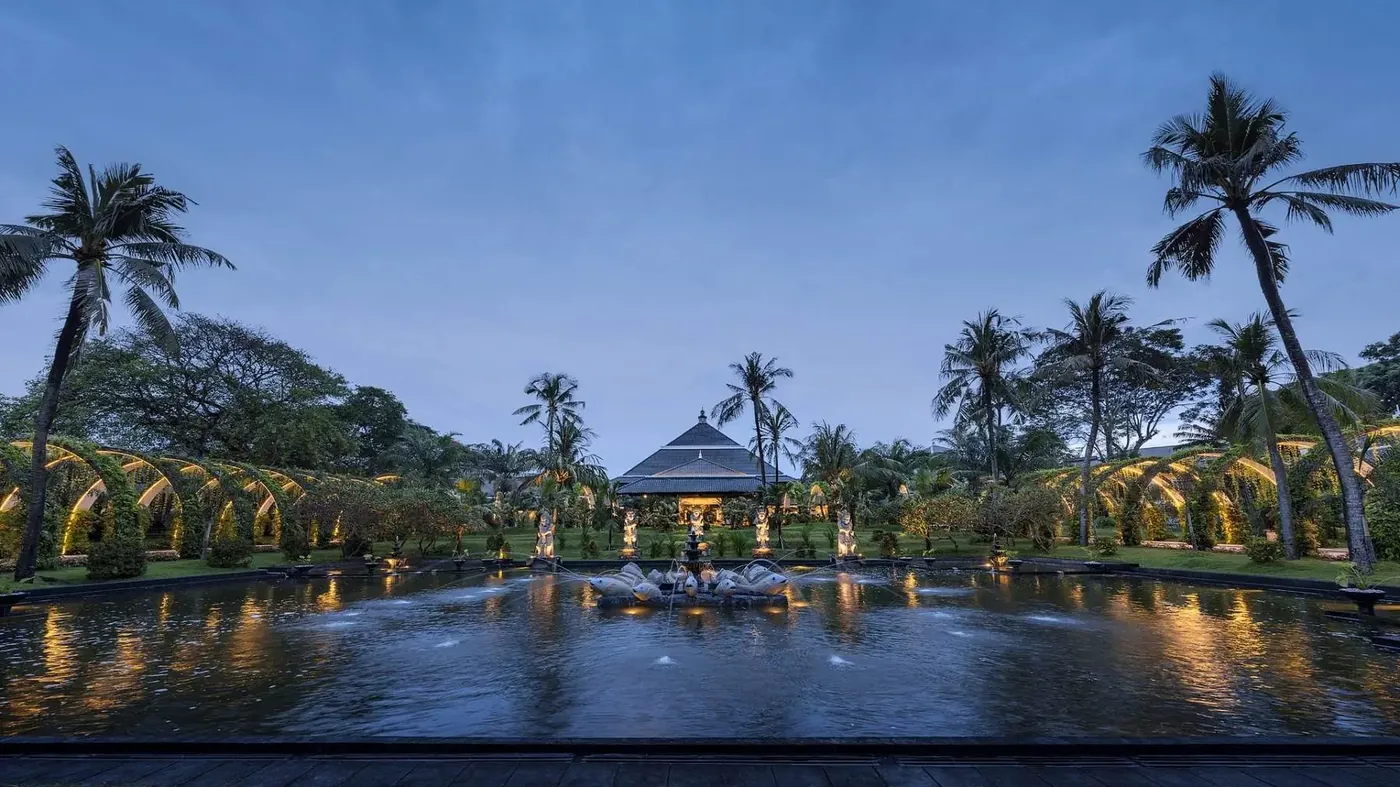
Ask yourself a question before you book anything in Bali: does it actually need to be Four Seasons money? A few hundred metres down the same stretch of Jimbaran coast, Four Seasons Resort Bali at Jimbaran Bay will happily take three to four times what the InterContinental asks. The service there is genuinely exceptional, the villas are beautiful, each wrapped in its own garden, and the whole experience does feel special. But there's a catch worth knowing before you pay that premium: the resort's best pool, the one right on the beach, doubles as a popular beach club open to non-guests. It's lovely, but it dilutes the sense of exclusivity you'd expect to be paying for.
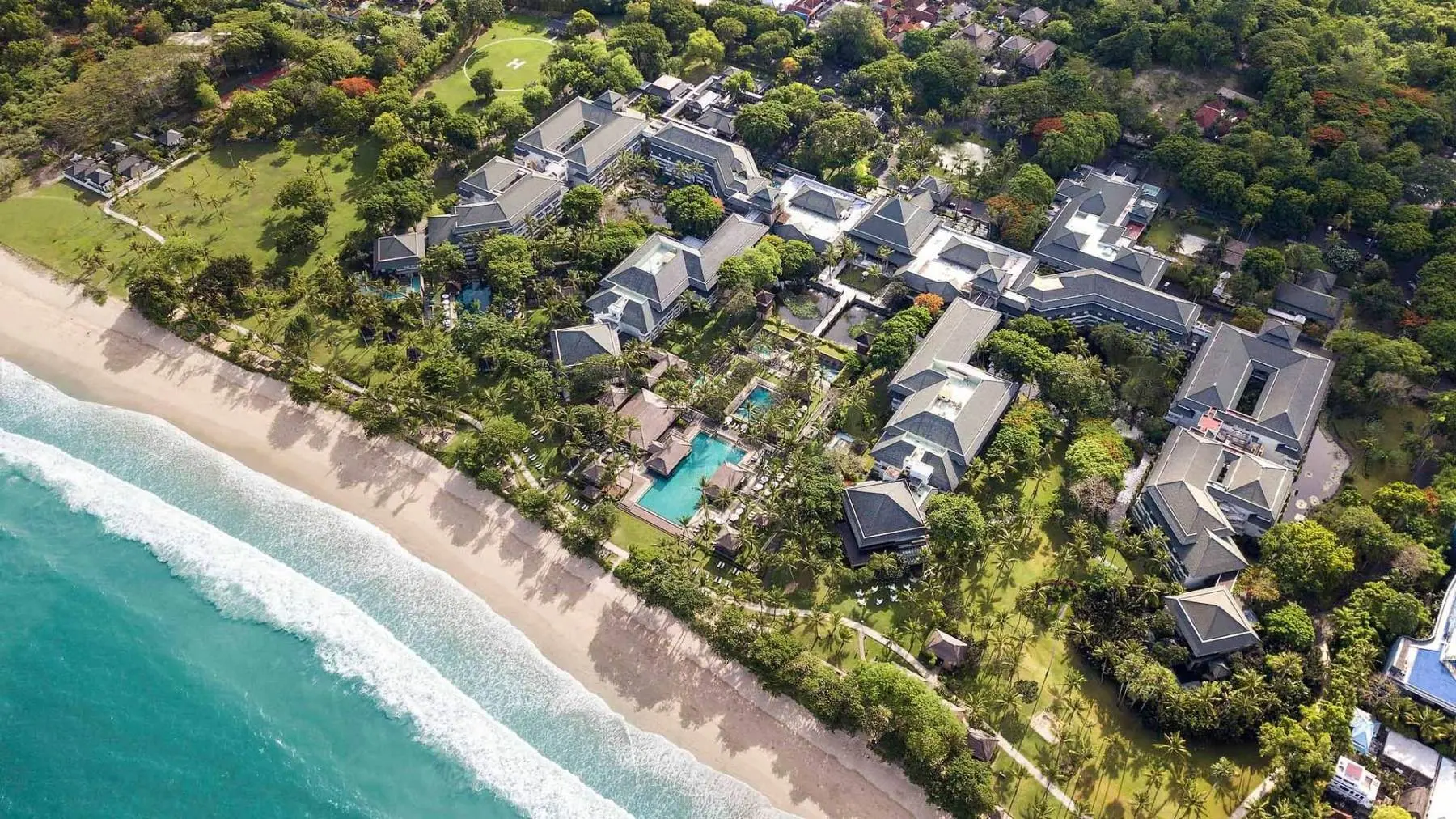
The InterContinental has no such compromise. A better stretch of beach, expansive and meticulously kept grounds, pools with real character scattered through the property, all for a fraction of the price. The reason it can hold its own against a neighbour charging three to four times as much is a story almost nobody checking in there actually knows.
The name nobody connects
Here's what almost nobody staying there realises: the InterContinental was designed by Hendra Hadiprana, the same architect and art collector behind Jimbaran Puri Tanah Gajah. It opened in 1993, built around Tri Hita Karana, the Balinese philosophy of harmony between people, nature and the divine, drawing directly on the Siti Hinggil concept from Javanese royal palaces, an elevated platform you climb toward, symbolising a sacred mountain. He used that same elevated-platform idea again years later for his own home's lobby at Tanah Gajah, looking out over the rice fields.
Almost nobody staying here knows any of that, which I find quietly amusing every time I check in. This isn't a standard mass hotel that happened to get big. It's the work of a man who was, first and foremost, a passionate collector and architect, asked to do something he'd never really attempted: bring the same intention to a commercial megaproject that he'd bring to his own private retreat. Walk the grounds and you'll find stone statues and Indonesian art scattered throughout the fourteen hectares, easy to miss entirely if you don't know to look for it. This is exactly the kind of story a fraction-of-the-price hotel isn't supposed to come with. Here, it does.
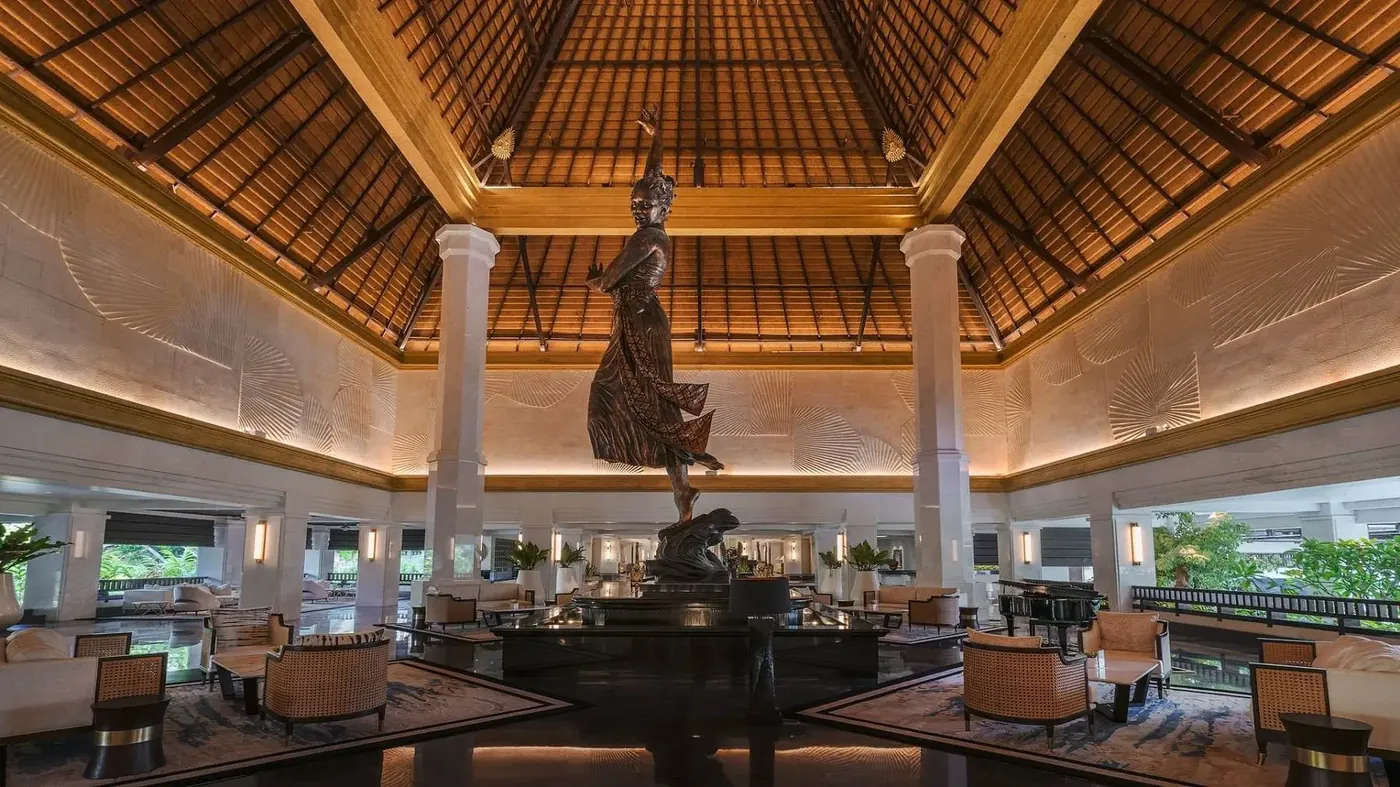
There's a sharper edge to that story too, one I only came across recently. Some of that original art and craft has quietly disappeared over the years, casualties of renovation cycles more focused on modern polish than on preserving what made the place distinctive in the first place. It's a small, telling irony: the very collection that gave this building its character is the thing most at risk of getting renovated away.
The same year, two completely different answers
Four Seasons Resort Bali at Jimbaran Bay opened the exact same year, 1993, a few hundred metres down the same stretch of coast, and took a completely different bet. It became the world's first large-scale luxury villa resort, and the first hotel anywhere to put a private plunge pool in every single villa. It changed the entire trajectory of tropical hospitality.
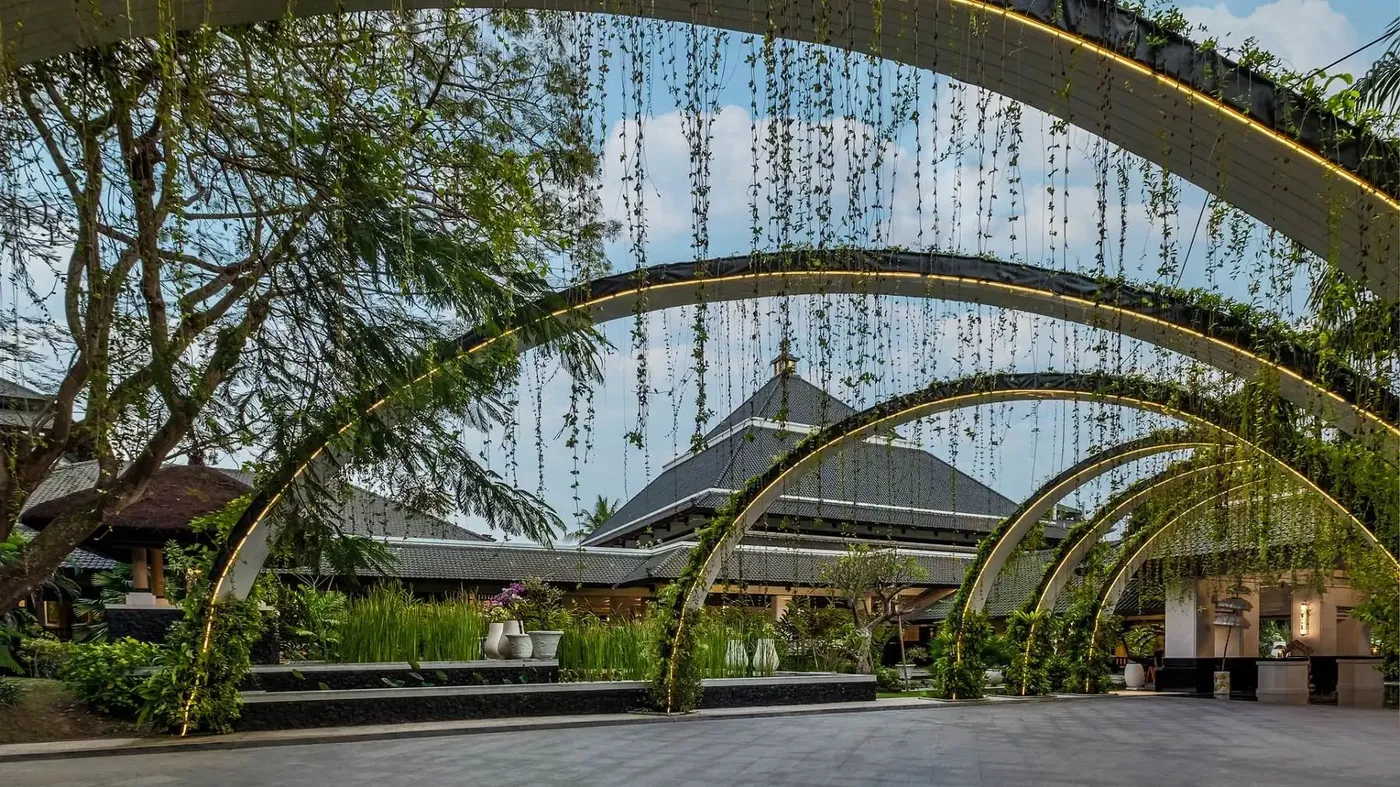
Hadiprana went the other way. Rather than invent a new format, he tried to bring real character to a scale that was never built to hold it: a huge, commercial hotel dressed as a monumental classical Balinese palace, with vast water features, stone temple gates and hand-carved wooden pillars, all built to project the grandeur of Indonesian culture to an international audience checking in for the first time. One resort rewrote the rules of luxury. The other tried to give an enormous building a spirit it had no obvious right to have. I find myself more moved by the second bet, maybe because it was the harder one to win, and because it's the one you can still book for a quarter to a third of what its neighbour charges.
Getting the value right
Rates here move more than most travellers expect, and getting that value equation right starts before you even arrive. I used to check prices weekly in the run-up to a trip, well before I'd actually book anything, simply because I knew Bali was coming and I knew the InterContinental's pricing was volatile enough to reward that kind of patience. It's not unusual to see the same room swing by hundreds of dollars within a matter of days, and I've seen a rate drop by as much as a thousand dollars overnight, worth rebooking on the spot when it happens. If you already know you're heading to Jimbaran, keeping half an eye on prices in the weeks beforehand is worth the five minutes it takes.
If you're booking through us, breakfast comes included as one of our benefits, and that's exactly how I'd take this hotel: a straightforward base room with breakfast, nothing more. I've stayed in the Club rooms here and wasn't won over. Compared to other InterContinental Club lounges I've experienced around the world, this one felt too busy and too impersonal, and the staff attention varied more than I'd expect at this level, some days excellent, some days you'd barely get acknowledged. For the price difference, I'd rather take a sharp base-room deal and spend the savings elsewhere, ideally on a very good dinner at Rumari or Cuca, both a short drive away and genuinely worth the detour.
The rooms themselves are a pleasant surprise, spacious and comfortable well beyond what the category usually delivers. Do make sure you book a renovated one. The resort went through a full overhaul in 2015 and refreshed its look again in 2022, and the gap between an updated room and an older one is worth checking for before you commit.
What earns its keep
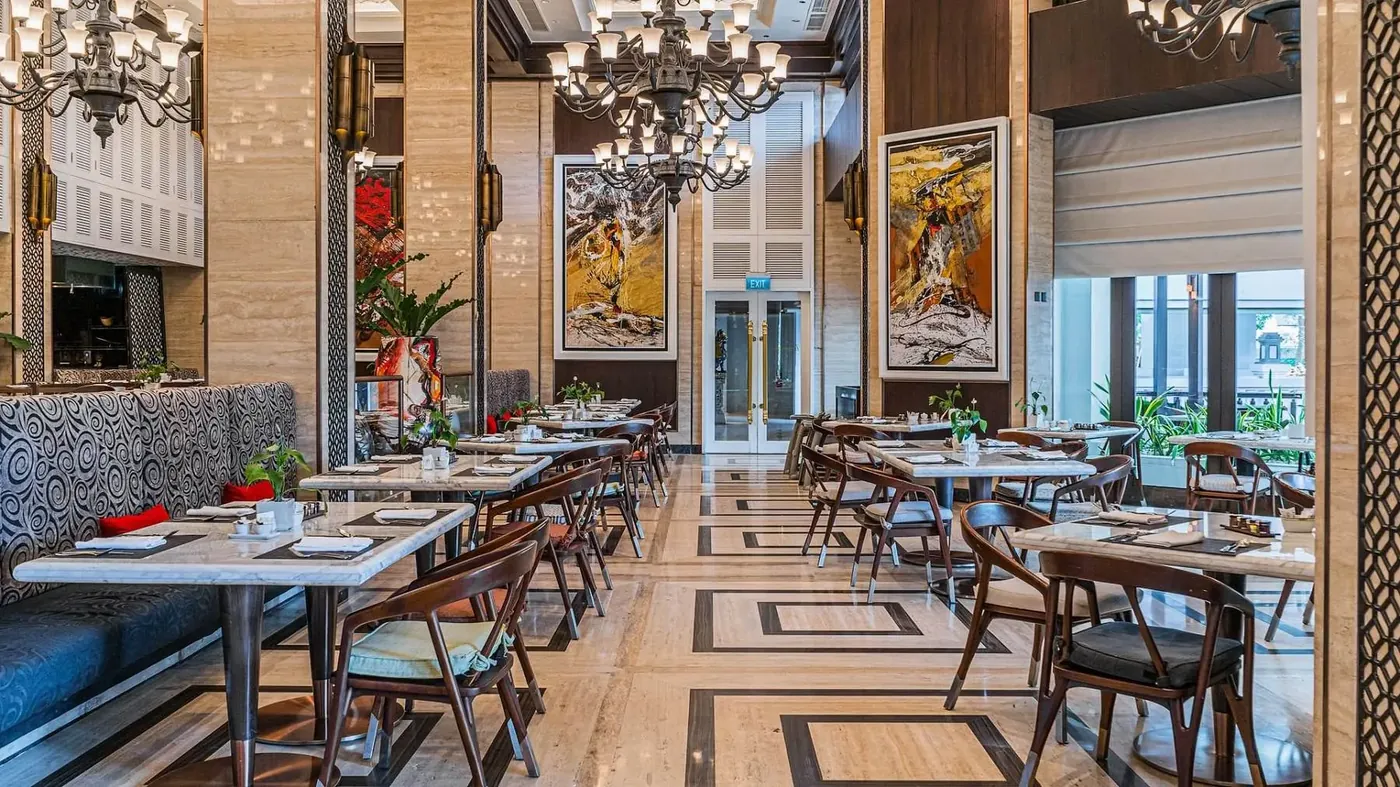
This is where the value argument stops being theoretical. Breakfast at Jimbaran Gardens, the resort's Indonesian and Balinese restaurant, impressed me the most, and I didn't expect that going in. The resort renovates gradually, a little more each year, and Jimbaran Gardens has clearly had its turn recently. For a hotel at this price point, the spread was excellent, better than what most far pricier resorts put out. The other restaurants didn't move me quite as much, competent but fairly predictable, though sitting outside in those gardens makes up for a lot.
The InterContinental sits on nearly flat ground, and the grounds team keeps it billiard-table taut: acres of manicured green stretching between the buildings, open and expansive in a way few resorts on the island manage. Four Seasons, working with a much steeper, more limited hillside plot, compensates differently, dense, layered planting that feels lush rather than open. Both have real character. They're just built from entirely different terrain, and only one of them asks a fraction of the price for it.
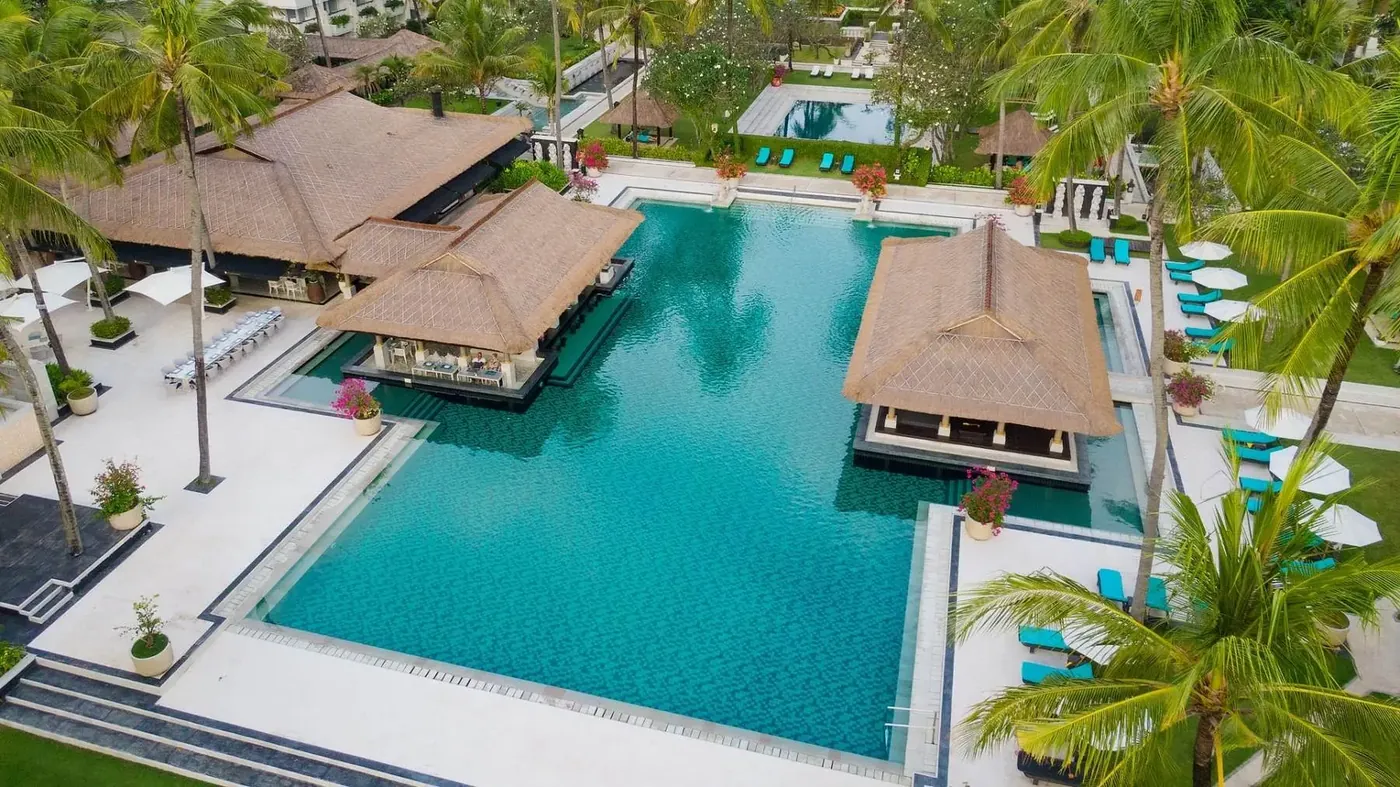
The pools carry their weight too, several of them scattered through the grounds, each with its own small slice of atmosphere. That temple-like grandeur running through the architecture gives the whole resort a picturesque quality that's easy to walk past without registering, much like the Hadiprana story itself.
An honest gap in the memory
Trying to recall specific moments from my stays here, I noticed something telling: I don't have many. My last visit was two weeks with my in-laws, and most days settled into the same easy rhythm, lounging in the beautiful garden bales overlooking the beach, weighing up the same daily choice between dipping our toes in the pool or the sea, both sitting at roughly the same distance. Pleasant, unhurried, and honestly not much of a story.
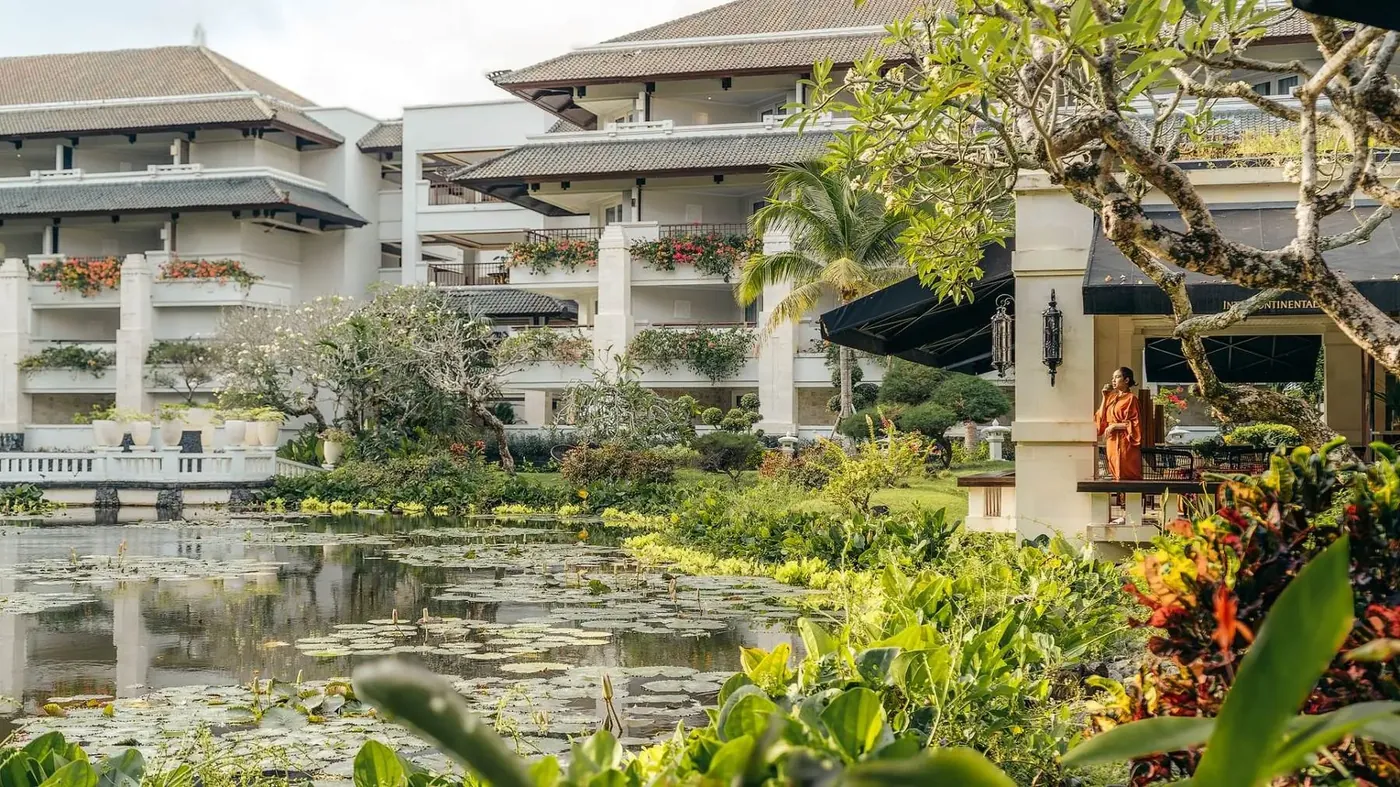
What sticks instead: the long corridors, a fairly unavoidable consequence of a resort this size, and the fact that we never really had a meaningful interaction with any single staff member. Service was fine, professional, present when needed, but somewhat impersonal, nobody who felt like they knew us by the second day. It didn't bother me much, because the gardens, the sea, the pools and the atmosphere carried the stay entirely on their own, and at this price, that trade felt entirely fair.
Worth sitting with, that. At Amandari, the magic lived in a staff member quietly moving a parasol. At Tanah Gajah, it lived in a chef building a sauce from scratch because you happened to mention you liked it. Here, at a resort roughly twenty times the size of either, whatever magic there is lives almost entirely in the space itself, in the thing Hadiprana actually built. Maybe that's the honest limit of trying to give a hotel this size a soul: the architecture can carry it. The people running it day to day, spread this thin, can't always follow.
Adding it all up
Phenomenal grounds, the most spacious-feeling resort in Bali as far as I'm concerned. The best position on the best stretch of beach in the whole bay, wider and softer than anywhere further north toward the airport, and better, in my view, than what Four Seasons gets just down the coast, beach club and all. Small pockets of paradise scattered across the property in its pools. Architecture striking enough that you could spend a stay just wandering it. Solid rooms, solid facilities across the board.
None of it is the boutique, quietly perfect experience of somewhere like Tanah Gajah or Como Uma Ubud. It was never trying to be, and I don't think it really could be, not at this size. What it offers instead is scale with real intention behind it, from a man who happened to be building his own character into it at the same time, on a much smaller plot of land, a few kilometres up the road in Ubud, and a price that undercuts its flashiest neighbour three to four times over. You won't leave with a story about the staff. You'll leave with two weeks of very good afternoons at a quarter to a third of the cost, which is not a small thing to say. If you'd rather see the full range of what we stand behind, have a look at our stays.
InterContinental Bali Resort is available through The Banjar Collective.
GET IN TOUCH TO PLAN A STAY →