The verdict
Bali is not ruined. It is unevenly preserved, and most of what is still intact happens to sit behind a gate. Soori was built around ten temples and the village's ancestral paths. Como Shambhala holds twenty-two hectares of river forest and four temples for barely thirty rooms. Four Seasons Jimbaran has over three hundred shrines in its grounds, one of them six centuries old. Alila Seminyak exists in its current shape because the family who sold the land refused to move a five-hundred-year-old temple. Those hotels are conservators and gatekeepers at the same time, and I have never worked out how I feel about that. What I can tell you is which ones open the gate rather than close it, and how much of this island you can still see without paying anybody.
The best morning of my most expensive trip to Bali cost nothing, and I have been turning it over ever since. We were staying at Bvlgari, on a clifftop on the Bukit, where a couple can spend two hundred euros on dinner without trying and the boutique quietly charges more than the Bvlgari shop in a European capital. On the third day the resort drove us down to a village. We started at the covered market, where the smell was raw ginger, roasted coffee beans and fresh fish all at once, in a building with no view of anything at all. Nobody treated us as rich tourists. The stallholders handed us fruit to try. Then our guide, who was from the village, took us into a yard where a retired fisherman sat on a wooden bench knotting nets by hand, the way he had for fifty years, for no audience whatsoever.
I had spent three days surrounded by an extraordinary amount of beauty that somebody had paid for. Watching a man do one thing perfectly for half a century does make you wonder what exactly you are doing with yourself. I have not resolved that, and this whole article is really just me failing to resolve it in public.
Here is the uncomfortable shape of it. A banjar is the ward, the community organisation that runs Balinese life at street level: ceremonies, cremations, disputes, the gamelan, who owes what to whom. It is the actual social operating system of this island, and it is the one thing a clifftop resort cannot manufacture, because banjars grow out of villages and villages grow where there is water, and up on that headland there is none. So the hotel did the sensible thing and drove us to one. The most real hour of the trip was arranged, and it was still real. That is the knot I keep picking at, and it is also, if you were wondering, where the name of this site comes from.
What these hotels were built around
| Hotel | What was already there | Who still uses it | Open to you without staying? |
|---|---|---|---|
| Soori Bali | Ten stone temples and the ancestral footpaths | The neighbouring village, daily | The paths and the black-sand beach are public |
| Amandari | The layout of Kedewatan village next door | Villagers walk some of the paths; the girls dance here | Kedewatan itself, and the valley walk below it |
| Como Shambhala Estate | 22 hectares of river forest, four temples, a sacred spring | Around thirty rooms, and the spring's own pilgrims | Yes, restaurants and spa, at a price |
| Alila Seminyak | A five-century-old family temple, kept as a condition of sale | The founding family, with the incense still lit | Yes, the restaurant and beach bar take anyone |
| Four Seasons Jimbaran | More than 300 shrines, one from the 15th century | Staff, guests, and whoever brings the offerings | Sundara, on the sand, takes outside bookings |
| Komaneka at Keramas | Working rice fields, built over on stilts rather than filled in | The farmers, who kept what the land produces | Yes, and the beach belongs to the village at sunset |
| Jimbaran Puri | A fragment of old stone temple in the garden | Nobody much, which is its own kind of honesty | The bay in front of it is public |
From our own stays. Access changes, and a hotel that welcomes outside visitors one season can stop the next, so ask before you drive an hour for lunch.
Why doesn't Bali look like the photographs?
Because most of those photographs were taken on private property. People land here with rice terraces and temple gates in their heads and meet scooters, walls, half-built villas and an island busily concreting itself over. The drive to Jumeirah is the clearest version I know: you approach through a landscape that looks like the end of something, a heavily guarded gate appears, and thirty seconds later you are inside a Majapahit water palace with the fountains running and the staff using your name. Canggu does the same trick in reverse, where parts of the beach frankly look like a landfill with a smoothie bar attached.
The Bali people came for has not disappeared. It has been consolidated. And nobody mentions that when they post the photograph.
So where did the beautiful Bali go?
A good deal of it is on the books of about fifteen hotels, and the inventory is startling when you put it in one place. I only noticed because I went back through forty of my own write-ups looking for something else.
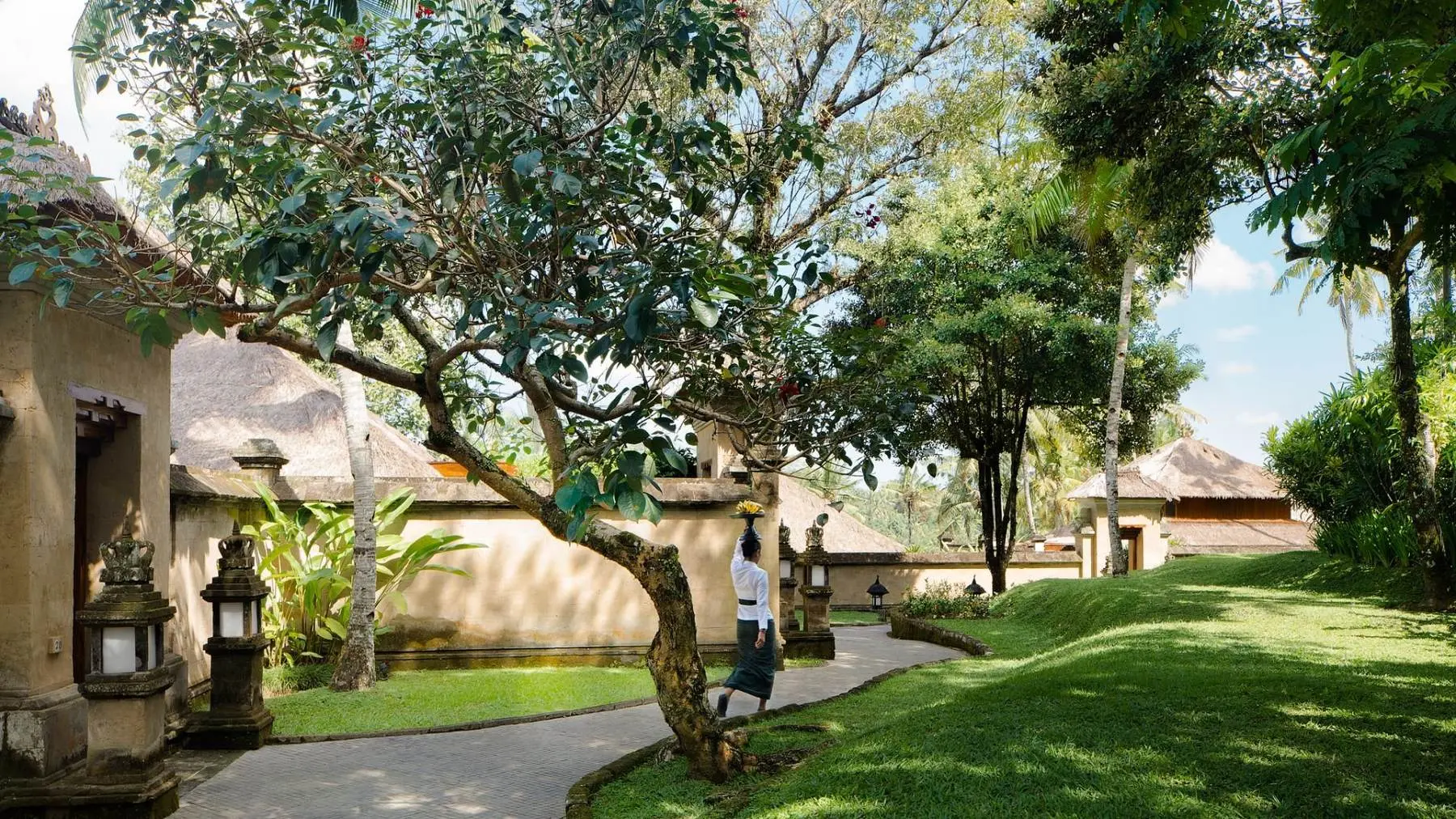
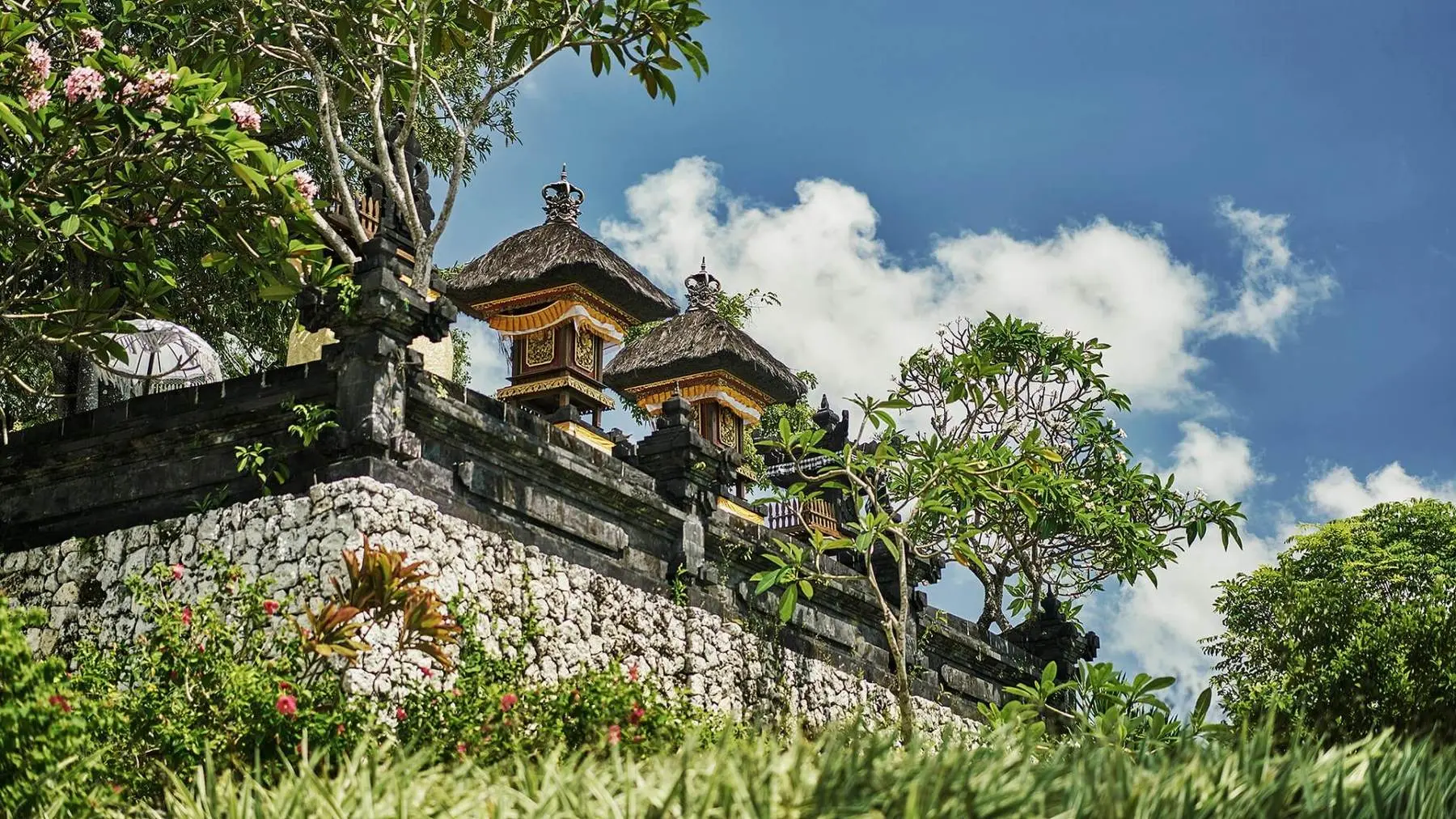
At Soori, ten stone temples stand on the property, built at the recommendation of the elder of the neighbouring village, and the ancestral pathways crossing that land were left exactly where they were, with the resort planned around them. At Como Shambhala, twenty-two hectares of riverine forest hold barely thirty rooms, aligned with four Balinese temples and a spring the Balinese consider sacred. At Four Seasons Jimbaran there are more than three hundred shrines scattered through the grounds, one dating to the fifteenth century. Amandari was modelled on Kedewatan village next door, right down to a village gate at the entrance to each suite and paths some locals still walk, and every afternoon between three and four the village girls come in for their Legong lesson, exactly as they have since 1989. At Jimbaran Puri a fragment of an old stone temple sits between a waterlily pond and a row of thatched cottages, and hardly anybody notices it.
None of that is decoration bought at auction. It was there first, and the hotel was arranged around it.
Did the hotels take that land, or save it?
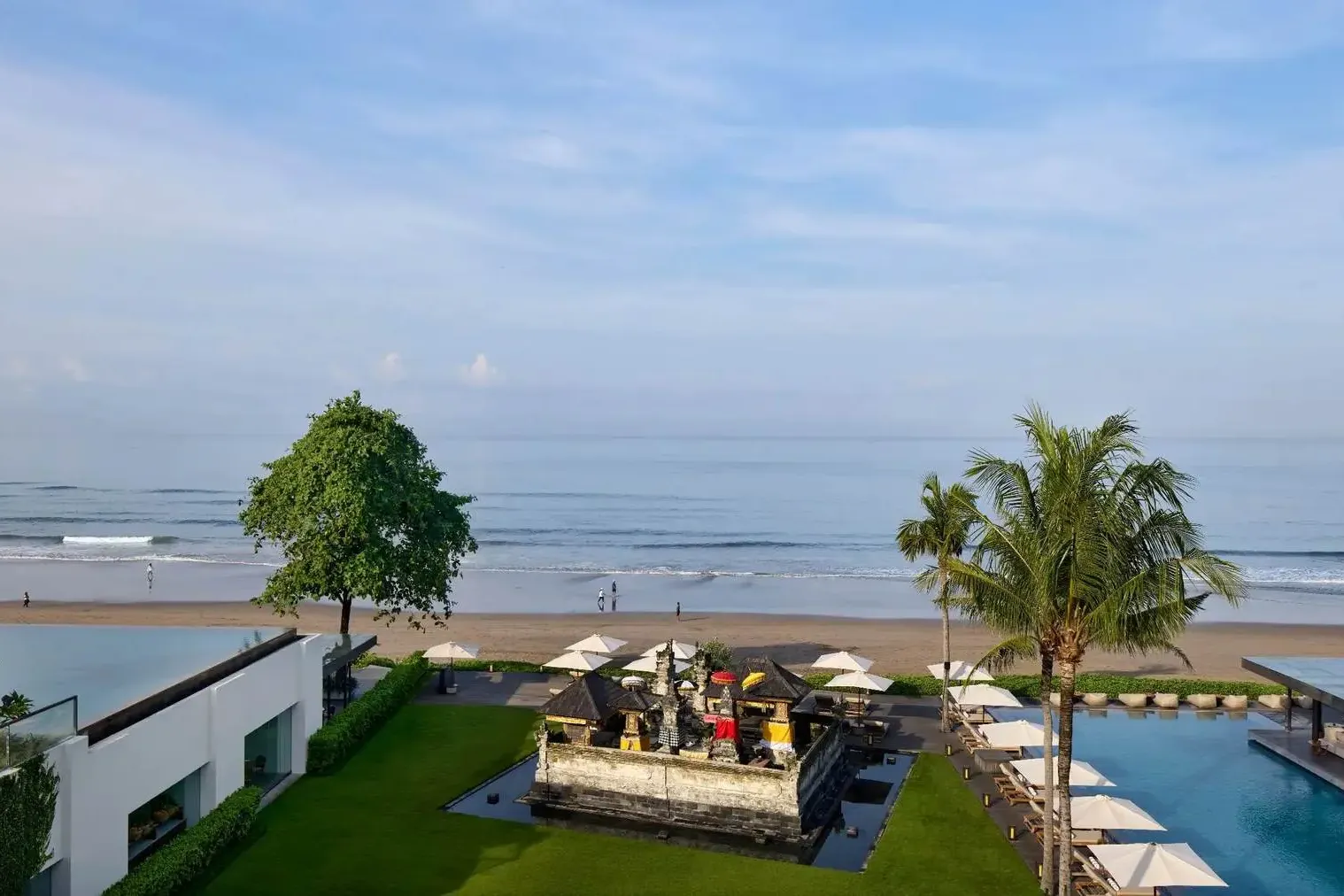
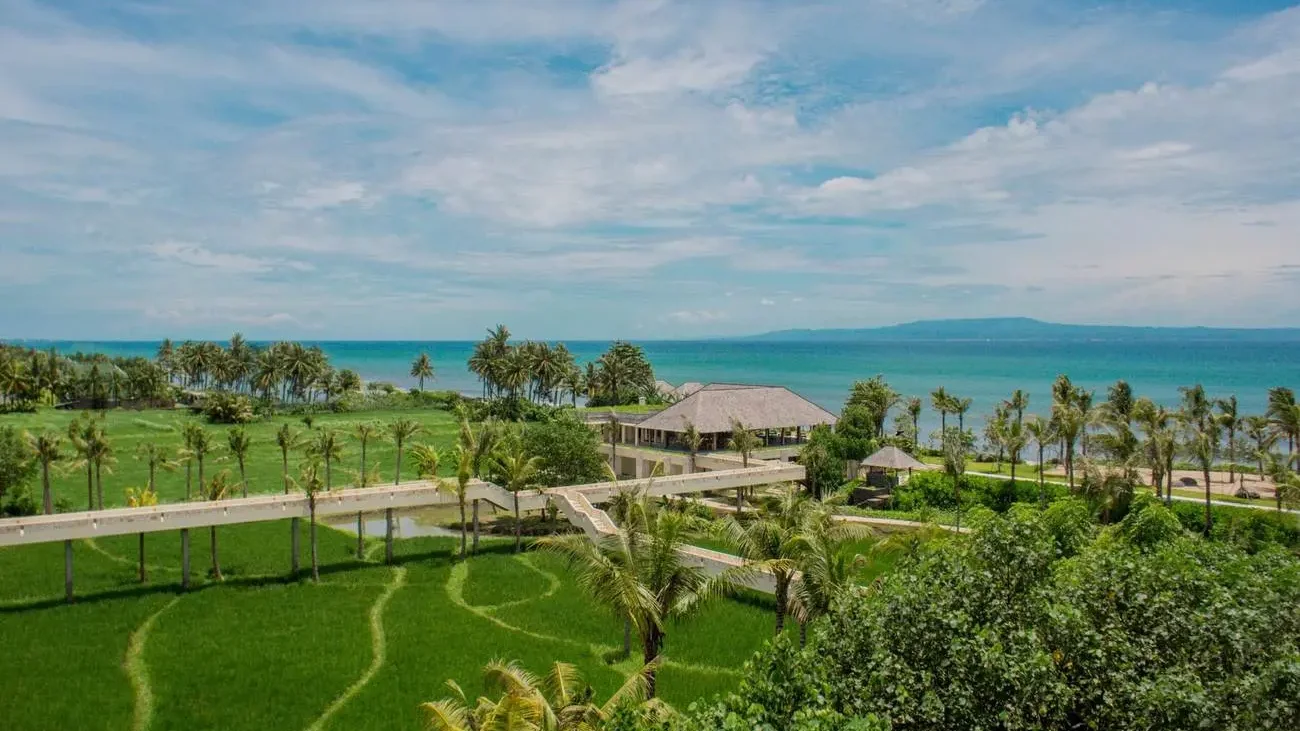
Both, and anyone who tells you it is only one of the two is selling something. Alila Seminyak sits on two hectares in one of the most densely built stretches of coast in Bali, and it is a cluster of separate buildings around a courtyard because the family who sold the land set one condition: the ancestral shrine that had stood there for generations was not going anywhere. It is still there, in the middle of the glass and the vertical gardens, incense still burning, entirely unbothered by the DJ two buildings over. Komaneka at Keramas put its villas on raised walkways over living rice fields instead of filling them in, and left the farmers what the land produces, which it had no obligation to do. Viceroy runs its water through an eighteen-stage treatment before it reaches the Petanu, and what comes out is cleaner than the river it joins, which the villages downstream notice.
And the counterfactual is not a thought experiment. Look at any unprotected stretch of this coast and you can see precisely what happens to it. Without these hotels, that land would be villas. I find that genuinely hard to argue with, and I still do not entirely like the conclusion.
So what's the catch?
That a fence makes the thing behind it scarce, and scarcity has a price list. I wrote about Alila Villas Uluwatu that it promises transcendence at the gate and then hands you a walled garden and a queue for a sunbed, and I stand by it. The harder sentence is the one I wrote at Amankila, which is that the grounds are cleaner than the villages just outside the gate. That is not a compliment to the hotel. It is a description of what money does to a hundred metres of hillside, and I wrote it down because leaving it out would have been dishonest.
The purest case is also the oldest one. The Oberoi is fifteen acres of private park with five hundred metres of its own beach, and outside its walls Seminyak has changed almost beyond recognition. I have never found another resort anywhere built on quite that contradiction: paradise on one side of a wall, its opposite on the other, and both of them entirely real. What unsettles me is the order of events. That wall went up around 1971, when the place was a private house with a handful of villas for friends and the famous were already flying in to disappear behind it. The island arrived afterwards. The fence did not go up to keep the crowd out. The crowd formed around the fence.
And the fence, I should be precise about this, is not locked. It is priced. Nearly every hotel on this island will let you in if you are paying: Como Shambhala takes outside bookings for its restaurants and its spa, as most of them do, and the bill does the work the security gate is given credit for. I am not sure that is better. A wall at least announces itself.
There is no version of this where I come out of it clean. I am a guest at these places, I recommend them for a living, and the thing I am recommending is partly the privilege of standing inside the fence.
Why does this version of Bali dominate the pictures?
Because it photographs better than anything outside the gate, and photographs are how this island is sold. I once described Alila Villas as the most efficient photograph-generating machine on the island, a building whose commercial logic runs almost entirely on people consuming an image of it. That is not a moral failing on its part. It is the business.
The consequence is the thing that interests me. These hotels are so photogenic that they dominate the media, so people arrive believing that is what Bali looks like. Then they land, sit in traffic for ninety minutes past unfinished concrete, and conclude the island has been ruined in the years since the pictures were taken. It has not. They were shown a private version and told it was the public one, which is a rather different complaint, and a fairer one.
Can you see any of it without booking a suite?
Yes, and this is the half that usually gets left out, so here it is first. The beach below Amankila is a public beach; fishermen land on it whenever they need to and nobody at that hotel would dream of suggesting otherwise. Soori's ancestral paths are still walked by the village, and the temple above it belongs to them, not to the resort. At Keramas the beach belongs to local families at sunset rather than to tourists, which I have seen almost nowhere else on this island. Several of these hotels will feed you without a room key, including Sundara on the sand at Four Seasons and the beach restaurant at Alila Seminyak.
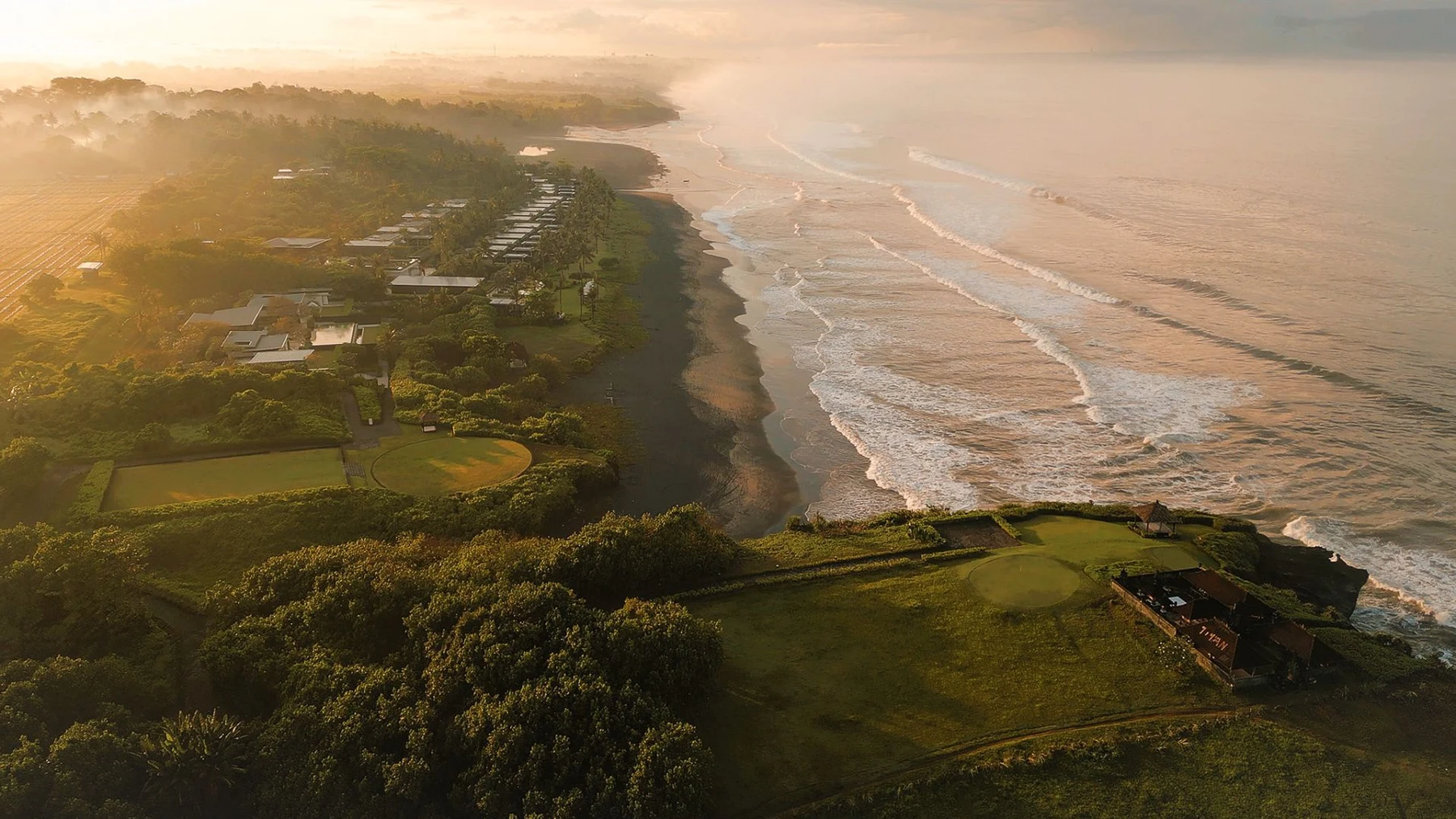
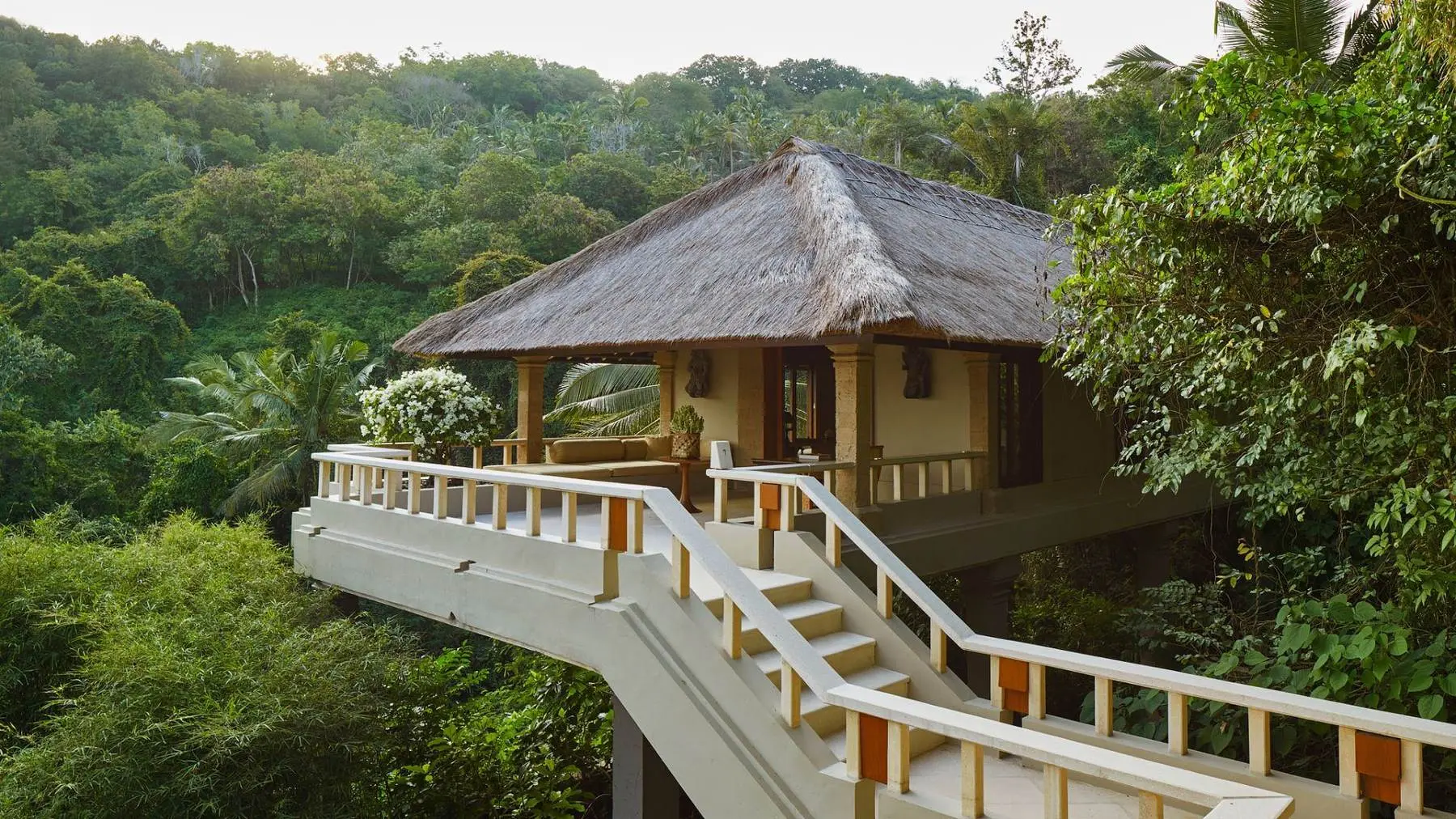
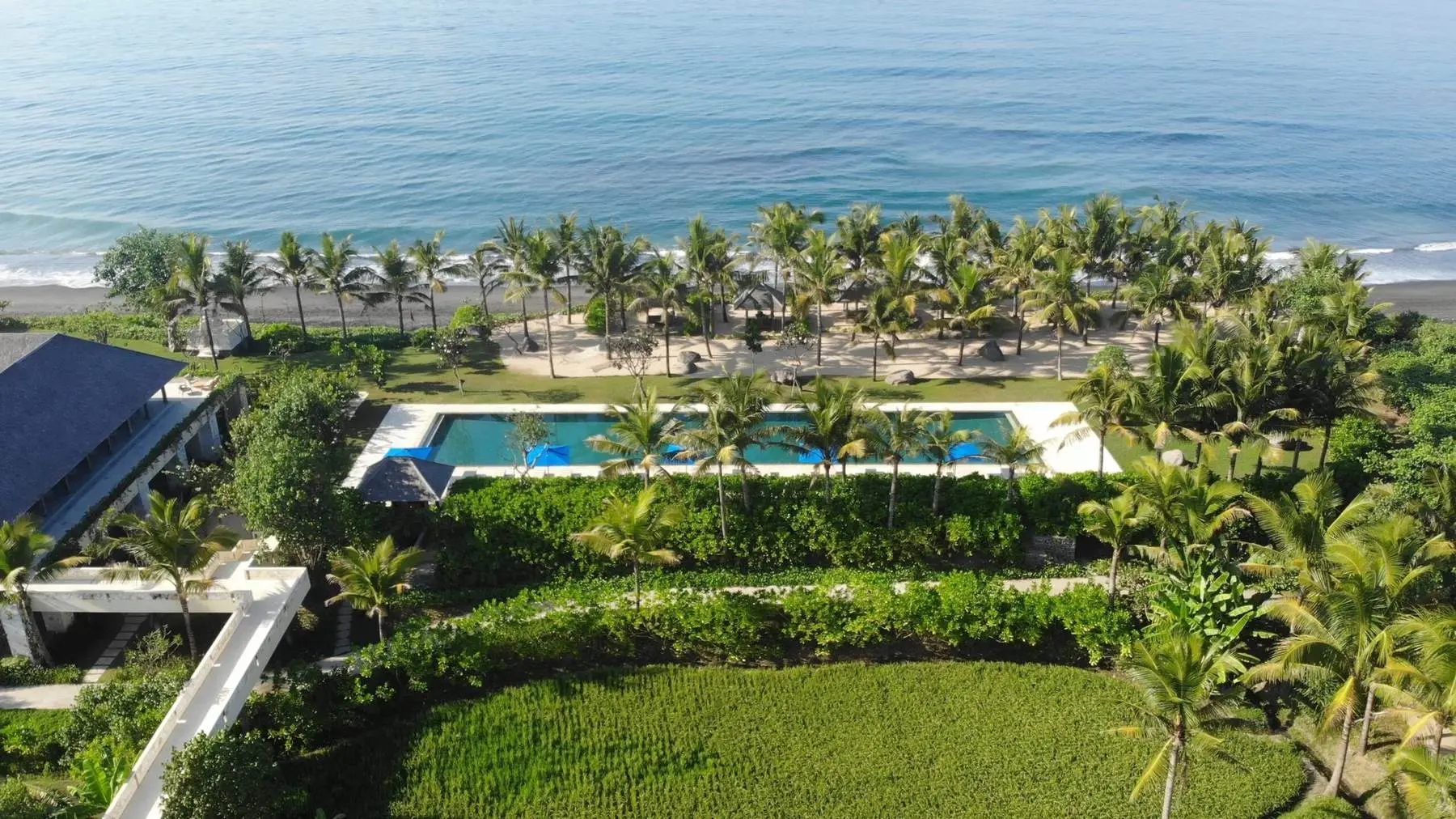
Beyond the gates, the simplest fix is the alarm clock. Half of the traffic problem dissolves before eight in the morning, and the valley at seven is a different place from the valley at eleven. Sidemen, Munduk and most of the east coast are still intact in the way people imagine the whole island once was. And the best of it cannot be booked at all: a ceremony that was happening whether you came or not, which is what a day with Wayan is actually for.
Which hotels open the gate rather than close it?
The ones that were built around something that was already there. Soori, Amandari, Alila Seminyak, Komaneka at Keramas, Shore Amora on its working rice field, Jimbaran Puri and Four Seasons Jimbaran all sit on land that keeps doing what it did before the hotel arrived. You feel the difference immediately, because the place has a life that does not depend on you being in it.
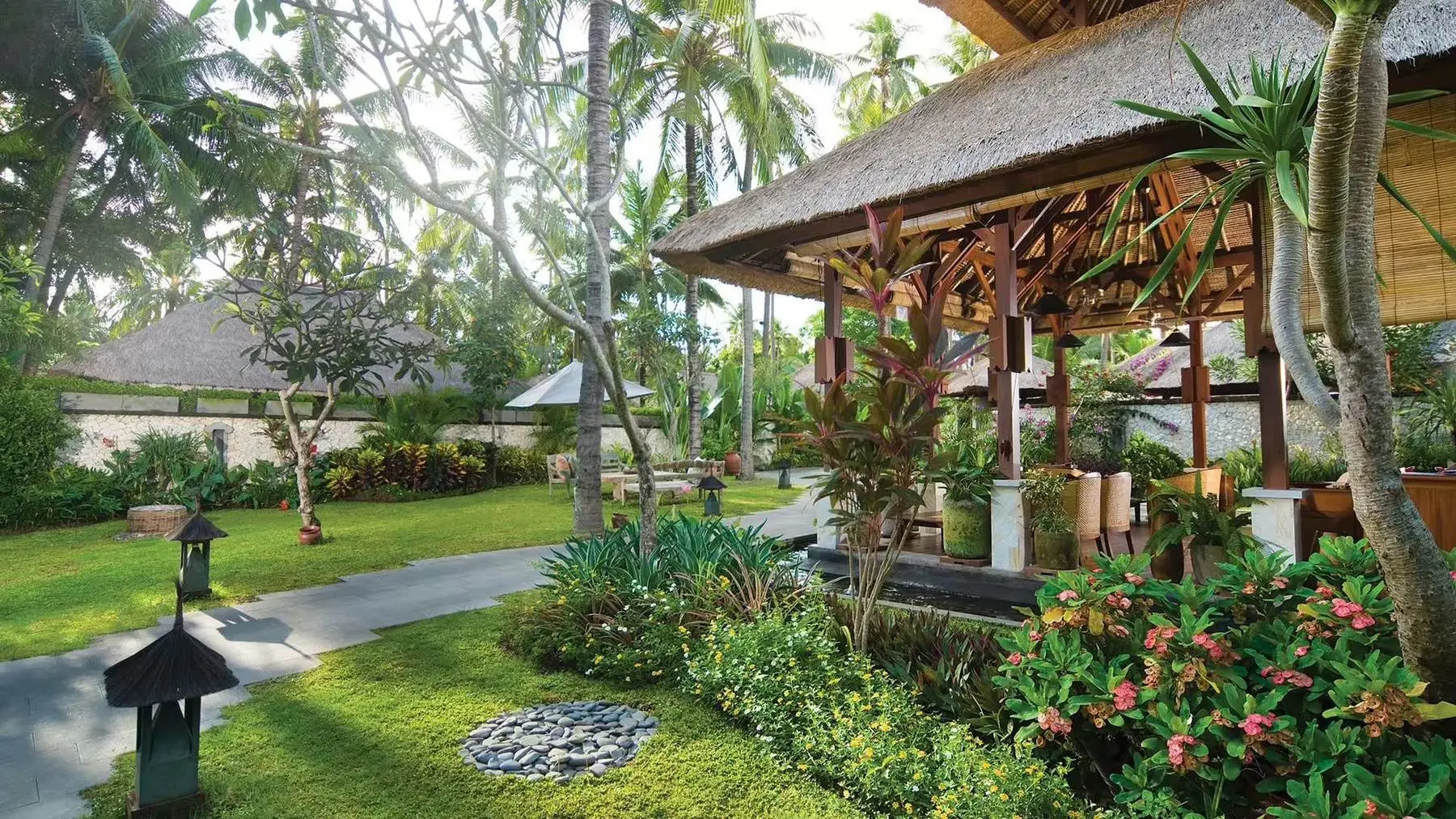
The other kind is not wicked, and some of it is superb. But I wrote about The Mulia that I do not want a resort which has engineered the island out of itself, and that is still the line for me. If you book one of those, book it knowing you have bought a resort rather than an island. That is a perfectly good holiday. It is simply not the thing in the photographs.
I have no tidy ending for this. I am uneasy about an island where the most beautiful ground is privately held, and I am also aware that private hands are the reason any of it survived, and that I have spent thirteen years enjoying the result. What I keep coming back to is that fisherman and his fifty years of the same knot, tied for nobody, in a yard with no view. Everything I can recommend to you costs money. That hour did not, and it is still the hour I remember.
If you want the version of this island that exists outside the gate as well as inside it, that is the trip we are best at planning.
PLAN A TRIP WITH BOTH SIDES →