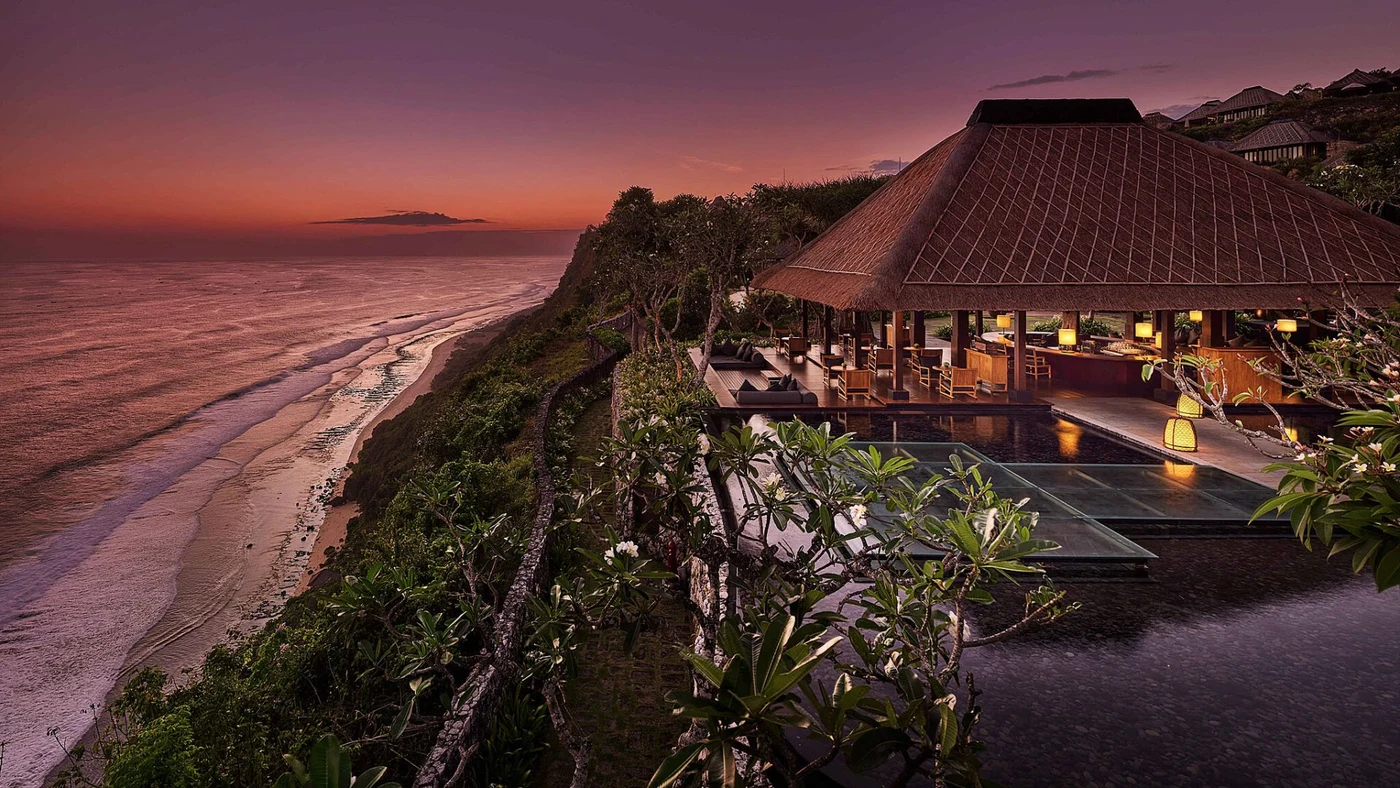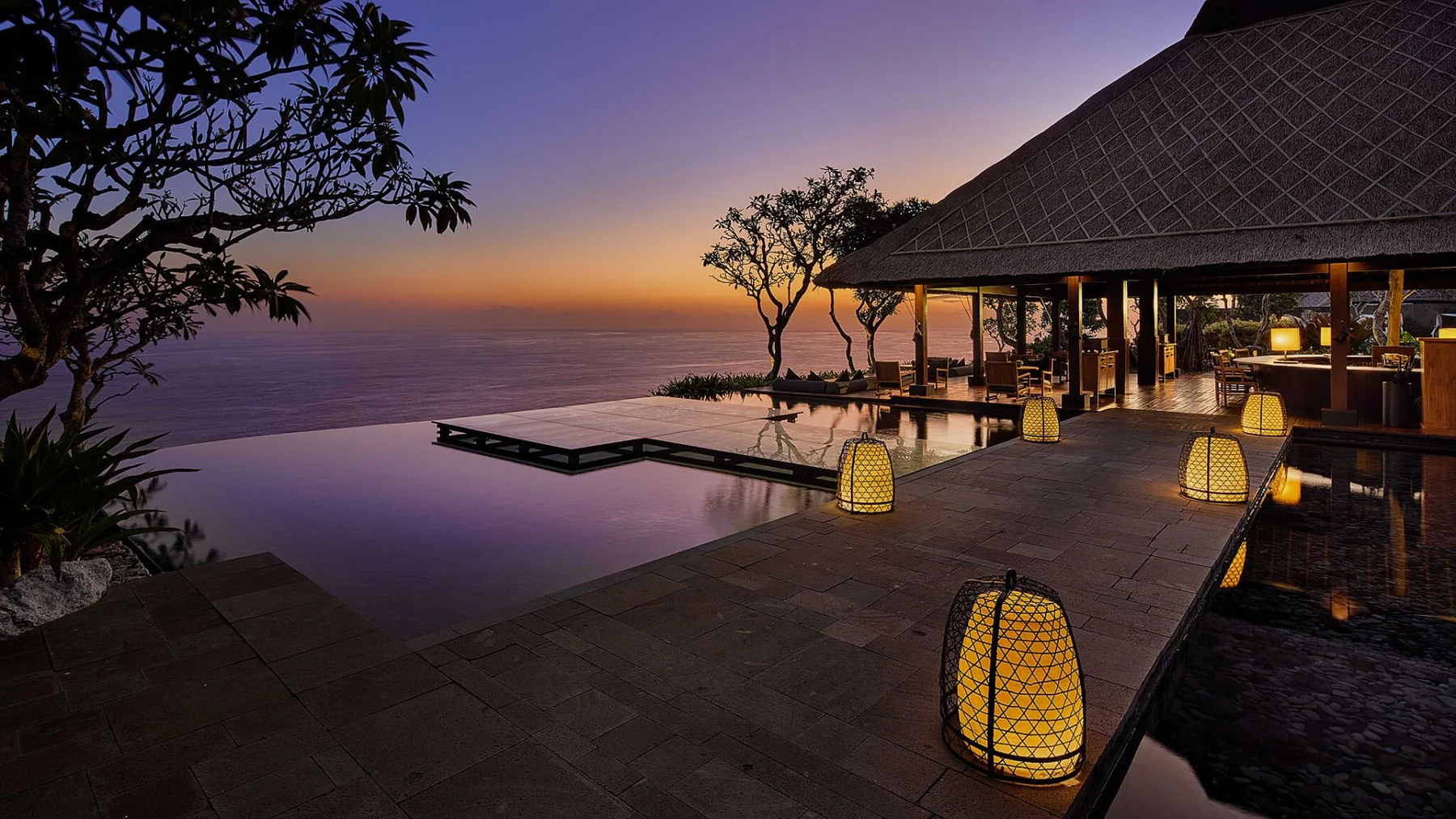
We arrived here straight from Alila Villas Uluwatu, which is relevant, because I was in a mood.
Check in happened in our own villa. A young woman walked us in, made us feel at home inside about ninety seconds, and handed us to a butler who gave us the full tour. I barely heard any of it. I was too busy staring at the fact that we had a view. Not a walled garden with a nice tree in it. The actual Indian Ocean, from our own pool deck, with a large open pavilion beside it for when the sun gets serious.
That is what you want from an Uluwatu hotel. It sounds like a low bar. On this cliff it is not.
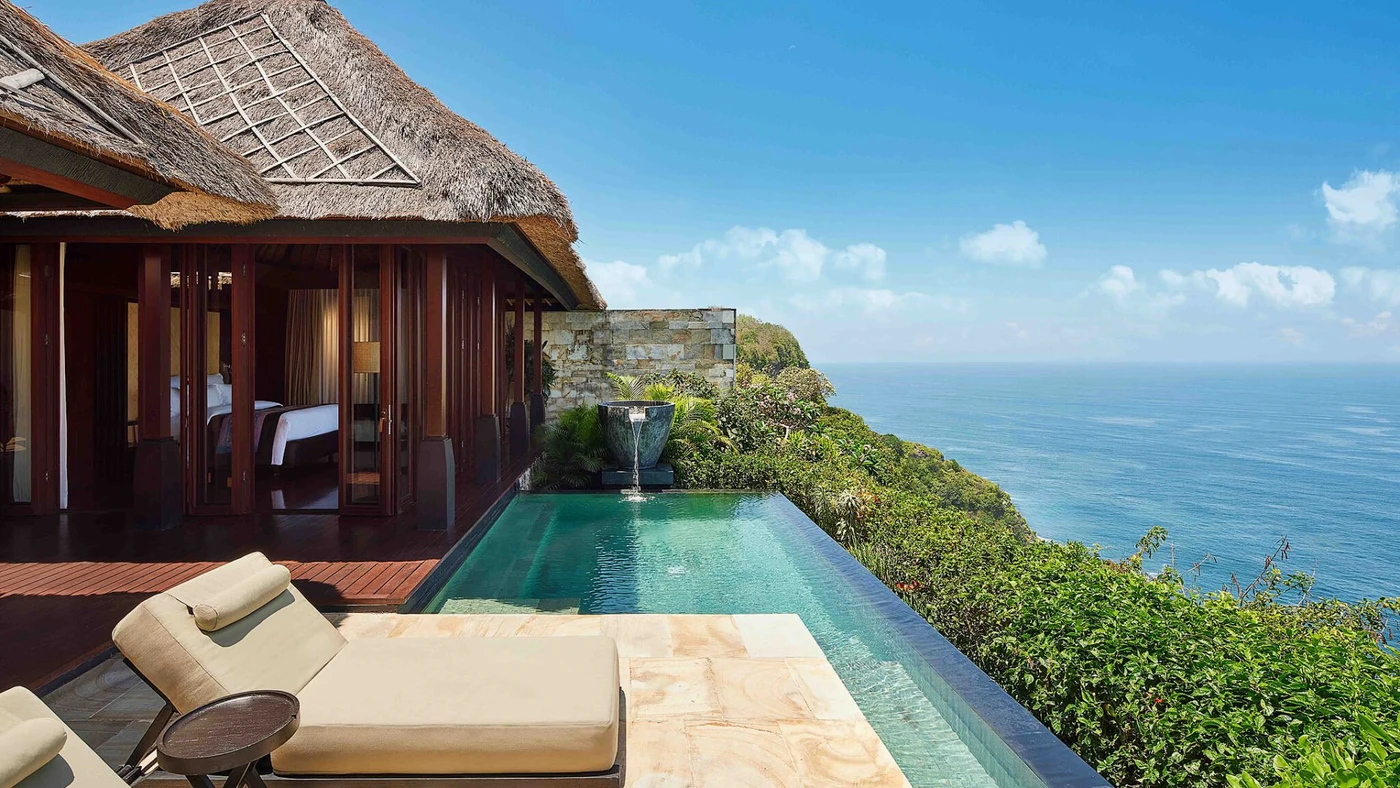
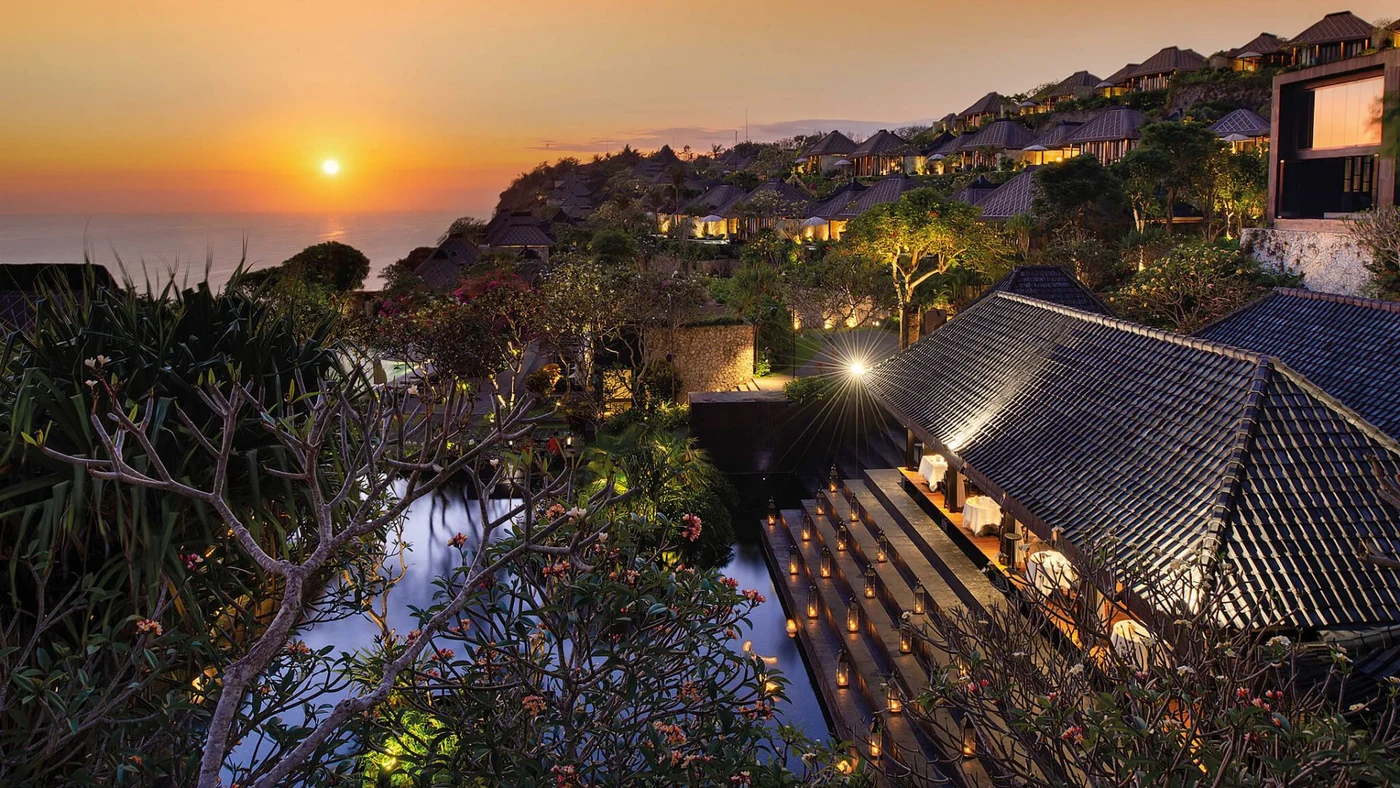
The next morning I did the thing I always do in hotels, which is walk the paths before anyone else is up. This one is steep and it gave me the whole property in about four minutes of smell. First the frangipani, thousands of them, fallen overnight onto wet volcanic stone, that heavy sweet tropical weight you get nowhere outside Bali. Then I came round the bend towards the main building and it vanished, instantly, replaced by chlorine off the freshly cleaned infinity pool and strong espresso from the kitchen.
Two entirely different civilisations, about forty metres apart. I have thought about that walk a lot since, because it is more or less what this hotel is. It also turned out not to be the whole picture, but that took a village to find out.
Why Uluwatu produces the best views and not the best hotels
To understand any resort up here you have to understand the ground, because the Bukit Peninsula is not like the rest of Bali at all.
North of the airport the island is volcanic. Deep soil, rivers, rice terraces, villages organised for a thousand years around water that has been shared and argued over. South of the airport it changes completely. The Bukit is uplifted limestone, ancient coral pushed out of the sea, and rain drains straight through it. No rivers, no paddies, and it sits in the rain shadow of the highlands so there is less rain to start with. Where the rest of Bali farms rice, the Bukit had seaweed and limestone quarries.
So almost nobody lived here. For long stretches of Balinese history this was a backwater, and at one point it was where you sent people you wanted out of the way.
Which is strange, because spiritually this is one of the most charged places on the island. Pura Luhur Uluwatu sits on the cliff a few kilometres from this hotel, one of the sad kahyangan, the directional temples that hold Bali together and guard it against whatever comes in off the sea. Empu Kuturan founded it in the eleventh century. Dang Hyang Nirartha expanded it and, the story goes, chose this cliff to attain moksha and leave the world entirely. The name means headland of rock. This is where Bali ends.
So: land too dry to farm, therefore empty, therefore available, with the best views in Indonesia thrown in. The government pushed tourism up here with incentives precisely because nothing else had ever worked.
Which is why the resorts feel the way they do. They were bulldozed onto empty clifftops behind heavy security gates, with no village to be woven into because the land could never support one. Staff commute in for hours from the parts of the island where people actually live, and the service that results is too often transactional. That is a bizarre thing to say about Bali, where warmth is not a training module but closer to a national character trait.
It is Nusa Dua on a cliff, and it explains the scoreboard. Banyan Tree and Anantara were always middling and have since changed brands. Six Senses is shut for a renovation while still relatively young. Alila is a magnificent building operating largely as a photo panorama. Which leaves Bvlgari as the one property up here I can find very little wrong with, other than the bill.
The ice bucket
Here is how good it is at the level that actually matters.
I put a bottle of water on the table next to my lounger. Within a few minutes, unasked, a pool boy appeared with a small silver bucket of fresh ice and a slice of lime. Nobody made a thing of it. He was already gone. Get up to swim and by the time you are back your lounger has been pulled tight again.
At Alila I spent two days failing to get a lounger at all. Here there was one free at any hour of any day, at the big pool with the iconic view, and somebody kept turning up with snacks. That is the entire difference between these two hotels, and it costs one and a half to two times as much.
What Bvlgari actually is, which explains a great deal
Most people book this thinking they are booking a hotel company. They are not.
Bvlgari is a Roman jeweller, founded in 1884 by a Greek silversmith, now part of LVMH. The hotels came late and there are only nine of them. Bali opened in September 2006 and was the second, right after Milan, which makes this cliff a more significant address in the company's history than most guests realise.
The structural bit matters. Bvlgari does not own these hotels. Local partners own the asset, Marriott's luxury division runs the operation, and Bvlgari licenses its name and enforces the standards. Every property is designed by the same Milanese firm, ACPV Architects Antonio Citterio Patricia Viel, which is why they all feel related.
So you are staying inside a jeweller's brand, executed by the largest hotel operator on earth, on land owned by somebody else. Hold that thought, because it explains nearly everything I liked here and everything that niggled.
It also explains the crowd. This place does not attract hotel people, it attracts Bvlgari people, which is a different animal. Other Bali resorts pull in design obsessives, honeymooners and long stay Ubud romantics. Here you get customers of a luxury goods house who happen to be sleeping in one of its buildings.
The design, which is better than the brand needed it to be
The easy option was to airlift Italy onto a cliff. They did not do that, and credit where it is due.
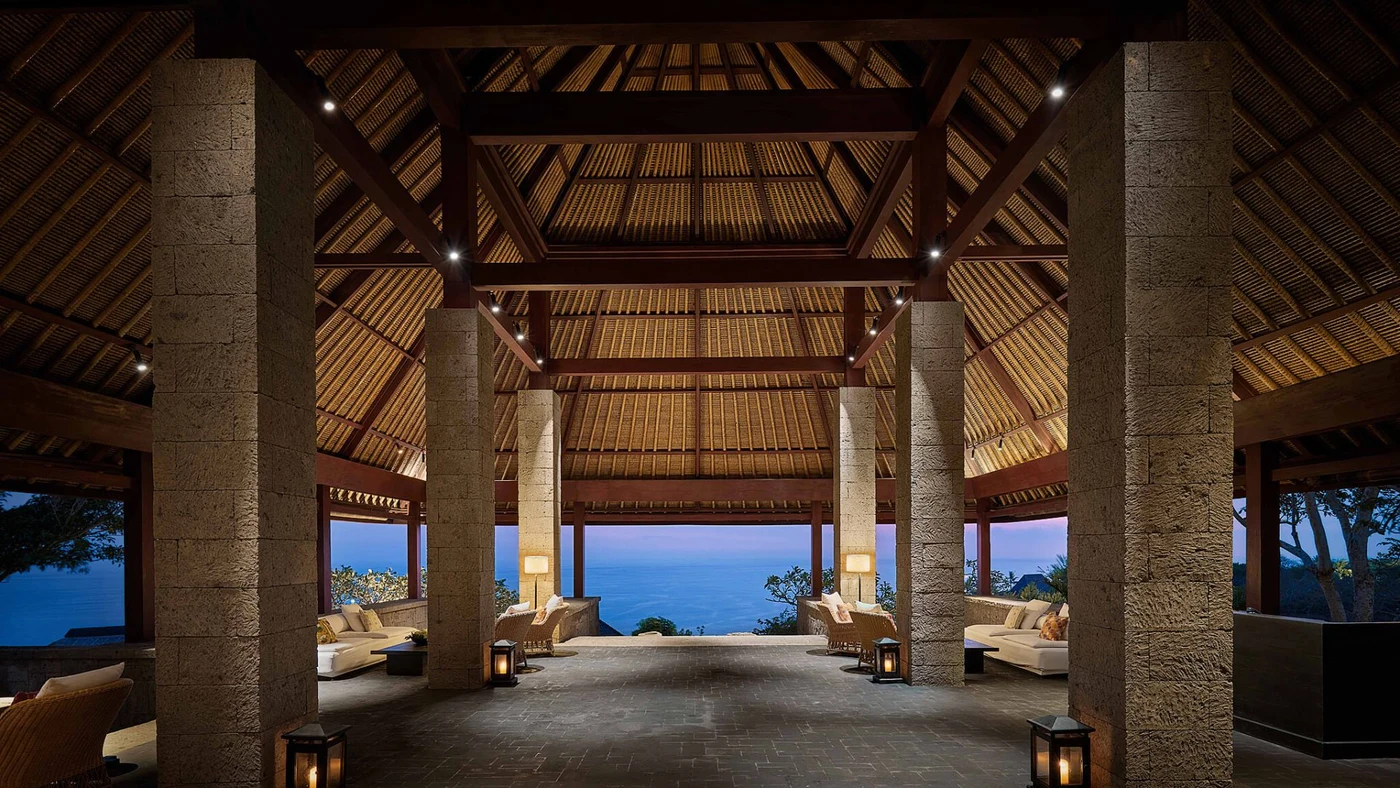
ACPV terraced the site into the slope in the manner of Bali's rice fields, which is a decent joke on a peninsula that has never grown rice. The materials are local and heavy. Hand cut volcanic lava stone, palimanan in the walls, bangkiray hardwood, alang alang thatch. The pools are lined in sukabumi, the deep green Javanese stone, which is why the water reads as jade rather than swimming pool blue. There is a working Hindu temple at the highest point of the property, used by the staff, which up here counts for more than decoration.
Sangkar, the all day restaurant on the cliff edge, is named for the Indonesian rooster cages hanging overhead as light fittings. Il Ristorante is the formal Italian counterweight and has been through several chef eras, most recently rebuilt around Niko Romito.
The honest note is that it feels its age a little, the way Amandari and the Oberoi and Viceroy do. Nineteen years is nineteen years. But it is beautifully maintained, which is exactly what Alila down the road is not, so it reads as patina rather than neglect.
The days, which were extremely easy to fill
We had three and they evaporated.
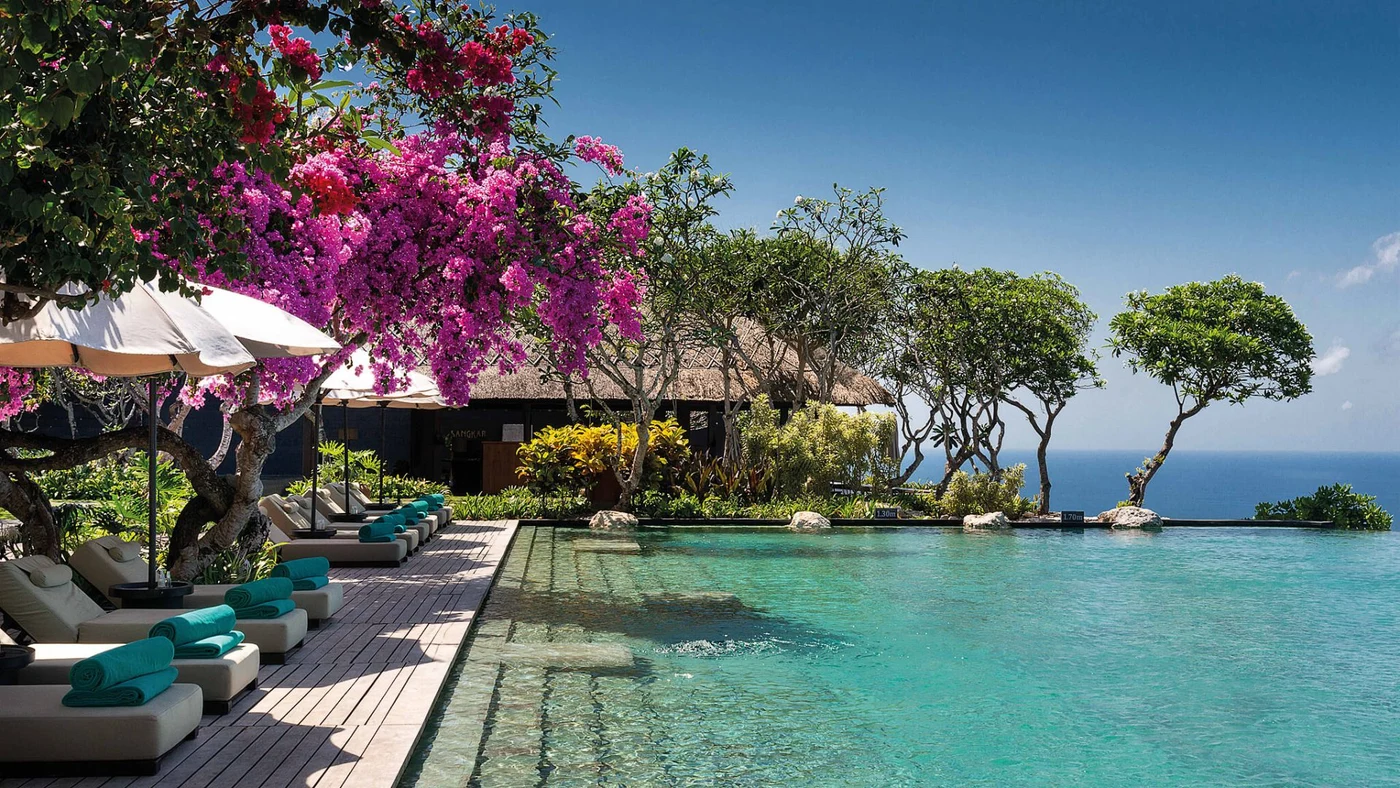
The rhythm was our own pool, then the main pool, then our own pool again, with things happening in between. That main pool has since been rebuilt as the Serpenti Pool Club, terracotta and gold, themed on the snake motif Bvlgari has been selling for decades. Guests only, snacks and fruit all day, cocktails from the Bvlgari Bar team. I would love to tell you what it is like. It opened after we left.
The included activities are good, and the butler runs through them on arrival, which makes you feel enrolled rather than upsold. We did the Melukat purification ceremony and a workshop making Balinese offerings. My wife used the included private yoga, available at any hour, and still rates it as the best she has done anywhere. At golden hour they bring out serious canapés. Ironing is unlimited and free. The minibar is included.
Which produced a reflex in us that I suspect it produces in everybody. Because the rate is so high, you start hunting down everything labelled free as a sort of psychological rebate. Another canapé. Another yoga class. Send the shirts again, they are only going to hang there. It genuinely takes the edge off the price, and I am fairly sure that is precisely the point.
The contradiction, and why it is not a contradiction at all
The resort works very hard to feel generous. It also charges like a maniac, and those two facts sit next to each other all day long.
The boutique is where it gets funny. Staff and butlers tell you, with real pride, that as a resident you get special pricing in the shop. My wife looked a few pieces up on her phone and found them costing more here than in Bvlgari's own stores in major cities. You are on a clifftop behind a gate with nowhere else to go, and the pricing knows it.
Dinner tells a similar story. We skipped the high end Italian and ate at Sangkar most nights, which is the informal engine of the place. Breakfast was à la carte and good. But order simply, a gado gado and a nasi goreng, a dessert, one or two drinks, and a couple is at two hundred euros without trying. The rendang was my favourite thing I ate all trip, a properly luxurious version of a dish you can get anywhere on this island, at fifty three euros. I am not usually precious about luxury hotel pricing. This was the first time in Bali I actually flinched.
Then there is the gentle, constant, extremely well trained upselling, all of it designed to keep you on the property and consuming.
None of which is inconsistent, and that took me a while to see. This is exactly how a jewellery boutique operates. Everything around the object is warm, gracious and free. The coffee, the chair, the conversation, the feeling that you belong in the room. The margin lives in the object. Bvlgari has been running that model since 1884 and is extremely good at it. Here the canapés and the yoga and the ironing are the boutique experience, and the shop and the restaurants and the spa are the vitrine.
Once you see it as a jeweller's hotel rather than a hotelier's hotel, the whole place snaps into focus.
The walk outside the gate
The best morning of the trip happened off the property, and I want to take my time over it.
A banjar is the ward, the community organisation that runs Balinese life at street level. Ceremonies, cremations, disputes, the gamelan, who owes what to whom. It is the actual social operating system of the island. It is also the one thing a clifftop resort cannot manufacture, because banjars grow out of villages and villages grow where there is water, which up here there is not. So the resort does the sensible thing and takes you to one.
We started early at the covered local market. And here was the third smell of this trip, after the frangipani and the chlorine. Raw ginger, roasted coffee beans and fresh fish, all at once, in a building with no view of anything.
What I liked most was that nobody appeared to be treating us as rich tourists. We could actually talk to the stallholders. They handed us bits of fruit to try, including mangosteen, which if you have never had one is worth the airfare on its own.
Our guide was from the village itself. He took us to a yard where an older man sat on a wooden bench, a retired fisherman who knots traditional fishing nets by hand. He showed us the technique. Same knot, same hands, fifty years. Calloused fingers, entirely unbothered, smiling at the two of us.
I had spent the previous three days surrounded by an extraordinary amount of beauty that somebody had paid for. Watching a man do one thing perfectly for half a century, for no audience, does slightly make you wonder what you are doing with yourself. I have not resolved that either.
We finished on the veranda of a traditional stone house, learning to fold palm leaf and bright flowers into an offering basket. My wife made one and was genuinely proud of it. The grandmother of the house took it straight from her, said a real blessing over it, lit incense, and placed it on the family shrine.
That morning is one of the reasons this website exists, and it is where the name came from. If you have ever wondered why we are called The Banjar Collective, that is why.
Back inside the gate, the service is good everywhere, all the time, and I want to be careful not to damn it. Nobody put a foot wrong. But most of it stayed on the surface, and I kept sensing a corporate frame around what people were allowed to do and say. Which, given a licensed brand operated by Marriott to a standard written in Rome, is more or less structurally guaranteed. You can script polish. You cannot script warmth.
At checkout, though, they proved me wrong. The butler gave us a lontar. It is a small traditional book made from dried palm leaf, and he had scratched a message into it by hand in Balinese script, with a thank you in English underneath that referred to specific things we had talked about during the stay.
Then he asked whether he should pack our suitcase. Normally I would say no. It was included, so obviously I said yes.
He did not pack the suitcase. He wrapped every individual garment in fine scented Bvlgari tissue paper, put the shoes in linen bags, arranged the toiletries so nothing could move, and we opened that case at home in the Netherlands without a crease in anything.
So much for no extra mile. I am leaving both observations in, because both are true, and I have not fully reconciled them. Perhaps the extra mile here is a thing that exists at the beginning and the end, at the two moments the brand knows you will remember, and rather less in the middle.
So is it worth it
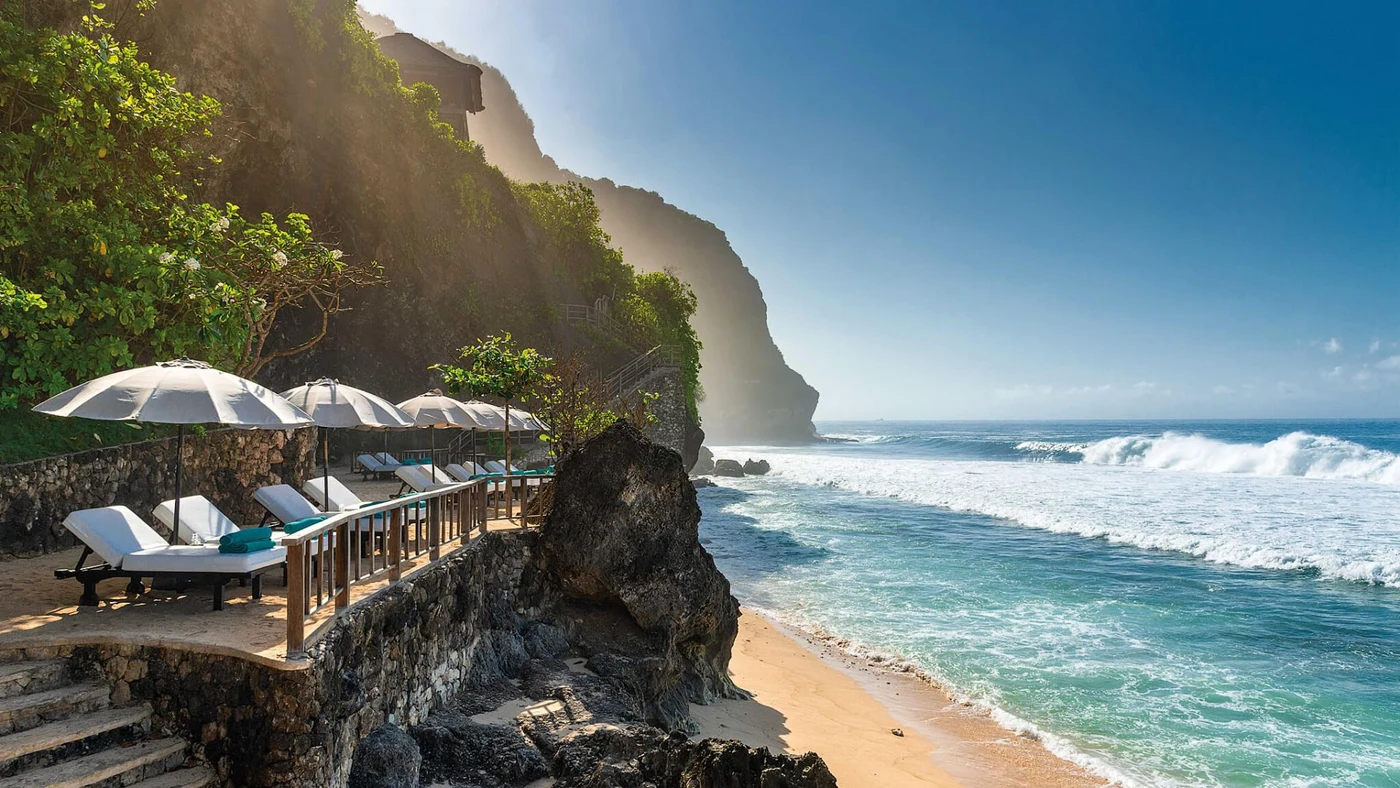
One thing I have to declare first. An inclined elevator runs down the cliff face to a private beach reachable only through the resort, rugged and unspoilt, and it was shut for a long renovation while we were there. It has since reopened with the beach club reworked around the same Serpenti theme, guests only. From the photographs that is the strongest single argument this resort has, and I did not get to test it.
Beyond that. This is Bali's most expensive resort. Rates start around a thousand euros and climb briskly, which is one and a half to two times Alila.
Nothing here disappoints. The gardens are immaculate, staff are everywhere, the villa makes you feel wealthy, the view is the best on the island, and after two days at Alila it felt like being looked after by adults. If you are going to spend serious money on this peninsula, spend it here.
It is still too expensive for what it actually is. Compare it with Samabe, technically Nusa Dua and my favourite hotel in this part of Bali, where for under half the price you get better service, better food, better facilities and the whole thing all inclusive. What Samabe does not give you is a building that stops you in your tracks. You are paying a very large premium for design, for a view, and for three letters on the gate.
Whether that is worth it depends on whether you are buying a hotel or buying a Bvlgari. Plenty of people are quite consciously doing the second, and there is nothing wrong with that.
What stayed with me
On the second morning I found a thin film of salt on the nightstand.
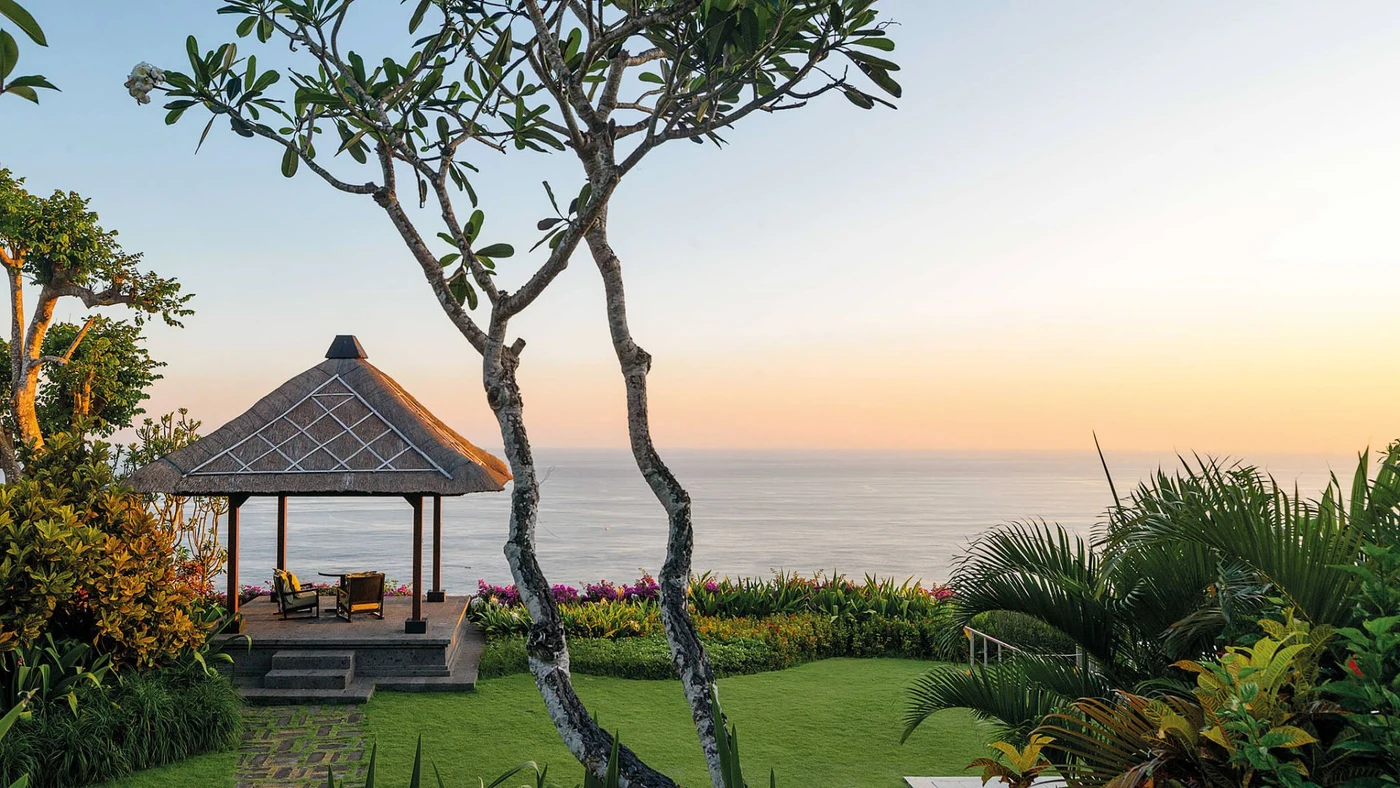
The air comes in through every gap in a building that is otherwise sealed, conditioned and controlled to a standard written in Milan, and it leaves the Indian Ocean behind on the furniture overnight. Housekeeping presumably deals with it every day of the year. I loved it.
That is the honest summary. This place is polished to within an inch of its life and it costs more than any hotel in Bali, and the two things I will actually remember are an old man knotting a net the way he has knotted it since before I was born, and the sea getting into the room anyway.
Bvlgari Resort Bali is available through The Banjar Collective.
GET IN TOUCH TO PLAN A STAY →