The verdict
Two strange hotels high on the same cliff, and the story is simple: Alila wins on architecture, Bvlgari on everything else. Put simply, Alila sells its view and Bvlgari gives it to you, then charges you for everything else. Bvlgari Resort Bali (No. 9 on The Bali 20), from around $1,200 a night, is the most expensive resort in Bali and the best-run on the cliff: the ocean from your own pool deck, staff who see you, and food that is expensive rather than disappointing. Alila Villas Uluwatu, from around $850, is one of the two or three most significant buildings on the island, and it didn't make The Bali 20. I'll be fair about that: if it fixed what went wrong on my stay, it would go straight into my top five, because the place itself is magical. If you must choose between them, Bvlgari wins easily. If you want the Uluwatu experience and to be looked after for less, I'd sleep at Samabe.
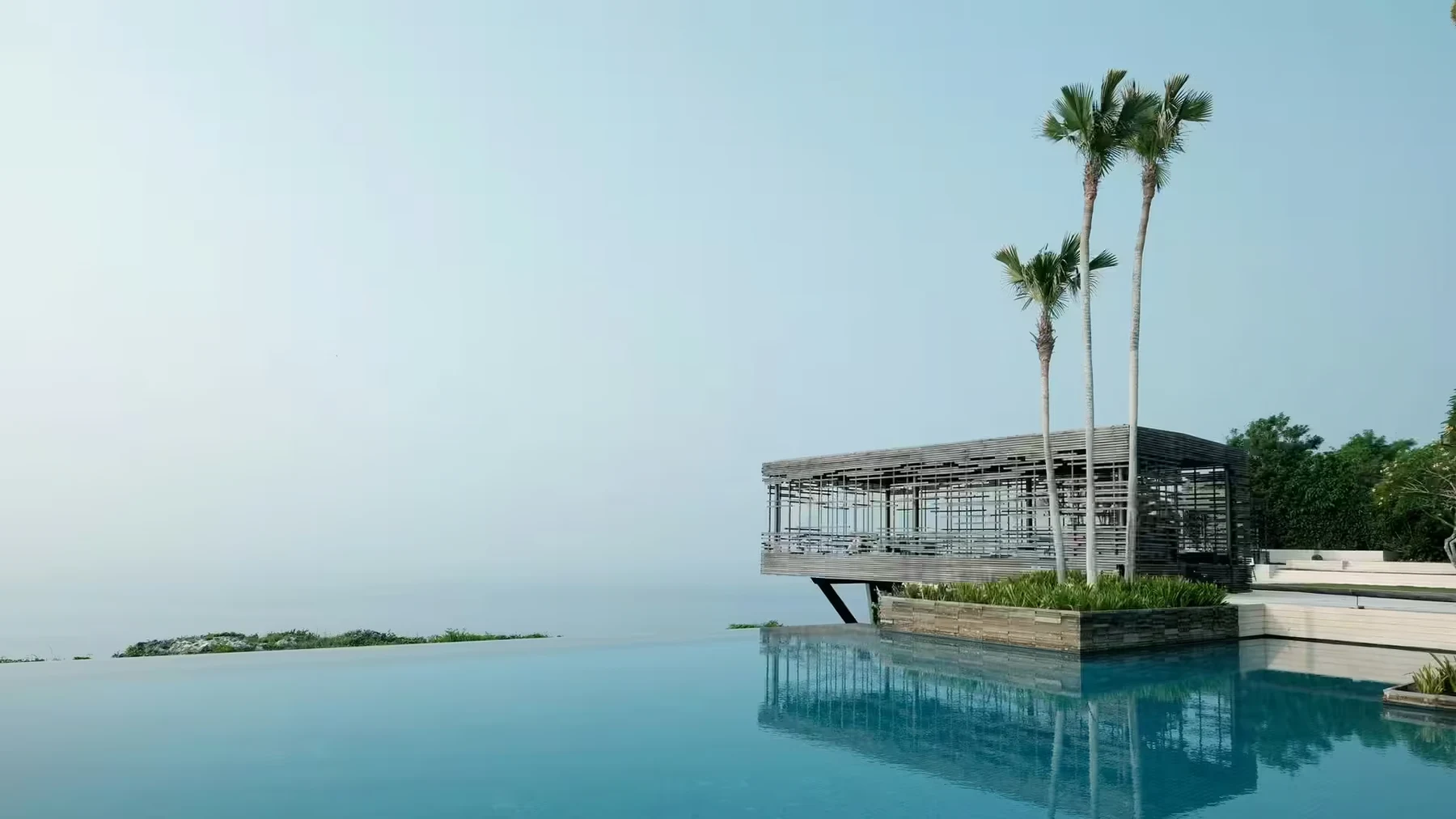
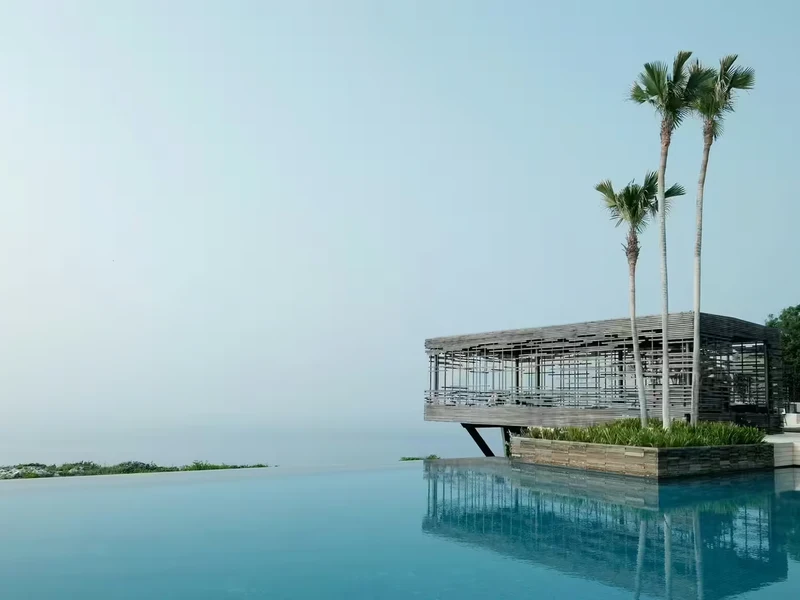
Alila Villas Uluwatu may be the most famous hotel in Bali right now, thanks to a pool and a cabana that have been photographed more often than most temples on the island. It isn't on my Bali 20. Its neighbour up the coast, Bvlgari, is, and I still can't tell you what it's trying to be. They're two strange hotels, high on the same cliff, and to understand either you have to see them side by side.
We did exactly that, arriving at Bvlgari straight from Alila, which matters, because I was in a mood. A young woman walked us into our villa, made us feel at home in about ninety seconds, and handed us to a butler who gave us the full tour. I barely heard a word of it. I was too busy staring at the fact that we had a view: not a walled garden with a nice tree in it, but the Indian Ocean, from our own pool deck. That's what you want from an Uluwatu hotel. It sounds like a low bar. On this cliff, it isn't.
At a glance
| Bvlgari | Alila Villas | |
|---|---|---|
| Where | Clifftop, about 150 m above the ocean | Clifftop plateau, about 100 m above the ocean |
| From the airport | 45 to 75 min | 45 to 75 min |
| Entry villa, per night | From around $1,200 | From around $850 |
| Entry villa view | Over roofs and gardens to the ocean | Walled garden; frontal sea view from around $3,500 |
| Size | 59 villas and mansions | Around 65 villas |
| Beach | Private beach by inclined lift | None |
| At night | Silent, apart from the sea | Beach-club bass carries across the site |
| Architecture | ACPV, terraced in lava stone (2006) | WOHA, a Bali landmark (2009) |
| Best for | Being looked after, the view from your villa | The building, two nights |
| The Bali 20 | No. 9 | Not ranked |
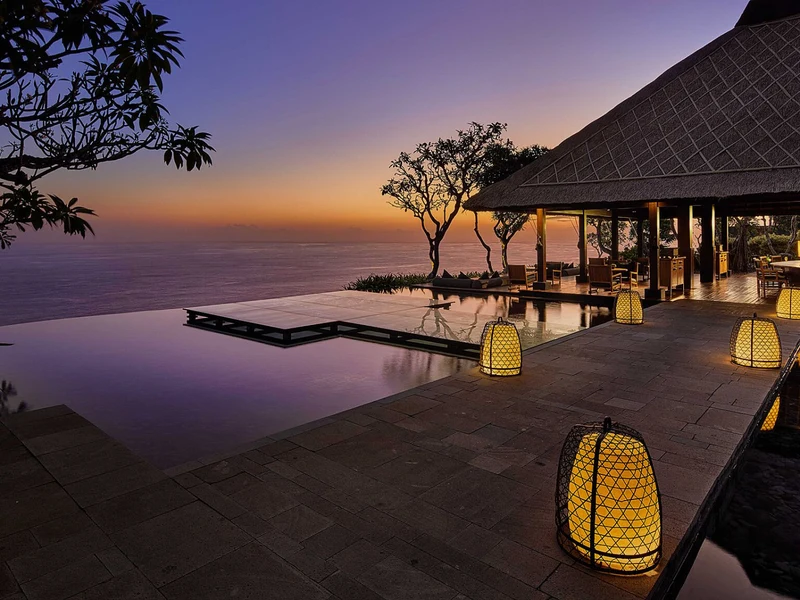
Numbers on the photos are positions on The Bali 20. Rates are for the entry category at the time of writing, September 2026, and move with the season.
Why does Uluwatu have the best views but not the best hotels?
Because of the ground they stand on. North of the airport, Bali is volcanic: deep soil, rivers, rice terraces, and villages organised for a thousand years around shared water. The Bukit Peninsula is uplifted limestone, ancient coral pushed out of the sea, and rain drains straight through it. No rivers, no paddies, and so for most of Balinese history almost nobody lived here. Spiritually, it's one of the most charged places on the island: Pura Luhur Uluwatu, a few kilometres away, is one of the great directional temples said to guard Bali from the sea. But when tourism came, the resorts were built onto empty clifftops behind security gates, with no village to be woven into, and staff commuting in for hours from where people actually live. The service that results is too often transactional, which is a bizarre thing to say about Bali, where warmth is closer to a national character trait than a training module. Against that backdrop, Bvlgari is the one property up here I can find very little wrong with, other than the bill.
What is each one trying to be?
Alila knows exactly what it is. Bvlgari still doesn't, and it hardly matters. Alila is an image, and a magnificent one: a building so photogenic that its fame now runs ahead of the stay itself. Bvlgari is harder to read. It opened in 2006 as only the second Bvlgari hotel, after Milan, before the brand had settled on what a Bvlgari hotel should feel like, and you can still see the seams. Is it Balinese, with its lava stone, its staff temple and its Melukat purification ceremonies? Or is it a jet-set address, with a snake-themed pool club in terracotta and gold and a boutique by the lobby? After all these years, I still can't feel which.
But neither of them really lives on identity. Both live on the best view in Bali, and that's a different market from the rest of the island. Elsewhere you stay for a village, a valley, a kitchen or a family of staff. Up here you stay for a hundred metres of cliff and the Indian Ocean going on forever, and both hotels know it.
Which is the better building?
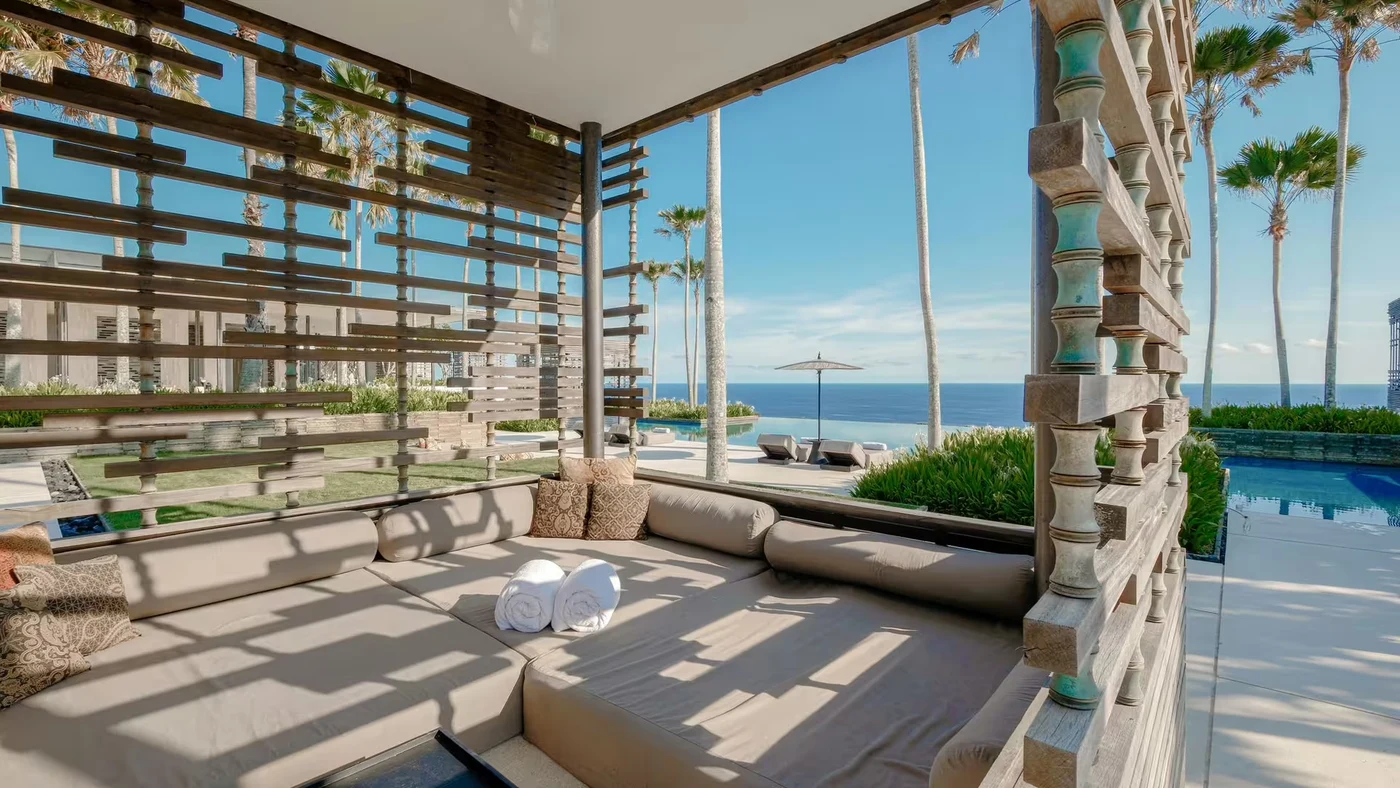
Alila, and it isn't close. WOHA began drawing it in 2004, it opened in 2009, and it's one of the two or three most important buildings in Bali. It's made of limestone quarried on site, recycled railway sleepers, ironwood and rattan, and timber lattice slices the walls into slivers until you can't tell where the building stops. A fifty-metre infinity pool runs along the cliff edge, with a slatted cabana cantilevered out over the drop. The villas are zen and minimal without ever feeling cold. Ours was among the nicest rooms I've slept in anywhere, with a bed I can only call magisterial.
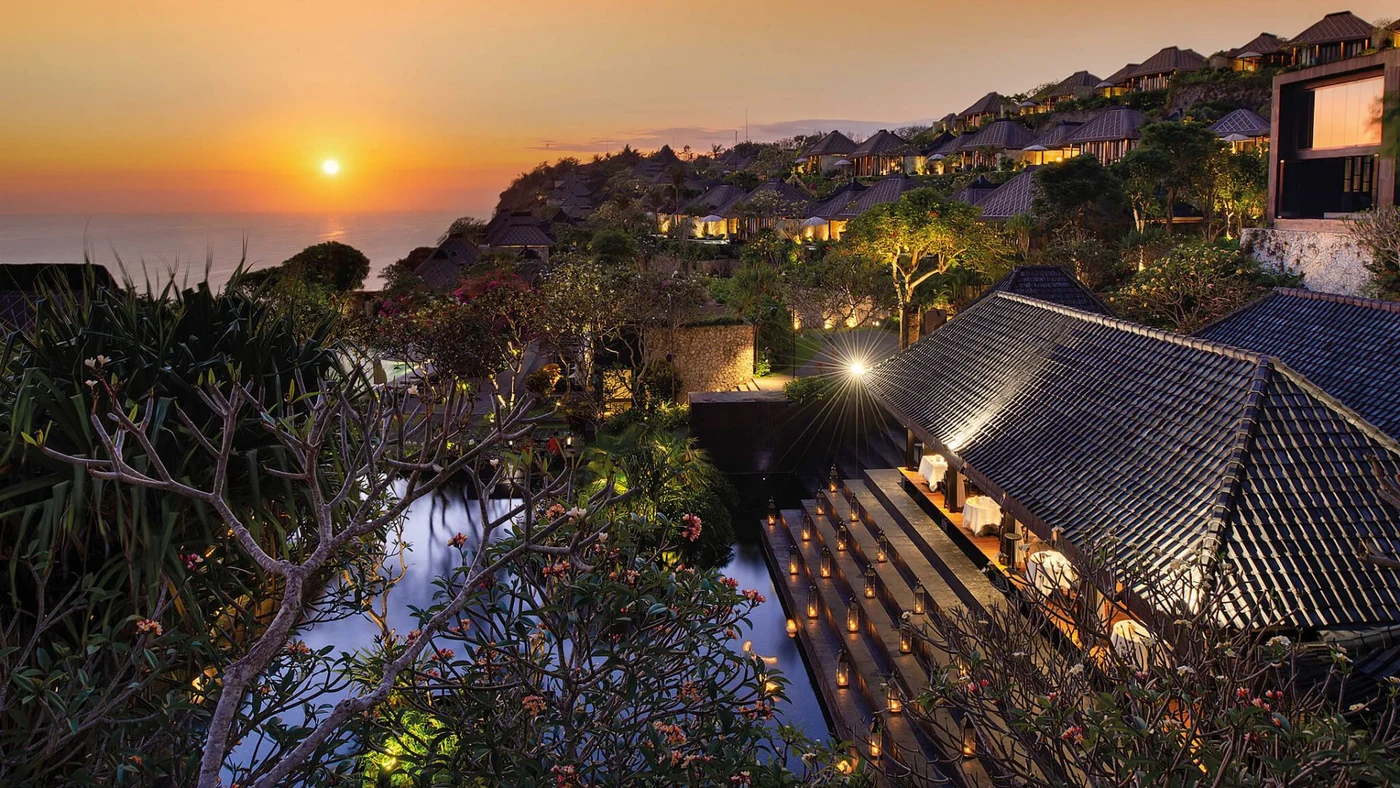
Bvlgari is better than the brand needed it to be. Its Milanese architects, the firm behind every Bvlgari hotel, could have airlifted Italy onto a cliff. Instead they terraced the slope like Bali's rice fields, a decent joke on a peninsula that has never grown rice. They built it from hand-cut lava stone, local hardwood and thatch, with pools lined in deep green Javanese stone so the water reads as jade. It feels its age a little, but it's beautifully maintained, so it reads as patina. That's exactly what Alila is not: there the paint is going, small things are broken, and the gardens look scruffy next to architecture this disciplined.
Which villa should you book?
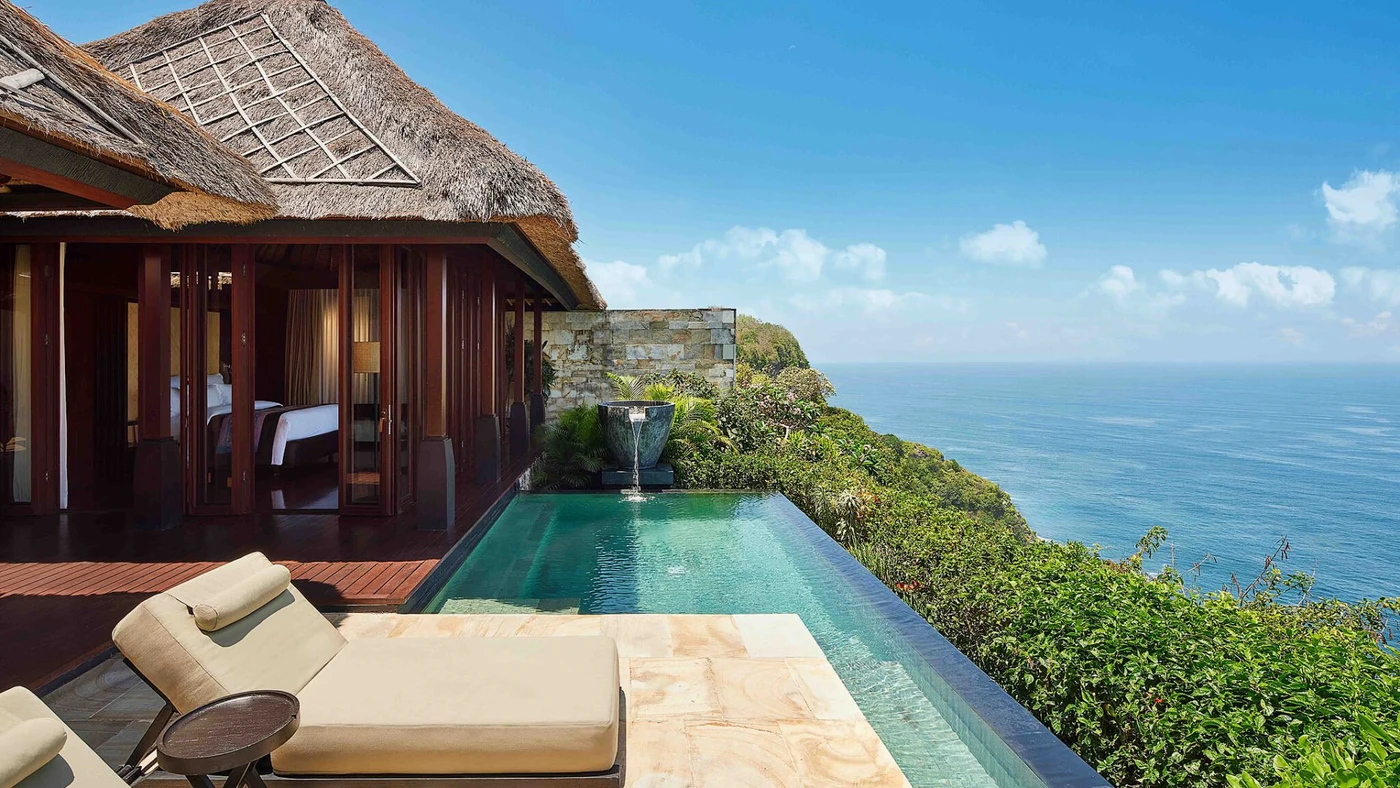
At Bvlgari, any of them. At Alila, this is where the comparison breaks down. Neither hotel gives you a frontal sea view at entry level. At Bvlgari, our villa looked out over the roofs of the villas below and the dense, overgrown tropical gardens, with the ocean beyond. And it was still magical: you see the sea, you feel it, and the view is overwhelming all the same. The basic villas are simply beautifully designed, terraced into the slope so that at every moment you know you're in Uluwatu.
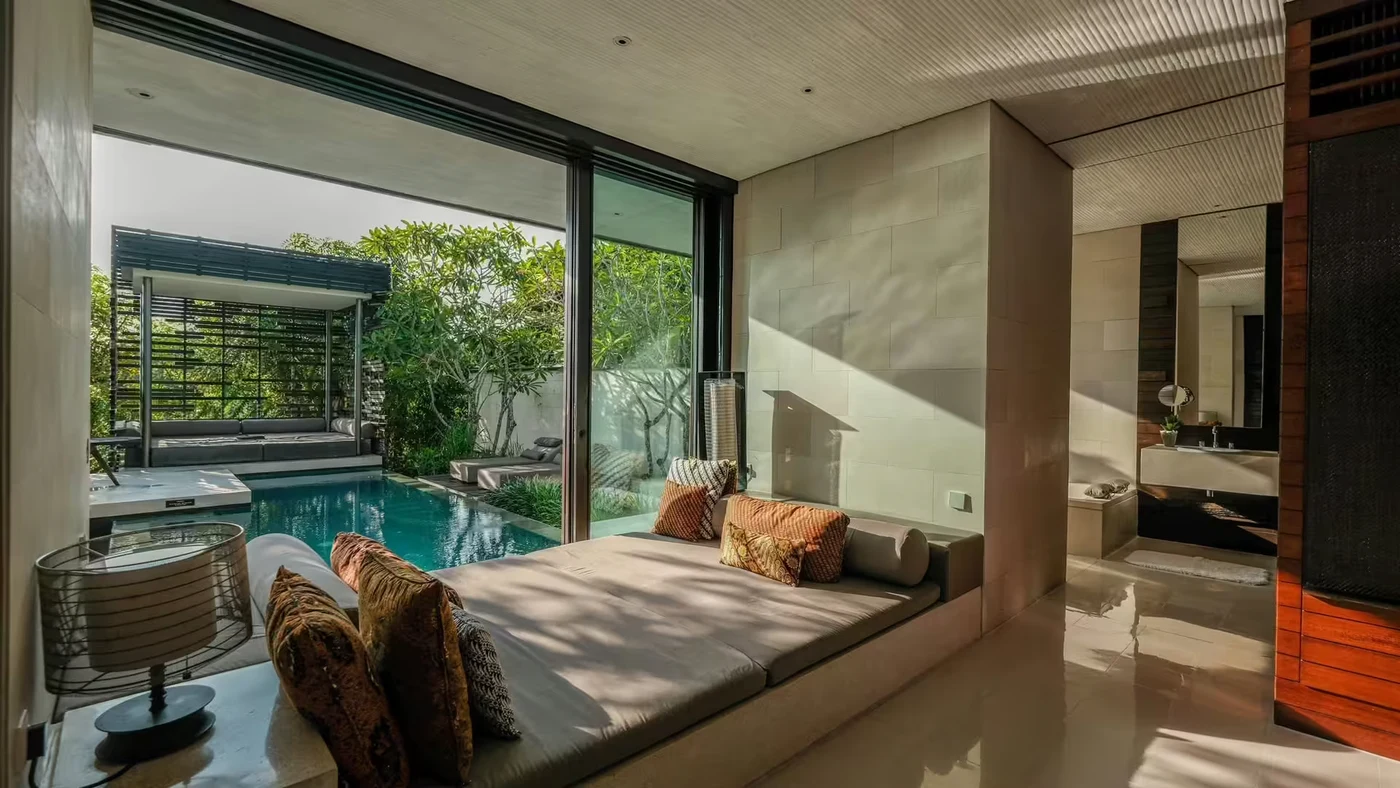
Alila's entry villa is officially a garden view, and ours looked onto a walled garden, complete in itself and cut off from the ocean. That was lovely on the first afternoon and felt like a cruel joke by the second, when the sea was the only thing we wanted and there was nowhere free to sit and look at it. The category above sits on higher ground but still doesn't face the ocean head-on. A truly frontal view at Alila means the cliff-edge villas, with two or more bedrooms, from around $3,500 a night. One hotel's architecture lets the ocean in, even from its cheapest villa. The other walls it out unless you pay three times as much.
What about the beach and the nights?
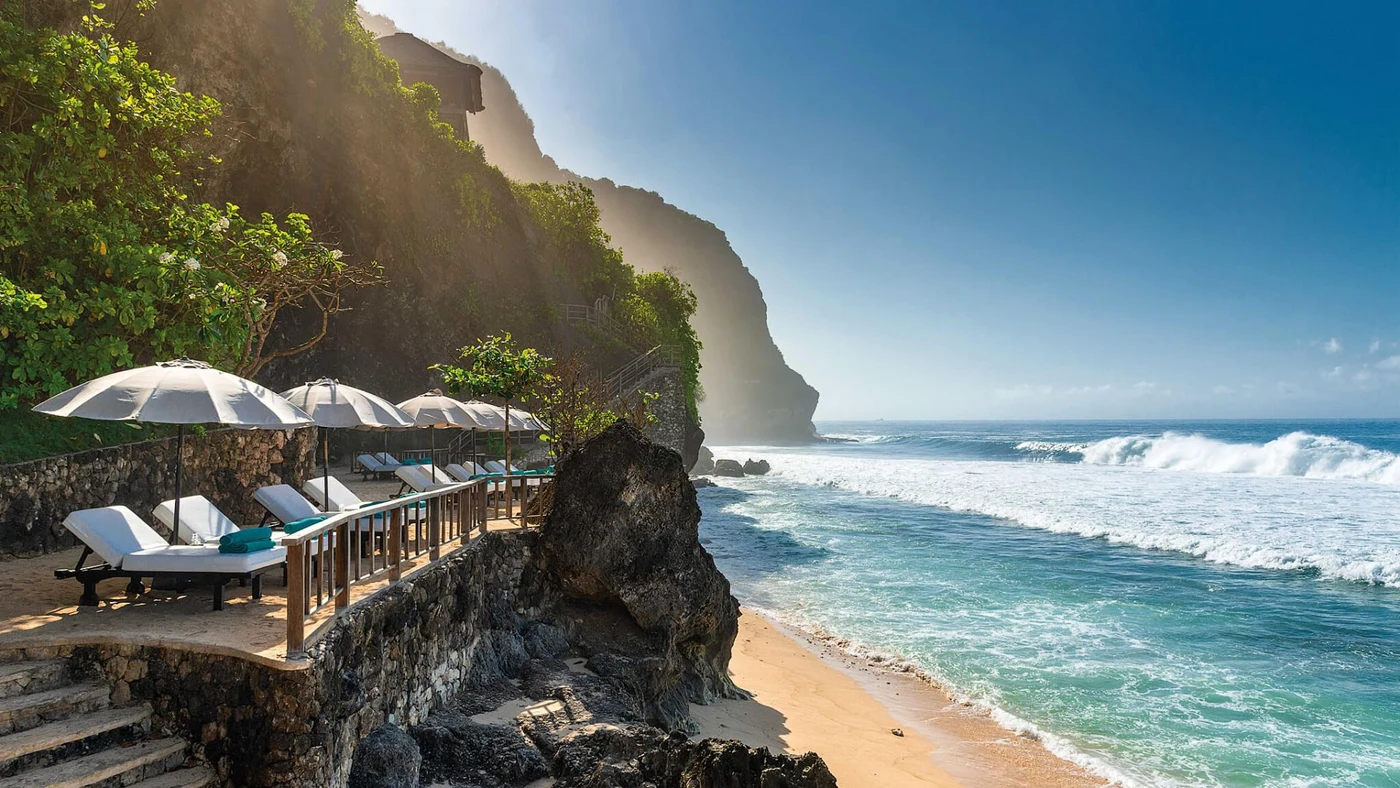
Bvlgari wins both, and quietly. Bvlgari has something no other hotel on this stretch of cliff can offer: an inclined lift that runs down the cliff face to a private beach reachable only through the resort, rugged and unspoilt, with a guests-only beach club at the bottom. Alila has no beach at all. You look at the ocean from a hundred metres up, and that's as close as you get. After dark the difference is just as clear. At Bvlgari the nights are silent, apart from the sea. At Alila, the bass from a nearby beach club carries across the site until late. The bed was fabulous. The thumping was not.
Which is the better hotel?
Bvlgari, by a distance, and you can see it at the pool. At Bvlgari, I put a bottle of water on the table next to my lounger, and within minutes, unasked, a pool boy appeared with a small silver bucket of ice and a slice of lime, and was gone again. Get up to swim, and by the time you're back your lounger has been straightened. At Alila, I spent two days failing to get a lounger at all. Nobody reserves them with towels. The deck is simply small, the loungers few, and they're permanently occupied.
Alila's check-in was flawless, warm, even moving, with a short massage while the paperwork happened. It was also close to the last time anyone treated us as though we were staying rather than passing through. Nobody asked how our evening had been, and a WhatsApp to the spa took hours to answer. After two days there, Bvlgari felt like being looked after by adults. Its service stays a little on the surface in the middle of a stay, polished inside a corporate frame, but it comes alive at the moments you'll remember. At checkout our butler gave us a small palm-leaf book with a message scratched into it by hand in Balinese script, then packed our suitcase with every garment wrapped in scented tissue paper. We opened it in the Netherlands without a crease in anything.
Where will you eat best?
Bvlgari, though you'll feel it in your wallet. At Alila, both restaurants work very hard to make every plate look as if it were assembled for Instagram, and taste is clearly the second priority. The grilled octopus at CIRE arrived cold and tough, the satay at The Warung dry. At Bvlgari we ate mostly at Sangkar, the all-day restaurant on the cliff edge, and the beef rendang was my favourite thing I ate all trip: a properly luxurious version of a dish you can find anywhere on the island. At fifty-three euros, it was also the first time in Bali I actually flinched at a price. Order simply and a couple is at two hundred euros without trying. But expensive rather than disappointing is still a clear win.
What's the catch?
At Bvlgari, the bill. At Alila, everyone else. Bvlgari charges like a maniac while working very hard to feel generous: included yoga, canapés at golden hour, unlimited free ironing, activities that make you feel enrolled rather than upsold. That's not a contradiction once you realise it's run like a jewellery boutique. Everything around the object is warm, gracious and free, and the margin lives in the object. Staff told us with real pride that residents get special prices in the boutique. My wife checked on her phone and found the pieces cost more there than in Bvlgari's city stores.
At Alila, the catch is that the view isn't only yours. It doesn't sell a pool day pass, but Sunday brunch at CIRE comes with access to the famous infinity pool, so many of the people on that deck aren't staying there. The best spot on the property, the Cliff Temple Terrace beside a working temple, doubles as the wedding lawn. My explanation, and it is only my inference, is that the building earns its money as a view as much as a hotel. And since almost nobody comes back a second time, little pushes back when the details slip.
Who is each one for?
Alila for people who come for the architecture. Bvlgari for people buying a Bvlgari. Alila is a once-in-a-lifetime hotel for most of its guests: they save for it, come once and photograph it thoroughly, and the memory quietly edits itself in the hotel's favour. It worked on me, and I'm the one writing the complaint. Bvlgari doesn't attract hotel people. It attracts customers of a luxury house who happen to be sleeping in one of its buildings, and it knows exactly how to look after them.
Which is the best value?
Neither, honestly, and I'd rather sleep somewhere else. Bvlgari, from around $1,200, is still too expensive for what it is. Alila, from around $850, charges you for the building and the cliff, and at that price you don't get the sea. If I want the Uluwatu experience myself, I'd sleep at Samabe, technically Nusa Dua and my favourite hotel in this part of Bali: better service, food and facilities for well under half of Bvlgari's price, all-inclusive. What Samabe doesn't give you is a building that stops you in your tracks. And if you want architecture of Alila's calibre with a hotel that actually needs you back, look at Soori.
Bvlgari or Alila?
Alila has the better building. Bvlgari has the better hotel. If you have to choose between these two, Bvlgari wins easily. Go to Alila for two nights, for the architecture, and walk to the temple terrace early, before anyone is setting up for anything. If you're going to spend serious money on this peninsula, spend it at Bvlgari.
The full reviews are here: Bvlgari Resort Bali and Alila Villas Uluwatu.
And if Alila ever gets the details right to match its building, I'll be the first to move it into my top five.
We can book both at the hotels' own rates, with the benefits attached.
PLAN AN ULUWATU STAY →