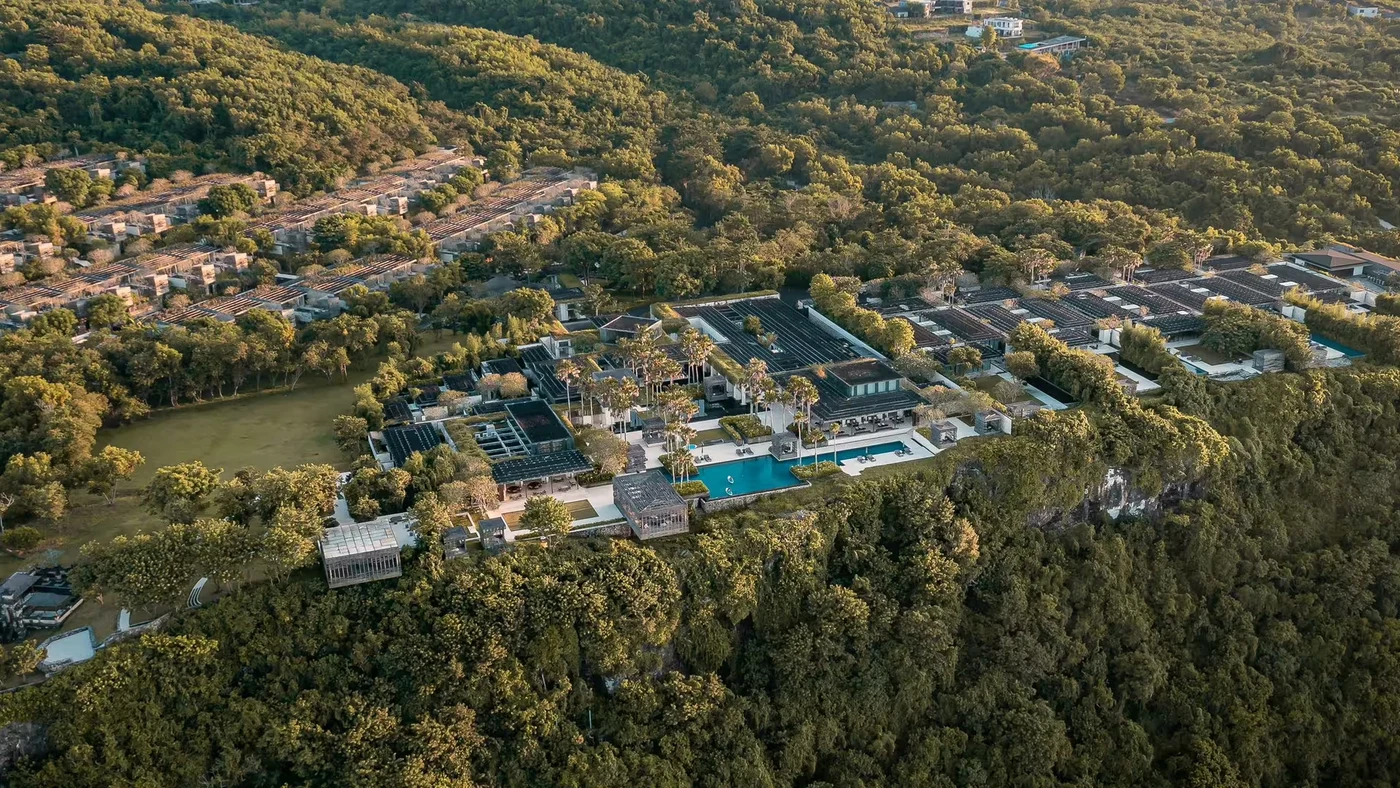
The check in is the best thing this hotel does, and I mean that as a compliment before I mean it as anything else. We came in off the road onto a clifftop plateau on the Bukit Peninsula, dry savannah a hundred metres above the Indian Ocean, and were greeted like long lost family who had finally come home. Someone gave my wife and me a short massage while the paperwork happened. I was on a pink cloud and I said so out loud, several times, to anyone standing near me.
I have been thinking about that half hour ever since, because it was flawless and warm and it was also close to the last time anybody here treated us as though we were staying rather than passing through. What I have never satisfactorily worked out is why. I have one explanation that fits everything I saw, which I will get to, and I want to say up front that I am not certain of it. What I am certain of is the two days, so let me start there.
The villa did everything a villa is supposed to do
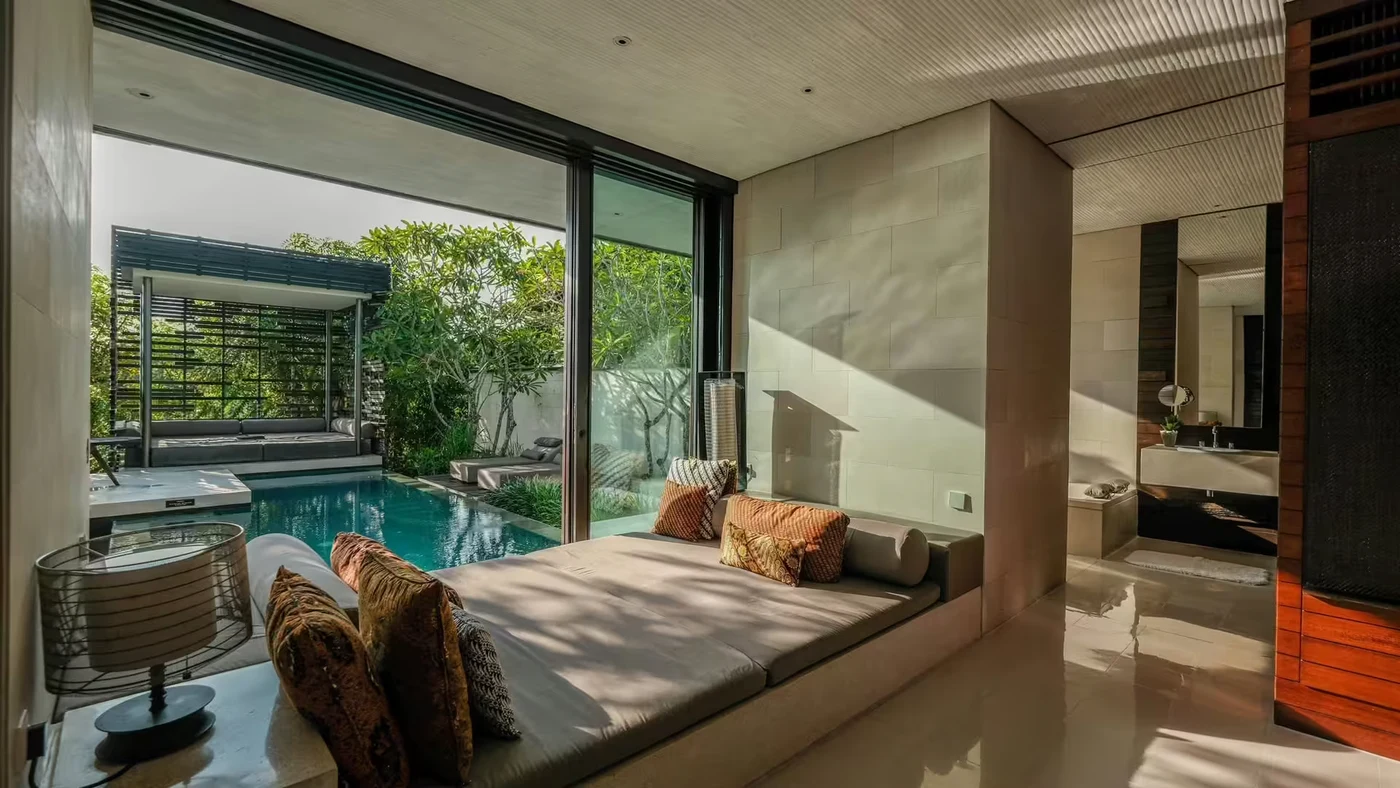
We had a one bedroom pool villa and it is among the nicest rooms I have slept in anywhere. A great deal has been written about these villas and for me all of it landed. Zen and minimal without ever being cold, the bed magisterial, which is not a word I use about beds.
We slid the terrace doors open and that was the afternoon gone: the daybed, the pool, and later lying under the bale at the back of the garden, the one everybody photographs.
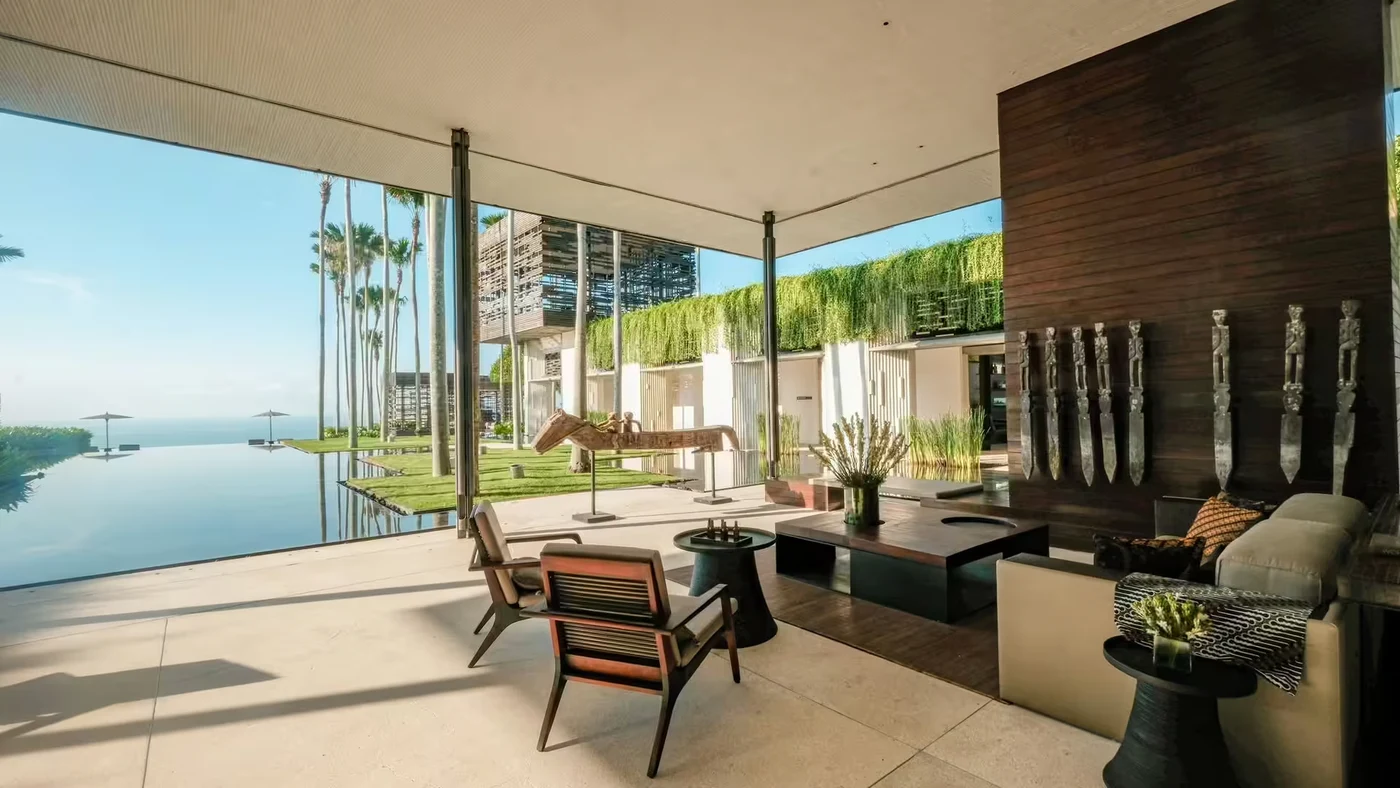
The odd part is that our villa has no sea view and we barely registered it. The garden is walled and quiet and complete in itself, and for a few hours that was more than enough. I am flagging it because it matters enormously by day two, when the ocean is the only thing you want and the only place to sit and look at it is a terrace with no free seats on it. On the first afternoon it did not cross our minds.
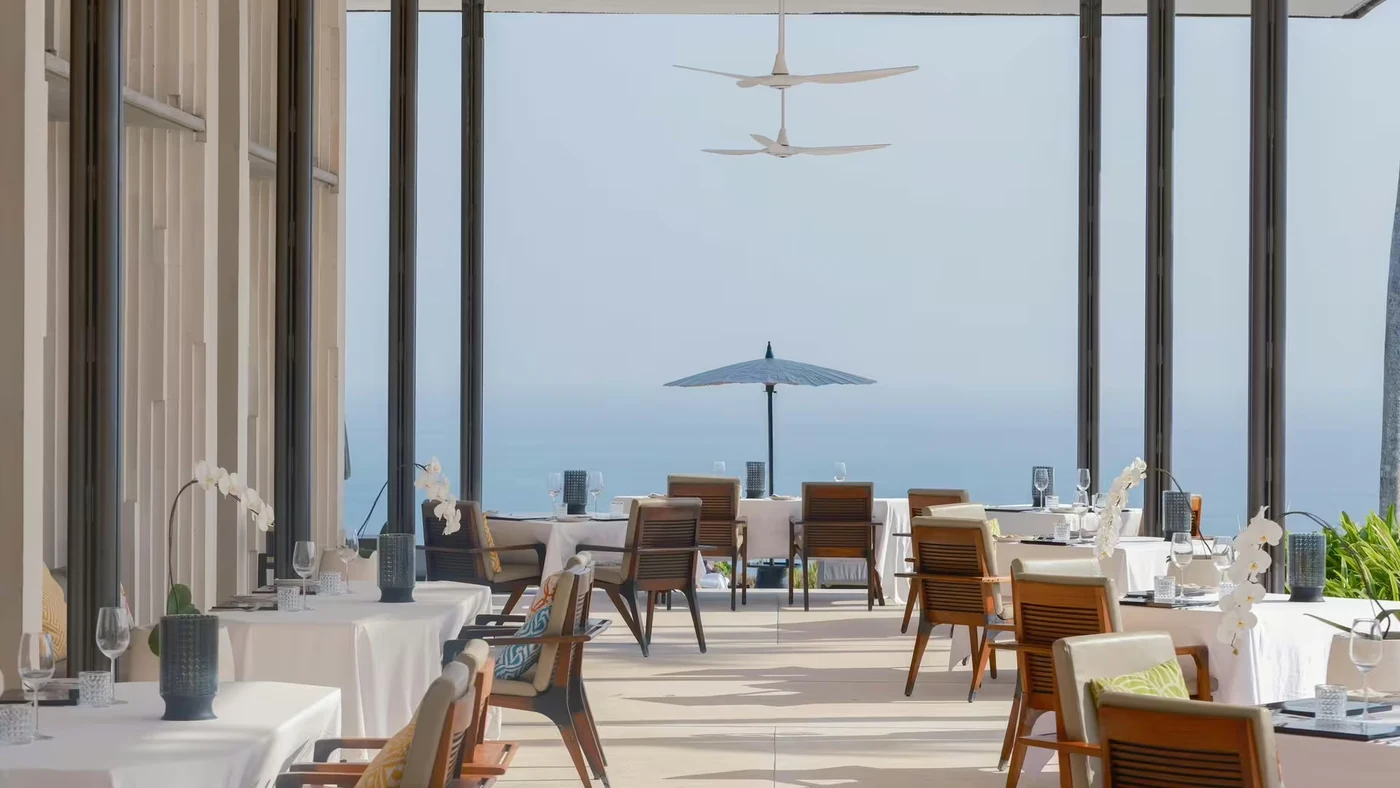
Lunch was at The Warung, which has the sea view that is the reason anybody books this hotel, although a good number of the tables also look straight onto the central resort terrace. The food arrived beautiful and then I ate it and it was flat. Not bad, not wrong, just empty in the middle where the flavour belongs.
I remember being surprised, and I remember something I am less proud of, which is that I wanted this hotel to deliver so badly that I would not let it register. One dish, I told myself. Kitchens have off days.
Then we went to look for a lounger and there wasn't one. Not that afternoon, not the next day, not once all stay. Nobody puts towels down here in the morning, so this is not the usual sunbed war either. The deck is simply small, the loungers few, and they are permanently occupied. We hung around the terrace taking photographs of the ocean while actually watching the sunbeds out of the corner of one eye, waiting for somebody to gather their things, and nobody did. We spent the afternoon in our own pool telling each other we were looking forward to dinner.
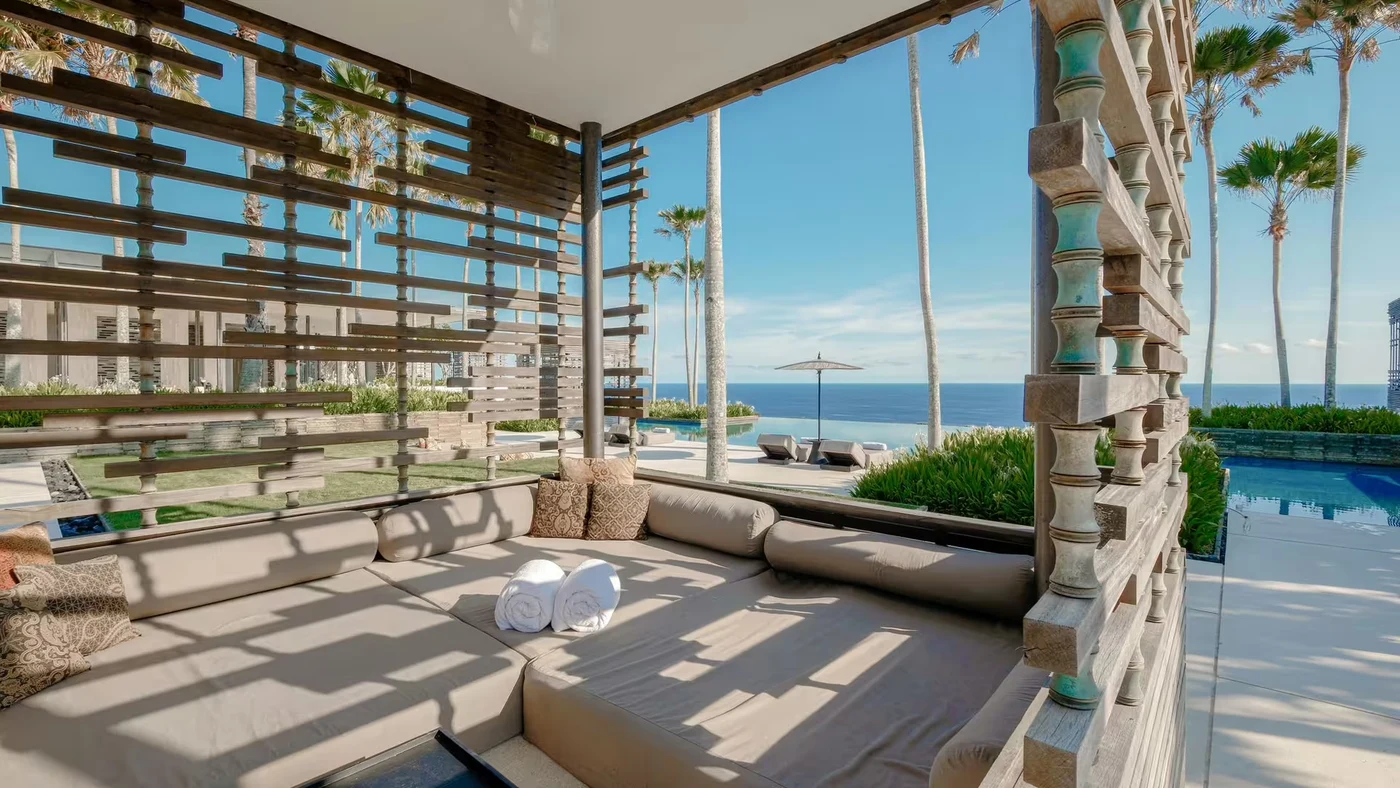
Dinner was at CIRE, and the room is spectacular, and at night with the lighting on it comes close to magical. I would still say that now. Then the grilled octopus arrived cold and tough, and that was the moment the illusion properly began coming apart, although I kept hoping anyway, because I had paid $850 and hope is what you do with that.
Walking back to the villa afterwards I noticed the bass. There is a beach club within earshot and the house music carries right across the site at night. The bed was fabulous. The thumping was not.
The best place on the property, and what else it is
To the right of the famous pool there is the Cliff Temple Terrace, and next to it a working local Hindu temple, and it is the part of this hotel I liked most. I went back several times.
It has an uninterrupted view down onto the surf, which comes in heavy and loud against that limestone, and with the temple beside it the whole thing feels authentic in a way almost nothing else here does. It is a green open zone that lets you breathe after all the styling next door, and you can stand in it in complete serenity and simply look at where you are.
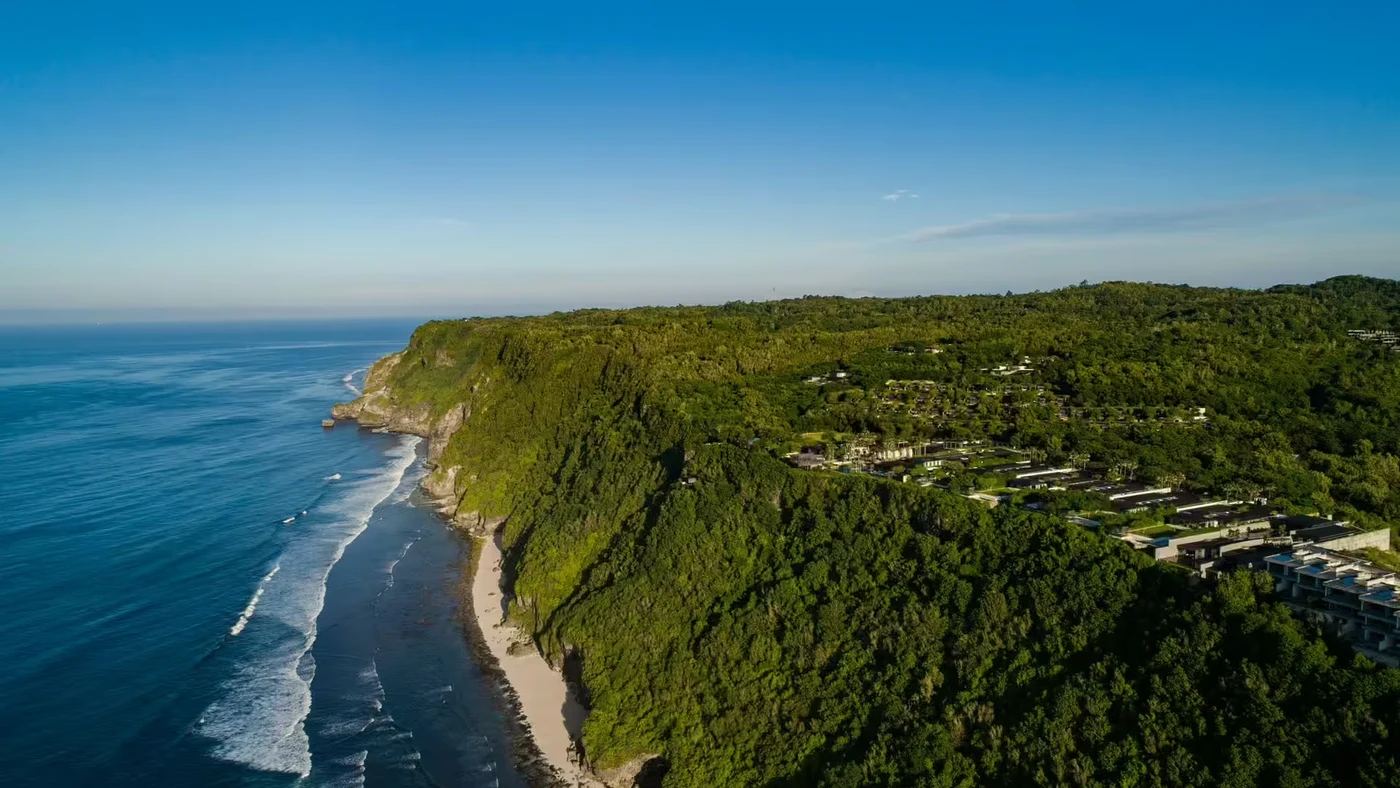
Which makes it the most ironic square metres on the property, because this is the commercial heart of the place. The weddings go here. The VIP parties, the events, the bookings with real money attached. The lawn is kept deliberately open so it can be built up when required, with the temple and the ocean as the selling points.
We did not have an event during our stay and I am glad, because I cannot imagine paying these rates and finding the best spot on the property fenced off for somebody else's party.
The rest of that morning went the way the rest of the stay went. Breakfast is à la carte and perfectly good, and not one person made any contact with us over it. Everybody friendly, nobody curious, nobody asking how the night had been or whether anything could be better. I messaged the spa on WhatsApp about massage availability and got an answer several hours later. The cocktails were barely worth ordering next to a view like that. And still, all day, no lounger.
The thing that stayed with me was watching who did get looked after. The people out on those sunbeds were having a lovely time of it, with drinks brought over and conversations struck up and somebody checking on them, while we could stand at the edge of the same terrace and feel like scenery. That is a genuinely strange sensation to have anywhere in Bali, where a three star hotel will give you warmth without being asked, because warmth here is not a service standard that somebody trains into the staff. It is closer to a national character trait, and you have to work quite hard to switch it off.
An explanation I am not certain of
I went looking afterwards for something that would account for all of it at once, and I found one thing, and I want to be careful about how much weight I put on it.
The hard part first, because it is published. This hotel does not sell a pool day pass. What it sells is lunch. Book the Sunday brunch at CIRE, currently somewhere around 1.88 million rupiah a head, and access to that famous infinity pool comes with it. The events lawn is on the hotel's own facilities list. So a good number of the people out on that deck are not staying here, and the restaurants are functioning partly as a way in.
The softer part is what I make of it. If a meal is also a ticket to the view, then the plate is not really the product, which would explain food that photographs beautifully and tastes of very little. If the lawn is worth more per evening than anything permanent you could build there, then keeping it open and green is a commercial decision as much as an aesthetic one. And if the staff are covering a viewing platform and an events business as well as 65 villas, then attention going to whoever is out on the deck is arithmetic rather than indifference.
I want to be clear that this is my inference and not something anyone told me. There are other explanations. It might simply be understaffing, or a kitchen going through a bad patch, or two unlucky days. But it is the only account I have been able to construct that covers the food, the deck, the lawn and the silence at breakfast at the same time, and I could not stop seeing it once I had.
The thing about coming once
There is something else underneath it, and this one is closer to a hunch. Almost nobody at Alila Villas Uluwatu is on their fifth visit. This is a once in a lifetime hotel, and people save for it, come once, photograph it thoroughly and look back on it for the rest of their lives. That is not a criticism of anybody, it is a completely reasonable way to spend money and the pictures really will be spectacular. But it does something to the incentives that I think is worth saying out loud.
A hotel that depends on you coming back has to be good in ways you cannot assess in advance. It has to get the sate right on a Tuesday, notice that you looked tired at breakfast, answer a WhatsApp in ten minutes rather than four hours. All of that is expensive, none of it photographs, and the only return on any of it is your second booking.
A hotel whose guests mostly come once has far less riding on any of that. It has the building, the cliff and the sunset, and it has photographs circulating endlessly and free, taken by guests and day visitors and everyone at somebody's wedding. I am not suggesting anybody sat down and decided to let the rest go. I am suggesting that nothing much pushes back when it slips.
Compare it with Soori, architecturally in the same league and arguably better, sitting an hour and a half from anywhere with nothing at all around it. Soori has no passing trade, no view economy and no events lawn to fall back on, so if you do not come back, and if you do not tell people, Soori has a real problem.
Which is why they import a particular milk from Java for a local cheesemaker to turn into burrata, and why the small invisible things there are done properly. That is not generosity, or not only generosity. It is a business that has correctly identified where its money comes from.
Or compare it with Alila Seminyak, which I love, and which costs about half as much. There is no myth on offer there and no grand narrative handed to you at check in, and because it promises nothing transcendent every single thing it does fits, and you leave happy. Uluwatu promises transcendence at the gate and then gives you a walled garden and a queue for a sunbed.
What WOHA built, and what has happened to it
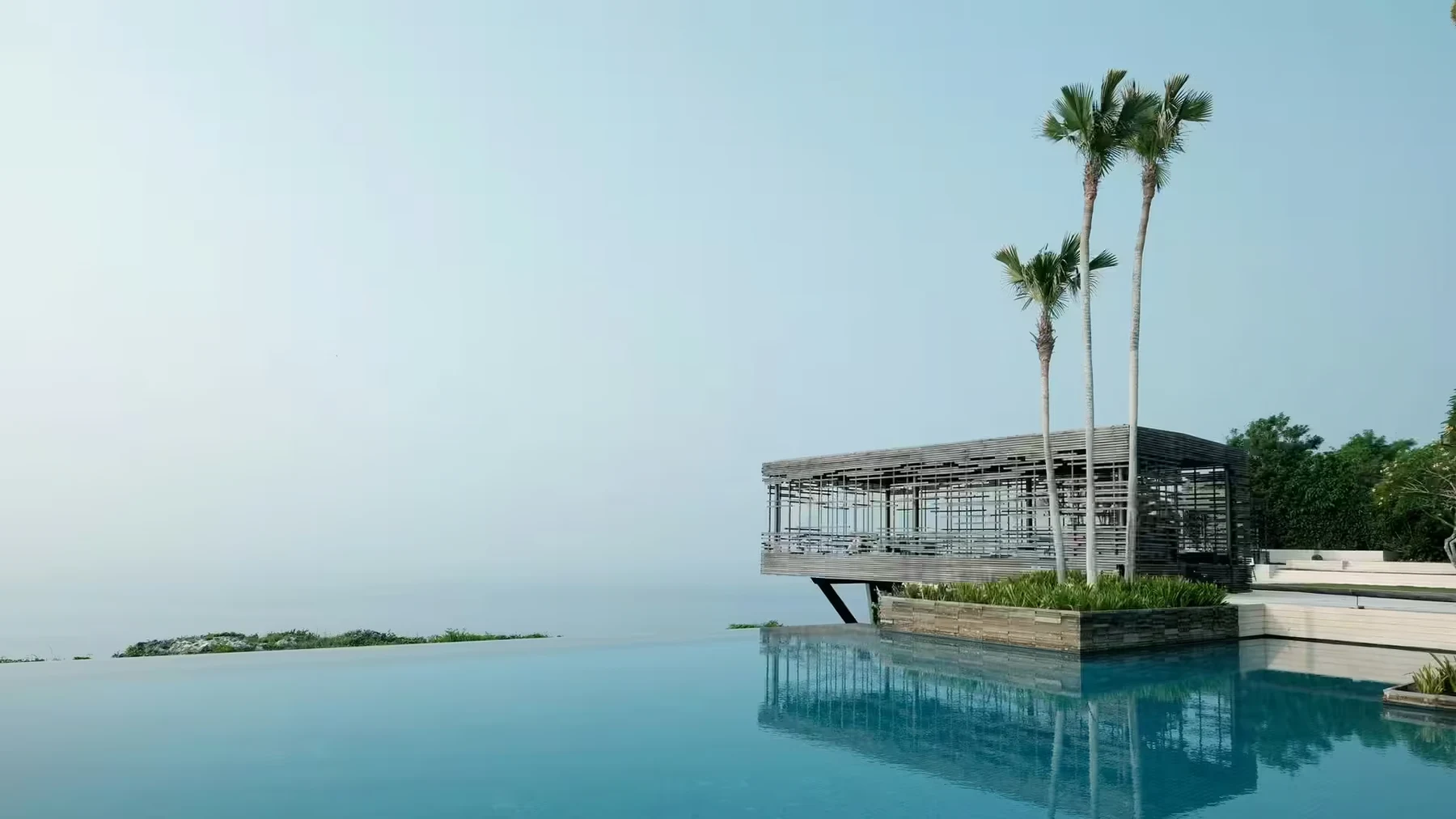
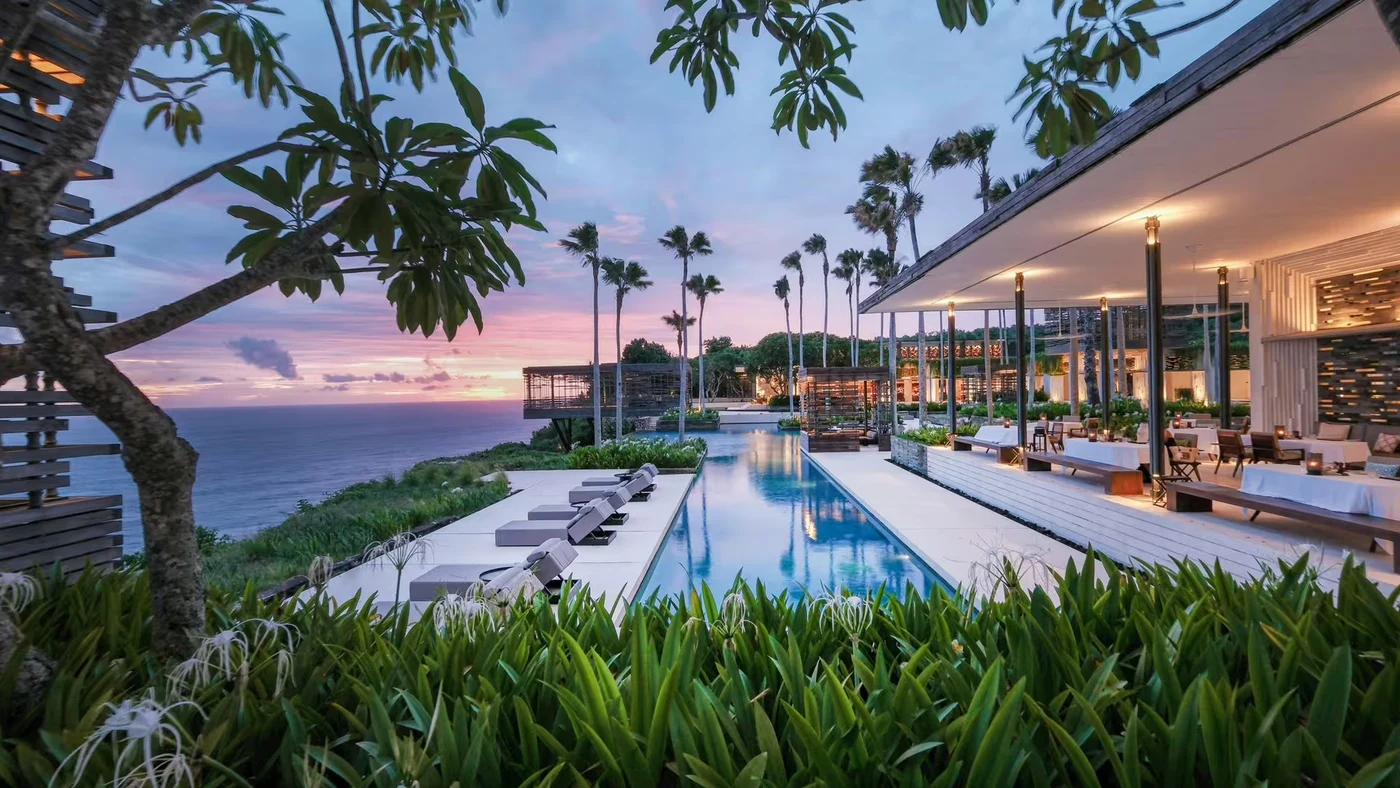
WOHA began drawing this in 2004 and it opened on the first of June 2009, and it is one of the two or three most significant buildings in Bali. Limestone quarried on site, recycled railway sleepers, ironwood and rattan, timber lattice cutting the walls into slivers until you can no longer say where the building stops. Fifty metres of infinity pool along the cliff edge and the slatted cabana cantilevered straight out over the drop. WOHA wrote at the time that the resort redefines luxury as the enjoyment of natural beauty and a sense of place rather than excessive consumption.
Read that sentence again and look at what the property has become, which is the most efficient photograph generating machine on the island, a building whose commercial logic runs almost entirely on people consuming an image of it. The argument has been turned inside out by its own success, and the building is so good that nobody has noticed it happening.
Alila was founded in 2001 and was always a management company that never owned these hotels, and in late 2018 Hyatt bought Two Roads Hospitality, Alila included, for just over four hundred million dollars. I cannot tell you from the outside whether that is connected to what I experienced, and I am wary of the easy version of that story. What I can tell you is that this hotel is being run as an asset rather than as a house, and that is precisely the difference between it and every property in Bali I keep going back to.
And then you cannot unsee anything
Once you are irritated you start looking properly, and this is not entirely fair, because you go over critical and notice things you would forgive without a second thought at half the price.
But you do notice them. Small things broken, paint gone, gardens honestly a bit scruffy next to architecture this disciplined, details let go inside the villa too. The pink cloud had gone, the novelty of the private pool had worn off, and so, which genuinely surprised me, had the view.
Dinner that night was The Warung again and I played it safe and ordered sate, which arrived dry with almost nothing in it. Both restaurants work extremely hard to make every plate look as though it were assembled for Instagram, the breakfast included, and taste is clearly the second priority. We checked out the following morning, early, a full day ahead of plan, because there was nothing left here to get.
What it comes down to
I notice, having written all this, that there is almost nothing in it. Three thousand words about one of the most celebrated hotels in Asia and I can barely give you a single thing that happened.
That is not a failure of memory, it is the finding. At Viceroy or Soori there is so much going on around you that the place writes itself into you without any effort, and I could tell you about the fishermen and the offerings and the gamelan carrying up from the village. Here almost nothing happened to us at all. The hotel is sterile in a way that leaves nothing to hold onto, and the only thing I came away with is the view.
Which is the strange part. When I think about this place now I do not think about the octopus or the sate or the four hour WhatsApp. I think about the pink cloud, that feeling of sitting a hundred metres up with the Indian Ocean going on forever in front of you, and I want to keep remembering it that way. When you have paid that much you do not want your memory of it to be a catalogue of irritations, so the memory quietly edits itself in the hotel's favour without asking you.
Which may be the whole answer. Whatever else is or is not going on here, this place produces a feeling that outlives everything that went wrong underneath it, in people who will only ever come once and have every reason to remember it kindly. It works. It worked on me, and I am the one writing the complaint.
At Soori, somebody rinsed the black sand out of my slippers while I was swimming and set them down on a folded towel facing the direction I would be walking, and never mentioned it to anyone. At Alila Villas Uluwatu, across two days and roughly seventeen hundred dollars, nobody asked how our evening had been.
Both of those things are tiny and both of them are the entire hotel.
The location is sublime and the hardware is among the best in Asia. They have absolutely everything lined up and at the moment they are letting a good deal of it sit there. I do not know whether that is a decision, a staffing problem or just the phase this property is in, and I would genuinely like to be wrong about all of it.
So go, for two nights, for the architecture, which is worth the trip entirely on its own. Walk to the temple terrace early, before anybody is setting up for anything. Take your photographs. You will probably remember the cloud and forget the rest, which is either the kindest thing about this hotel or the most convenient.
Alila Villas Uluwatu is available through The Banjar Collective.
GET IN TOUCH TO PLAN A STAY →