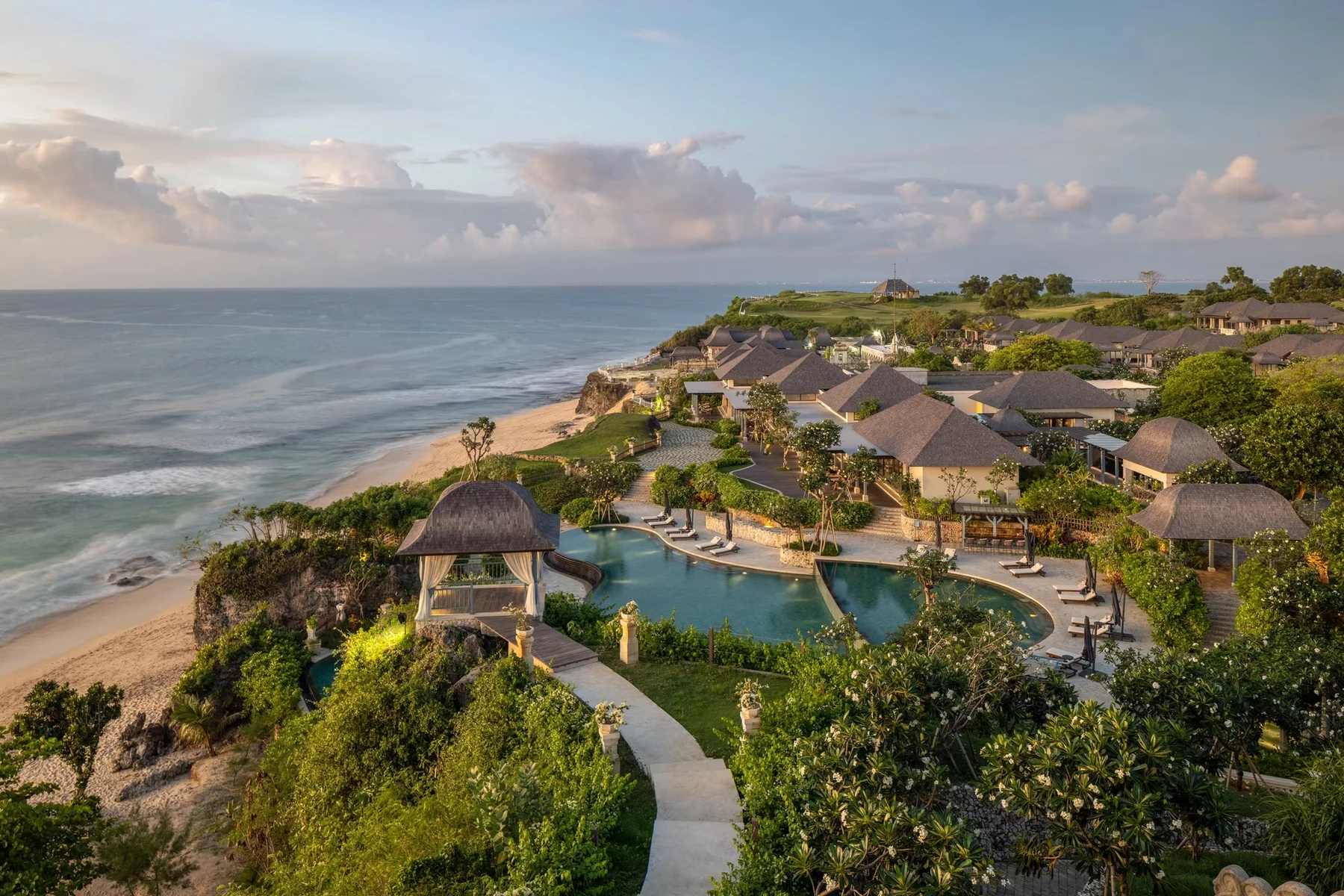
I did not want to book this hotel. Since it opened in July 2022 it has been kicked around online more thoroughly than anything else on the island, and the line was always the same. Jumeirah had dropped a gaudy palace onto Bali, a slab of Dubai where it did not belong, all white walls and gold and pomp. The beach was strewn with rubbish. The planting was bare and thin. And the thing that put me off most was not any single complaint but the overall impression, because in every video I watched the place looked joyless.
So I was not about to hand over serious money for the privilege of being disappointed. Then something odd happened. The reports slowly got better instead of worse. Traveller reviews improved year on year, which almost never happens, because hotels normally drift the other way as the paint ages and the opening staff move on. Eventually I booked, mostly out of curiosity, half expecting to write a piece about how the internet had been right all along.
The internet was not right. It was early, which is not the same thing, and working out why turned out to be the most interesting part of the whole stay.
The drive in, which is genuinely strange
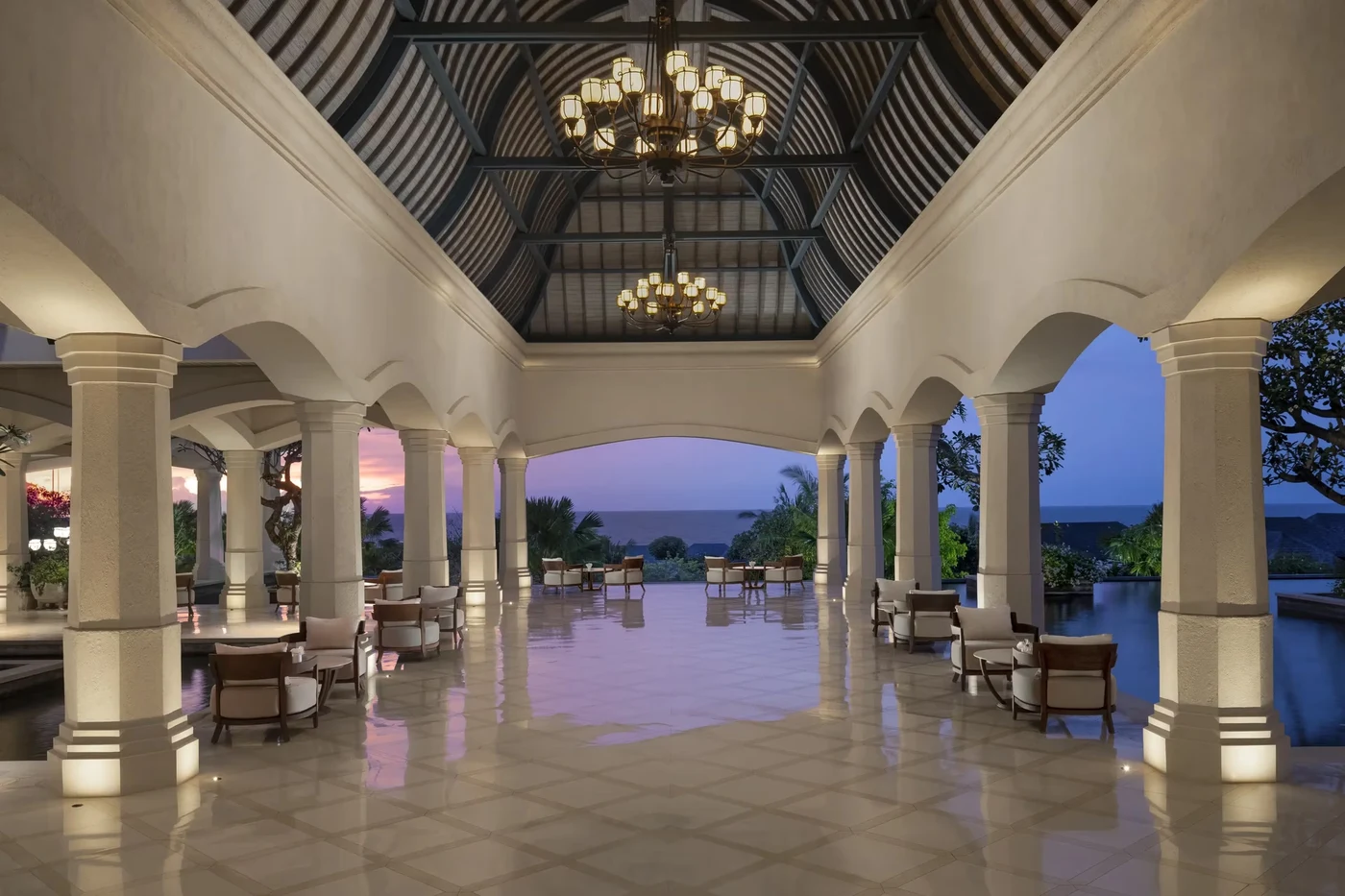
You approach through a landscape that looks like the end of something. For kilometres you pass concrete carcasses of half built hotels, roads vanishing under vegetation, construction sites abandoned mid sentence. Then a heavily guarded gate appears and thirty seconds later you are inside a Majapahit water palace with fountains running and staff using your name.
That contrast is not an accident and it has a history worth knowing. This whole area is Pecatu Indah, a four hundred hectare development launched in 1996 by PT Bali Pecatu Graha, a company belonging to Tommy Suharto, the former president's youngest son. Roads went in. A golf course was started. Then the Asian financial crisis hit in 1997 and the entire thing stopped dead. The site lay dormant for years, was picked up again after 2004, and was knocked back once more by the aftermath of the 2002 bombings.
Dreamland Beach, the beach directly below this hotel, got its name from precisely that. It was the land where the dream was supposed to arrive.
So what you drive through on the way in is a thirty year old plan that keeps almost coming true. The hotel itself is part of that pattern. Jumeirah signed to operate it in 2012 and it was announced for 2015. It opened in July 2022, seven years late.
Which, as introductions go, is an unusually apt one for a hotel that the internet then buried at birth for not being finished.
The Dubai story is wrong, and it is wrong in an interesting way
Let me deal with the accusation properly, because it gets repeated everywhere and it does not survive five minutes of checking.
Jumeirah Bali was developed and is owned by PT Asia Pasifik Properti, a subsidiary of the Rekso Group. Rekso is about as Indonesian as a company gets. It is the Sosrodjojo family business behind Teh Botol Sosro, the bottled tea you see in every warung on the island, and it also runs McDonald's in Indonesia. Jumeirah signed a management agreement in 2012 to operate the place. The brand is from Dubai. The money, the land and the decisions are not, which is more than you can say for a fair number of properties nobody accuses of being foreign.
The design is Javanese rather than Arabian, and this is where it gets genuinely clever. The resort is built as a Majapahit water palace. Majapahit was the Hindu Javanese empire that dominated this part of the world until it collapsed around 1500, at which point its priests, aristocracy and artists crossed the strait and settled in Bali. That migration is the reason Bali is Hindu today while Java is not. It is the origin story of Balinese court culture, its architecture, its dance and its temples.
So a Majapahit palace in Bali is not a foreign object dropped onto the island. It is Bali's own ancestry, staged rather literally. The layout references Trowulan, the imperial capital. The main pool takes its organic shape from Waduk Baureno, a legendary Majapahit reservoir. You enter through a Balinese gate flanked by Singa Ambara Raja guardians with winged Majapahit creatures overhead, and Balinese carvers cut the Ramayana reliefs and the floral patra work by hand.
The architecture came from Grounds Kent, who have been building in Indonesia for decades. The interiors are by Jean-Michel Gathy of Denniston, who has designed more Aman hotels than anybody alive. I went in expecting the whole thing to be too much, having seen plenty of overdone hotels in Bali. It is not. It reads as calm.
And then there is the garden, which is where the real story is.
The man who invented Bali
The loudest complaint about this hotel in 2022 was the planting. Thin, exposed, sad, a palace standing in a building site. That criticism was completely accurate and almost entirely meaningless, and to explain why I have to introduce you to the man who drew it.
The landscape at Jumeirah Bali was designed by Made Wijaya, who was appointed to the project back in 2012, alongside Grounds and Gathy, and who was born Michael White in Sydney in 1953. He sailed to Bali in 1973 as an architecture student on a break from his studies, and when the boat could not land in heavy seas he lost patience and jumped overboard to swim ashore in a rainstorm. He never went home. A Brahmin family in south Bali took him in, he converted to Hinduism and took the name Made Wijaya, and he made a living coaching tennis, teaching English and guiding visitors around the island, David Attenborough among them.
He fell into gardening almost by accident and then designed something in the region of six hundred of them. His first was the Bali Hyatt in Sanur in the early eighties, followed by the Oberoi, and after that a long list of the island's landmark hotels. Further afield he did gardens for David Bowie at Mustique and for Francis Ford Coppola. He wrote the standard books on Balinese architecture, ran a famously acid newspaper column called Stranger in Paradise, and was in his last years one of the loudest voices against overdevelopment on the island. He died in Sydney in August 2016.
An Australian magazine once called him the man who invented Bali, which is overblown but not by much. His 1980 garden for the Hyatt was so successful at capturing what people wanted the tropics to look like that it effectively wrote the visual language of the Balinese luxury resort. Lotus ponds, layered planting, frangipani over stone. Every lush hotel garden you have ever admired on this island is either his or descended from his.
Which brings us to the joke at the centre of this article. In 2022 people looked at a newly planted Made Wijaya garden and compared it, unfavourably, to Made Wijaya gardens that had been growing for forty years. Amandari opened in 1989. The Oberoi is older still. Those gardens are not lush because of some quality Jumeirah lacks. They are lush because they have had four decades of water and heat and someone tending them.
A tropical garden at year zero looks like sticks. That is not a design failure, it is horticulture. Wijaya's entire method was layering and patience, planting for what a place would become rather than for how it photographs on opening week. Reviewing his last major landscape in its first season is like judging a cake by tasting the flour.
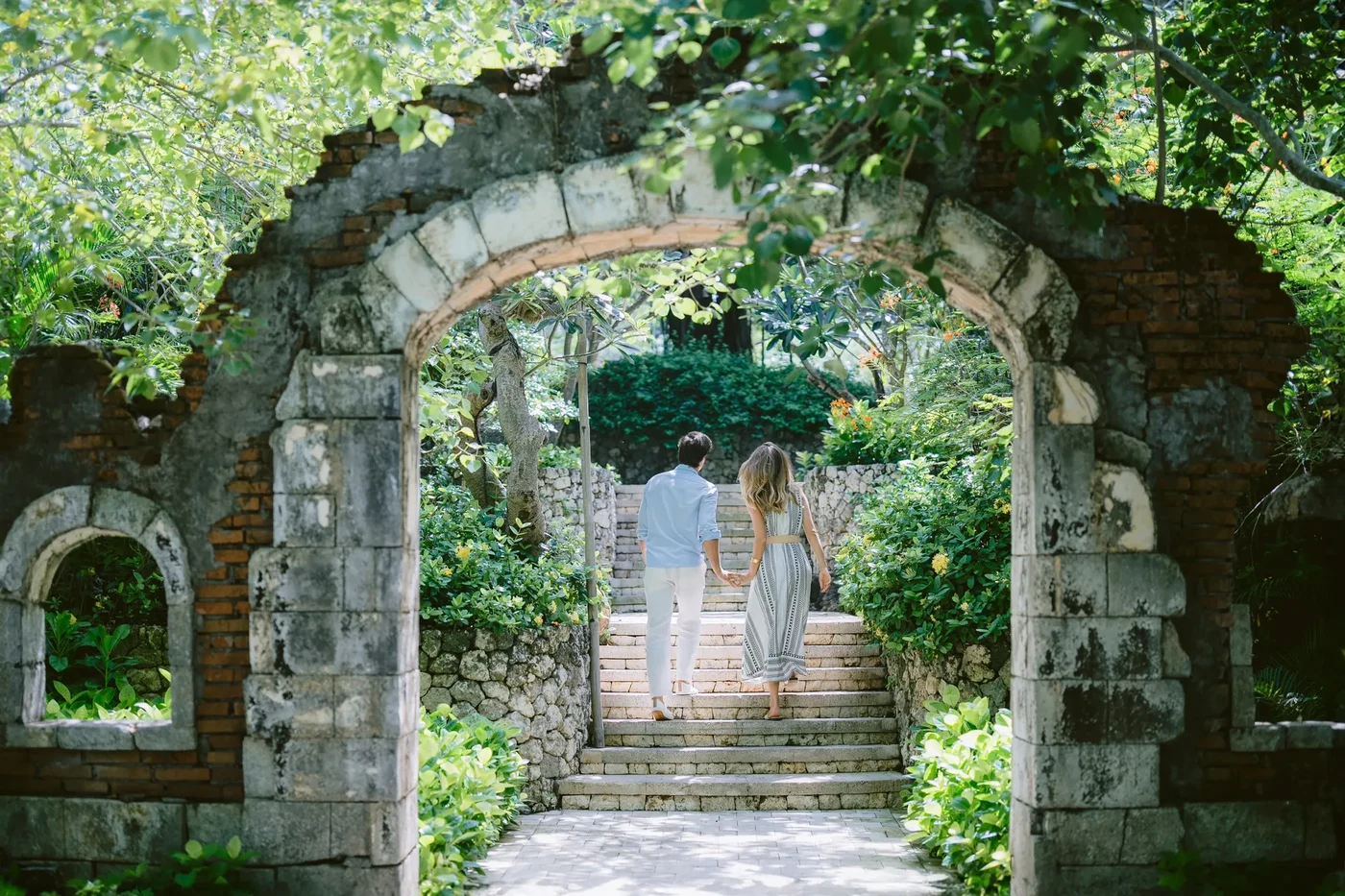
I arrived to greenery already thick enough to make the resort feel enclosed, and with the site's steep level changes doing the rest, the place has become its own bubble. Give it another five years and I think it will be talked about as one of the great gardens on the island, which would be a decent posthumous result for a man who died six years before it opened.
The flowers on the path
Here is the moment the hotel won me over completely, and it happened before breakfast.
I was walking the grounds early, which is what I always do in hotels. The gardeners were out collecting fallen frangipani, thousands of them, into big baskets. But they were not clearing them away. They were moving along the stone paths and scattering the flowers by hand into flowing patterns and spirals that followed the curves of the walkways.
So when you leave your villa in the morning and walk down to breakfast, you are walking over a fresh, scented trail of flowers, and the cool white palace walls stop reading as cool white palace walls and start reading as a living tropical palace instead.
Nothing requires anybody to do that. No brand standard has a line item for it and no head office in Dubai thought of it. It is the kind of thing that only appears once the people working somewhere have decided the place belongs to them, which is precisely the quality that could not possibly have existed here in 2022, and precisely the quality that no amount of money can install on opening day.
The villa, which is the best value in Bali right now
We had a Garden Villa and it was the biggest surprise of the stay.
The villas here start at around 210 square metres and work as their own walled compound. A private pool. An outdoor living area with a pendopo, the open Javanese pavilion, so you can sit outside in shade all day. An outdoor shower. Planting pushed right up against the walls, so what you see from inside is green rather than masonry. Gathy's interiors run an Indonesian and Dutch colonial line that sounds like it should be far too much and simply is not.
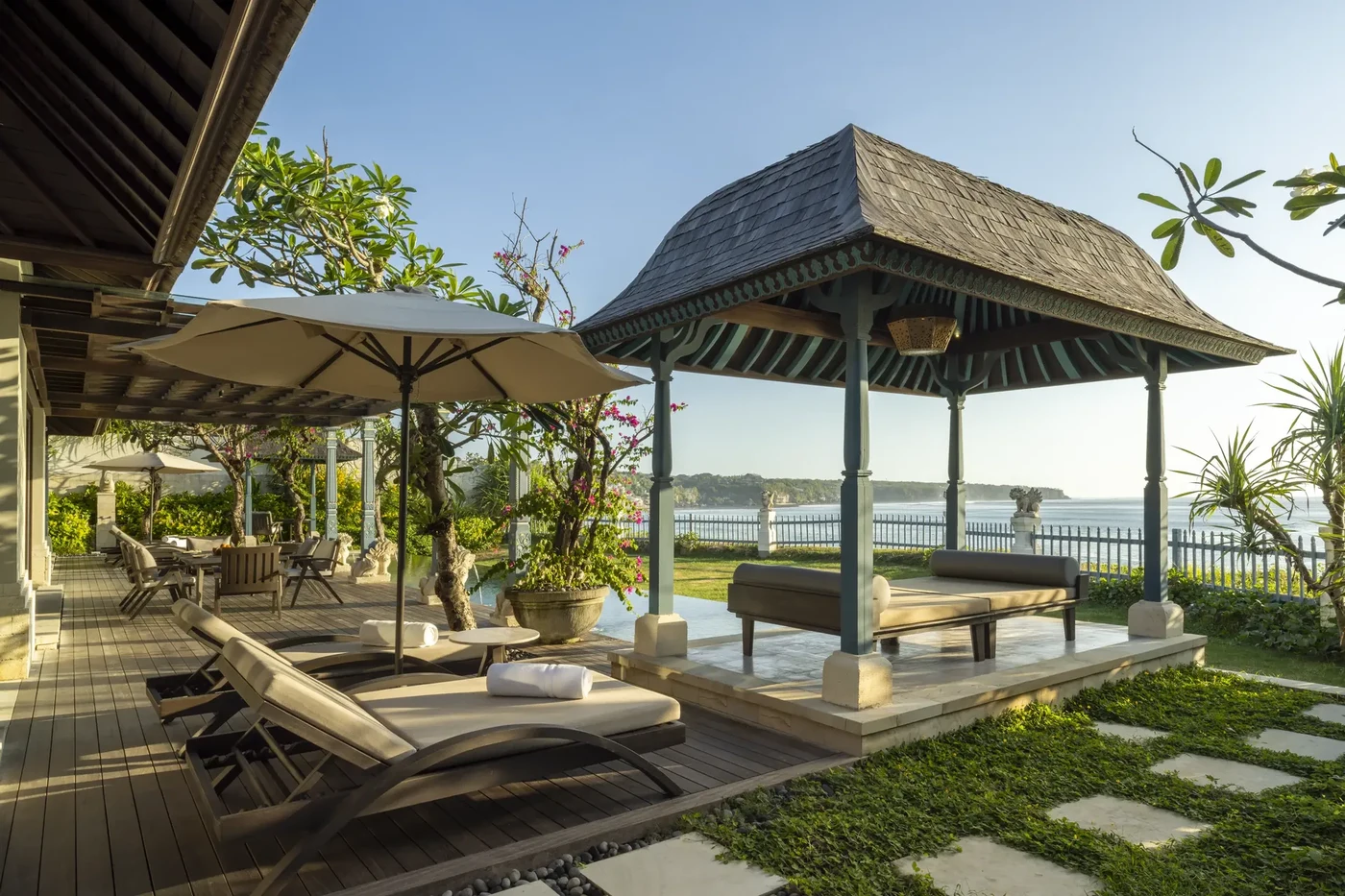
Ours had no ocean view and I did not care in the slightest, because the vegetation around it was the whole point. We spent hours in there doing very little.
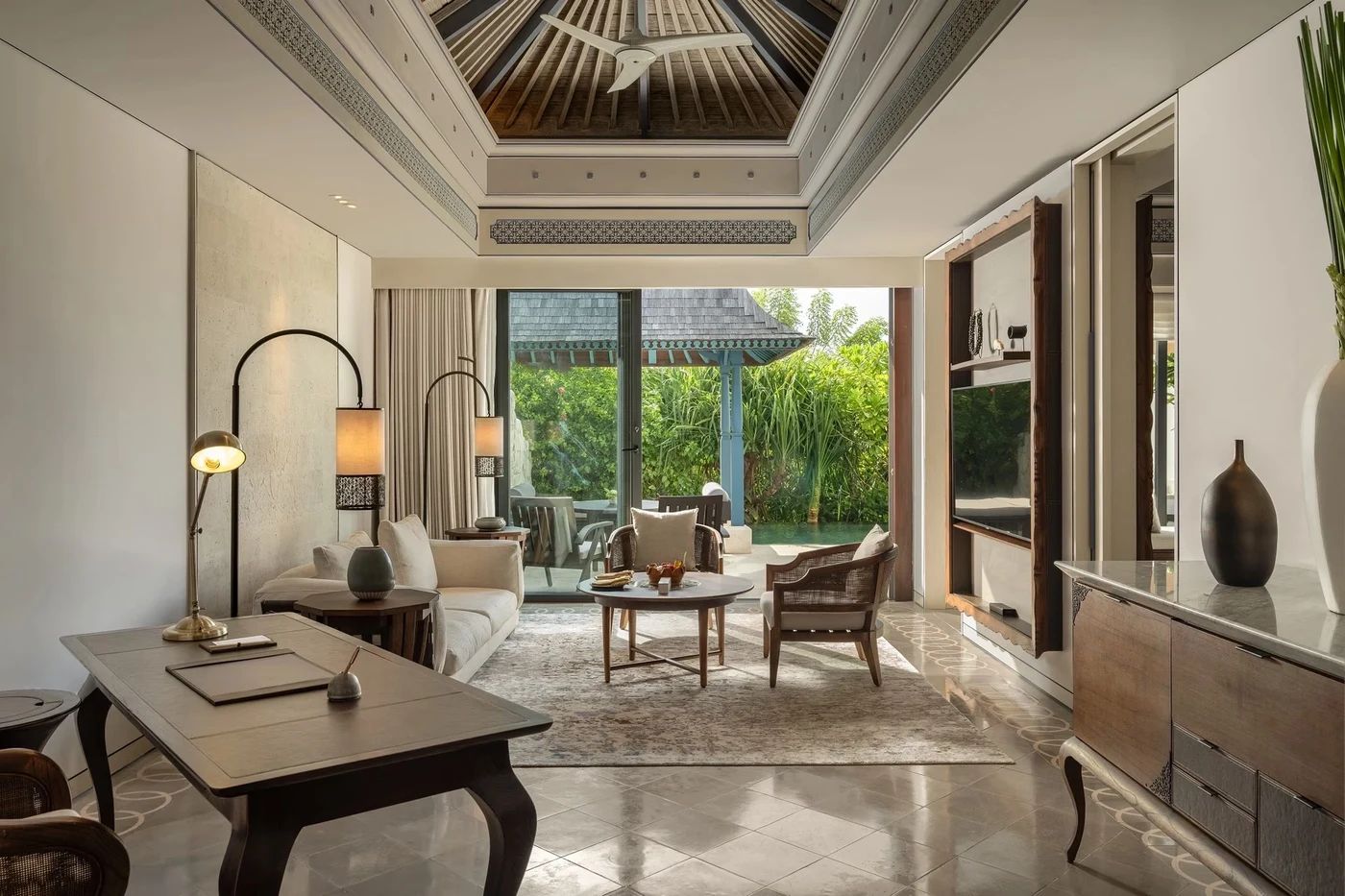
Now the number that matters. We paid around €550 a night including benefits. That villa sits comfortably in the same conversation as the best we have stayed in on this island, alongside Raffles, Alila Villas Uluwatu and Soori, every one of which costs considerably more. For quality of villa per euro I do not currently know of anything better in Bali, and remarkably few people seem to be talking about it.
I should also mention the housekeeping. However many times we came back with sandy feet, the villa was somehow always sand free. I never once saw it happen. I have concluded there are elves.
The pools, the beach, and the crabs
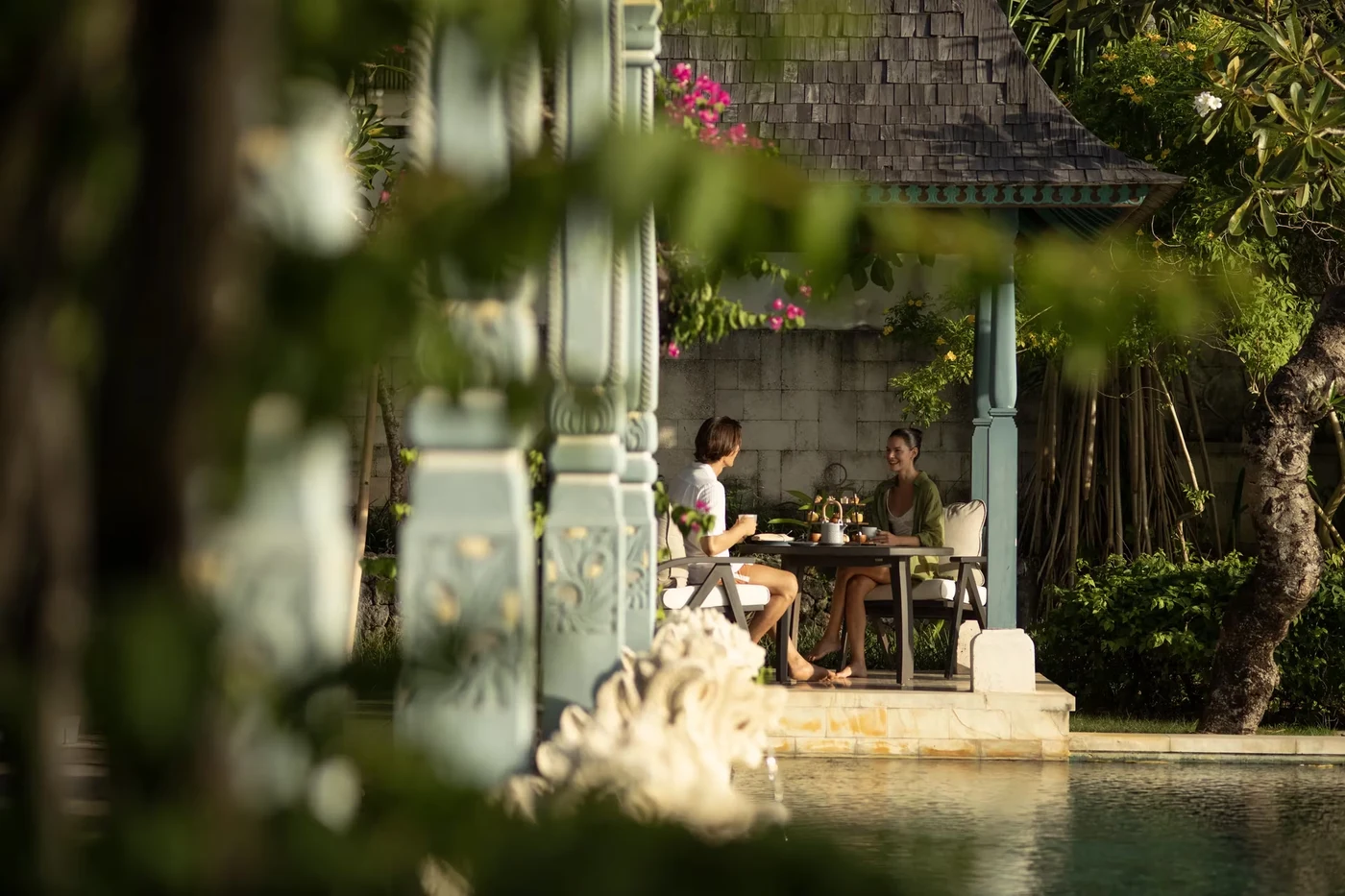
The pools are beautifully done, sit properly into the landscape rather than on top of it, and look out over the water. We spent most of our time at them. They have a different feeling from most Bali hotel pools, quieter and more contained, and there was always somewhere to sit.
The beach was the other thing I had been warned about, and it bore no resemblance to the footage that put me off. Clean sand, blue water, and a good easy atmosphere generated mostly by the surfers, who have been coming to Dreamland far longer than any hotel has been here. You can lounge, swim, and watch people who are much better at this than you are.
One afternoon a lifeguard took us down to the rocks directly under the hotel. He was on his break. He showed my daughter how to find the small cliff crabs and the starfish in the rock pools and how to catch them the traditional Balinese way, which involves not hurting them, and then putting them back. She was completely delighted.
She now wants to go crab hunting everywhere we travel. Some man on his lunch break has permanently altered our holidays and he will never know it.
For a few days our entire world was the villa, the main pool and that stretch of sand, and it was a good world. It also felt genuinely fresh, because this is not where everybody else in Bali is staying. One warning though. You are a long way from everything up here, and this is a poor base for exploring the island. Come to stop.
Why hotels get judged at the worst possible moment
There is a bigger point in all of this and it is not really about Jumeirah.
A hotel is at its least impressive in its first year and gets almost all of its attention then. The opening is the news event. That is when the press trips run, when the videos get made, when the algorithm rewards the footage, and when everybody who cares about hotels is looking. It is also the precise moment when the garden is sticks, the kitchen has not found its rhythm, the staff have not worked together long enough to be good and nobody yet feels any ownership of the place.
Then the attention moves on, and the hotel spends the next five years quietly becoming what it was designed to be, with nobody filming.
For a property whose whole design premise is a water palace embedded in a mature tropical landscape, that timing was close to fatal. The reputation formed in year one and the internet does not revisit. Which is exactly the gap a site like this one exists to fill, and the reason I am glad I ignored my own instincts and booked.
The kitchen has not worked out what this hotel is
The food is where the becoming is most obvious, and it is more interesting than a simple hit and miss verdict.
Akasa produced the single best thing we ate, a truffle wagyu tenderloin. Two separate guests, independently, told me I had to order it, which is not something that happens often. They were right, and it was expensive, and it was worth it. But Akasa would not be out of place in New York or Hong Kong. It is a thoroughly cosmopolitan restaurant that happens to be standing on a cliff in Pecatu.
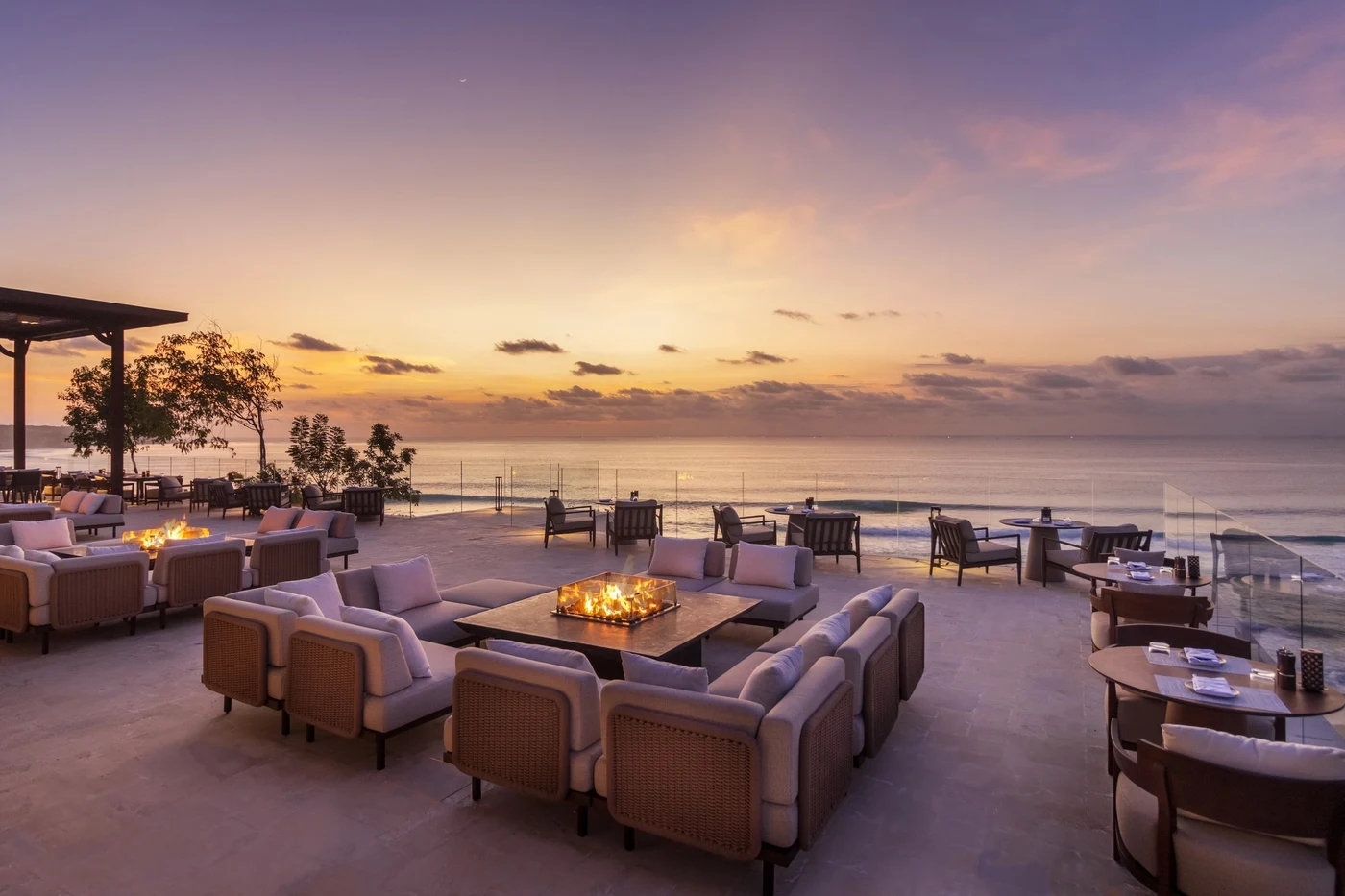
Segaran has the same quality and a wider problem. Sushi, pizza, Indonesian, all on one menu. It is a restaurant without a centre of gravity, and you can taste the lack of focus.
Both of them are clearly built for an international audience rather than a Balinese one. And here is the thing I kept coming back to. The Indonesian dishes were consistently more authentic and simply better than the international ones, which tasted standardised in the way hotel food does everywhere on earth. Yet the Indonesian food is nowhere near the top of the bill. They do not seem willing to put it on the pedestal, presumably because they have judged that their guests want something else.
Which is a strange position for this hotel in particular to be in. The building is a Majapahit water palace. The gate has Singa Ambara Raja guardians on it. The walls carry hand cut Ramayana reliefs. Every stone of the architecture commits absolutely to Javanese and Balinese heritage, and then the menu loses its nerve about exactly the same heritage.
The whole food and beverage operation feels like it is still trying concepts on. That is not a disaster and it is fixable, and my strong suspicion is that the fix involves backing the thing they are already best at.
Service has a similar shape, though less of a puzzle. Some staff were outstanding, animated and funny and a genuine pleasure to talk to, and then you would meet somebody noticeably less sharp. It needs finetuning rather than fixing.
None of which surprises me. Kitchens and service cultures take years to settle, in exactly the way gardens do, which is the whole argument of this piece.
So should you go
Yes, and sooner rather than later, because these rates will not hold.
Jumeirah Bali was written off before it had any chance to grow into itself, by people looking at a young garden, a half finished neighbourhood and a beach on a bad day. Three years on the planting has filled in, the beach is lovely, the villas are the best value in Bali at this level, and the place has clearly developed a character of its own. The kitchen is still deciding what it wants to be and the service is still settling, and both of those will come.
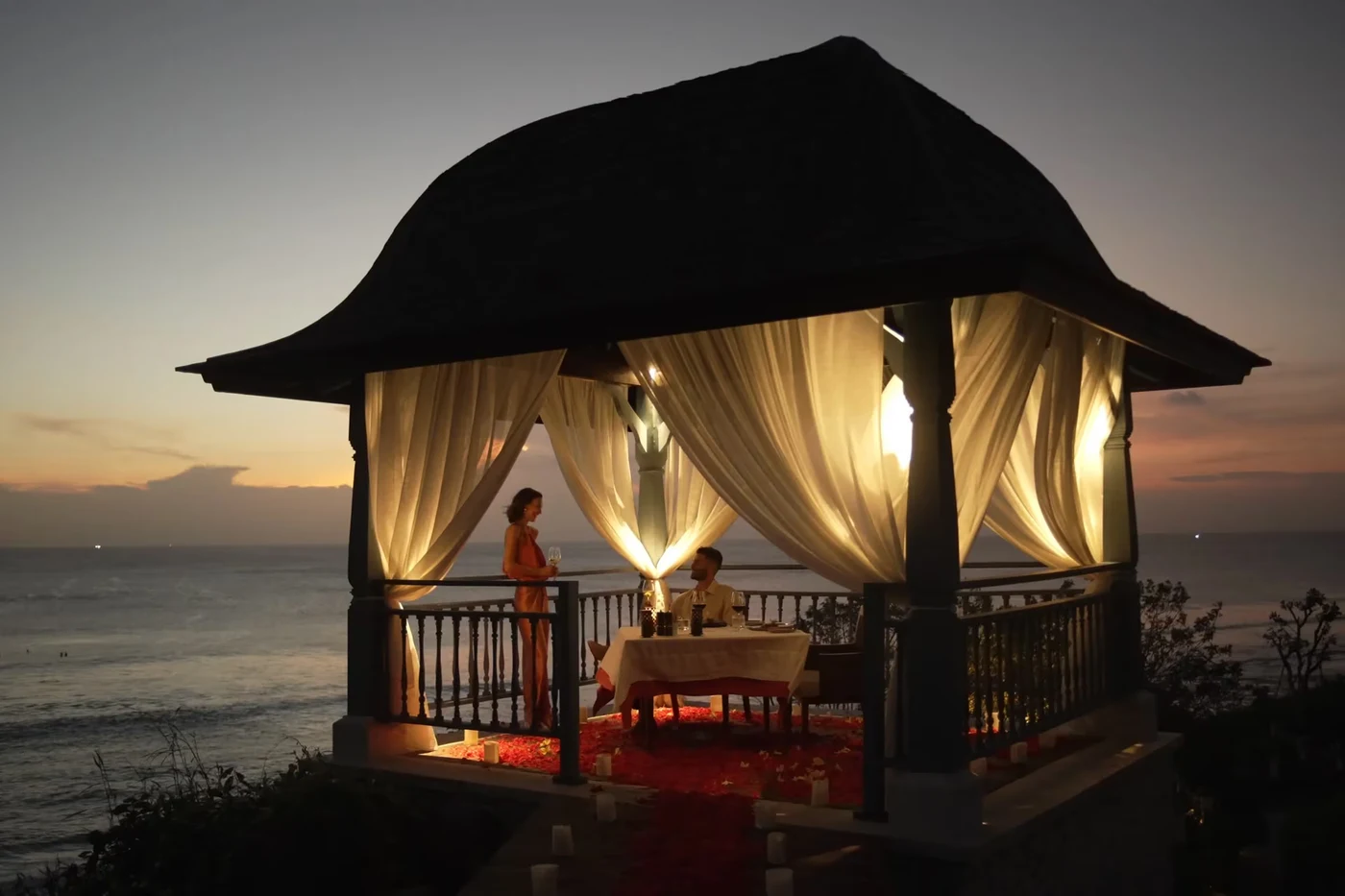
The palace is trying to feel legendary and it is not there yet. But for the first time I can see the version of this hotel where it gets there, and at these prices you get to enjoy the becoming rather than pay for the arrival.
Somewhere in Sydney in 2016 a man died six years before his last big garden opened, and then had it panned by people who never knew he drew it. It is filling in beautifully now. Go and walk through it early, while the flowers are still on the path.
Jumeirah Bali is available through The Banjar Collective.
GET IN TOUCH TO PLAN A STAY →