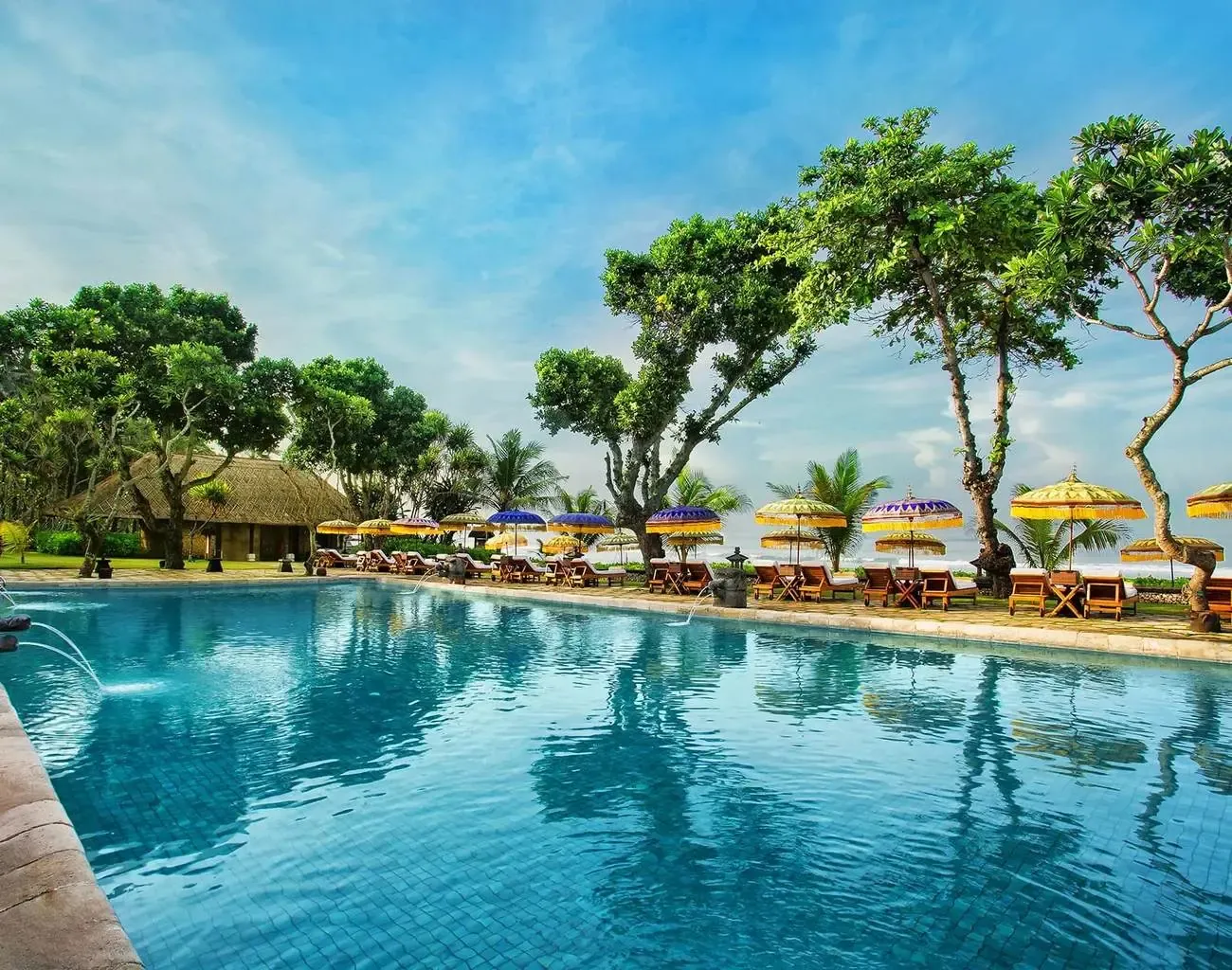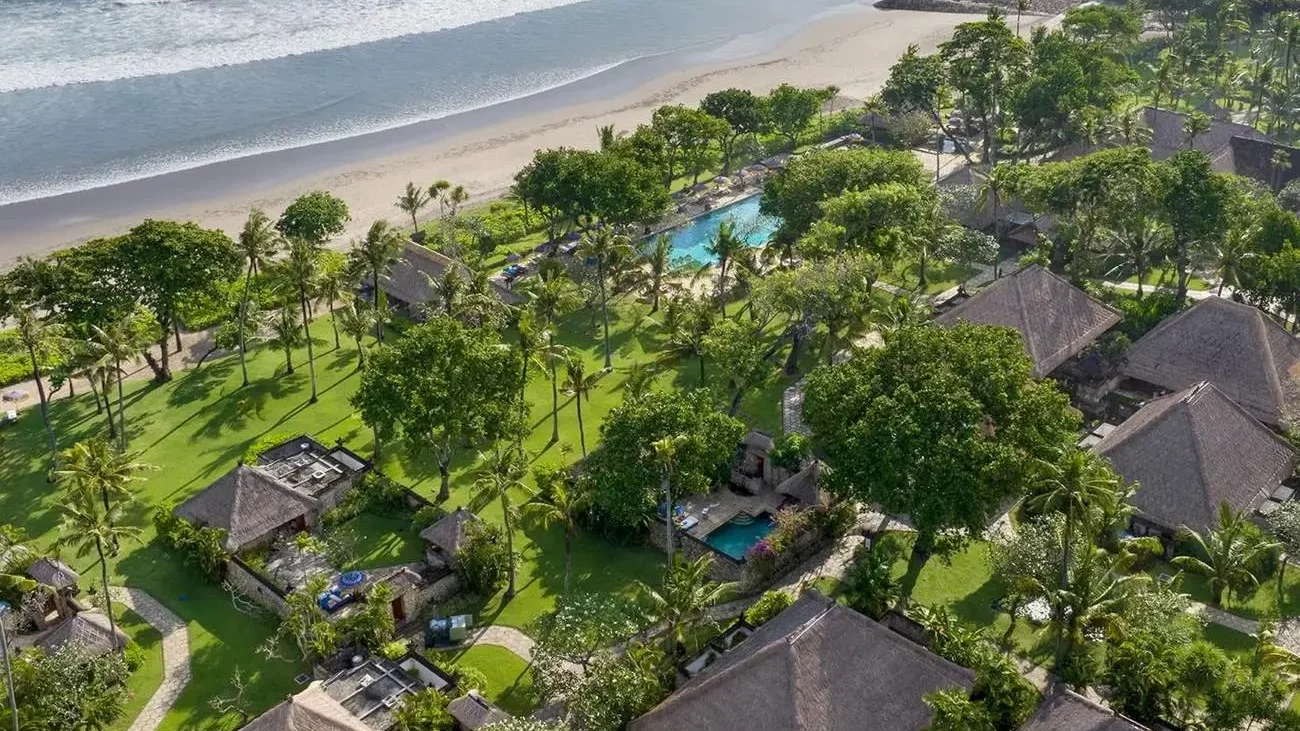
The Oberoi was the first hotel I ever stayed at in Bali, and it's also the reason I fell for the place at all. Some memories fade the way most memories do. This one hasn't. I can still draw the property from memory, room by room, path by path. I remember exactly what the Indian curries smelled like, because it's an Oberoi, and Oberoi never lets you forget where the brand began. I remember the particular character of nearly every staff member I met. I remember the sound of proper, breaking waves on the beach, louder and rougher than most of Bali's coastline offers. I could keep going.
I now look at this hotel with two competing thoughts in my head at once, and I don't think I've ever fully reconciled them.
A private island in a sea of mass tourism
Outside the walls, Seminyak has become almost unrecognisable from what it once was. The traffic is genuinely bizarre. The beach clubs throw sound in every direction, whether you asked for it or not. It's the version of Bali I find hardest to love.
Step inside The Oberoi, and none of it exists anymore. The property is large enough, roughly fifteen acres, that it feels less like a hotel and more like a private park stitched into one of the most beautiful stretches of coastline on the island. Whether your day is loud or completely silent is entirely up to you, not the neighbourhood. I don't know another resort in the world built on quite this exact contradiction, paradise on one side of a wall, its opposite on the other, both fully real at the same time.
A club that predates almost everything
Most people assume Amandari was Bali's first true luxury hotel. It wasn't, not by a long way. The land The Oberoi now sits on started life around 1971 as a private residence designed by the architect Peter Muller, who years later would go on to design Amandari itself. The owners asked Muller to add a handful of guest villas for friends, people like Princess Grace and Salvador Dalí, and what began as a house quietly grew into an exclusive private club known as Kayu Aya. Mick Jagger stayed here in that era too. Before mass tourism had properly arrived on the island, some of the most famous people alive were already flying in privately to disappear behind Kayu Aya's stone walls, the same instinct, in a way, that still draws people through these gates today.
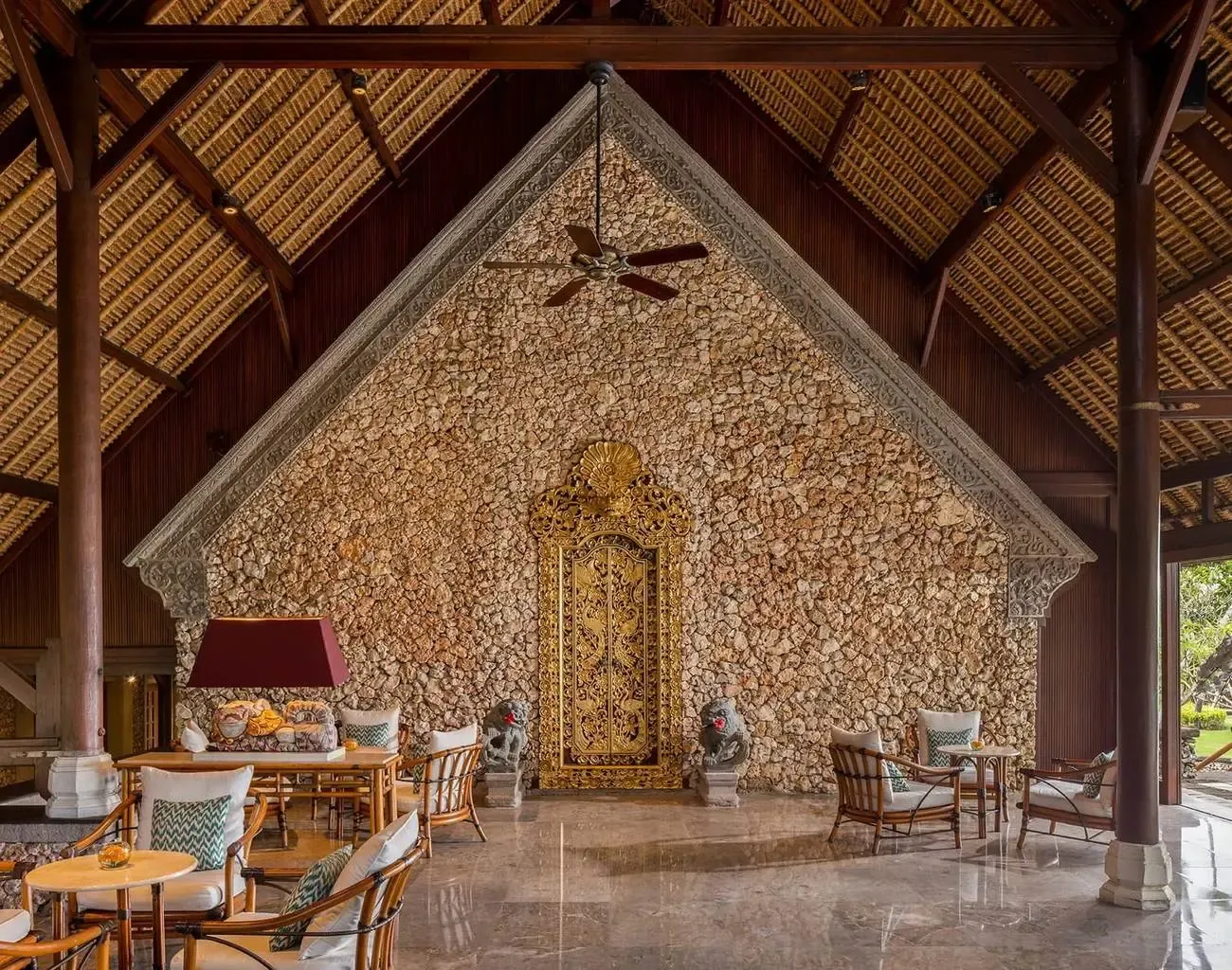
The club's own money ran out by 1974, and a long ownership dispute followed in the Jakarta courts. It wasn't until 1978, after the case was finally settled, that Oberoi Hotels took over the property and opened it as Hotel Bali Oberoi. Even counting only from that year, it still predates Amandari by eleven years. Counting from Kayu Aya's founding, closer to eighteen. Seminyak outside these walls has changed almost beyond recognition since then. Inside them, remarkably, the original instinct never really left.
What made it genuinely radical wasn't just the timing. Kayu Aya rejected the standard hotel room entirely in favour of freestanding villas with thatched roofs, built to honour traditional Balinese architecture rather than override it. David Bowie clearly felt something similar about the island. Decades later he built his own Balinese-inspired retreat on the private Caribbean island of Mustique, a house he described as pure fantasy, filled with Javanese doors and Indonesian materials shipped halfway around the world. He never seemed to need Bali itself. He'd already found a way to bring it home, his own version of disappearing behind a wall.
The man who refuses to modernise
John Halpin has been the General Manager here since 2012, and he might be the person on this island I respect most in the role. Before Bali, he spent years overseeing Como Shambhala Estate and Como Uma Ubud for COMO, two hotels I've already written about on this Journal, which makes his path here feel almost inevitable in hindsight.
What Halpin has done at The Oberoi, more than anything, is refuse to change it. In an era where most resorts chase modernisation on a constant cycle, he runs something closer to a museum, protecting the DNA of the place rather than updating it. It's a quietly stubborn kind of leadership, and it's exactly why the wall between here and Seminyak has held as well as it has. The world outside gets louder every year. Under Halpin, the world inside has simply refused to notice.
What the garden actually looks like
I'll try not to overwrite this, because the details speak for themselves. The grounds are an old, dense jungle garden that opens directly onto a wild ocean. Frangipani and banyan trees, decades old, are everywhere, along with more flowers than I can name. The branches hang low enough over the paths that they form natural tunnels, and the fallen frangipani blossoms carpet the ground below, releasing a heavy, sweet scent across the whole property. With the sea breeze constantly moving through it, this is close to my ideal climate on the island, cooler and drier than the jungle interior, which always runs more humid. If you're just arriving in Bali, I'd genuinely recommend starting here. It's the easiest place on the island to acclimatise, and the gentlest possible introduction to what's on the other side of that wall.
What stays with me most isn't any single moment. It's a pattern, repeated in dozens of small exchanges: ask a staff member here anything, and you can feel how proud they are to answer. Not performed hospitality. Something closer to ownership.
My own rhythm here
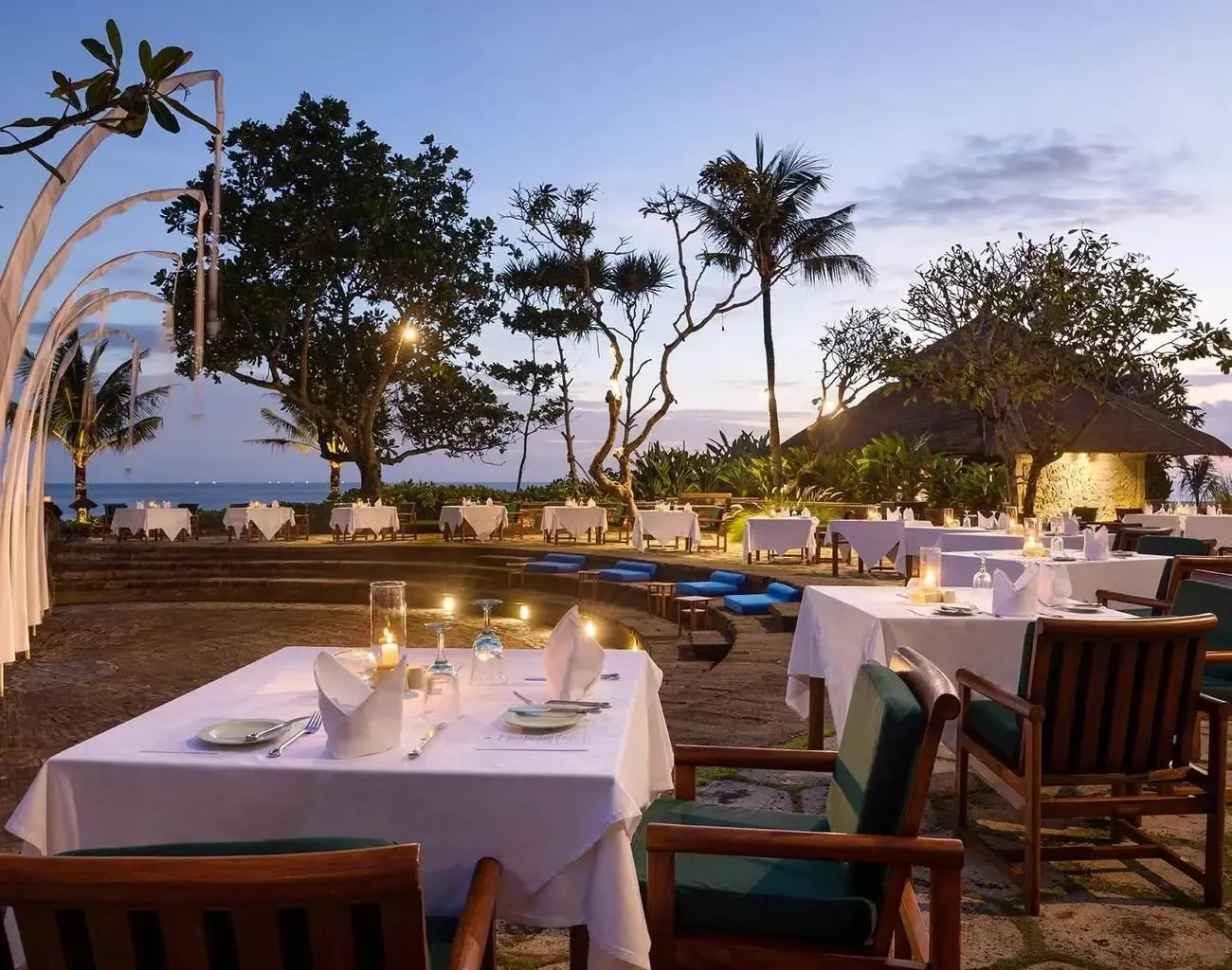
The Oberoi is paradise. What surrounds it, these days, no longer is. But once you accept that trade and plan around it, there's still an enormous amount to pull from a stay here. I spend most of my time by the pool or in the garden, on a daybed facing the beach. I take long walks along the sand. I have lunch at La Lucciola nearly every single day I'm here. Late afternoon, I sit for tea at the amphitheatre, where local performers play traditional music or dance as the light starts to change. Just before sunset, this becomes the most beautiful stretch of the entire island, and nowhere else on Bali feels quite this dreamlike. It's painful to see what Seminyak around it has become. It's a relief that this particular pocket of it still exists exactly as it was.
Rooms, spa, and a very solid kitchen
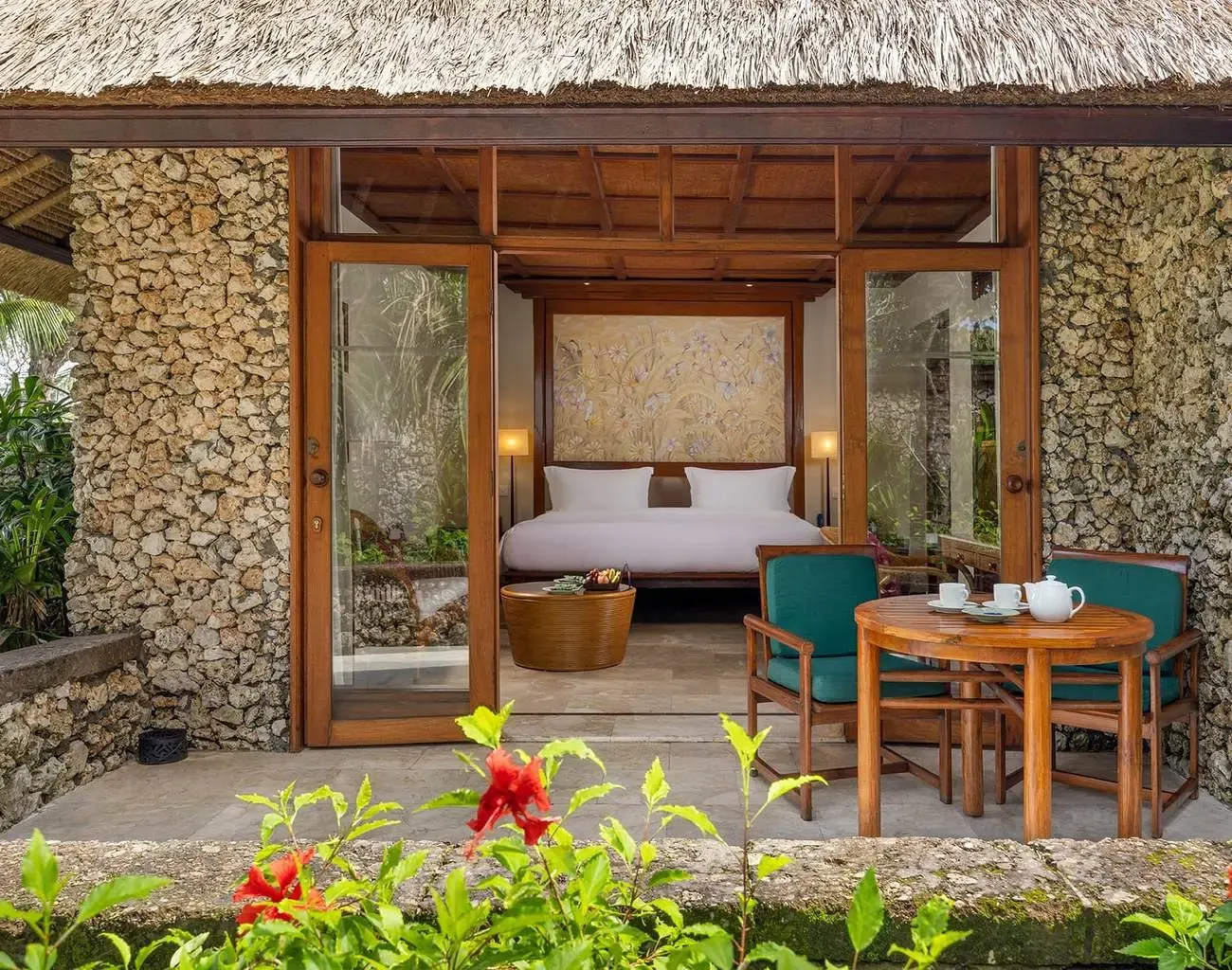
The accommodations show their age next to Bali's newer hotels, but the bed and linens are phenomenal, and the cleanliness borders on absurd, the kind of quiet, uncompromising standard that outlasts trends rather than chasing them. A number of villas with private pools are scattered through the grounds, and rather than feeling separate from the gardens, they add colour to them. The spa is excellent too. I'm admittedly a creature of habit here, always the same massage, never brave enough to try anything else. Given Oberoi's Indian roots, several techniques woven into the treatments trace back to India, and whatever they're doing works. It's among the best massages on the island.

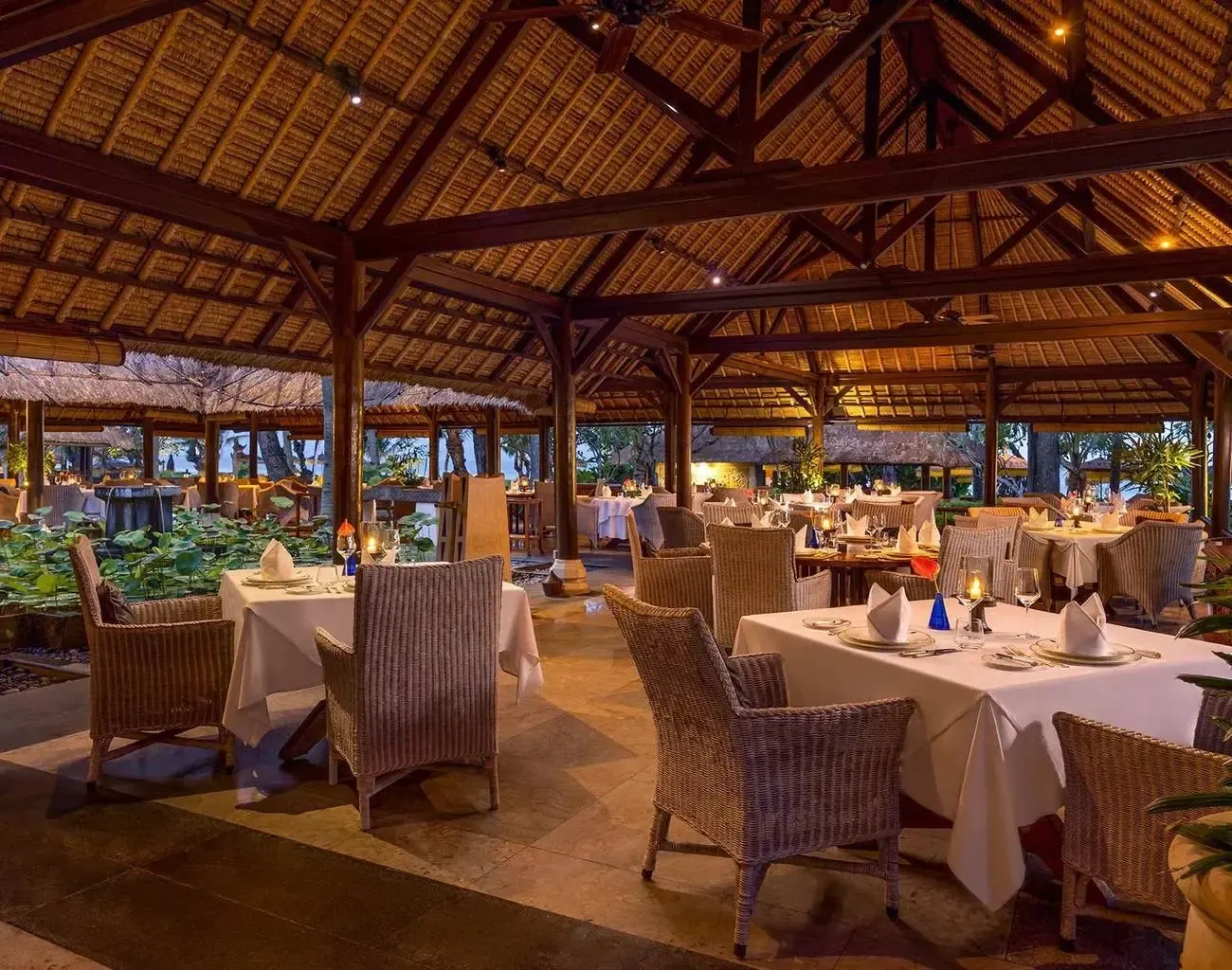
On food, I can be brief. It's consistently solid, and the Indonesian and Indian kitchens in particular stand out. If you want to try genuinely authentic Indian cooking in Bali, this is one of the better places to do it. The architecture, as everything above probably already suggests, is thoroughly Balinese, designed by the same Peter Muller who later built Amandari. It's hard to imagine anything on this island being more architecturally authentic than this, or more insulated from everything that's happened to the neighbourhood since.
The guests who never really leave
One more thing worth mentioning: I haven't spoken to as many repeat guests anywhere else in Bali as I have here. Ten years, twenty, forty, it barely raises an eyebrow when someone tells you. Just as often, I've met young travellers who've already become fiercely loyal returners themselves. The guests here know exactly what they're getting, and just as importantly, what they're not, none of the ultra-luxury spectacle found elsewhere on the island, and they seem entirely at peace with that trade. You won't find lost, glossy tourists wandering the grounds by accident. That absence shapes the atmosphere as much as anything else here. Whatever Seminyak becomes next, I suspect the people who keep coming back for forty years will still be finding exactly what they came for, on the right side of the wall.
The Oberoi Bali is available through The Banjar Collective.
GET IN TOUCH TO PLAN A STAY →