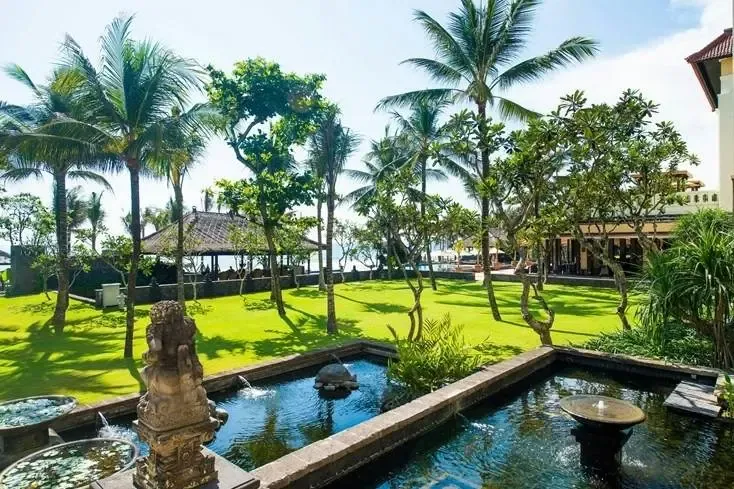
Walk back from the beach here with sand on your feet, and someone is already waiting at the entrance, a traditional wooden watering can in hand, a soft towel over one arm. No word needed. They rinse the sand away before you're anywhere near the marble. I've stayed at plenty of hotels with elaborate service. This is the only one where I've had my feet washed like a small ceremony, every single time, without ever asking for it once.
Ten, twenty years ago, I was an Aman junkie, from well before the brand became the status symbol it is today. Most of that old magic is gone now. A few places still carry it. Tanah Gajah is one. Nowhere do I feel it as strongly as I do here, and there's a reason for that beyond nostalgia, which I'll get to. Fair warning first, though: this is going to be a detail-heavy one. I'd normally trim half of what follows to keep things breezy. I'm not going to, because The Legian genuinely doesn't make sense if you skip the details. It's a hotel built by people who couldn't stop themselves, and I've come to think you can't actually understand it without seeing how far that went.
Adrian Zecha didn't only found Aman. In 1992, he founded GHM too, and this became one of that company's defining early hotels. It isn't a resort that merely echoes the old philosophy. It was built by the same hand, on a completely different idea.
Built to be swallowed by the sea, not to escape it
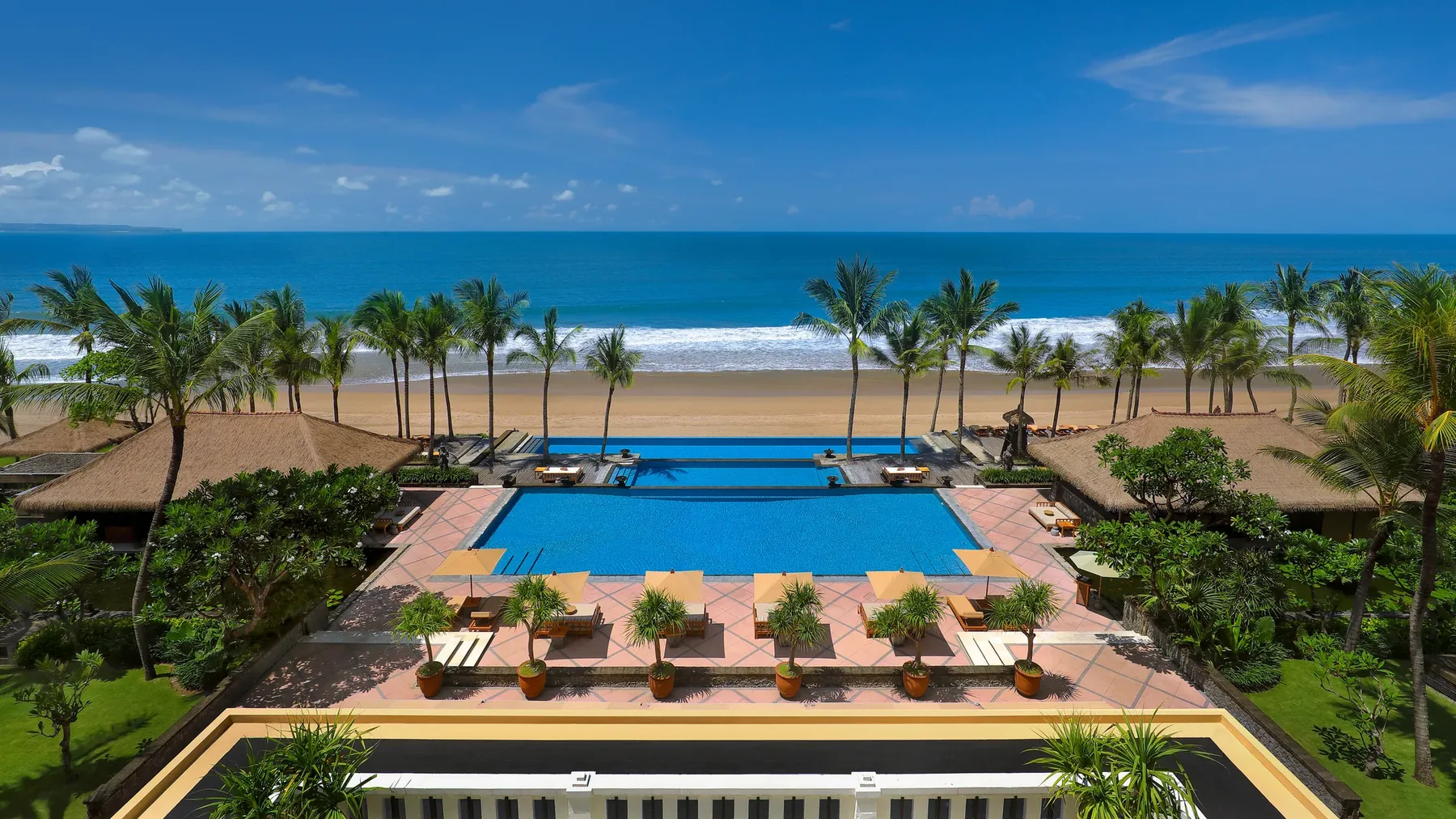
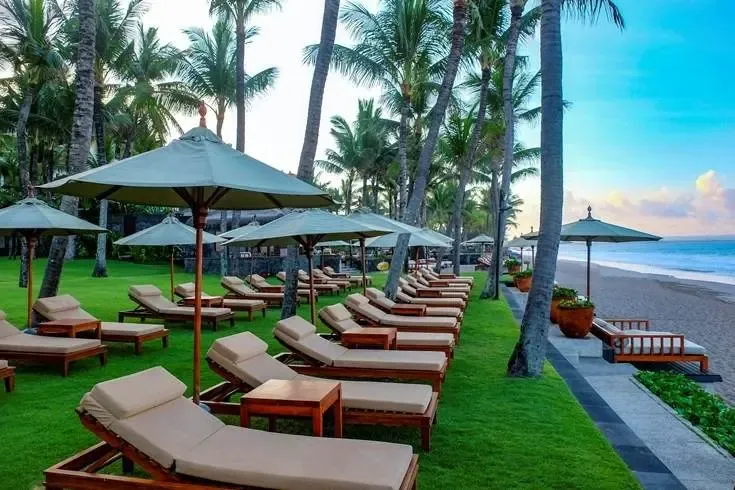
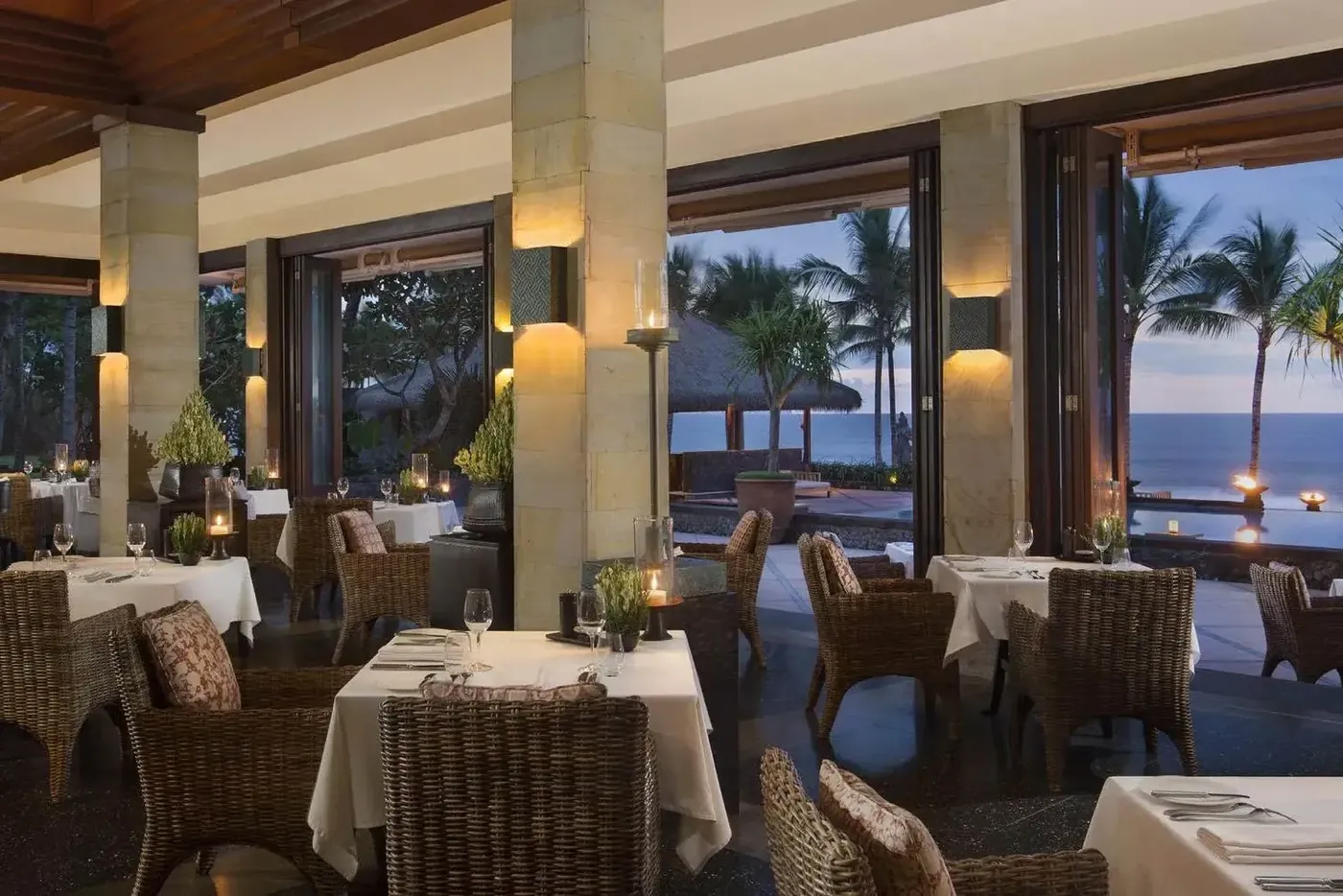
Most hotels in Bali are serene. They dissolve into their surroundings. This one does the opposite. Built closer to the water than any other property on the island, some say too close, every part of it is angled toward the ocean's energy rather than away from it. The pool's edge optically dissolves into the waves beyond it. Sit on your balcony, or take a meal in the restaurant, and the sound of surf never actually lets up. I didn't clock any of this consciously the first time I stayed. I just knew I couldn't stop looking at the water. Turns out that's the whole design brief. Jaya Ibrahim, who designed every interior here, has said as much himself: he wanted everybody drawn in by the sea, not the interior, not the food, the sea. That's not a hotel being modest about its own work. That's the actual instruction the building was given.
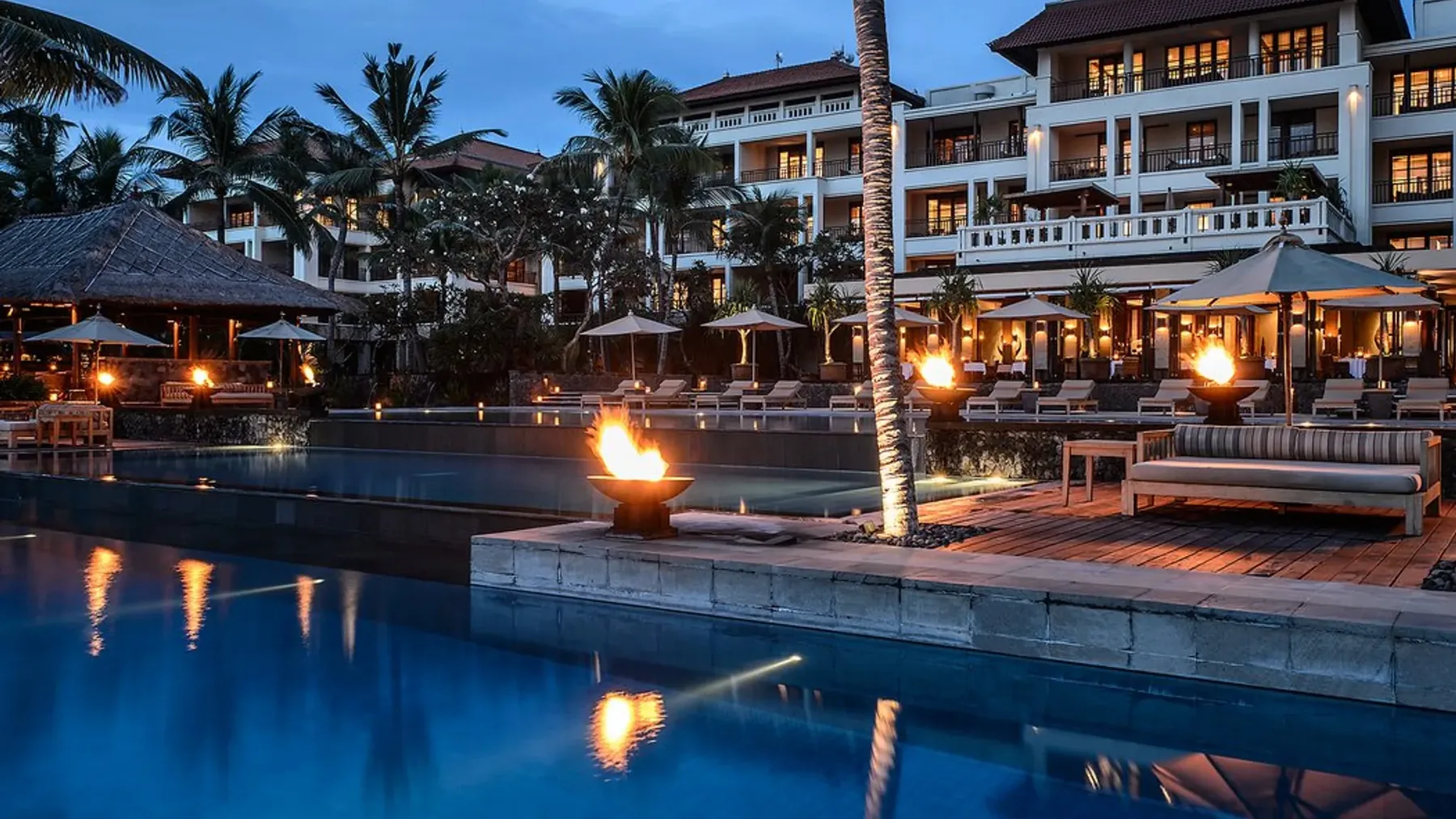
It also happened to be the first hotel in Bali built in a fully contemporary architectural language, a deliberate break from vernacular style, aside from one nod: a central tower shaped like a balé kul-kul, the traditional Balinese drum tower, sitting over what had originally been planned as an apartment building. That's not a throwaway detail either. The Legian was never meant to be a hotel. It started life as beachfront apartments, generous floor plans from 75 square metres up, until ownership changed its mind mid-construction. GHM kept that apartment logic fully intact rather than carving it down, small pantries retained alongside separate bed, bath and living rooms. It opened as an all-suite resort in 1996, and it still carries a faint urban air because of it, an apartment block that quietly picked up turndown service somewhere along the way.
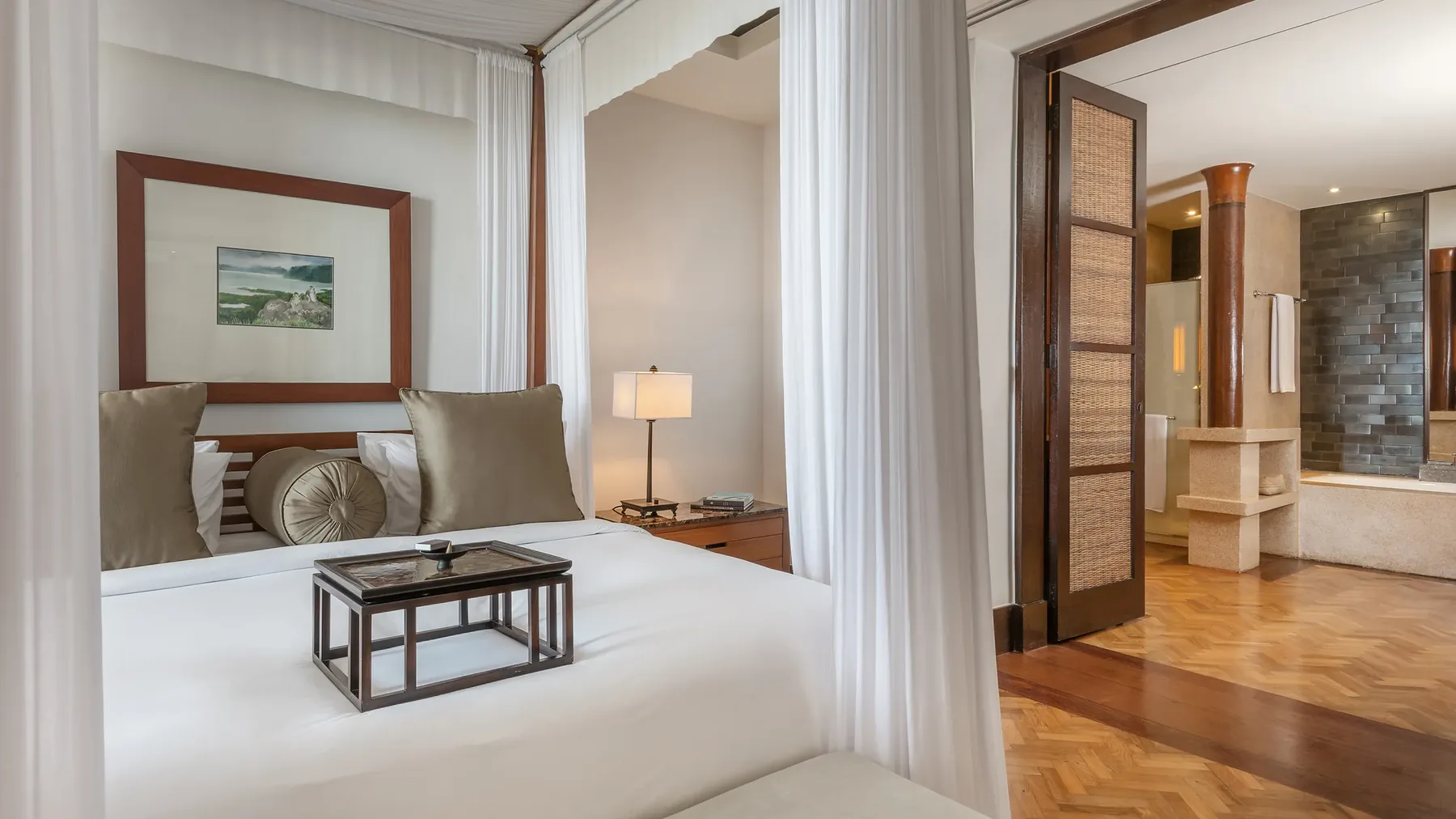
I'll admit rooms don't usually do much for me. I've always found the rest of a hotel, the grounds, the food, the way a place runs, far more interesting than four walls with a bed in them. My suite here was the exception. It didn't feel like a hotel room I was borrowing for a few nights. It felt like my own, slightly absurd version of a living room, one where the minibar kept quietly refilling itself for free, like the apartment it was always supposed to be.
The art that prepares you for the real thing
Even the lobby is staging something. An enormous carved wooden screen dominates the entrance, made by the Balinese master carver I Made Jojol, its design pulled directly from Walter Spies' paintings of the 1930s, the same artist who shaped the dreamy, romantic image of a "traditional Balinese village" most people arrive on this island already expecting, and which the Oberoi next door leans into fully.
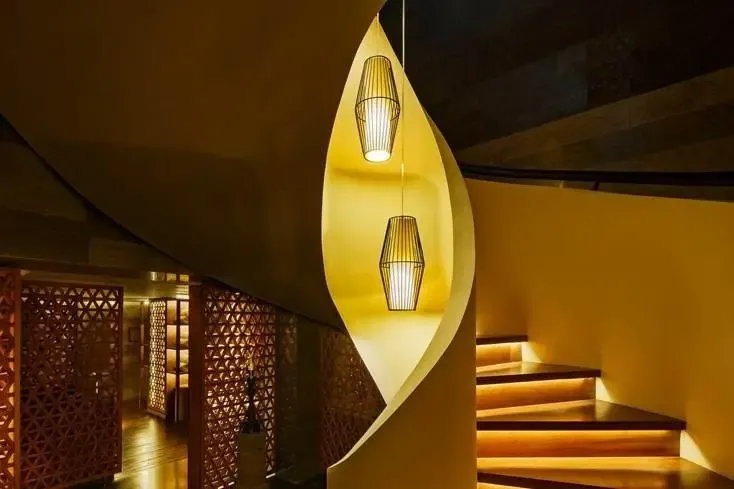
Through the screen's perforations, you can just make out a carving of waves on the restaurant wall behind it. Ibrahim has said the sequencing is deliberate: it's there to prepare you before you're actually confronted by the sea itself. I love that idea more than I probably should, a piece of art whose entire job is to soften you up for the real thing waiting thirty seconds later. That logic runs through the whole property, ocean-toned terrazzo, aquamarine fabrics, even the furniture built with the outdoors in mind, right down to the spa's own Ocean and Earth treatments, one of which ends in a wave massage: two therapists working above and below you at once, timed to feel like a single motion.
A young unknown, given total control
Ibrahim was nobody yet when he designed all of this. He'd spent the 1980s in London setting the private lunch tables of Anouska Hempel, the actress turned hotelier behind Blakes, until she noticed the precision in his table settings and trained him properly. This was his first solo commercial project, handed to a complete unknown with nothing to point to yet. Where Blakes is dark and theatrical, Ibrahim built almost the opposite here, open, light, restrained. He called it his most memorable work decades later, precisely because nobody asked him to prove anything with it. Give an unproven talent total creative licence, and let the result be strange if strange is what the site demands. That's the same instinct that built Aman, applied here to a building that was never Zecha's own idea to begin with.
The kind of thing they remember without you noticing
The same discipline shows up in the smallest moments, and this is where the detail-warning from earlier really pays off. Spend an afternoon on a particular sunbed, and the next day it's already set up for you again, no one having said a word. More than once, staff have picked up a conversation with me exactly where it left off the evening before. It still catches me off guard every time. Each suite runs music off two pre-loaded iPods, playlists tuned to the hour, ambient in the morning, lower and slower by sunset. There's a climate-controlled room by the restaurant for wine, cheese and charcuterie, kept exactly as they should be. Check in, and before you've even seen your room, someone asks which scent you'd like waiting in it. Come back from dinner, and the suite's already been reset for the night, terrace lit, incense going, nothing left to do but sit and listen.
The Club, for those who want the same conviction quieter
Across the road sits The Club, opened in 2002 for guests who wanted even more privacy than the main hotel offered. It started with eleven one-bedroom villas and has since added three larger, individually named two-bedroom villas: the Kayu Aya, built for two families sharing a floor each; the Sunrise, its two bedrooms placed on opposite ends of the floor below a living space that catches the sunset dead-on; and the Joglo, styled after traditional Javanese aristocratic architecture, its two bedrooms in separate structures either side of the pool. Fourteen villas in total, each in its own walled compound with a private pool. Without the main hotel's ocean views to lean on, the design goes inward instead, coconut wood, alang-alang roofs, mahogany screens casting geometric light across the interiors. Ibrahim was blunt about the risk of building this enclosed: a villa like this can feel claustrophobic, so the idea was to bring the world to the guest rather than send them looking for it. Two ways to bathe in every villa, an outdoor tub by a lily pond, or a stone-tiled plunge pool centred on a carved offering tray for the gods. Meals arrive at any hour, day or night. Dial B for Butler, only half in jest. I've always taken a suite in the main building myself, close enough to actually feel the water. But I get completely why some people want this version instead.
The conversation you don't have anywhere else
I can't think of another hotel on the island where I've had such good conversations with fellow guests, about art, wine, restaurants, walks inland nobody else seems to know about. You notice the atmosphere most in how many people return. I've met guests who've been coming back every year for decades, long enough that staff treat them more like family passing through than paying guests. More than once I've heard the same story: someone who landed here without quite knowing what they'd booked, and fell under its spell soon after.
Not for everyone, and it knows it
Most of my days here disappear into reading by the pool, wandering the beach, extraordinary Indonesian food, the rijsttafel alone is worth the trip, and not much else. Anyone chasing the dreamy, photogenic version of Bali should look elsewhere. Anyone looking for what Aman used to feel like, an idea handed to the right person and built completely, without apology, will find it here. It just doesn't sound the way you'd expect, and somewhere along the way, someone will still be waiting to wash the sand from your feet before you've noticed you're back.
The Legian is available through The Banjar Collective.
GET IN TOUCH TO PLAN A STAY →