The verdict
Two grandes dames on the same stretch of sand, facing opposite ways. The Legian (No. 5 on The Bali 20), from around $450 a night, is the better hotel: more refined, with finer food, finer suites and service that borders on butlering, and the clearest heir to Adrian Zecha's thinking on the island. The Oberoi (No. 14, Best Architecture), from around $350, wins on everything you can't manufacture: fifteen acres of old jungle garden, calm, space, and the warmest staff in Bali. Choose The Legian for polish and the sea, The Oberoi for the ultimate Bali feeling.
On my first trip to Bali, I stayed at The Oberoi, and I couldn't imagine anywhere more beautiful on earth. Several times a day I walked past The Legian next door, and every time it looked cold to me, closed, not remotely inviting. On that same trip I got talking to a couple over lunch at La Lucciola, one of Bali's evergreen restaurants. They were staying at The Legian, and they walked past The Oberoi every day too. To them it looked run-down, a shabby tangle of thatch they couldn't imagine sleeping in. They found it baffling that we weren't impressed by The Legian's architecture. We found it baffling that they didn't see paradise next door.
I've thought about that lunch many times since, because we were both right. Stay at only one of these hotels and the other looks completely wrong from the outside. The way they spoke about The Legian, with a kind of reverence, stayed with me, and I kept an eye on it for years until I finally stayed there myself. Now I know both from the inside. They sit on the same beach, a few minutes apart, and they were built on opposite ideas: one hides from the sea, the other runs straight at it.
At a glance
| The Legian | The Oberoi | |
|---|---|---|
| Where | Seminyak beachfront | Seminyak beachfront, next door |
| From the airport | 30 to 60 min | 30 to 60 min |
| Entry room, per night | From around $450 | From around $350 |
| Opened | As a hotel in 1996, by Jaya Ibrahim | As Kayu Aya around 1971, by Peter Muller |
| Style | Contemporary, turned to the sea | Balinese villas in a jungle garden |
| Rooms | All suites, plus villas at The Club | Thatched villas, some with pools |
| Eating | Rijsttafel, refined Indonesian | Indian and Indonesian, garden breakfast |
| Best for | Polish, the sea, returning guests | Space, calm, the Bali feeling |
| The Bali 20 | No. 5 | No. 14, Best Architecture |
Numbers on the photos are positions on The Bali 20. Rates are for the entry category at the time of writing, September 2026, and move with the season.
Which feels more like Bali?
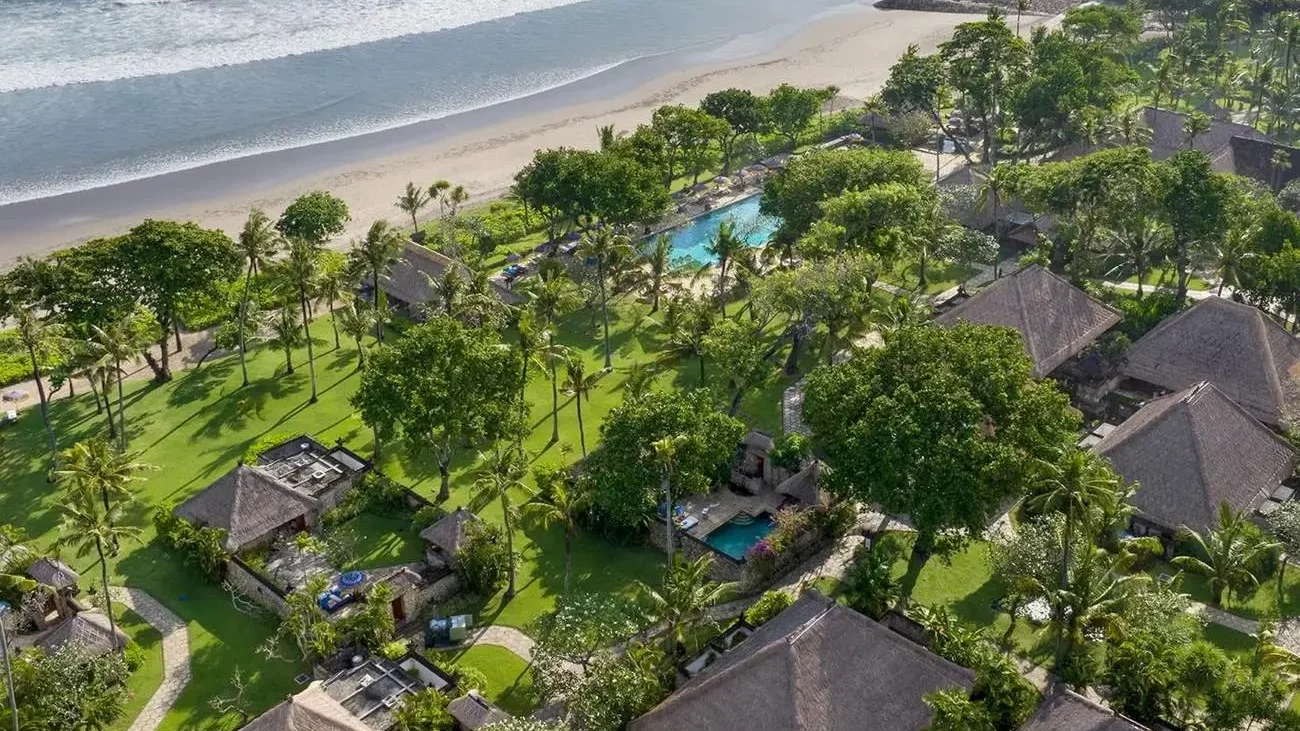
The Oberoi, and it has for more than fifty years. It began around 1971 as Kayu Aya, a private club designed by Peter Muller, years before he built Amandari. Its guests included Princess Grace and Salvador Dalí, and instead of hotel rooms it offered freestanding thatched villas, a radical idea at the time. It still leans fully into the romantic image of a Balinese village that Walter Spies painted in the 1930s, the one most people arrive on this island already expecting.
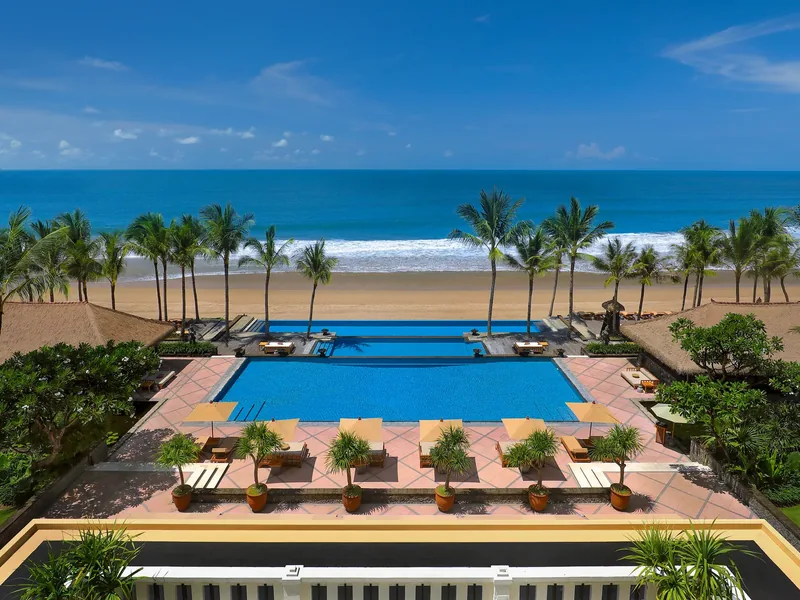
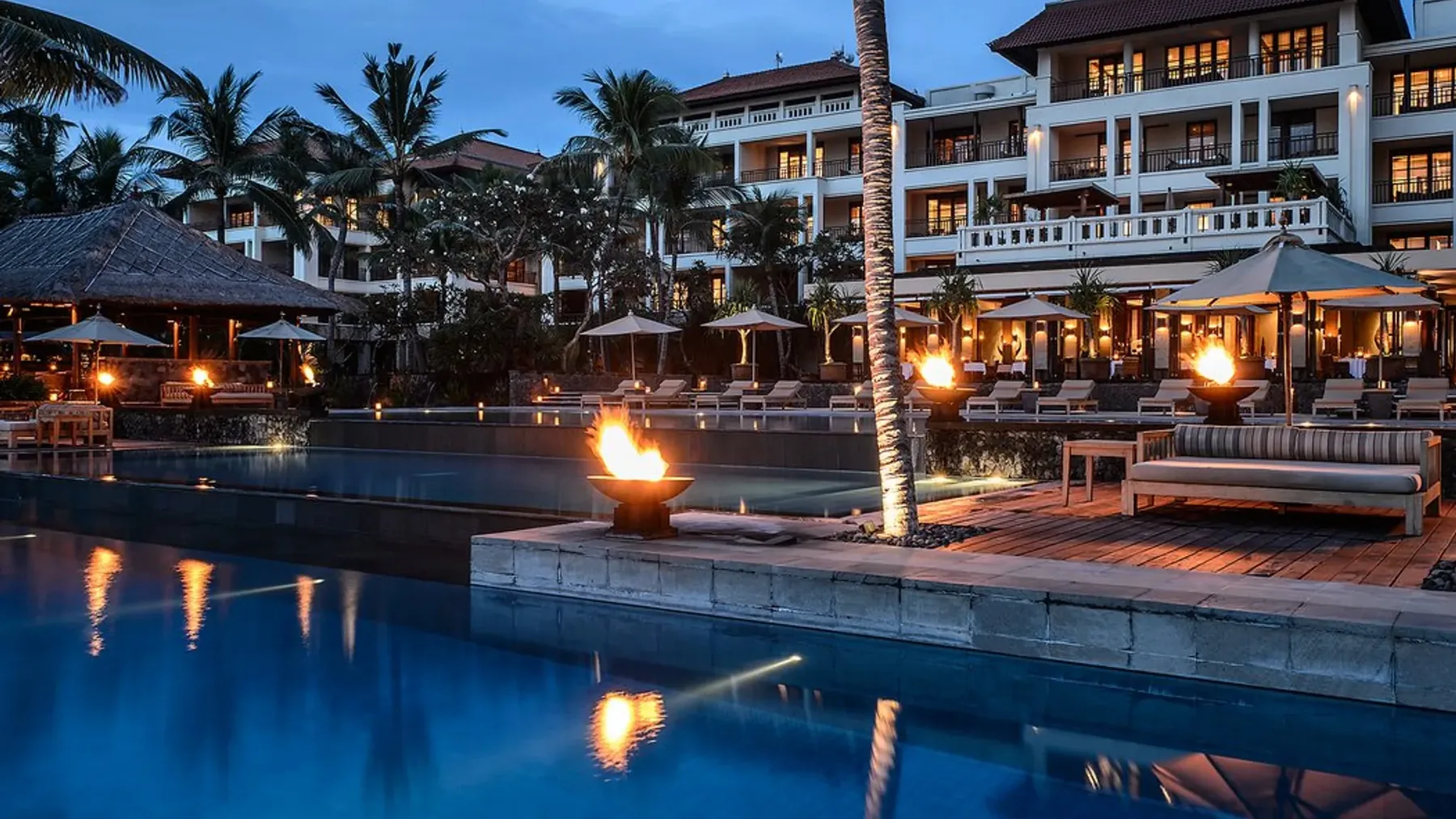
The Legian started life as a block of beach apartments, until the owners handed it to a complete unknown. Jaya Ibrahim had spent the 1980s in London setting the lunch tables of Anouska Hempel, who noticed the precision in his table settings and trained him. This was his first commercial project, and he built something no one in Bali had seen: a fully contemporary hotel, with a single nod to tradition in its drum tower, and a carved lobby screen whose only job is to prepare you for the sea waiting thirty seconds later. Muller gave Bali the dream of a village. Ibrahim gave it the ocean.
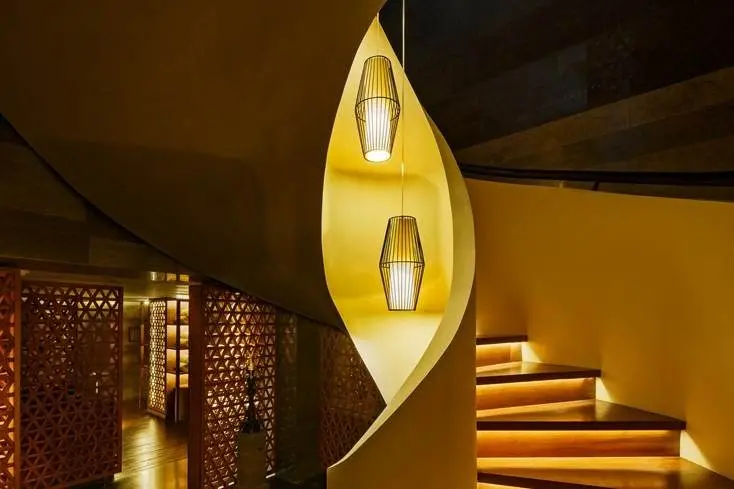
Which has the better grounds?
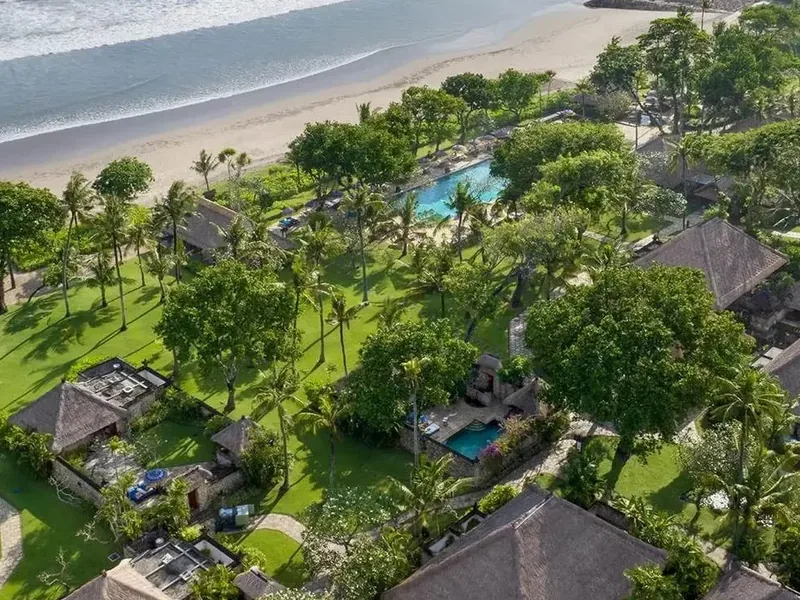
The Oberoi, and it isn't close, though The Legian is the better piece of architecture. The Legian's terraces, pools and gardens are brilliantly composed, every level angled toward the waves, but they sit on a tight plot where the design has to do all the work. The Oberoi simply has land: fifteen acres of old jungle garden, a rare luxury in the middle of Seminyak. Frangipani and banyan trees decades old hang so low over the paths that they form tunnels, and manicured lawns run all the way down to the beach.
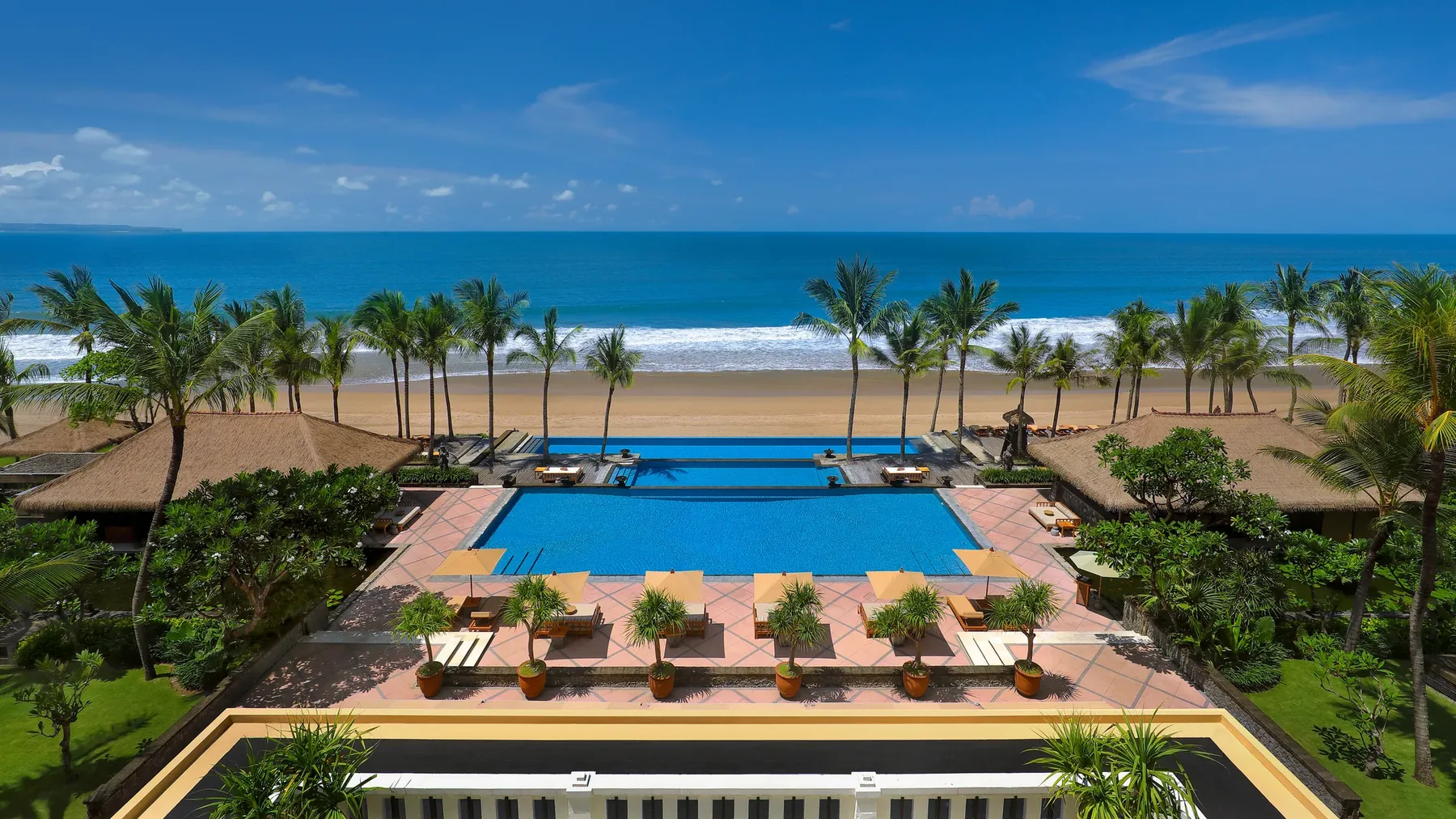
Outside the walls, Seminyak has become the version of Bali I find hardest to love, with bizarre traffic and beach clubs throwing sound in every direction. Inside The Oberoi, none of it exists. At The Legian you don't escape Seminyak. You just stop noticing it, because the sea is louder.
Where will you eat best?
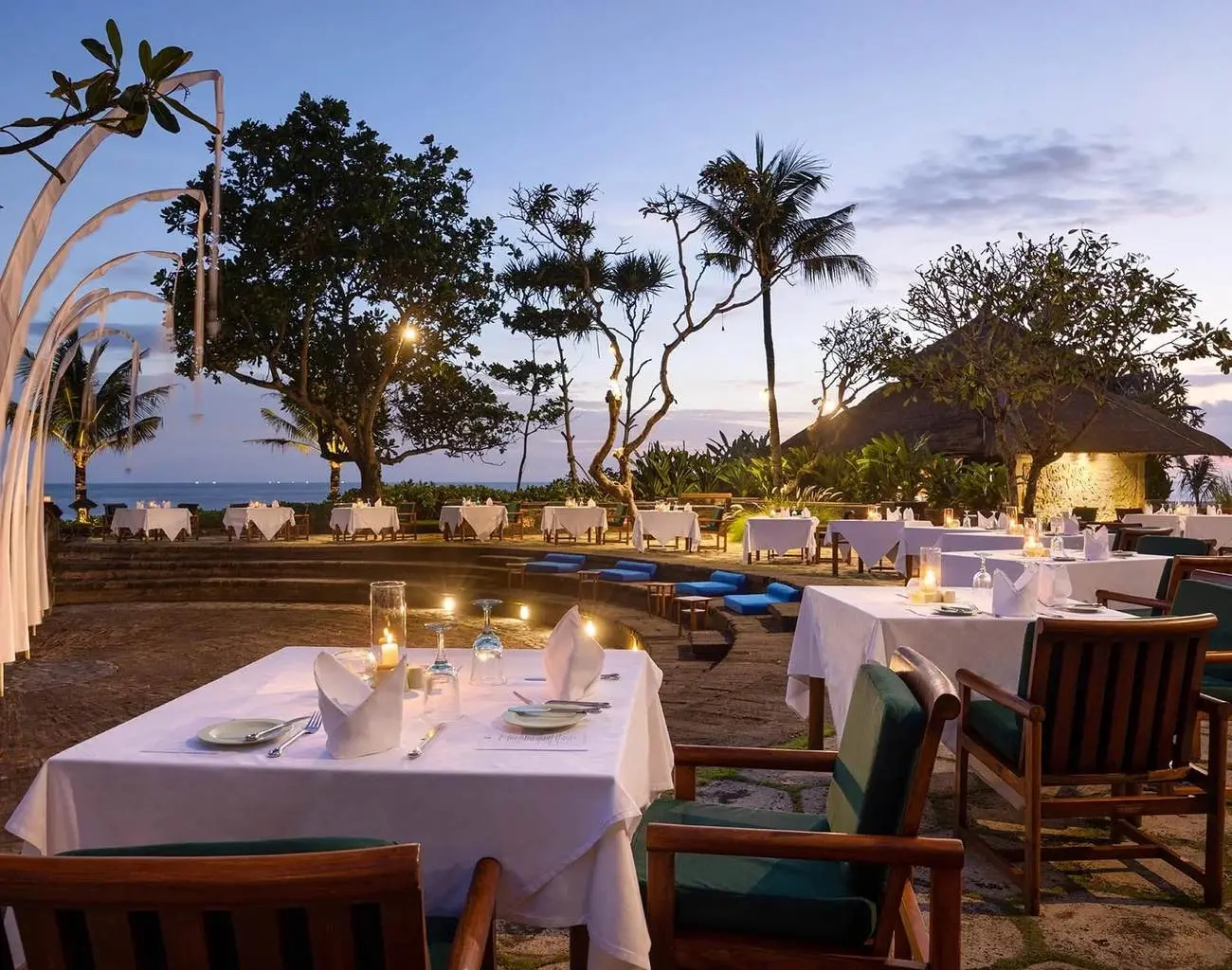
The Legian, for quality. The Oberoi, for the setting. Breakfast says it all. At The Legian the buffet is laid out indoors in a carefully chilled room, where even the charcuterie and cheeses are kept back in the wine cellar until they're served. Everything is at exactly the right temperature, and you carry it outside to eat by the sea. At The Oberoi there's no buffet. You order à la carte at garden tables set among the frangipani trees, on a terrace that opens straight onto lawns running down to the beach, and the scent of falling white-and-yellow blossom is part of every breakfast. The tropical air does leave the croissants a little limp. On quality, The Legian wins. But if you ask me where I'd rather sit, it's among the hibiscus at The Oberoi, with every sense switched on.
The rest of the day follows the same pattern. The Legian's cooking is more refined and a shade more authentic, and its rijsttafel alone is worth the trip. The Oberoi plays it a little safe, except with its Indian kitchen, one of the better places in Bali for genuinely authentic Indian food. I'll admit I haven't dined much in the evening at either. Both have atmosphere after dark, each in its own way, with the chiming bronze of a gamelan ensemble drifting across the grounds. Mostly, though, I spend the day at the hotel and walk out at night, because both sit so centrally that half of Seminyak's best restaurants are a stroll away. La Lucciola is my ultimate lunch spot, but for dinner I'd head from either hotel to Bambu, Motel Mexicola, Merah Putih or Mauri.
Which rooms are better?
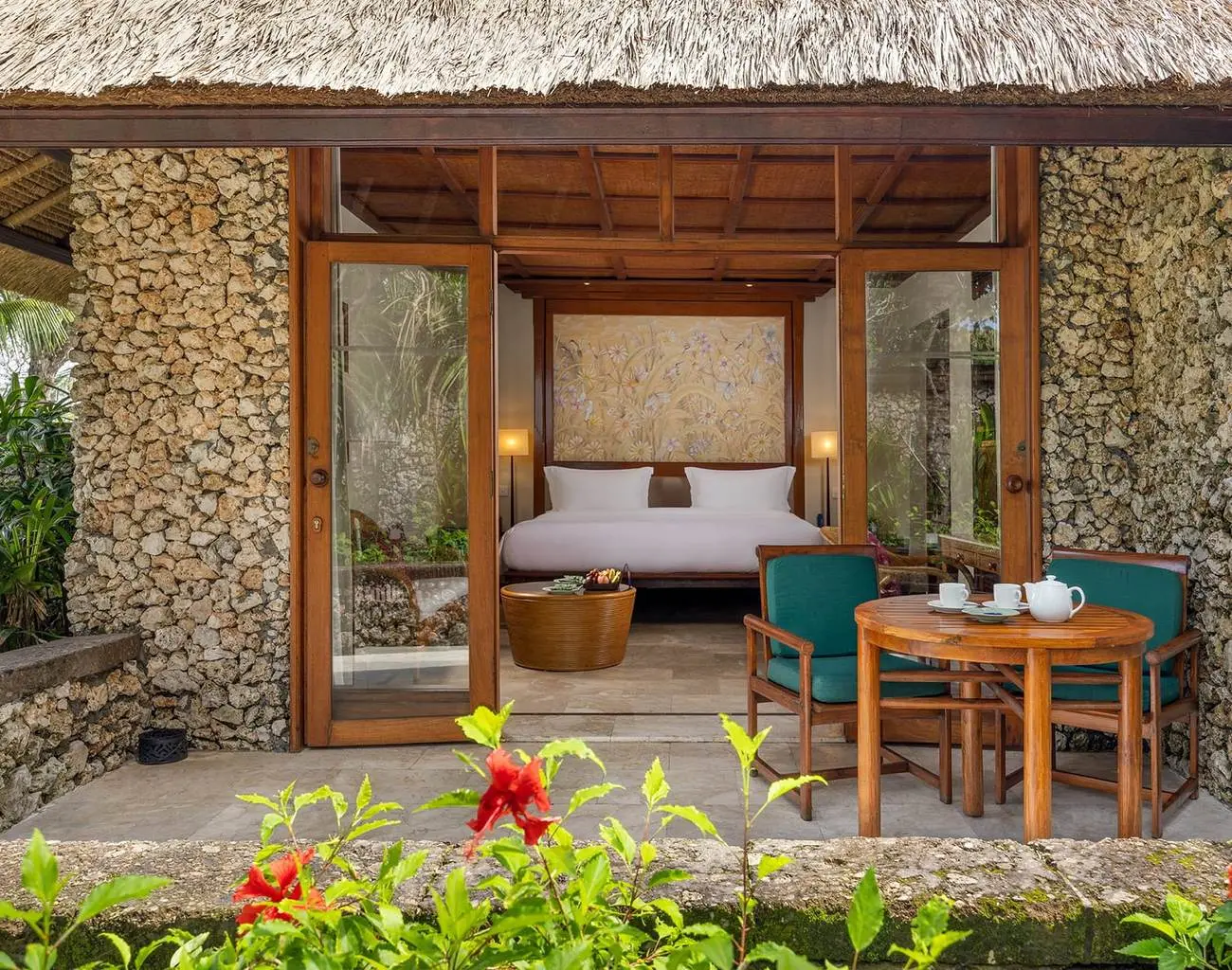
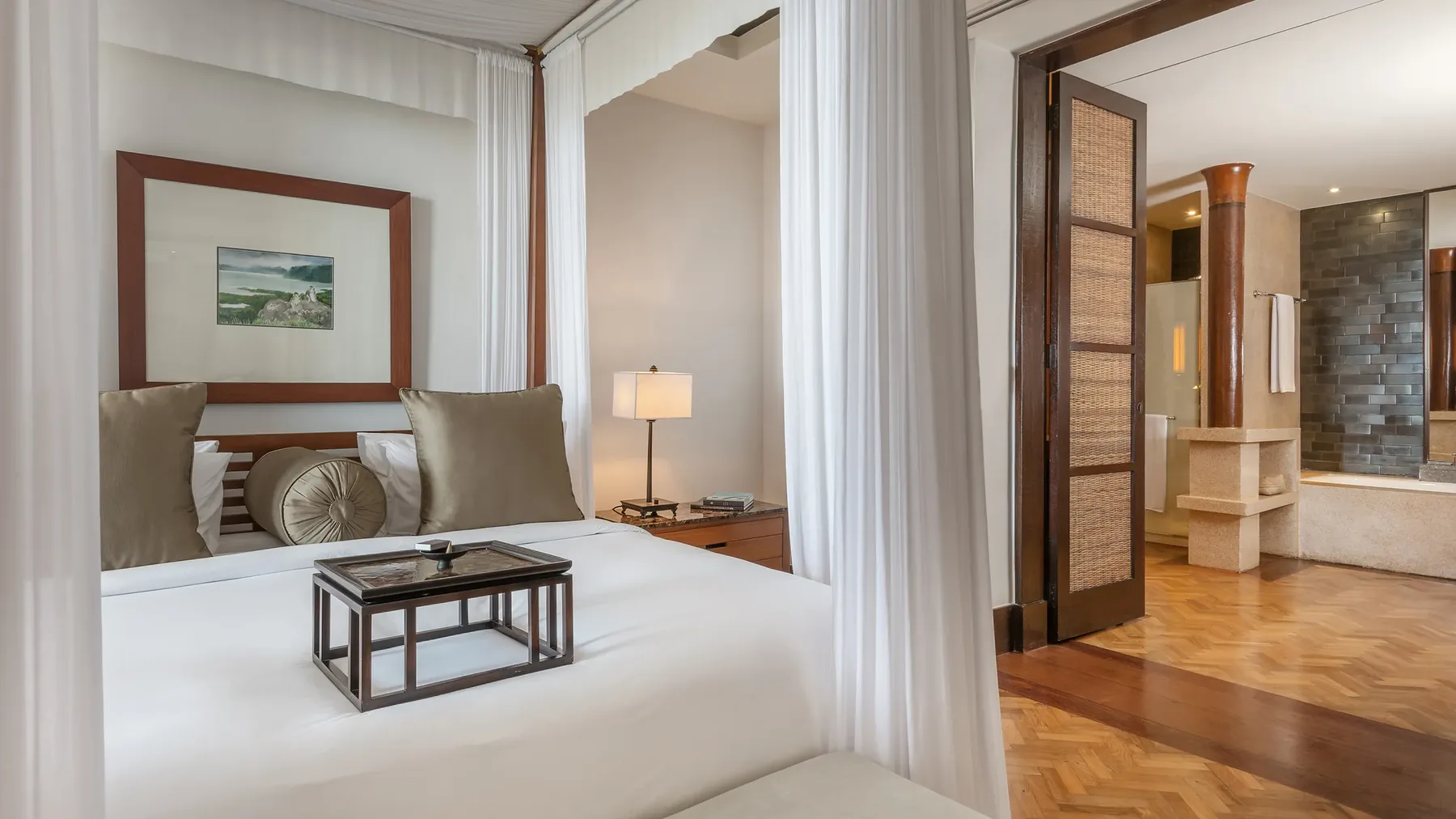
The Legian's suites, clearly. The Oberoi's villas are beautifully scattered across that landscape, and they're exceptionally clean and comfortable, with phenomenal beds. But I'd rather sleep in a Legian suite. It's minimalist but full of detail: your room smells subtly different at different times of day, and the playlist playing softly in the background changes with it. Rooms don't usually do much for me. This one felt like my own slightly absurd living room, with a minibar that refilled itself for free. For even more privacy, The Legian has The Club across the road: a handful of villas with their own pools, for guests who want the same conviction, only quieter.
Where is the service best?
The Legian for polish, The Oberoi for warmth. The Legian's staff work almost like butlers. You're genuinely pampered: spend one afternoon on a particular sunbed and it's set up for you again the next day, without a word, and conversations pick up exactly where they left off the night before. Every time you walk back from the beach, someone is waiting with a wooden watering can to rinse the sand from your feet. The Oberoi is one big, hospitable family, perhaps the warmest place on the island. Ask anyone there anything and you feel how proud they are to answer. Here too, you choose between a team trained to perfection and a family that makes you feel you belong.
What do they have in common?
More than either set of guests would like to admit. For all their differences, both are grandes dames, the kind of hotel you find in the great cities: Le Bristol in Paris, The Connaught in London, the Mandarin Oriental in Hong Kong. Hotels so anchored in the life around them that they aren't really allowed to change, even if that costs them the guests who find them dated. The Oberoi's general manager runs it almost as a museum, and The Legian still answers to the idea it was built on more than thirty years ago. That stubbornness is the whole point. The Park Hyatt Tokyo has just come back from its first major renovation, and I'm afraid, with my whole heart, that the old soul didn't survive it. I haven't been yet. I'm honestly a little scared to go, which is a ridiculous thing to say about a hotel.
Both have cult status, each with its own devoted following that returns year after year and would never dream of staying next door. And on an island that changes faster than anywhere I know, they're my anchors: the two places I can always fall back on, and trust to be exactly what they were the last time.
Which is the best value?
Both, which is rare at this level, but in different currencies. The Oberoi, from around $350 a night, sells you space: fifteen acres of garden on one of the best stretches of coast in Seminyak. The Legian, from around $450, sells you the room and the service: every guest gets a suite, and the staff remember your sunbed. If you'll spend your days in the garden, The Oberoi is the better deal. If you'll spend them on your balcony listening to the surf, The Legian earns its extra hundred.
The Legian or The Oberoi?
The Legian is the better hotel. The Oberoi is the better Bali. The Legian is a shade more refined in everything, and it carries Adrian Zecha's legacy like nowhere else on the island. Zecha founded Aman and, in 1992, GHM, and The Legian became one of GHM's defining early hotels: small, restrained, built around service that anticipates rather than performs. If you're after authenticity, calm, space and that ultimate Bali feeling, The Oberoi wins. They don't compete so much as complete each other.
The full reviews are here: The Legian and The Oberoi. For another pair of old souls built on opposite ideas, see Amandari vs Amankila.
Each looks wrong from the other's side of the wall, and each is paradise from inside its own. If I ever run into that couple from La Lucciola again, I'll buy them lunch and tell them they were right. I just won't tell them I was too.
We can book both at the hotels' own rates, with the benefits attached.
PLAN A SEMINYAK STAY →