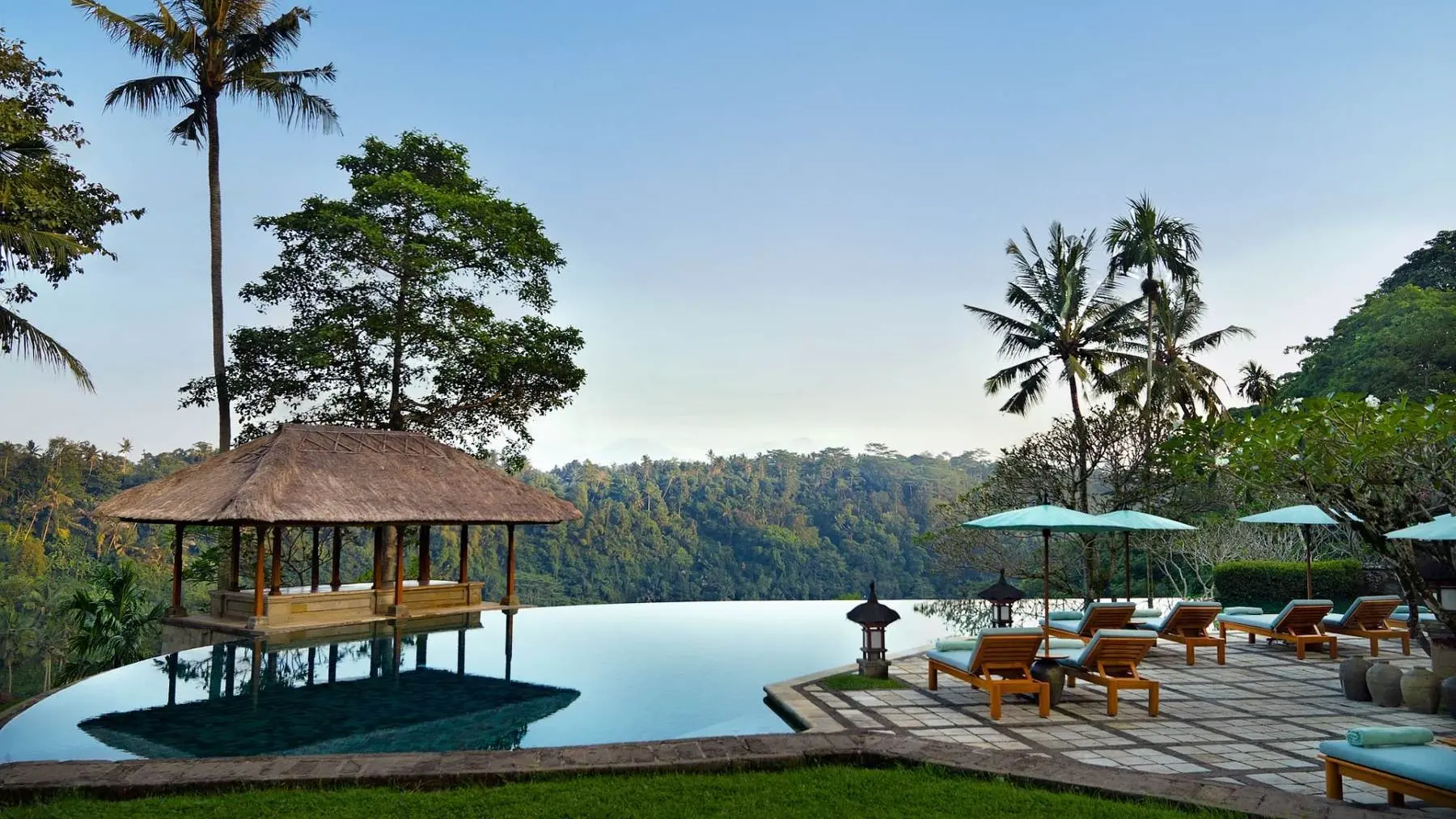
The verdict
Amankila is the more remarkable hotel: nothing else in the world stands on a hillside like that one, and it ranks fourth on The Bali 20. Amandari, at sixth, is the better introduction to Bali itself: intimate, walled, and inside the island rather than above it. At today's rates it is also the far better value. First trip, choose Amandari. Been before, or never want to leave the grounds, choose Amankila. Better still, do both, in that order.
I've been going to both for thirteen years. I've slept at each more than once, eaten at both, and spent lazy days at Amankila's Beach Club and afternoons at Amandari's pool without a room key to my name. Every night and every bill was paid for by me. That's plenty of time to form an opinion, and to find out which parts of it hold.
At a glance
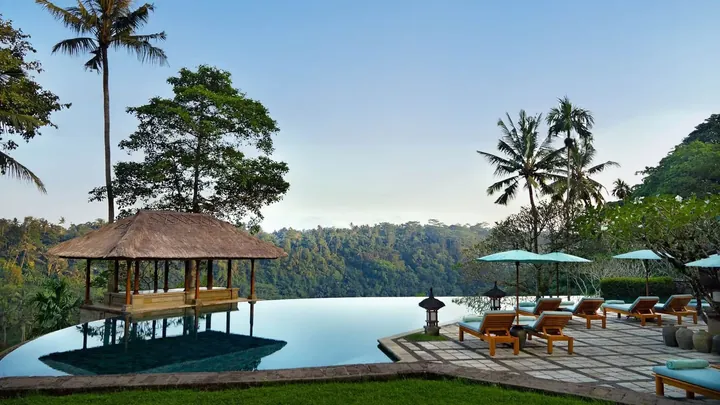
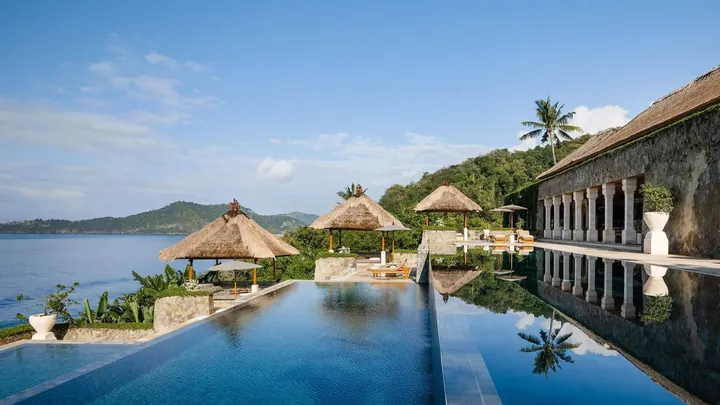
| Amandari | Amankila | |
|---|---|---|
| Where | Kedewatan, Ayung Valley, 10 min from Ubud | Manggis, East Bali, above the Lombok Strait |
| From the airport | 75 min to 2 hrs | 2 to 2.5 hrs |
| Entry suite, per night | Around $750 | $1,300 to $2,200 |
| Opened | 1989, by Peter Muller | 1992, by Ed Tuttle |
| Size | 30 suites | 34 suites |
| Places to eat | One restaurant, a bar, a private dining balé | Five, including Aman's Italian, Arva |
| Feels like | Staying with friends | King of the hill |
| Best for | First trips, privacy, the days outside the gate | Staying put, the views, the spectacle |
Numbers on the photos are positions on The Bali 20. Rates are for the entry category at the time of writing, September 2026, and move with the season.
A village and a palace
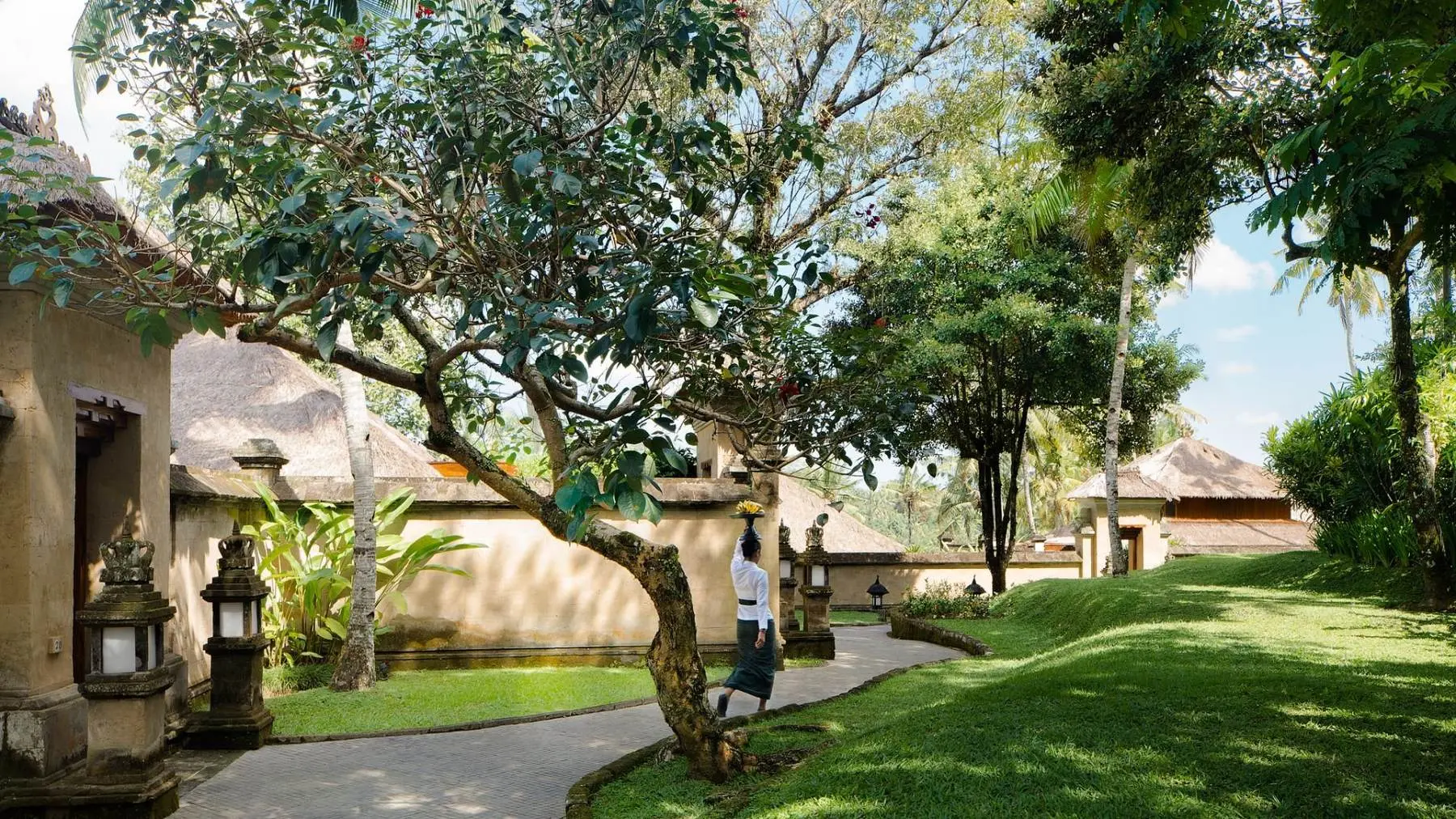
In 1989 Peter Muller designed Amandari as a Balinese village, modelled on Kedewatan next door: stone lanes, walled compounds, a gate for every suite, and a lobby shaped like the open pavilion where the village meets. Three years later, on a hill near Manggis with Mount Agung behind him and the sea in front, Ed Tuttle took his cue from the royal water palaces of Karangasem. One man built a village, the other a palace, and almost every difference below follows from that.
Which feels more special?
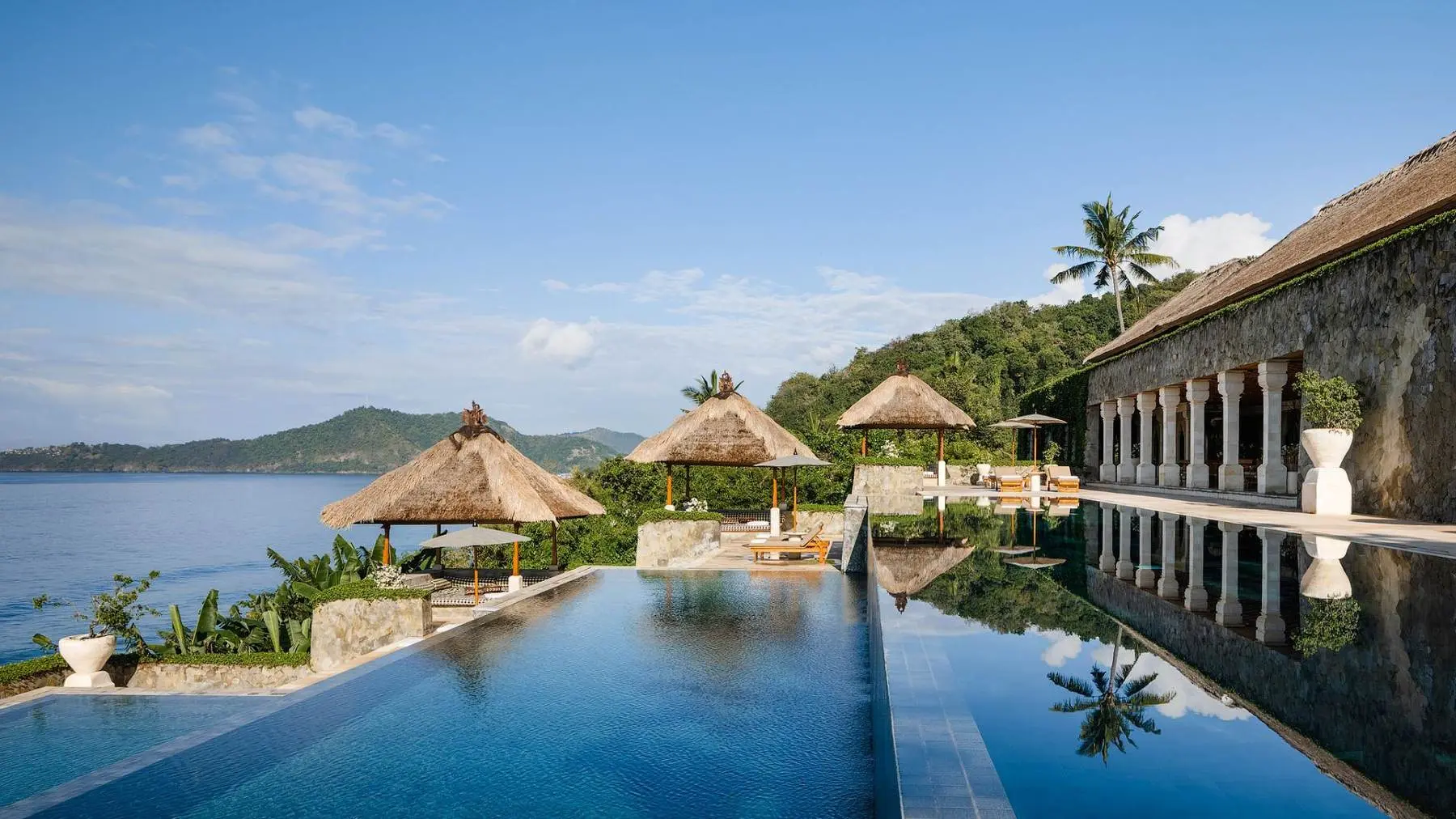
Amankila, and it isn't close. It is larger than life, and not because of its size. It's the history, the reputation, the pool you've seen on a hundred magazine covers before you've even booked. You walk the timber walkways between the hillside platforms and feel, slightly ridiculously, elevated. King of the hill.
The hotel works hard for that feeling. Every morning, before most guests are awake, someone rakes the black-sand beach clean of whatever the tide brought in, and with a refinery down the coast it brings in plenty. Nothing is allowed to break the picture. What you're given is a Balinese fata morgana: a more perfect island than the one outside the gate. That's a description, not a complaint. Nobody does it better.
Amandari is unmistakably Aman and feels like the opposite: intimate, restrained, understated to the point of shyness. The pool, the balés, the bar, the restaurant and the lobby all sit within a minute of each other. There are no buggies, because there's nowhere far enough to need one. It's a lovely resort, and I choose that word carefully. It is so embedded in the village around it that the hotel is an excursion in itself. You don't go out to find Bali. You wake up in it.
Who will you be sharing it with?
At Amandari, people like me. Couples, mostly past the age of photographing their breakfast, many of them plainly on a return visit. I fitted in so seamlessly it was slightly unnerving.
At Amankila the average age drops by a generation. Phones out before the coffee arrives, sunrise yoga, the three-tier pool photographed from four angles before anyone gets in. Before that sounds like a sneer: I spent my own first hour there hunting for folded charger cables to prove the legend was real. We were all there for the picture. Mine was just harder to post.
Where is the service better?
Neither. The level is the same, but the feeling is different. At Amankila the staff are Balinese and genuinely warm, but polished to a finish that lets them handle the most demanding travellers on earth without a crack showing. They want to give you days: sunrise on the resort's own outrigger boats, breakfast on a hilltop facing Agung, a picnic in a jungle clearing you'd never have found.
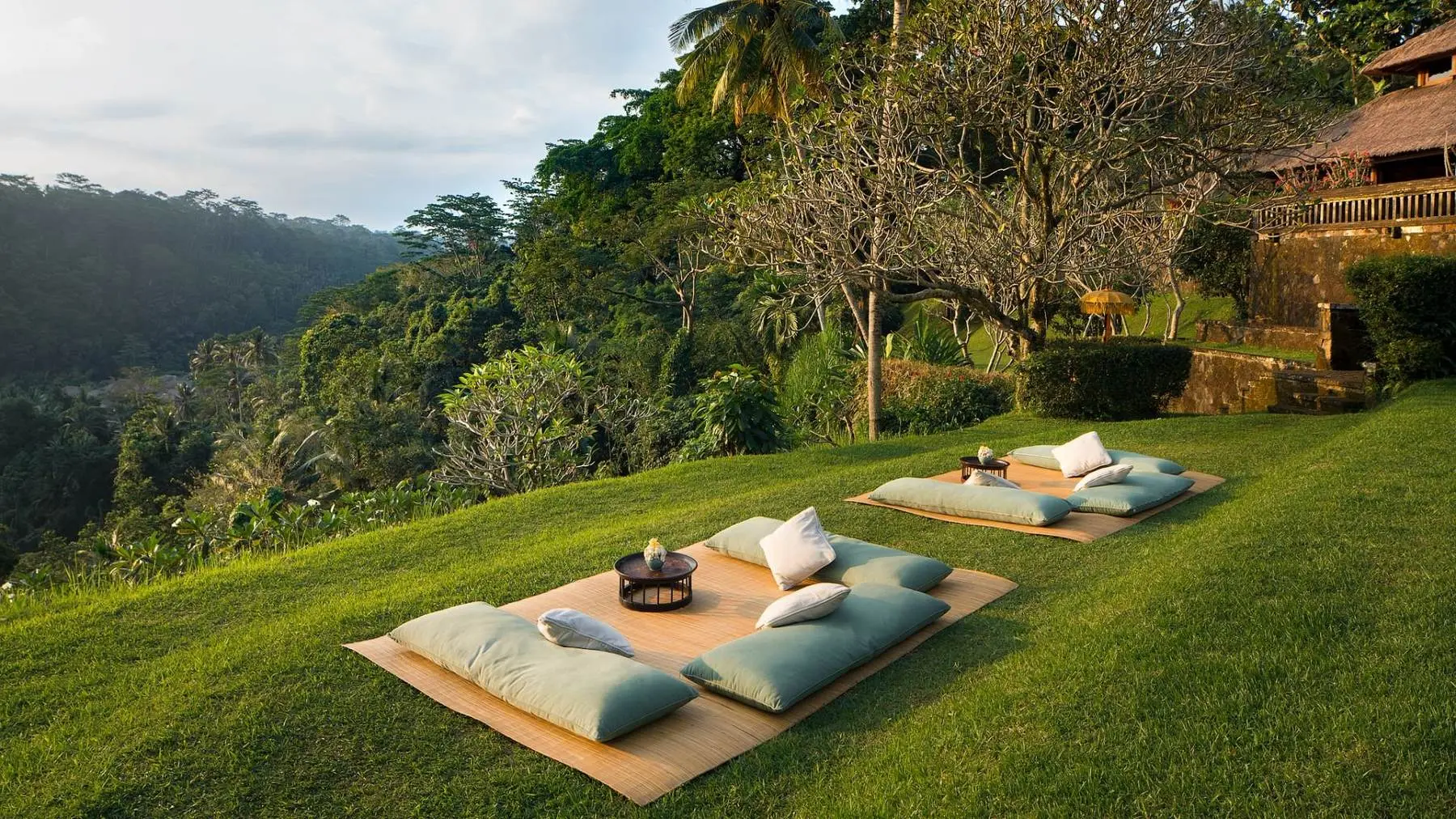
At Amandari the staff belong to the village and the valley, and the place feels more Balinese for it. Nobody is editing reality out of your sight. They simply make you welcome, as though you're staying with friends, and around four someone nudges you toward afternoon tea in a balé or on a lounger in the grass, while the village girls practise their Legong nearby. Someone at Amandari once quietly moved my parasol every time I got up to swim. At Amankila they would have moved the sun.
Which suites are better?
It depends on whether you'd rather have the view or the privacy. Amankila is built as open as possible, and every suite faces the sea, whether the strait or the bay. You wake to something extraordinary, and the price is privacy: you're a little on display, and so is everyone else. The suites are light and airy, and they've aged into something timeless.
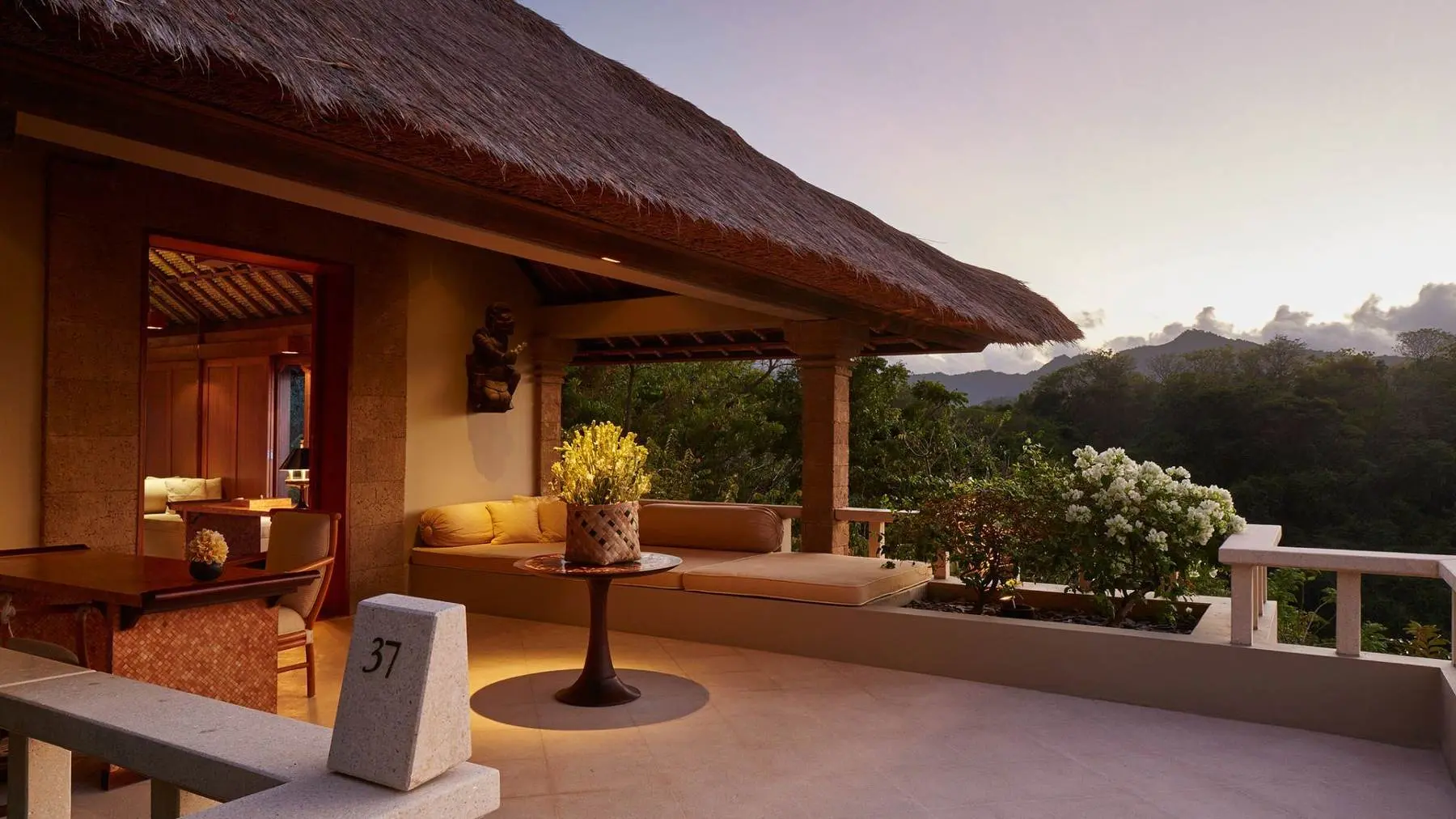
Amandari has fewer views and far more walls, high ones of paras, the soft grey volcanic stone Bali builds its temples and family compounds from. They're there because a Balinese village draws a hard line between public and private, and Muller took that literally. Behind your gate you have your own courtyard, your own sunken bath and your own piece of sky, in your own bubble. The interiors are darker and heavier, all wood and shadow, which is why Amandari reads as more dated despite being only three years older.
Where will you eat better?
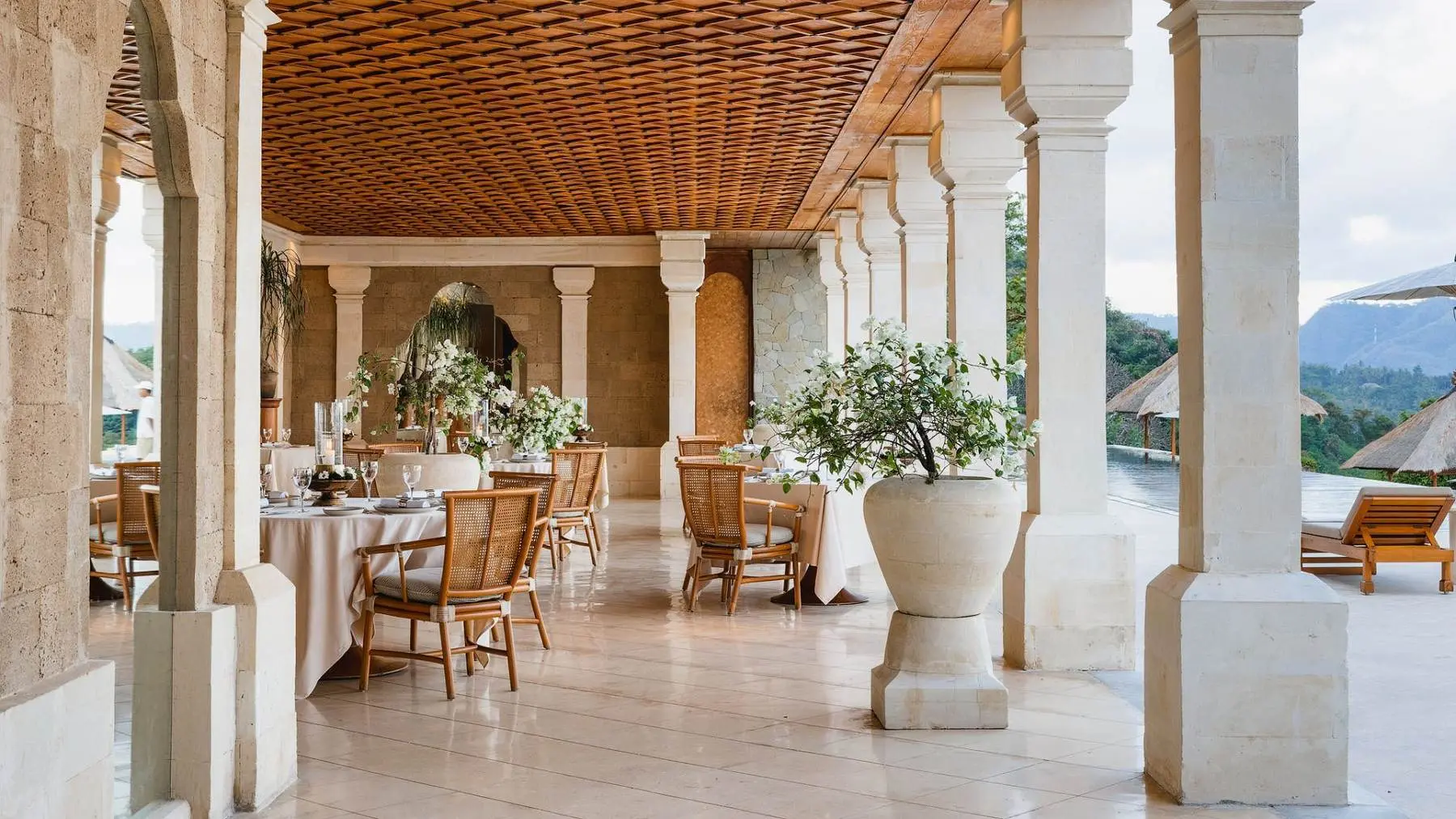
At Amankila, by a clear step. I spent fifteen years reviewing restaurants for a living, so here's the short version: Amandari has stayed with the conventional approach, and Amankila dares to move. Amandari still eats the way Aman ate thirty years ago: one open-air restaurant over the valley, Balinese and Indonesian dishes, the usual Western suspects, and set evenings such as the full-moon dinners. Everything was good. By the third night I was slightly bored, because by the second I knew what the fifth would look like.
Amankila builds on the same foundation and then goes further, and deeper. There's Sandikala above the pool, the Beach Club by the sea, a Harvest Table for eight, rijsttafel served in balés at the pool's edge, and a chef who makes it clear he'll cook anything you like. And there's Arva, Aman's own Italian restaurant, which the group opened here and not at Amandari. It bakes Neapolitan pizza, but if you're a purist who'd rather have the thin, crisp Roman kind, they'll make that instead. For a genuine food obsessive, nothing beats a kitchen that shares the obsession. At Amankila dinner is an event, and you can feel that they care.
Which is better value?
Amandari, and by more than you'd think. For years the two cost roughly the same, around $750 a night for the entry suite at either. Then they parted ways. Amandari has barely been able to move its rates, and I suspect Ubud is the reason: few places on earth have this many exceptional hotels within a short drive of each other, all chasing the same guest. Amankila has no such neighbours, and has priced accordingly. Its entry suite now runs from around $1,300 to $2,200 a night, depending on the season.
So I'll be plain. Amankila is still the more remarkable hotel, but at today's rates it has run ahead of itself. Nothing about the hillside changed when the price did. The Bali 20 measures what a hotel delivers at the price it asks, and Amankila still clears that bar; it just clears it by less than it used to. Amandari, meanwhile, has become one of the fairer deals at this level on the island, which is not a sentence I expected to write about an Aman.
So which should you book?
Amankila if you want the one hotel nobody can copy. Amandari if you want Bali. As hotels they are close to equal, but Amankila's place has no rival anywhere, and that's why it ranks two places higher. Amandari is brilliant too, but it lives in a much tougher neighbourhood. In Ubud I'd go to Tanah Gajah or Viceroy for service, Four Seasons Sayan or Mandapa for architecture, and Como Shambhala or Buahan for the grounds. I choose Amandari for understated pleasure, and nothing else does that as well. It's built above all for the first generation of Aman devotees. I'm one of them, as the pool will have told you.
Can you do both?
Yes, and it's the best way to see either. Go to the village first and the palace second. Start at Amandari while you still want to go out: ceremonies, the water priest, the days that need somebody who knows the family. Then drive east, about 75 minutes, and let Amankila take over when all you want is to stay put. Do it the other way round and Amandari will feel like a step down, which is unfair to it.
For how to divide the nights, see How to split a week in Bali; for the Ubud days, see the days with Wayan. The full reviews are here: Amandari and Amankila.
We can book both in one go, at the hotels' own rates, with the upgrade, credit and breakfast attached at each where Aman offers them.
PLAN A SPLIT STAY →