Bali is among the most dynamic hotel markets in the world, and it's one of my favourite things about the island. Very few places do this much innovating, developing and outright experimenting, with somebody always testing what works and, just as usefully, what emphatically doesn't. It functions as a nursery for strange ideas. Bill Bensley decided a few years ago to redefine glamping and built Capella Ubud to prove the point, and somewhere in a design meeting north of Ubud somebody else said "what if there were no walls at all," and nobody in the room talked them out of it.
That became Buahan. Michelin has given it two Keys, placing it above every one of my favourite hotels on this island, and I arrived with expectations to match.
The thin veil
Their own marketing says that only a thin veil separates guests from nature, and I want to give them full credit for it, because that may be the most accurate sentence any hotel on this island has written about itself.
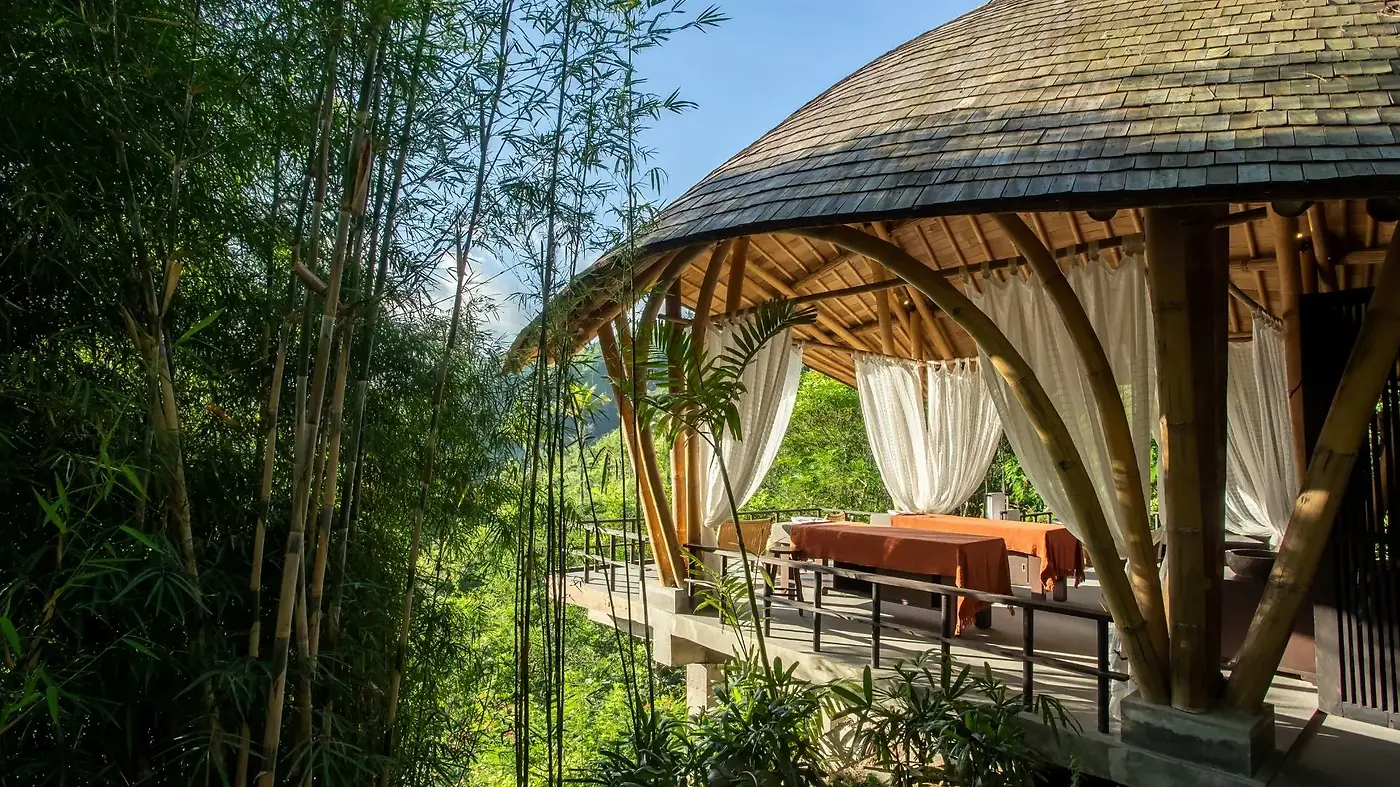
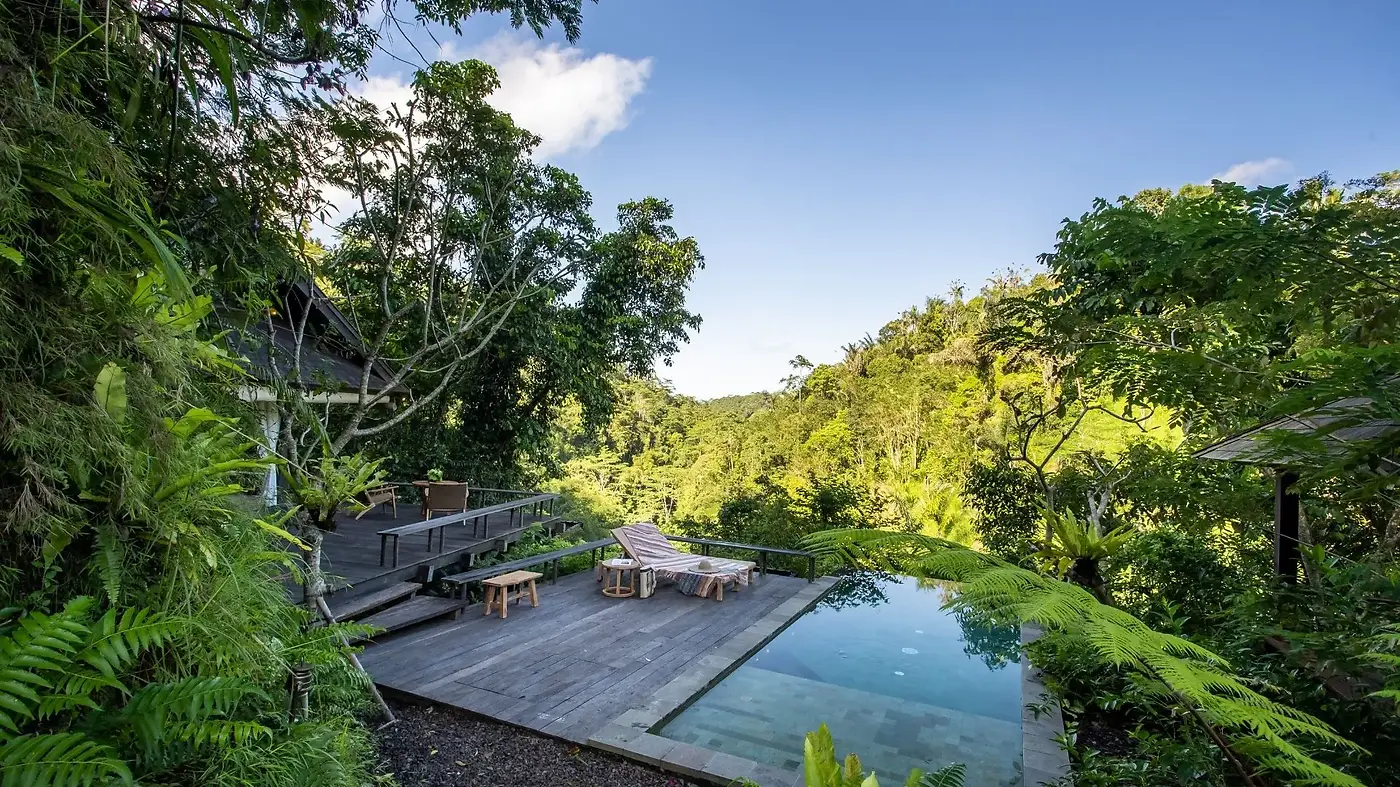
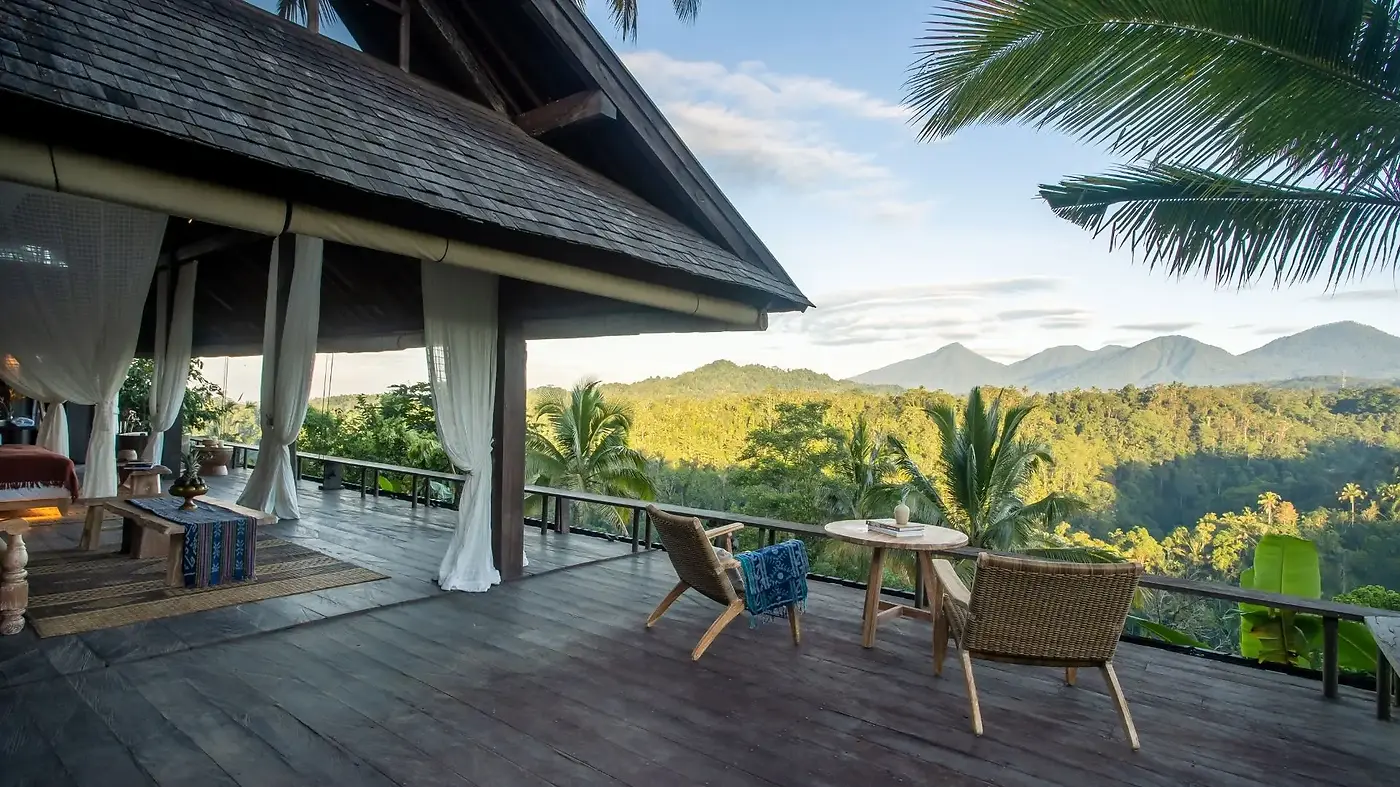
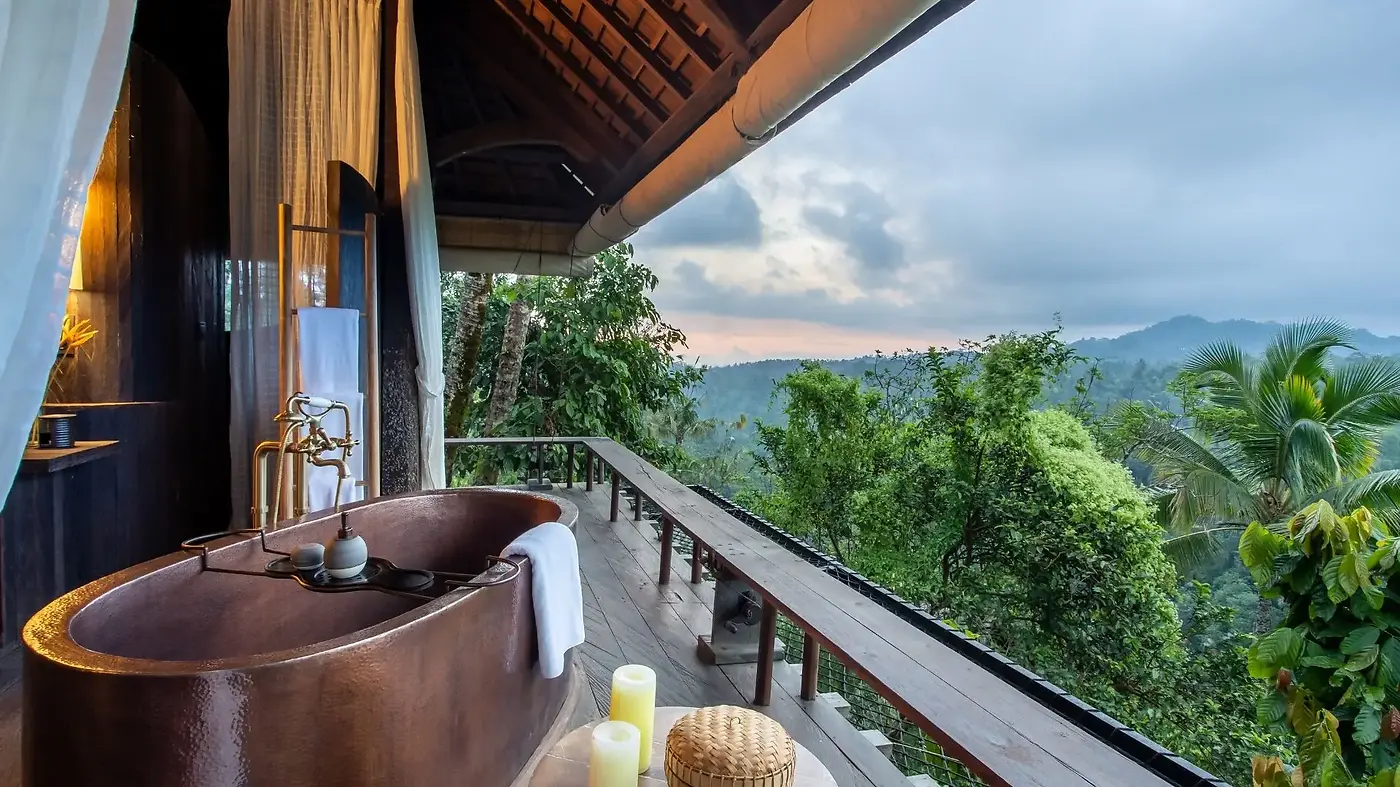
Sixteen balés are strung down the Ayung valley at six hundred metres, forty minutes north of Ubud, adults only. No glass anywhere, no doors, and a curtain as the entire barrier between you and everything on the other side of it, which is a specification rather than a metaphor. The architecture is properly serious, incidentally: the local architect Gede Kresna spent four months researching the site before drawing anything, and the balés use ironwood salvaged from old boat jetties, hand-smithed copper bathtubs and naturally dyed fabrics. Nobody cut a corner anywhere. They simply took the walls out and left everything else at full strength.
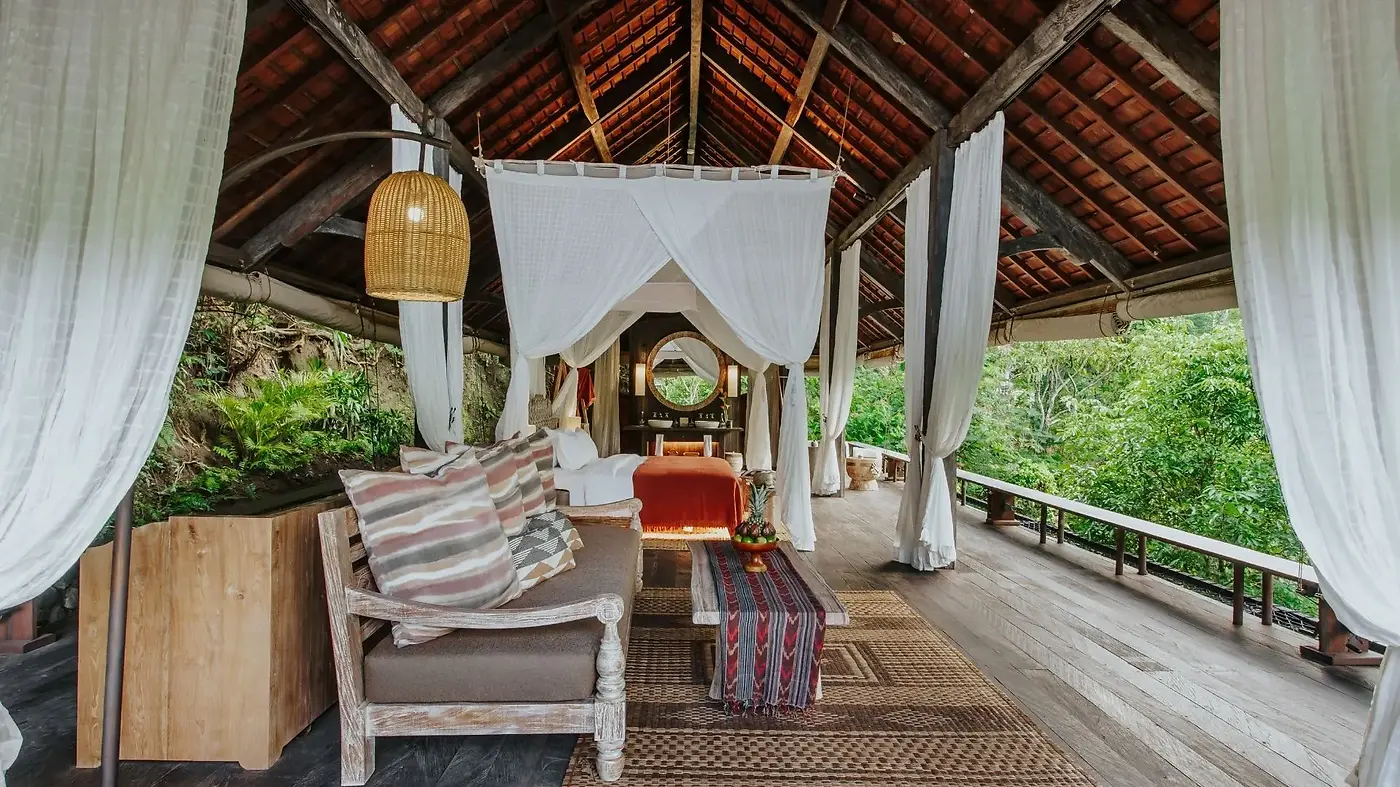
What a curtain cannot do is hold back humidity, or sound, or frogs, and we will be coming to the frogs.
Michelin, and a distinction worth defending
Before any of that, my largest structural objection, which isn't really about Buahan at all.
There is no lobby here, no room keys, no locks, no room numbers, and almost none of the shared infrastructure a hotel actually runs on. Buahan is a very beautiful private enclave of sixteen units, and calling it a hotel stretches the word past the point of usefulness. Which is where I lose patience with the Keys, because Michelin has developed a pronounced appetite for handing them to photogenic villa concepts while a good number of genuinely excellent hotels on this island go unrecognised entirely. Two Keys puts Buahan above properties that have spent decades building service cultures, training staff, developing food and beverage programmes and maintaining themselves to a standard that costs real money every single year. Buahan has sixteen tents and one very good idea. Both are worth your time, but ranking the second above the first tells you far more about what the guide finds interesting than about what a traveller is actually buying.
There's a wider split underneath that, and the same thing is happening in fine dining. One group of travellers wants an experience above all else, ideally one that shifts something in them. People like me look at the whole package: what the money buys, how the staff are trained, how the kitchen was built. Neither is wrong. Work out which camp you're in before you book, because Buahan was designed with real precision for the other one.
The jungle at night is not what the brochure implies
Every property selling communion with nature implies a certain soundtrack. Gentle water, distant birds, something you might otherwise pay an app for.
The jungle at night is not that. It sounds like a prehistoric battlefield. Things scream, other things answer, and somewhere in the middle of it all an enormous lizard, identified the next morning by a host who found my description very funny, produces a noise I can only describe as a dinosaur passing overhead. I lay awake for a long time, not out of anxiety but out of pure fascination, trying to work out what could possibly be responsible for each individual sound. Then I needed the bathroom, switched on a small lamp, and found myself eye to eye with several frogs who had taken up residence in the toilet bowl and were, as far as I could tell, entirely untroubled by my arrival.
The acoustics run both ways, which is the part nobody mentions. You hear the jungle, and you also hear your neighbours and anyone walking the paths, so I would not attempt anything romantic in a balé here. The concept tips from immersive into exhibitionist rather faster than you'd expect.
Insects I had anticipated. The damp I had not, and it turned out to be the defining physical fact of the stay. The balé is remarkably wet, you sleep in clammy bedding, and there is no wardrobe, so my wife spent a good part of the following morning genuinely concerned that her clothes were about to go mouldy, since actual mist had been hanging between them overnight, and set about protecting them with the fascinated determination of someone conducting an experiment. It didn't work. Days later, in other hotels, her clothes still had the specific weight and texture of a wet dishcloth. I came away from Buahan with a new and faintly humbling appreciation for air conditioning, which I had never previously considered a personality trait.
Although in fairness they did try. There is a cooling system here I have never encountered anywhere else, engineered to condition the bed itself rather than the room, on the sensible grounds that there isn't a room to condition. On the bed it works. Step off it and you are standing in a very hot, very wet space, wherever in the balé you happen to be. I found that genuinely admirable rather than annoying, because it's the concept executed to its logical limit: they solved the problem exactly as far as no walls allows, and then stopped, because there was nowhere further to go.
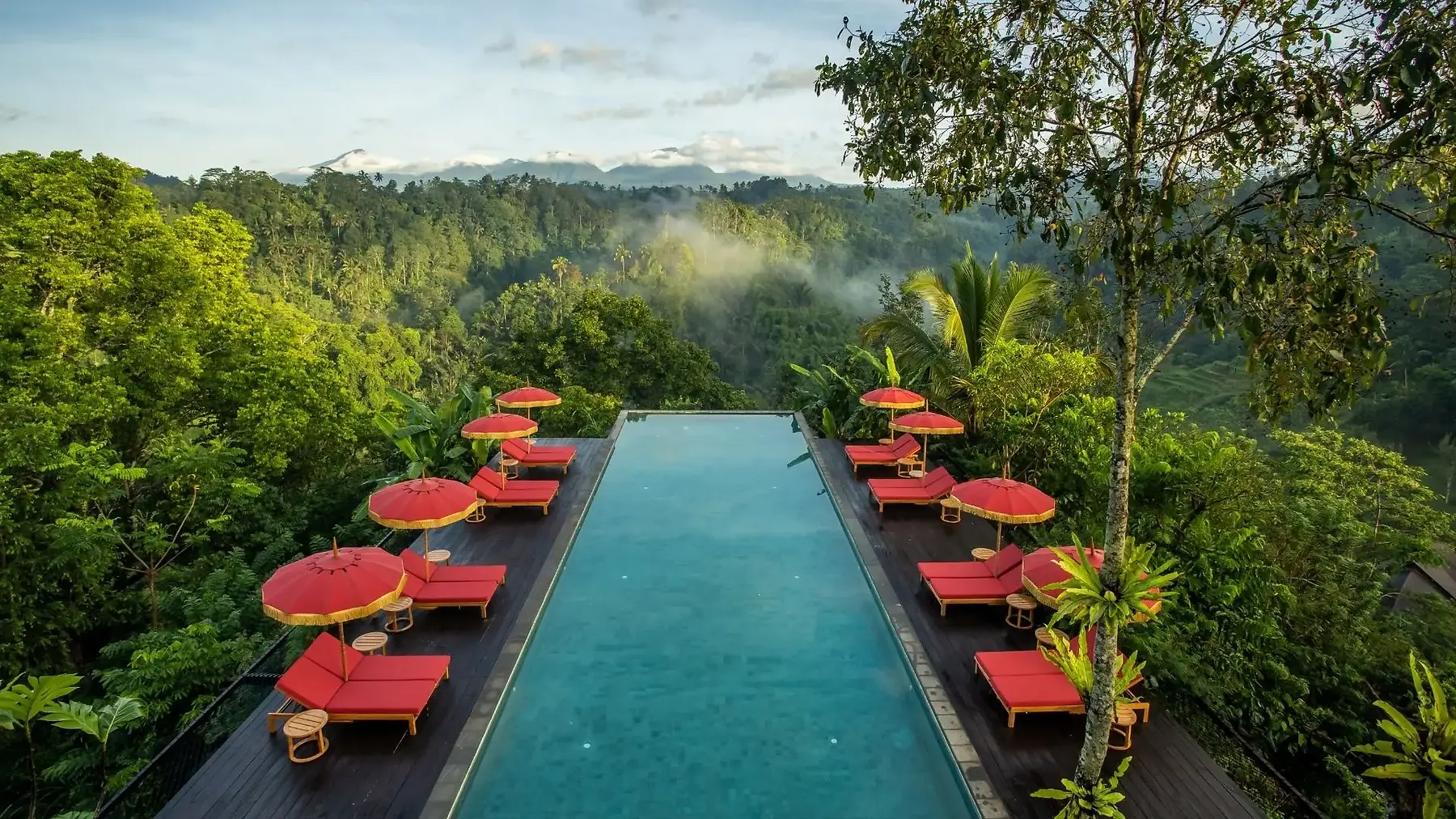
The one place I felt entirely at ease was the pool, which is beautiful, has an extraordinary view, and puts you floating in the middle of all that dense green with none of the dampness that comes with sleeping in it. I spent as long in there as I decently could.
None of this is a genuine complaint, mind you. If you book a resort with no walls, you can hardly act surprised when the jungle accepts the invitation.
The walkie-talkie
Here is my favourite thing that happened, and it explains this place better than anything else I could tell you.
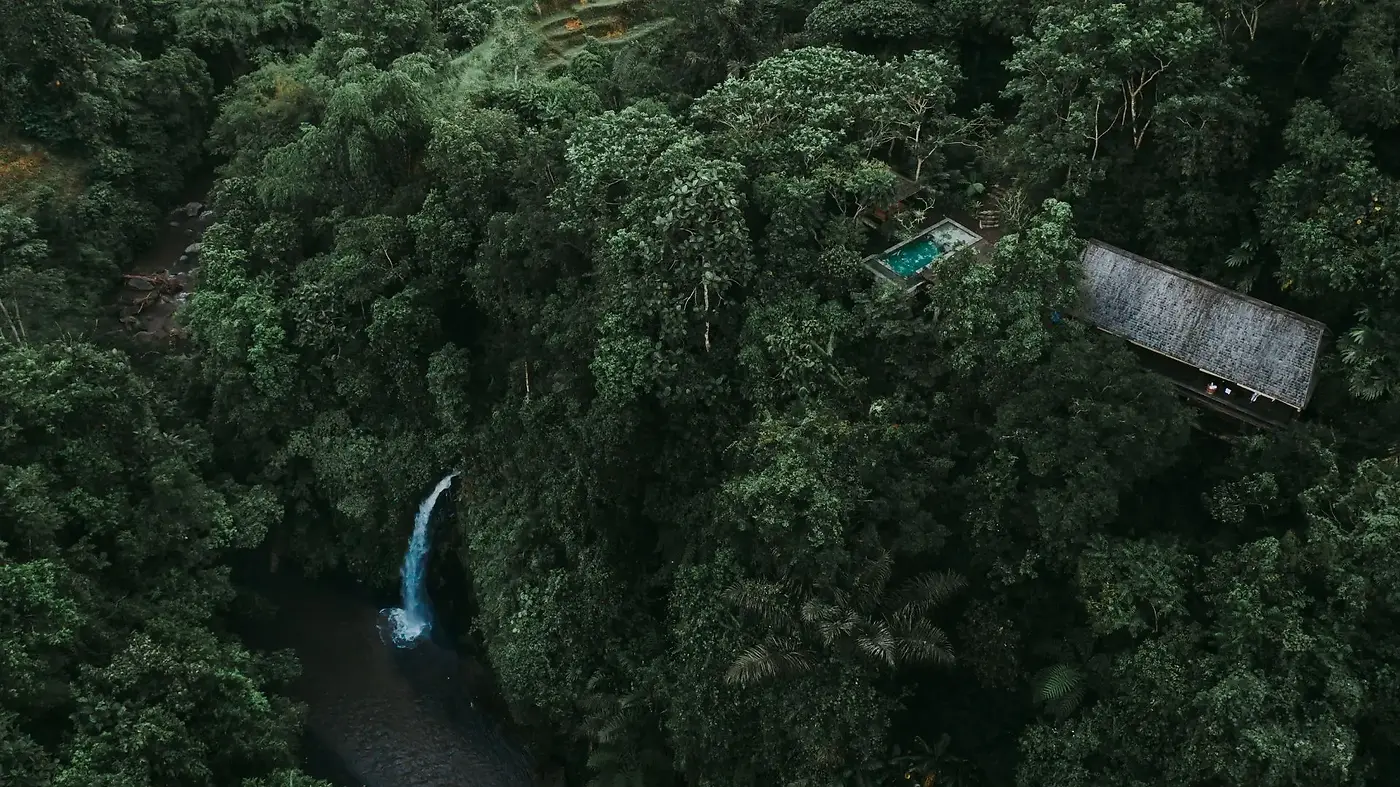
We asked our host whether there was anything to do around the property and were told, enthusiastically, about a beautiful waterfall at the bottom of the site. COMO Shambhala is one of my favourite hotels on this island and has a breathtaking path down to its natural springs, so I said yes immediately, expecting something in that spirit. What happened instead is that somebody pressed a military-grade walkie-talkie into my hand and told me, with emphasis, to call in on that channel the instant anything went wrong, whether slippery paths or difficulties of any other kind. Then, every fifteen minutes for the entire descent, the radio crackled and our host asked whether everything was still all right, occasionally in the form of "are you still alive?"
The path is steep and genuinely difficult, and the waterfall at the end of it justifies every step. Thirty-five metres of water hammering down into a wide natural riverbed strewn with enormous boulders worn smooth by the river, and the resort uses that exact pool for its Soul Freedom Journey. Standing in it, I could see why.
But consider the object in my hand. A resort whose entire proposition is dissolving the barrier between you and nature had just issued me emergency communications and a check-in schedule to walk down its own garden. That contradiction is Buahan in miniature, and I mean it affectionately: this is a place that has thought extremely hard about immersion and then, very sensibly, hedged.
What separates this from the theatre
It's worth putting Buahan next to Capella Ubud for a moment, because on paper they're doing something similar and in practice they aren't at all.
Capella is a magnificent piece of staging, and I've said as much elsewhere on this site, but underneath the tents and the narrative it remains a fairly conventional luxury hotel. Everything works the way you expect it to work. The novelty is worn rather than structural.
Buahan is the opposite, and that's what earns my respect even where I disliked the results. They have gone in with a straight leg. No walls means no walls, with every consequence that follows: the damp, the frogs, the sound carrying both ways, a cooling system that can only reach the bed, a kitchen tied to what grows within a short radius. Nothing has been quietly walked back to make a guest more comfortable, and an extreme concept only works if somebody sweats the details at that level. Somebody here did.
Which is why I'm reluctant to be too hard on the kitchen even though I disliked nearly everything it served me. They tried to reinvent the wheel. Some of it doesn't work. That's what reinventing a wheel looks like.
Where the veil got too thin
The kitchen is the one part I want to be direct about, and I say this as somebody who used to inspect restaurants professionally.
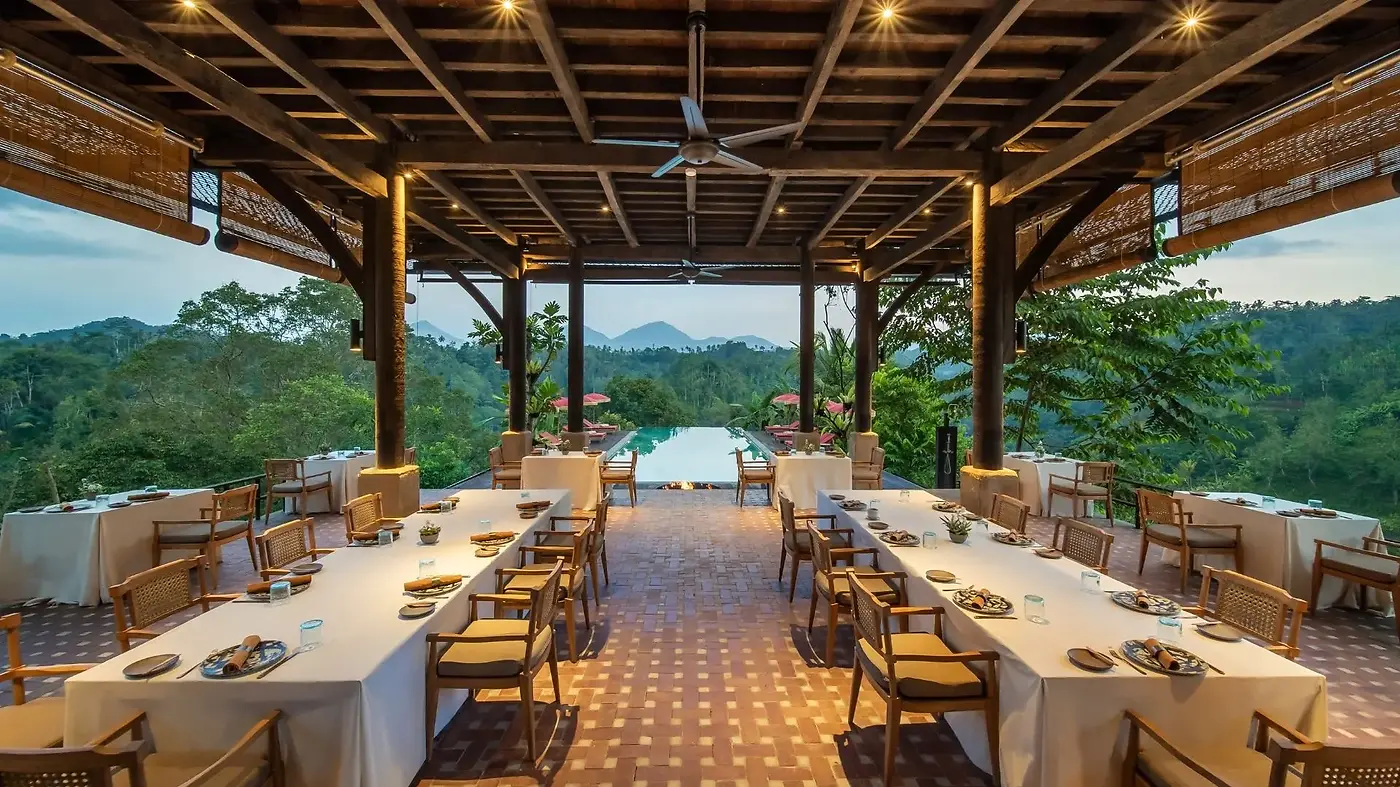
Buahan cooks almost entirely from what the jungle and the surrounding land provide, and its published figures run to around 80 percent plant-based and 80 percent local. Those numbers are the giveaway. They are targets fixed before anybody lit a stove rather than conclusions anyone reached by tasting, and once a number like that exists, every dish has to serve the narrative, and the narrative wins every argument it enters.
I still get a small chill remembering the jungle salad, assembled from leaves of a bitterness I had not previously encountered and a texture best described as slimy. At breakfast came a poached egg sitting in a heavy, reduced local fermented miso: ferociously salty, syrupy, and delivering so much umami at once that the dish had nowhere left to go. If the concept is that only a thin veil separates you from the jungle, this is that concept applied to breakfast, and I would like to formally request a slightly thicker veil in that one particular area. What struck me almost as much was everybody else. The oohs and aahs were flying and they were entirely sincere, and I have rarely felt so precisely identified as the wrong demographic.
Somebody brought me satay
Which brings me to the best thing about this place, and the reason I'd still tell you to go.
The escape hosts are superb, and they took most of the sting out of the entire business. We reported large spiders and various other implausible insects more than once and somebody arrived immediately, always calm, never once making us feel ridiculous for asking, and they come round three or four times an evening to check the balé anyway, which is either reassuring or unsettling depending on your mood. My best conversations of the stay came directly out of those visits, standing in the dark discussing what had just been removed from the bathroom.
And at some point my host worked out, without my saying a word about it, that I wasn't enjoying the food, and offered to bring some proper satay up to the balé instead. It arrived free of charge and it was excellent.
That one gesture tells you everything worth knowing here. The service culture is genuinely first rate, and the kitchen can cook beautifully the moment it stops being asked to prove something.
What I'd tell you
Their sentence is the right one. Only a thin veil separates you from nature. What nobody mentions is that a veil works in both directions, and that for one night you stop being someone observing the jungle and become something the jungle is fairly relaxed about observing back. The frogs were not startled. The lizard was not impressed. Somewhere above us a man with a radio wanted to know whether we were still alive.
If that appeals, book it, and book one night rather than three. Long enough to be overwhelmed, short enough that the damp doesn't get into your luggage. Understand you're buying a concept rather than a hotel, forgive the kitchen or eat extremely well on the way in, and let the hosts look after you, because they will.
I wouldn't call it one of the best hotels in Bali. I'm not sure it's a hotel at all. What I am sure of is that it's a real experiment rather than a decorated one, and experiments resolve in one of two directions. Either this turns out to be the start of something and in twenty years a category of travel exists that traces back to it, or it doesn't, and in twenty years we'll be saying do you remember that mad open-air place in the jungle. I have no idea which. But I've thought about that night more often than most of the flawless ones I've had elsewhere, and on this island that counts for something.
Buahan is available through The Banjar Collective, one night at a time.
GET IN TOUCH TO PLAN A STAY →