The short answer
In Ubud, the best show is free and happens outside the gate. Choose a hotel by whether it lets you see it. To be close to it: COMO Uma Ubud. To disappear completely: COMO Shambhala. To disappear with warmth around you: Amandari. For a hotel that is itself the experience: Capella or Buahan. Under $400: COMO Uma Ubud or Tanah Gajah. And whatever you book, arrive with a plan.
Get Ubud right and it stays with you for the rest of your life. Get it wrong and it becomes a place you went to once and never again. I’ve seen both happen to people with the same budget and the same good intentions. The difference was almost never the quality of the hotel. It was whether the hotel matched the Ubud they had come for.
On the coast, the choice is narrower. You pick a beach, and the beach decides a lot for you. Ubud is the opposite: there’s too much choice. I’ve written up twelve hotels here, and it could easily have been twenty-five. Most of them are good, and that’s what makes it hard.
Why is Ubud unlike anywhere else?
Bali is a Hindu island in the largest Muslim-majority country in the world. Almost nine in ten people here are Hindu, and Ubud is the island’s cultural heart. That isn’t a footnote for the brochure. It’s in the street every single morning.
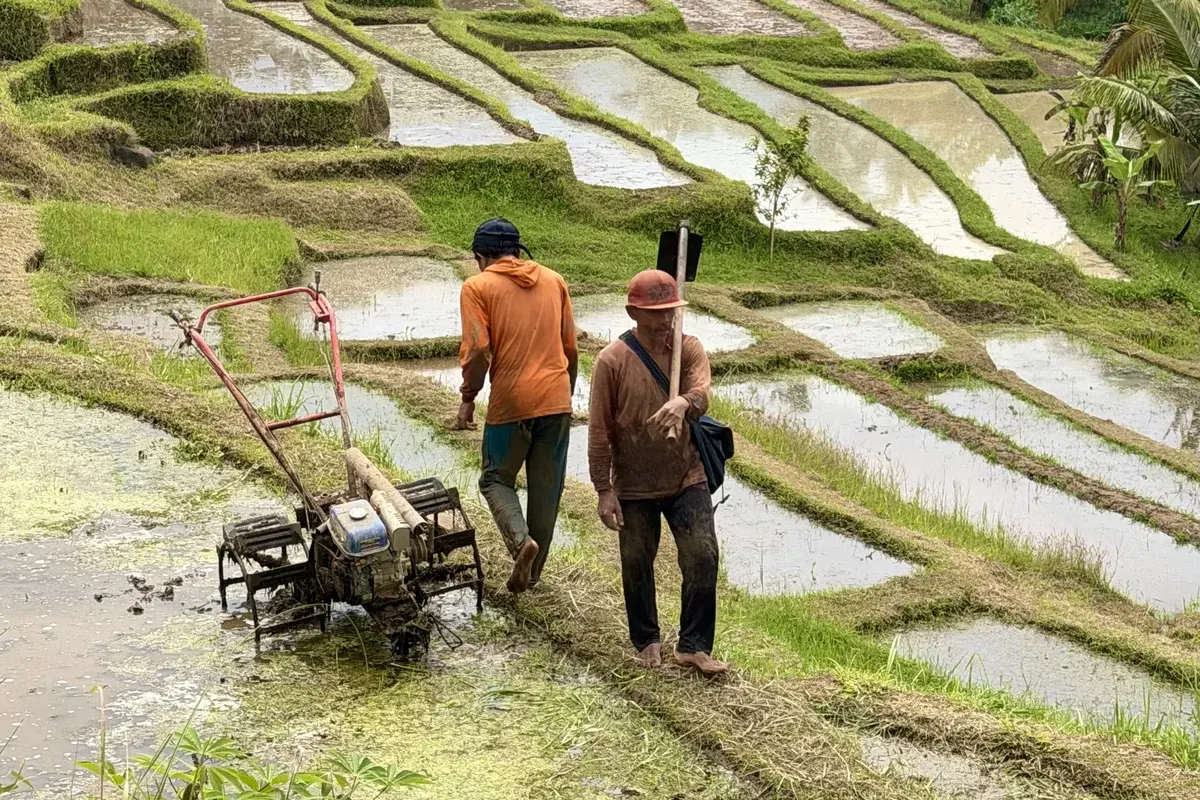
Every temple celebrates its anniversary every 210 days, by the Balinese calendar. There are so many temples that somewhere, today, one of them is having its birthday. Offerings appear on doorsteps before breakfast. Processions stop the traffic. A gamelan starts up behind a wall you’d walked past a dozen times.
The finest show in Ubud is free, it happens every day, and it takes place outside the gate of every hotel on this page. So the real question isn’t which hotel is best. It’s whether your hotel lets you see that, or keeps you from it.
Is Ubud still what people imagine?
Most people arrive with a picture that’s twenty years out of date. A book and then a film turned Ubud into the place you go to find yourself, and the internet has been selling the same image ever since. That Ubud existed. I walked through it. There were design shops, antique dealers and artists’ studios where you could lose an afternoon, and some of what I bought there I still look at every day at home in Europe.
Today large parts of the town are ugly, absurdly touristy and permanently stuck in traffic. The studios have been squeezed between shops selling cheap imports that perform authenticity rather than having any. Plenty of visitors conclude the old Ubud is gone. It isn’t. It’s still there between the noise, but it no longer finds you.
Four kinds of hotel
Ubud’s first hotel, the Tjampuhan, opened in 1928 as the royal guesthouse, and the painter Walter Spies built his studio in its grounds. You stayed to be in the middle of it all. Almost a century later, Ubud’s luxury hotels have split into four very different answers to the same island.
The hotel as the show: Capella and Buahan
These are experience hotels. You don’t come to see Ubud. You come to see the hotel.
Capella Ubud is Bill Bensley’s tented camp in the jungle: theatrical, witty and run by some of the best service staff on the island. It’s magnificent. It could also be anywhere. For honeymoons and anniversaries, if you can manage the steep stairs.
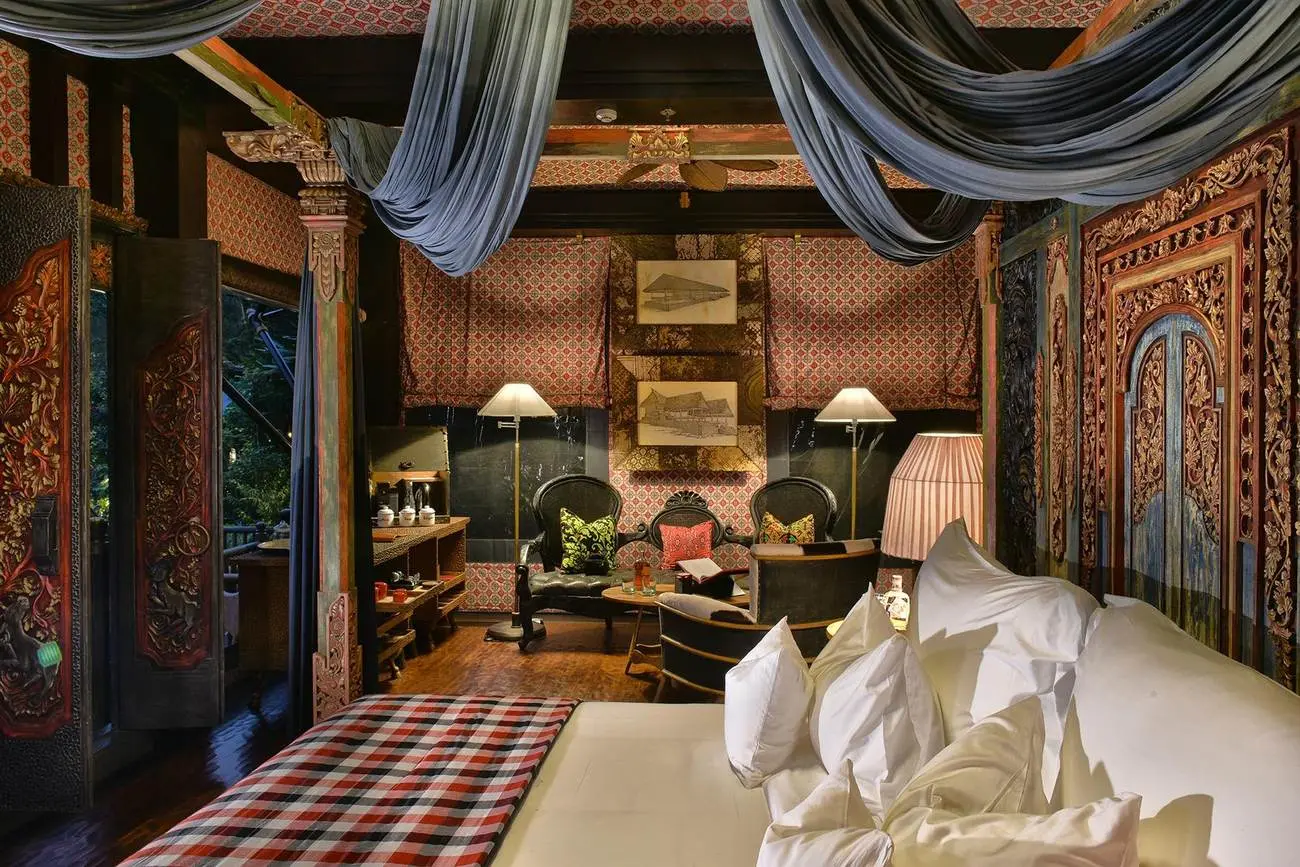
Buahan has no walls, no doors and no locks, just jungle, and two Michelin Keys. One night here is unforgettable. More than that is for people who don’t need a wardrobe and don’t mind being woken by the valley. Adults only.
The hotel that brings Bali inside: Mandapa
Mandapa takes the culture outside the gate and stages it within it: a temple on the grounds, a working rice field, a blessing on arrival, a gong for every guest. It’s the only hotel in Bali with three Michelin Keys, and it has the best food and rooms in the valley. If you want Bali performed beautifully without leaving the property, nobody does it better. How it compares with Four Seasons Sayan →
The hotel as a refuge
Here Bali becomes a view. You look at the valley rather than walk through it, and that’s the point.
COMO Shambhala. For a retreat, nothing in Ubud beats it. Whether you want to sit like the king of the jungle above the valley or wander down slowly to the natural pools in the forest, this is the place to vanish. It isn’t one hotel but several, spread over the estate where COMO’s spa and kitchen were born. Know what you’re booking: it’s very serene, you’ll hardly meet anyone, and nobody comes here to socialise.
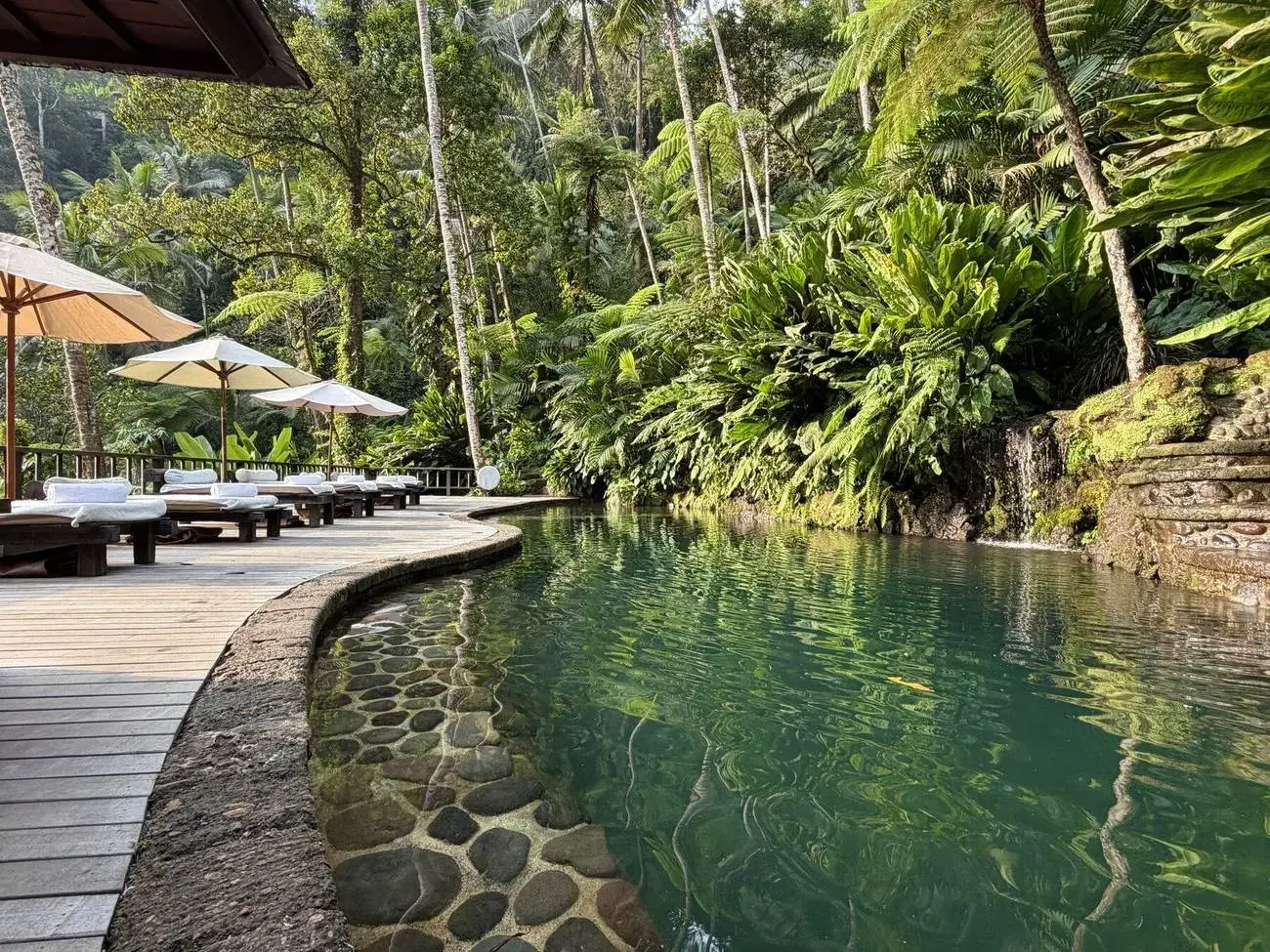
Amandari. If you want seclusion but not solitude, this is my favourite. The 1989 original that started Bali’s boutique era is compact and built like a Balinese village, so you see the staff and the other guests all day, and everything happens around one pool with a magnificent view. Not the place you book for the kitchen.
Four Seasons Sayan. One of the great arrivals in the world, across a bridge onto a lotus pond and down into the valley. Magnificent architecture and a rebuilt spa, but the food is safe and the hotel a little too well-behaved. The more remarkable place, though not the better hotel.
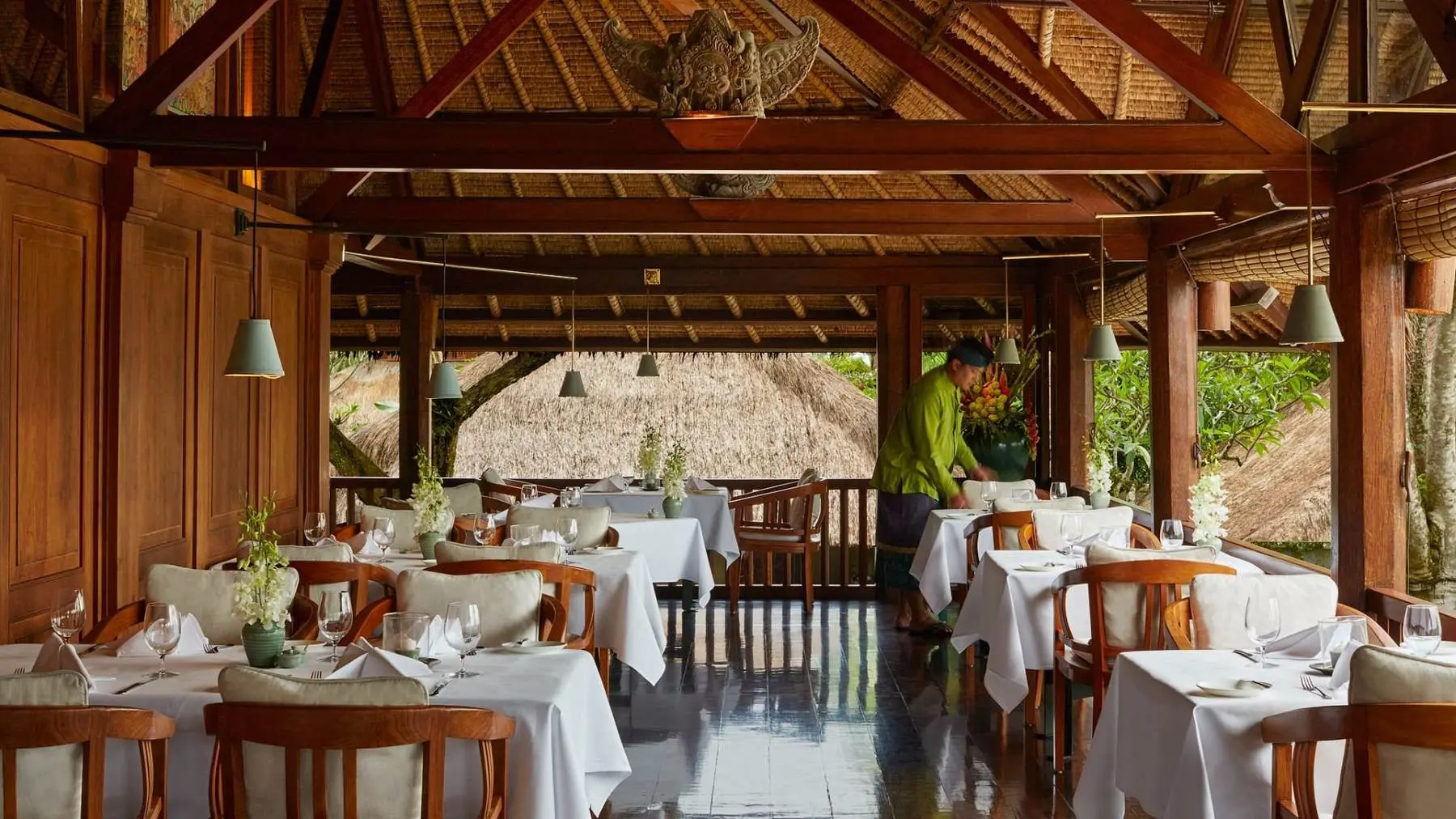
Anantara Ubud. It has almost no grounds, so it turned inward and made the view the point: three valleys and Mount Agung from the terrace. Very good value, and very far from everything else.
The hotel as a window
These put you close enough to the real Ubud to see it, if you know where to look.
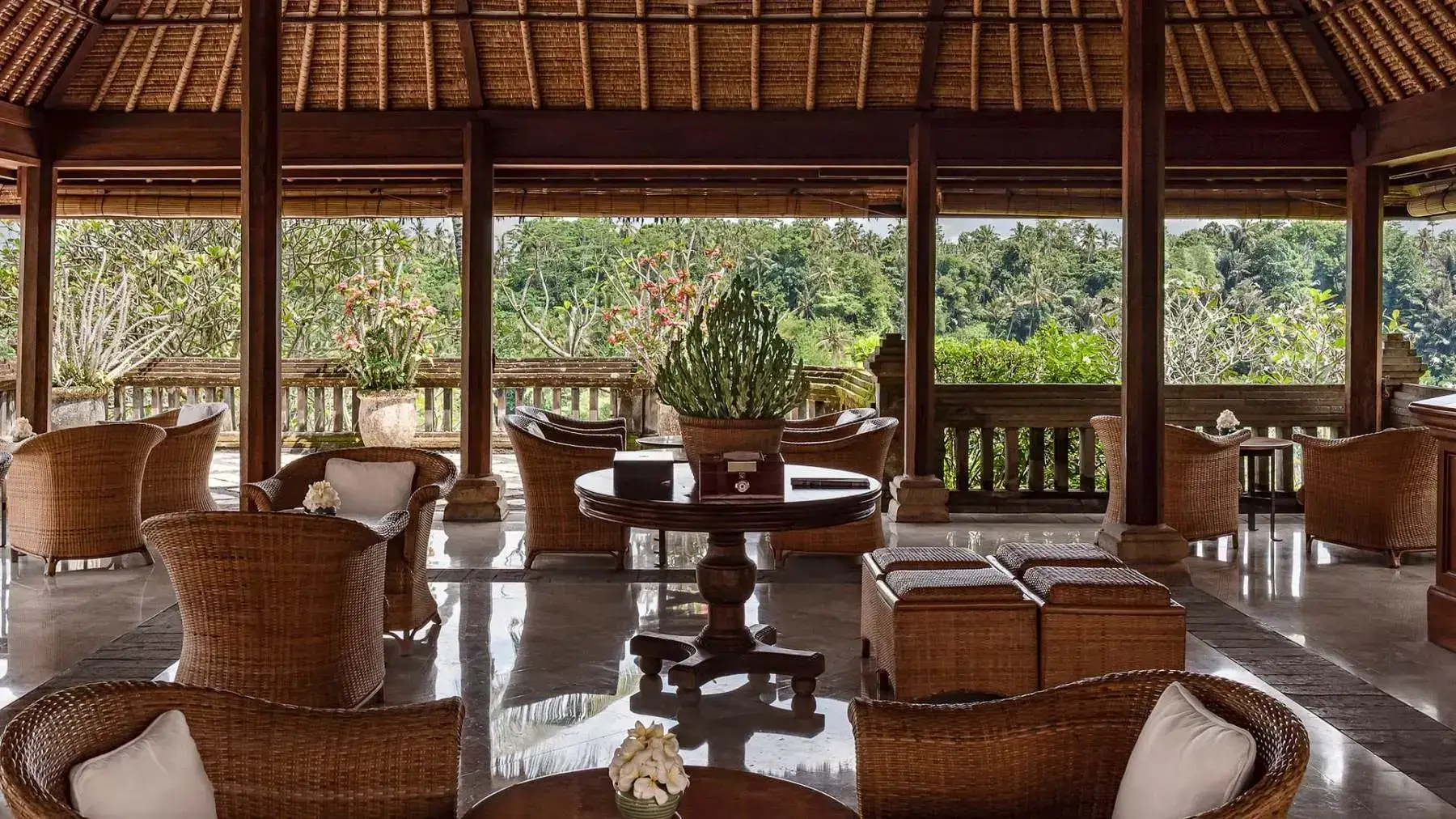
COMO Uma Ubud. For me, this is the ultimate close-to-Ubud hotel. It sits next to my favourite museum, the Neka, and the start of the Campuhan Ridge walk. A short drive gets you into the centre, yet inside the gates you have the quiet the town lost years ago. I can walk to Room4Dessert for a drink at the bar, there are ribs across the road, and if I don’t feel like paying for the excellent spa inside, there’s a simple one opposite for a fraction of the price. On nights in, the hotel’s own restaurant and bar are lively enough. It’s fairly priced, which leaves more for everything else, and it’s a superb base for day trips because you’re out of town before the traffic finds you.
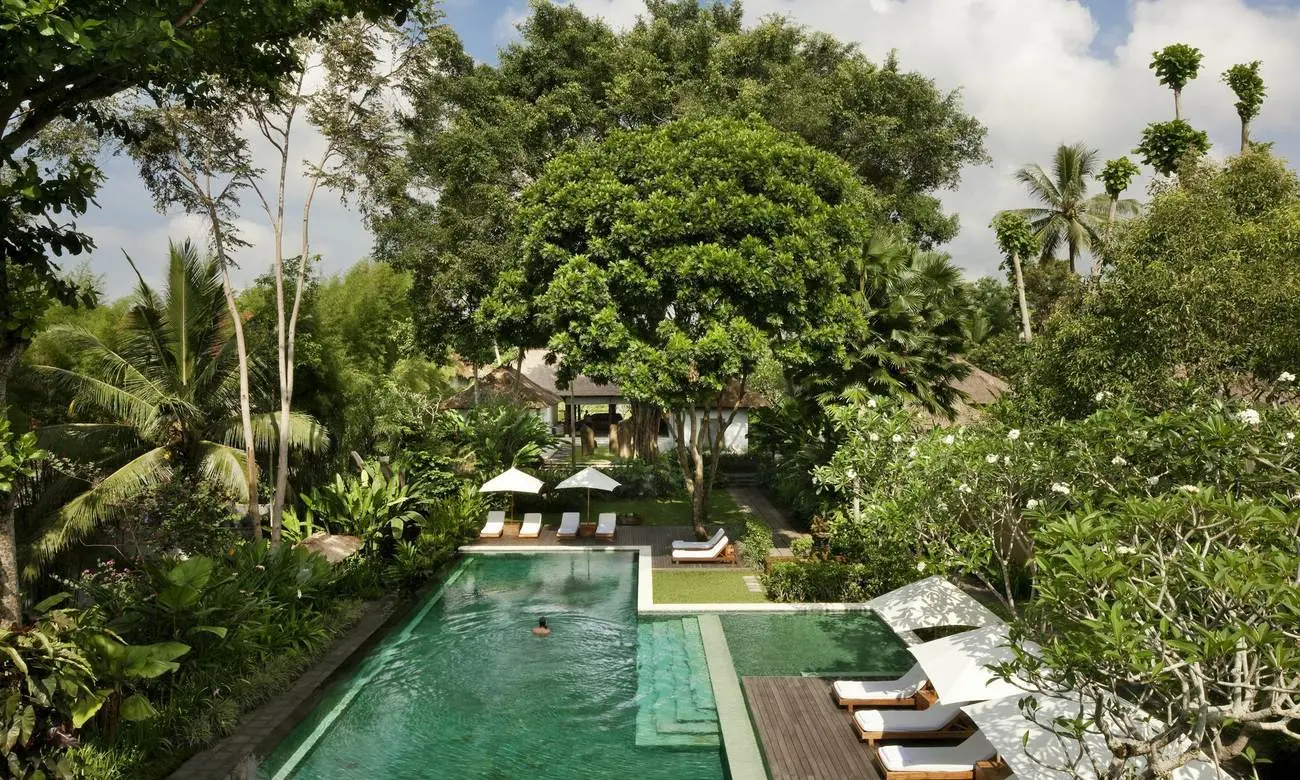
Tanah Gajah. Twenty villas on flat rice fields at the edge of town, on land that belonged to the Indonesian architect Hendra Hadiprana. His family took it back after he died, and much of the team trained in the Zecha years stayed. One set menu at dinner, and service with that whole history in it. The easiest grounds in Ubud if walking is hard.
Bisma Eight. The one hotel that stops pretending Ubud isn’t there. Young, lively, four minutes from the Monkey Forest, and one of the few independent, locally owned hotels in Ubud with a Michelin Key.
Viceroy. Owner-run on the edge of the gorge, just outside town, with a heated pool in every villa. Ask which villa, because they vary.
Alila Ubud. Kerry Hill’s 1996 Chedi, fifteen minutes north. A magical building with service that lags behind, and a superb base for exploring if you book it the right way.
What does each choice cost you?
Each kind of hotel has a cost that no website shows: time. If you’ve chosen a refuge or a show, it barely matters, because you won’t leave much. If you’ve chosen a window, it’s exactly why you chose it.
What your choice costs in the car
| Where you sleep | Each way | Per week |
|---|---|---|
| Bisma Eight | On foot | Nothing |
| COMO Uma Ubud | A short drive | Under an hour |
| Alila Ubud | 15 min | About 3½ hours |
| COMO Shambhala | 20 min | Almost 5 hours |
| Capella | 20 to 30 min | 5 to 7 hours |
| Buahan | 40 min | More than 9 hours |
| Anantara | 45 min | More than 10 hours |
One return trip into the centre a day, before evening traffic.
By budget, for two
| Budget | Hotels | My pick |
|---|---|---|
| Under $400 | Alila Ubud ($192), Bisma Eight (from about $200), COMO Uma Ubud ($280), Anantara ($323), Tanah Gajah ($376) | COMO Uma Ubud to be close; Tanah Gajah for service |
| $700 to $1,000 | COMO Shambhala ($759) | COMO Shambhala |
| Over $1,000 | Four Seasons Sayan ($1,170), Mandapa ($1,368), Amandari ($1,392), Capella ($1,663) | Amandari for warmth; Mandapa for food |
Cheapest rates with breakfast and taxes on each hotel’s own website, two nights in mid-November 2026. Booked through us, the rate is the same or better, with benefits on top.
The surprise is how much of Ubud’s best sits under $400. Above a thousand dollars you pay for a setting and a name, and both are worth having, but quality doesn’t rise in a straight line with the price.
A brand or an owner?
Most of these hotels belong to a company you already know: Four Seasons, Marriott, Hyatt, Minor, Banyan Tree, Capella, Aman, COMO. A brand sells certainty, and your points usually come with you. Three are different: Tanah Gajah, Viceroy and Bisma Eight are run by owners. A brand sells certainty; an owner sells character. It’s no coincidence that the old Ubud survives best where someone’s name is still on the door.
Children, stairs and offers
With small children, Ubud is expensive. On each hotel’s own website, only Alila Ubud and Anantara kept a family of four under $400 a night. Four Seasons Sayan was the gentlest step up; Amandari and Mandapa sent us to three-bedroom villas at more than four times the price for two. What 43 hotels charge a family →
If stairs are difficult, Ubud is the hardest part of Bali. Tanah Gajah is the one genuinely easy hotel, and Mandapa manages with ramps, a lift and buggies. The easiest hotels in Bali →
Offers are running at Amandari, Mandapa, Four Seasons Sayan, COMO Shambhala, Buahan and Anantara. All of them, with the small print →
The show outside the gate
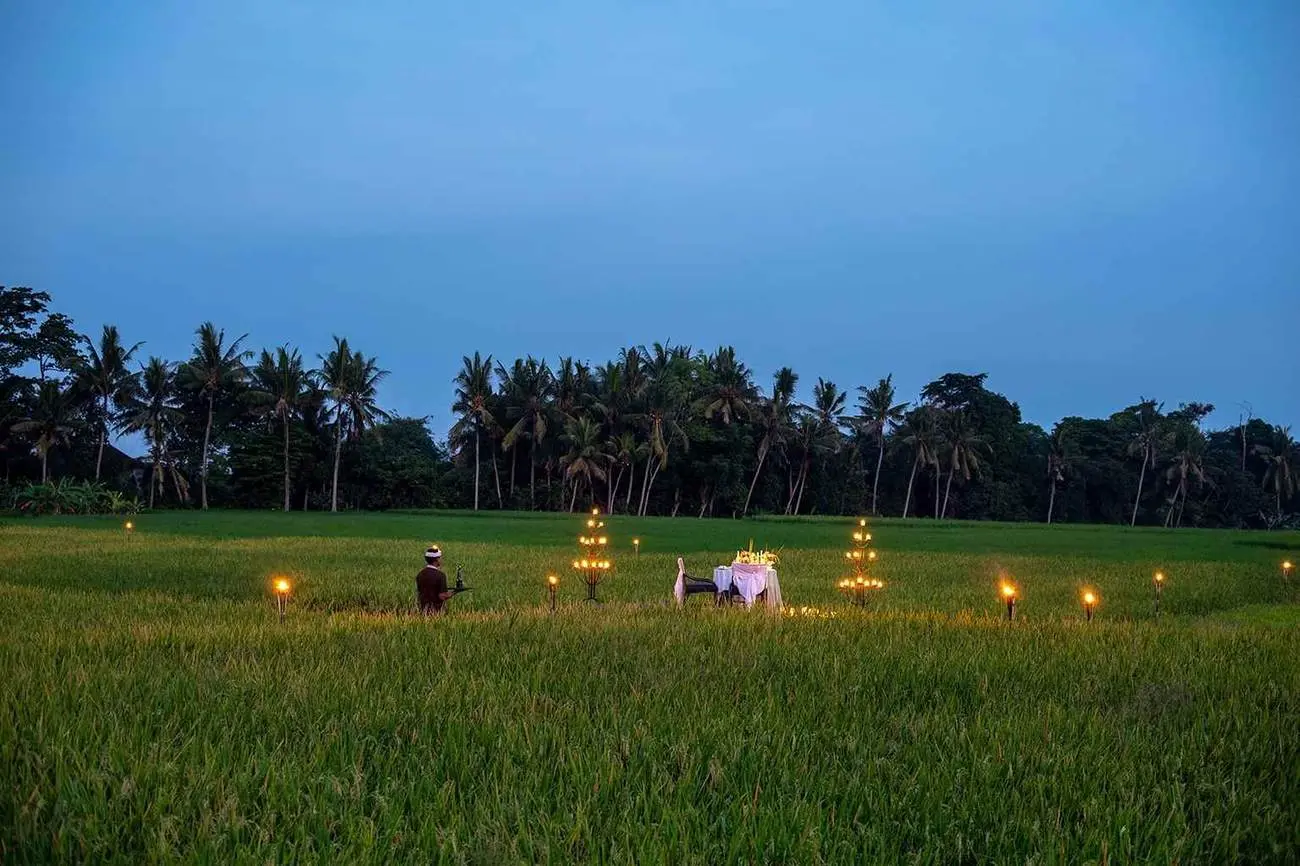
Every morning, the best of Ubud happens on the road. A procession, a temple in festival dress, a cremation tower being built in a village square. Without someone who knows which temple is celebrating this week, you drive straight past it.
That’s what Wayan does. He grew up inside that calendar, and he knows where the day’s ceremony is before the tourists do. It’s also why I plan Ubud before I land: a ceremony in the morning, a massage in one place, coffee in another, lunch and a studio nearby, so the good parts string together without the bad parts in between. I keep those addresses for the people I plan trips for, because a list on a website is the quickest way to ruin a good place.
Choose the right kind of hotel, arrive with a plan, and Ubud will be a place you come back to for the rest of your life.
Tell us what kind of Ubud you’re after, and we’ll match the hotel, the days and the dinners to it.
PLAN MY UBUD →