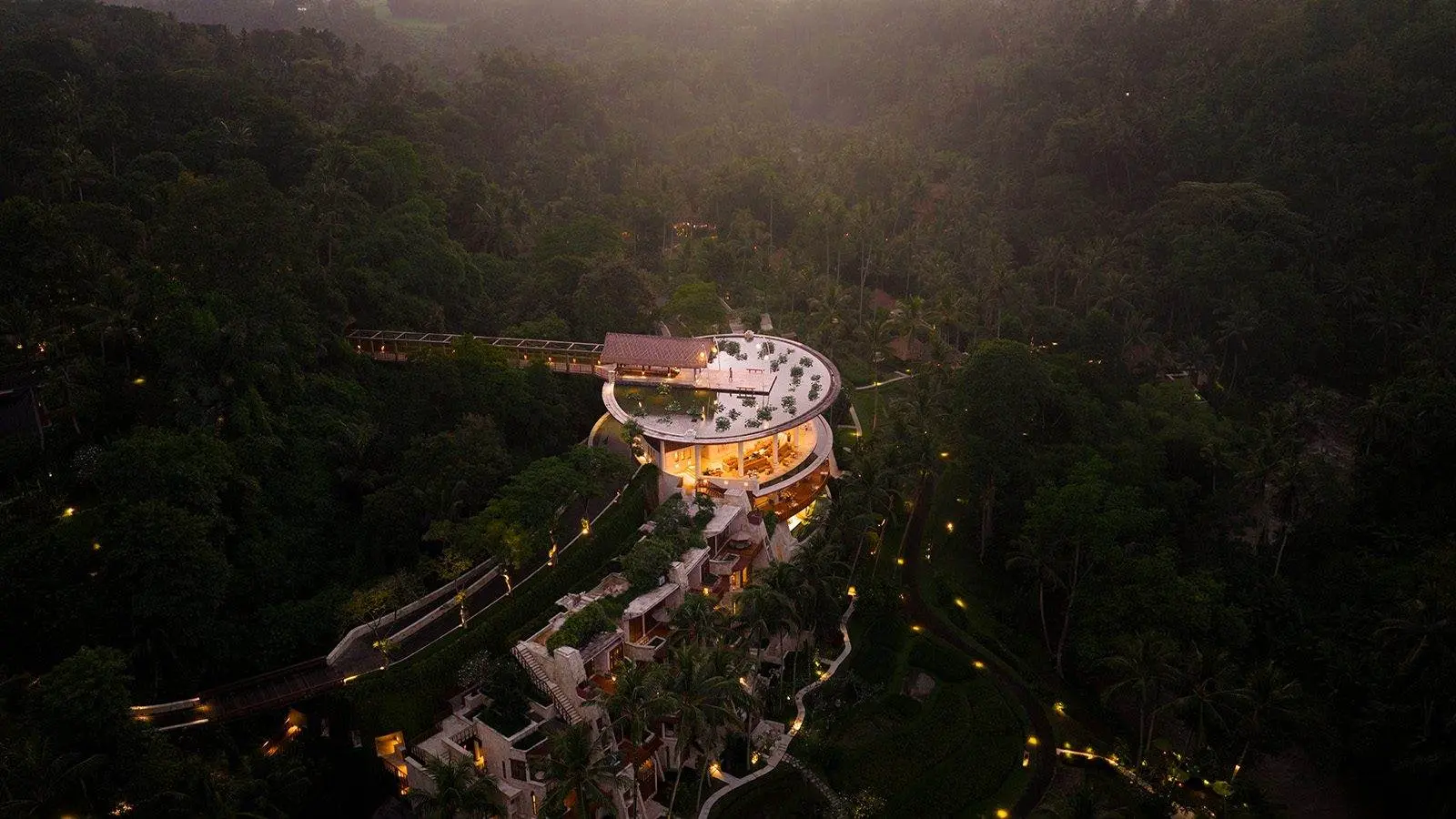
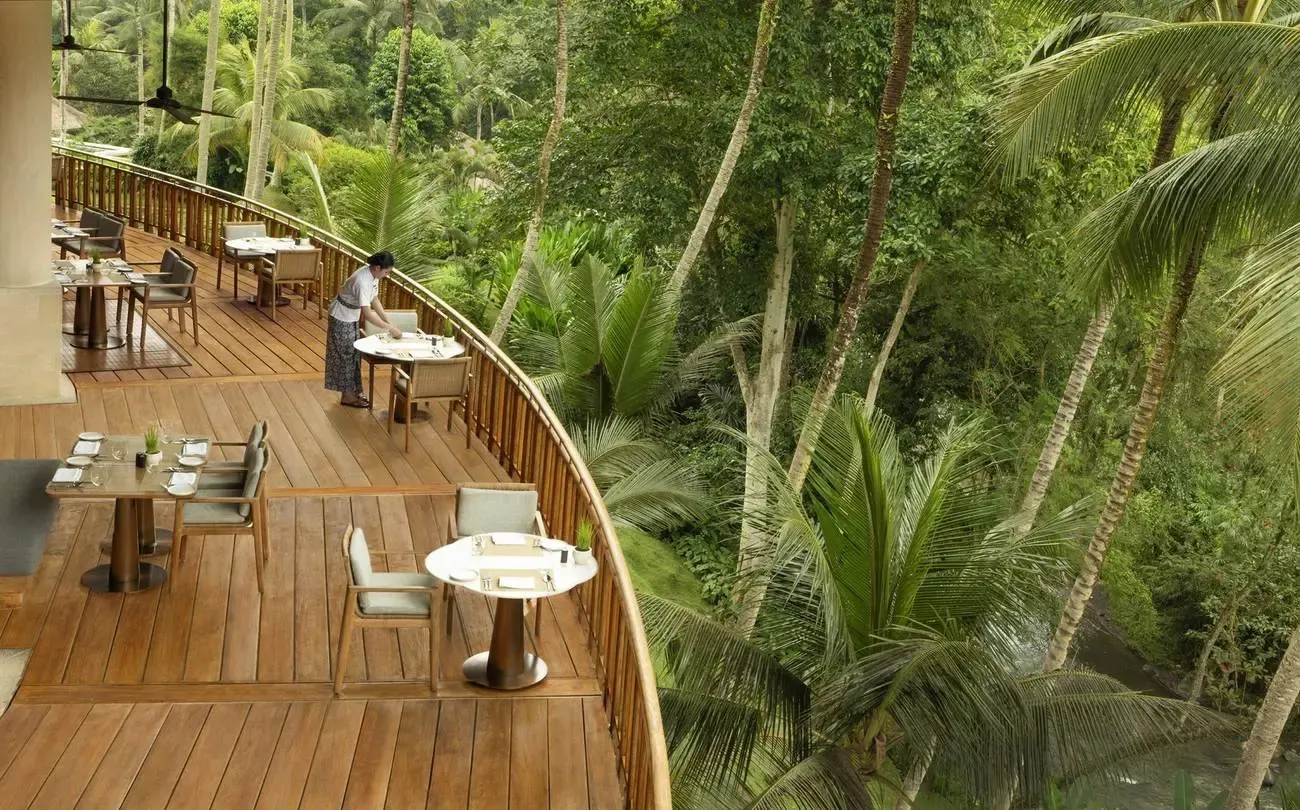
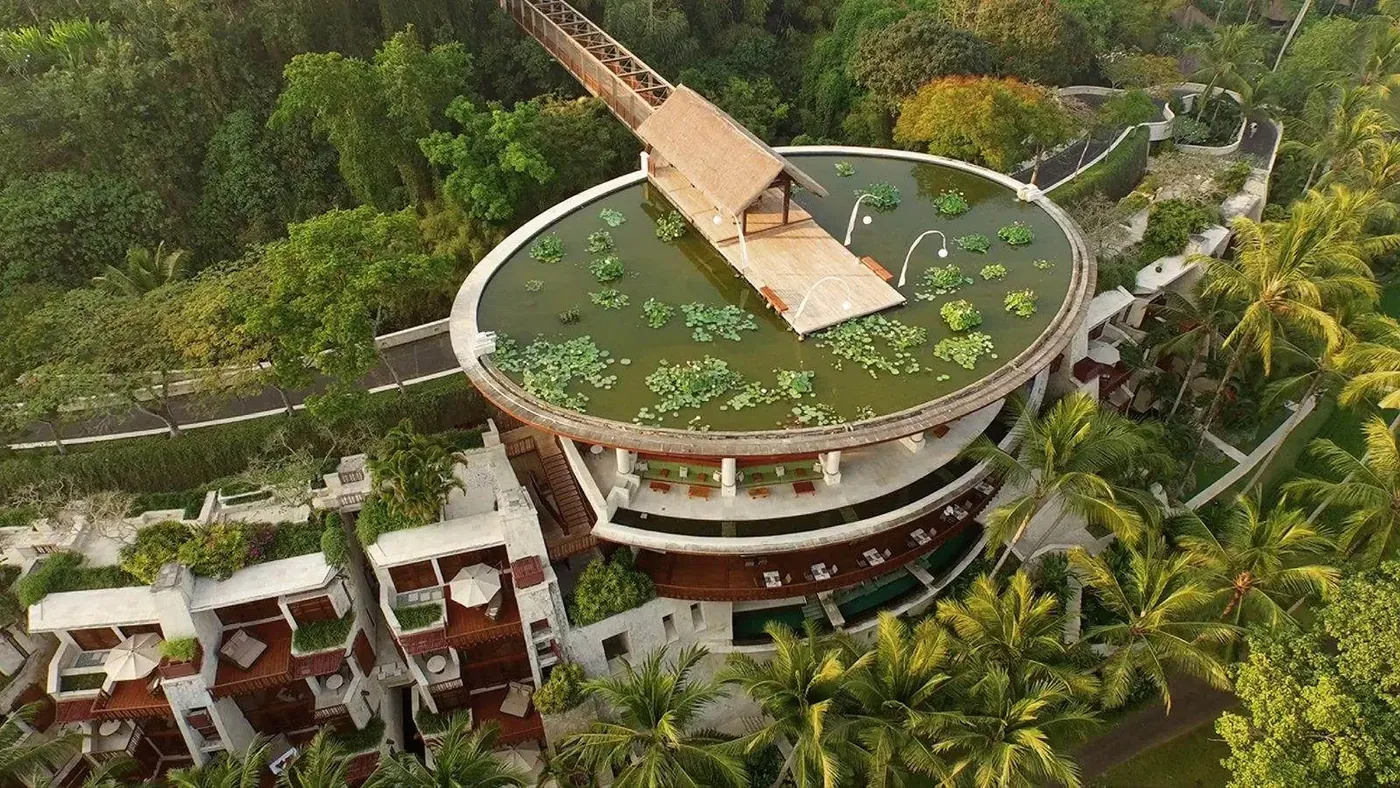
The entrance gives almost nothing away. A modest gate on a quiet, unremarkable street, easy to drive past without a second look. You walk in, cross a bridge, and arrive on a rooftop, and that's the moment the hotel reveals itself: the valley opens beneath you, the Ayung river cutting through the jungle far below. The main building is shaped, deliberately, like a giant rice bowl, its levels stacked so the lobby, the bar and the terrace restaurant all look out over the same view from different heights. From up here you feel small against the landscape. Then you walk down, level by level, and the feeling changes entirely. The birds get louder, the river grows into a roar, and somewhere a Balinese instrument I still can't quite place drifts through the trees. You're not looking at nature anymore. You're inside it.
That descent, more than anything else, is what stays with me about Four Seasons Resort Bali at Sayan.
The problem with researching a hotel
Before I get to what the hotel actually is, I want to name a problem I think about often, both as a traveller and as someone who books stays for other people. You can read a hundred reviews. You can watch every video a hotel's marketing team has ever produced. You can study the photos until you know the layout of the pool by heart. None of it tells you the one thing that actually matters: whether that place will feel like it fits you.
Reviews tell you what a hotel is. They rarely tell you who it's for. A five-star rating means very little on its own, because the traveller who left it might want the exact opposite of what you want. This is where I think an advisor who genuinely knows a place, not just from a brochure but from having stayed there, spoken with staff, and returned more than once, can offer something a review site structurally cannot: a sense of fit, not just of quality.
Four Seasons Sayan is a good place to make that case, because it's an extraordinary hotel that isn't, I'd argue, extraordinary for everyone in the same way.
A resort built into the valley, not above it
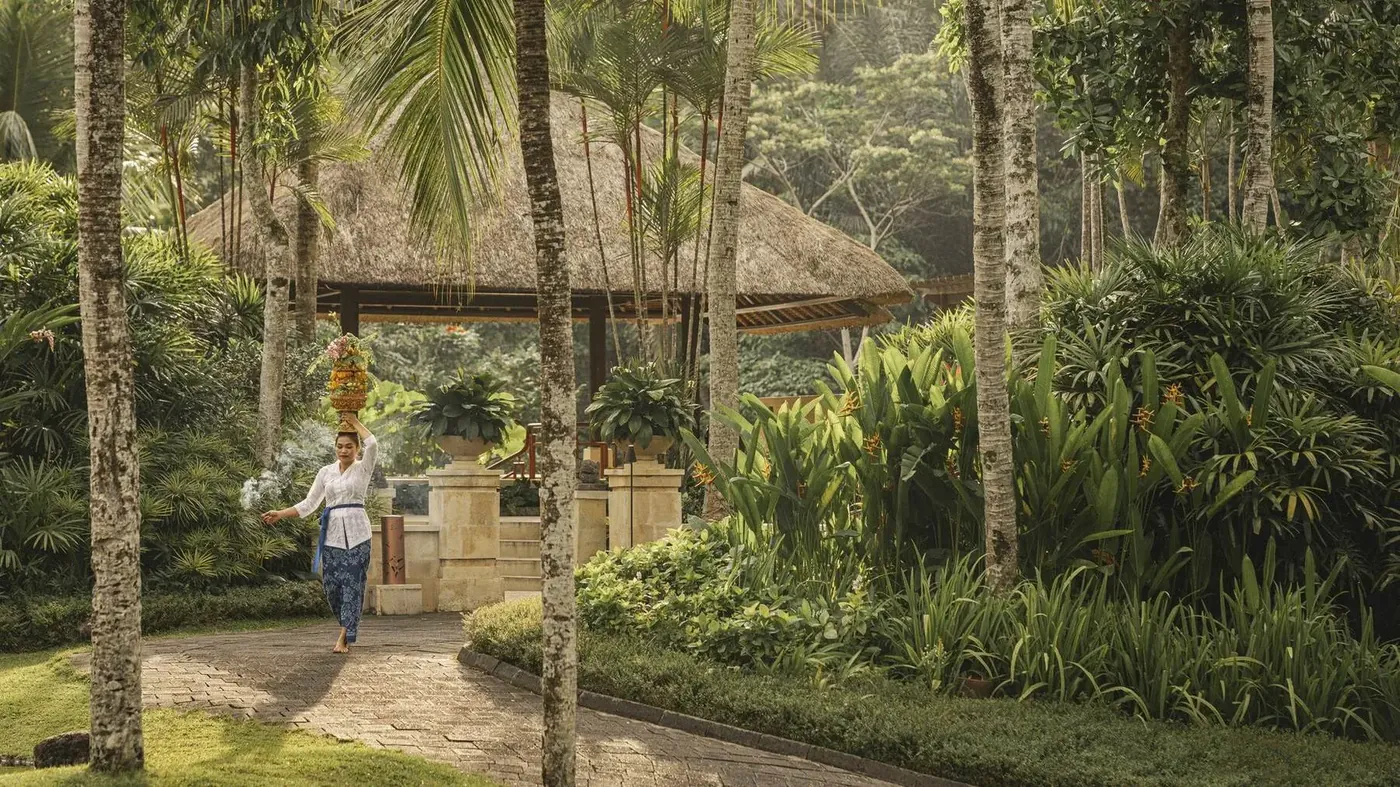
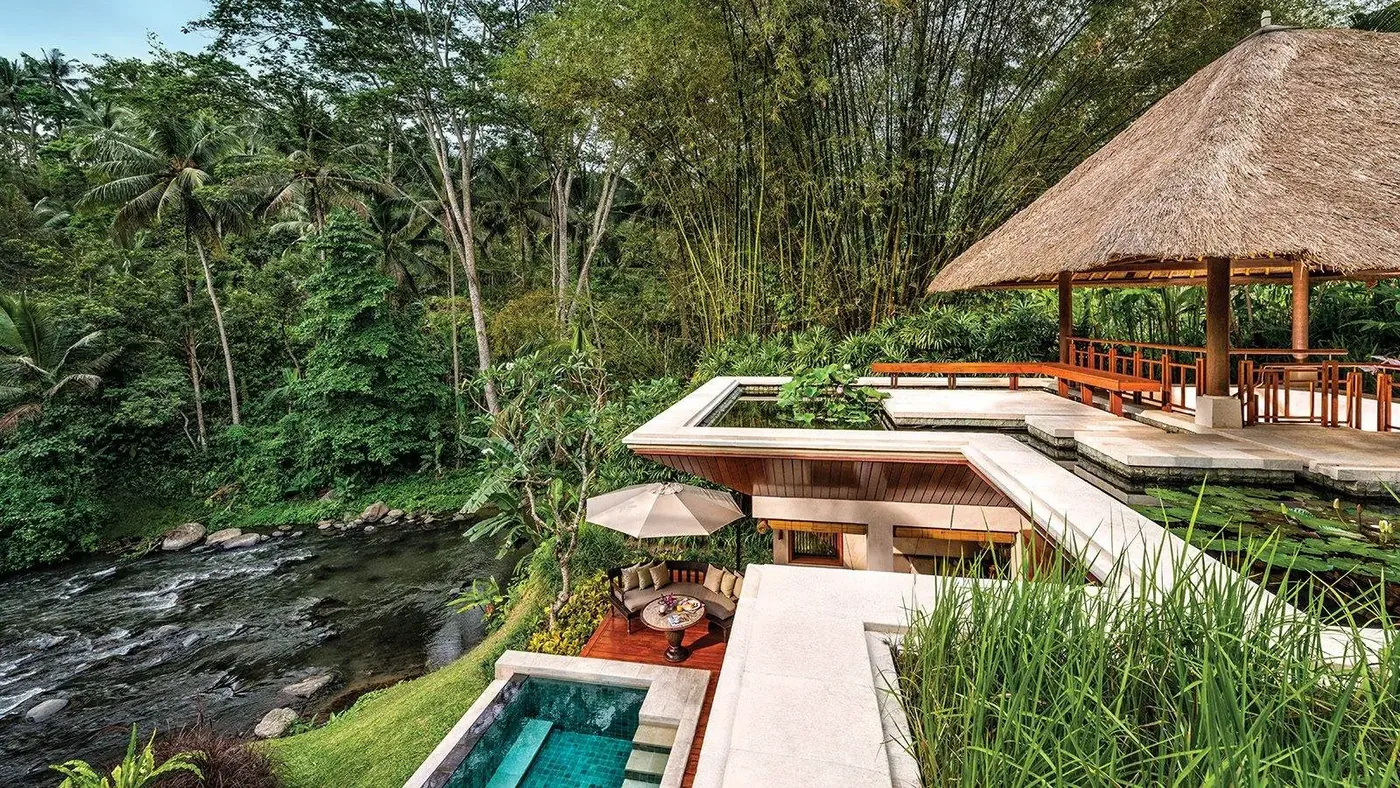
Most of Ubud's grand hotels choose elevation or expanse. Some sit on a ridge with a sweeping panorama. Others, like Tanah Gajah, spread out across rice paddies, open and horizontal. Sayan does neither. It descends into the valley floor, close to the river, hemmed in by jungle on both sides. That choice shapes everything about how a stay here feels. You're not surveying Bali from a comfortable distance. You're tucked inside a hidden ravine, and the trade-off is that you feel, in a good way, somewhat enclosed. This is a hotel you settle into for the day rather than a base you head out from each morning. The grounds themselves are reason enough to stay: manicured without ever feeling sterile, dotted with open-air bales, scattered rice terraces, and architecture considered enough that you could spend hours simply wandering it.
An investment in wellness that goes further than most
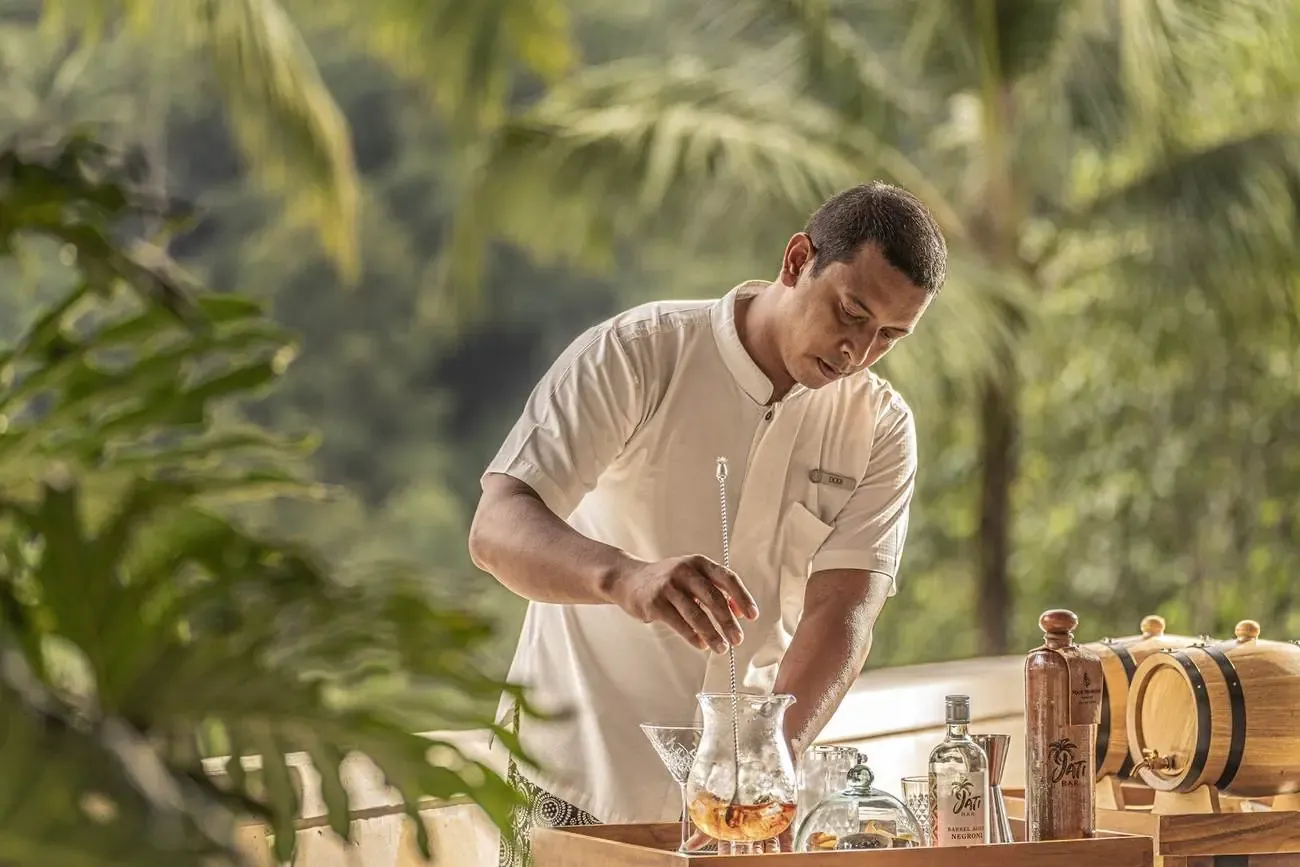
Where Sayan distinguishes itself most clearly is wellness, and not in the generic spa-menu sense. The resort's Sacred River Spa is led in part by Ibu Fera, a former Buddhist nun who studied Dharma in monasteries across Asia and now hosts something called the Sacred Nap: guests cocooned in suspended silk hammocks, guided through meditation and sound therapy rather than a conventional massage. The signature Muladhara Chakra Ceremony blends energy work with bodywork. Laughter Yoga starts the day with forced, collective laughter beside the lotus pond, which sounds absurd until you're in it. There's even a smoking ceremony for the lower back, which is exactly as unusual as it sounds.
I took the more conventional treatments myself, simple massages, and they were excellent, if genuinely expensive even by Bali's five-star standards. One thing worth knowing if you book through a Virtuoso advisor: most Four Seasons stays include a one-time resort credit, typically $100 for standard rooms and up to $200 for suites and villas, which can be applied directly to spa treatments or dining. It won't offset a week of treatments, but it takes a real edge off that first splurge.
What struck me most about the spa wasn't any single treatment, though. It was the sense that someone had decided, at an institutional level, that wellness here should be distinctive rather than default. That's a harder thing to build than a beautiful pool, and it shows.
A kitchen that plays it safe
Food is where I'd push back a little. It's good, comfortably at the level this category demands, but it rarely takes a risk. Mandapa, arguably the only real point of comparison in this part of Ubud, does something bolder with its menus, and the difference shows in how each hotel makes you want to spend your time. At Mandapa, I found myself wanting to stay on the grounds all day. At Sayan, I found myself, more than once, heading out to eat in town instead.
The one clear exception is Sokasi, the resort's riverside cooking school, designed by the bamboo specialists at IBUKU. The building itself is worth the booking alone: its roof is shaped like a curved leaf, its contour bending to follow the exact curve of the river beside it. You cook at an open-air counter with the water on one side and the resort's own herb garden on the other, picking lemongrass and chilies straight off the plant before they go into your pan. It's the one place at Sayan where the kitchen matches the ambition of the architecture around it.
Brilliant architecture, imperfect intimacy
That architecture deserves real credit, and also a small caveat. The main rice-bowl building is genuinely one of the most striking pieces of hotel design I've seen in Bali, but its open, stacked levels come with a cost: sound travels. Conversations, footsteps and service noise carry more than you'd expect in a resort built around calm, and it slightly undercuts the sense of privacy the design is otherwise so good at creating. It's a minor point against an otherwise remarkable building, but worth knowing before you book a room close to the lobby.
There's a second, more specific version of this worth flagging. I stayed in one of the simpler duplex rooms myself and loved it, but the riverside villas, the ones with the postcard view straight onto the Ayung, come with their own trade-off. Guest reviews echo what I'd suspect: the river itself is a constant, audible presence, closer to a rush than a murmur, and the rafting boats that pass below add their own bursts of noise throughout the day. None of it is unpleasant exactly, but if you're booking Sayan for hushed, uninterrupted privacy, the standard rooms and garden-facing villas may actually serve that goal better than the premium riverside ones do.
The ghost that supposedly still walks the grounds
Among longtime guests, a story keeps circulating: that Julia Roberts stayed here while filming Eat, Pray & Love. It comes up in conversation more than once if you spend enough time at the resort, always slightly differently told. I couldn't pin down a reliable source for it, and the more documented accounts of that shoot point elsewhere on the island. Whether it's true almost doesn't matter. It's the kind of story a place like this attracts, and it says something about the atmosphere Sayan cultivates that guests want it to be true.
Who this hotel is actually for
Here's where I want to be careful, because I don't think this is a weakness of the hotel so much as a description of its character. There's a particular kind of traveller for whom Four Seasons, specifically, is the only acceptable standard: familiar systems wherever in the world they land, a consistency of service and polish that doesn't waver, an international fluency that means you always know exactly what you're getting. It's not a coincidence that the Four Seasons name has become shorthand in popular culture for a very specific kind of luxury traveller, even if the shows that made that association famous were filmed at other Four Seasons properties, never in Bali. That guest exists, is a wonderful guest to have, and Sayan is built, brilliantly, for exactly them.
I'm not quite that guest. I come to Bali for the parts that are specifically, unmistakably Balinese, and at Sayan I sometimes felt like I was inside an extraordinary world of its own rather than inside Bali itself. That's not a flaw. It's a design choice, executed about as well as it can be. Como Uma Ubud pulls you toward the island around it. Sayan builds something complete enough that you might never feel the need to leave. Neither approach is more correct. They simply suit different reasons for travelling.
That, in the end, is what a review can't tell you, and what I think a good advisor can: not whether a hotel is good, but which kind of good you're actually looking for.
Four Seasons Resort Bali at Sayan is available through The Banjar Collective.
GET IN TOUCH TO PLAN A STAY →