The verdict
Same brand, same standards, and two completely different holidays: the valley or the sea. Four Seasons Jimbaran Bay (No. 11 on The Bali 20), from around $700 a night, is the better hotel overall: service a class above, livelier kitchens, the best resort in Bali for families, and a happy place in the truest sense. Four Seasons Sayan (No. 18), from around $800, is the more extraordinary place: the most beautiful hotel entrance on the island, grounds among the finest in the world, and a spa unlike any other. Both deliver the Four Seasons certainty that makes the brand so trusted, and both, to my taste, lose a little of Bali in the polish. Choose Jimbaran for people and pleasure, Sayan for the place itself.
Ask anyone who knows luxury hotels which Four Seasons in Bali is the famous one, and they'll say Sayan. It's been called one of the best hotels in the world for decades, and it's the one people put on their lists. And yet, on The Bali 20, it sits seven places below its sister on Jimbaran Bay. That isn't because Sayan is the lesser place. It's because Jimbaran is the better hotel, the one I'd recommend to almost anyone without hesitation, and Sayan is the one I'd only recommend to the right person.
At a glance
| Jimbaran Bay | Sayan | |
|---|---|---|
| Where | Hillside above Jimbaran Bay | In the Ayung valley near Ubud |
| From the airport | 15 to 20 min | 60 to 90 min |
| Entry room, per night | From around $700 | From around $800 |
| Size | 147 villas and 9 residences | 60 suites and villas |
| Service | A class above, generations deep | Friendly, a little deferential |
| Eating | Jala, Telu, Sundara, Rumari next door | Ayung Terrace, Riverside, Sokasi cooking school |
| Spa | Healing Village Spa, excellent | Sacred River Spa, exceptional |
| Best for | Families, people, pleasure | Couples, wellness, the setting |
| The Bali 20 | No. 11 | No. 18 |
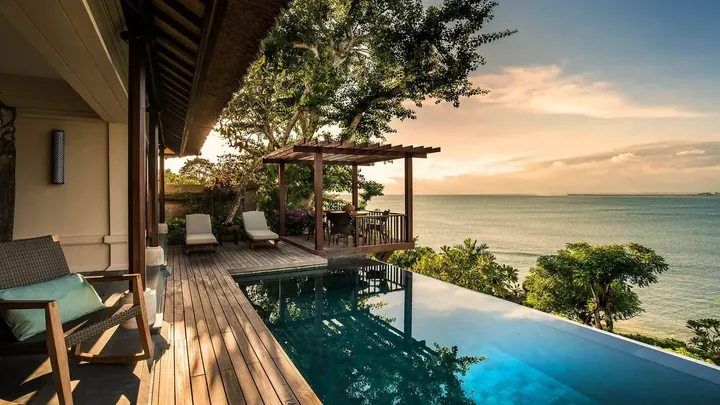
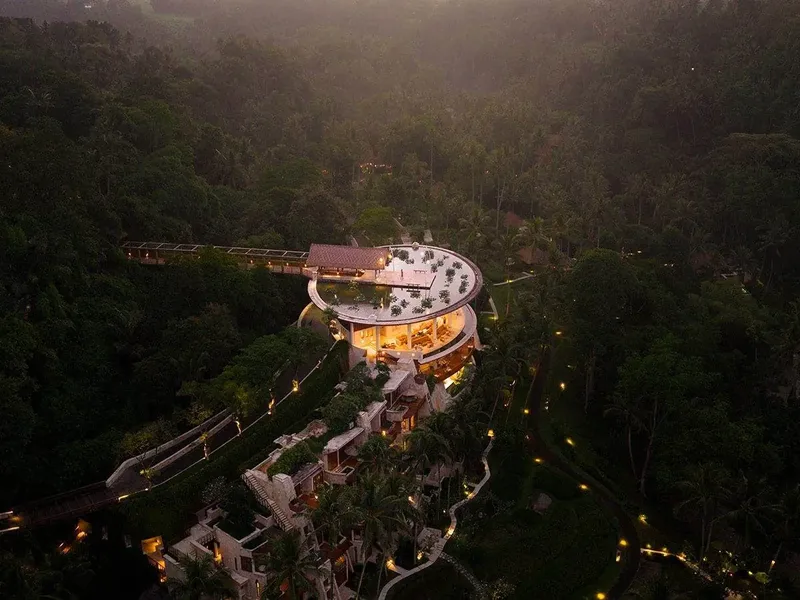
Numbers on the photos are positions on The Bali 20. Rates are for the entry category at the time of writing, September 2026, and move with the season.
What does the Four Seasons name buy you?
Certainty, and nobody does it better. Four Seasons has done something no other hotel group has managed quite so thoroughly: it has set the same towering standard everywhere in the world. For a great many travellers, and a good many wealthy ones, travel itself feels a little risky: the wrong food, a bathroom you'd rather not look at too closely, staff who don't understand you when English is all you speak. Four Seasons takes all of that off the table. Wherever you land, the beds are immaculate, the kitchen is safe, the service is fluent, and everything runs to the same polished, businesslike rhythm. No hotel brand on earth is as organised. Nobody books a Four Seasons to be surprised by the plumbing.
That is the brand's greatest strength, and for travellers like me it's also a small weakness. Put crudely, the polish that makes every Four Seasons reliable also makes them a little interchangeable, because polish tends to sand off the edges where authenticity lives. The strange thing is that these two are probably the most exotic hotels in the entire Four Seasons portfolio: a village of villas with a resident priest, and a rice bowl sunk into a jungle ravine. But set them against the rest of Bali, and something shifts. Both are excellent, genuinely so. And yet I miss something at both, the thing I find at a Tanah Gajah or an Amandari, where the island gets under the door. That's why they sit at 11 and 18, and not in the top ten.
Which has the better arrival and grounds?
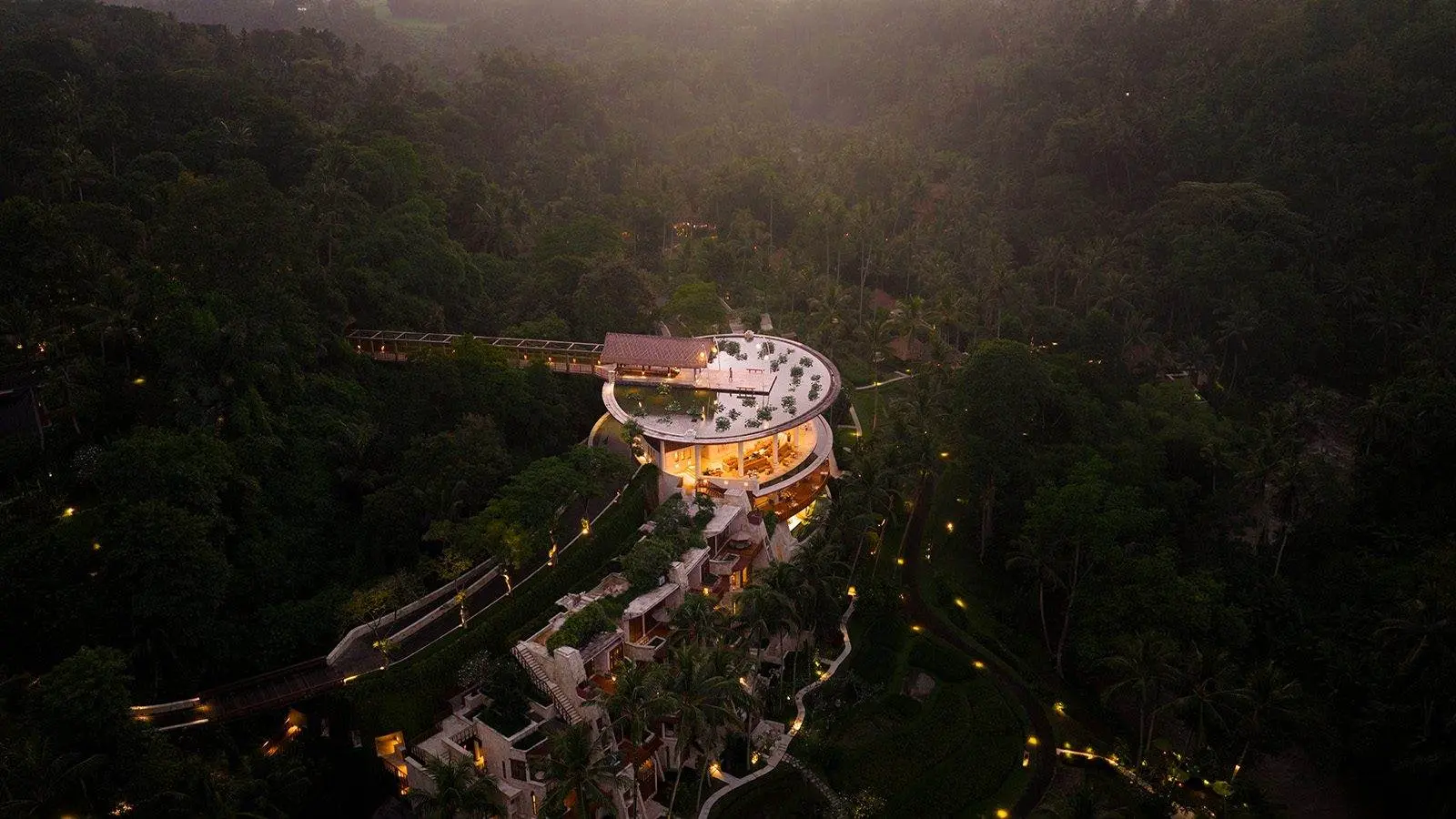
Sayan, easily, and it has one of the finest settings of any hotel in the world. It also has the most beautiful hotel entrance on the island, precisely because it gives nothing away. You arrive at a modest gate on a quiet street near Ubud, cross a long bridge over the treetops, and step out onto the roof of the main building, where a lotus pond seems to float above the valley. Only then does the ravine open up beneath you, the Ayung river cutting through the jungle far below. Most hotels make you look up at them. At Sayan, you arrive at the top and walk down into it, level by level, until the building disappears into the jungle behind you.
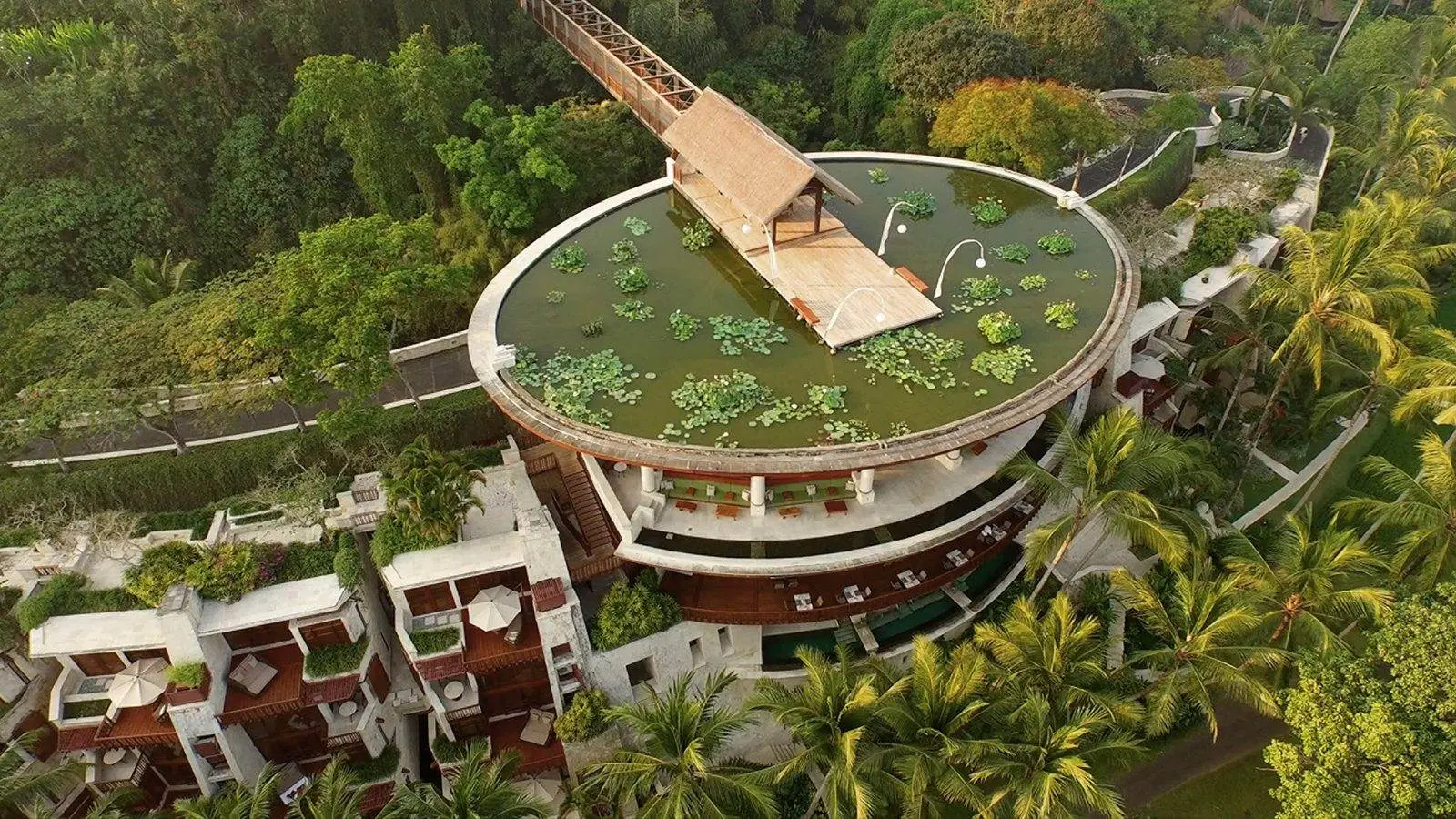
And down there, the feeling is almost impossible to describe. The fast river is loud, a hard roar rather than a murmur. Around it there's a cacophony of birds, insects and animals you never see, and a wind that moves through the valley and across your skin. It's a genuinely unique place, and a hotel you settle into for the day rather than a base you head out from.
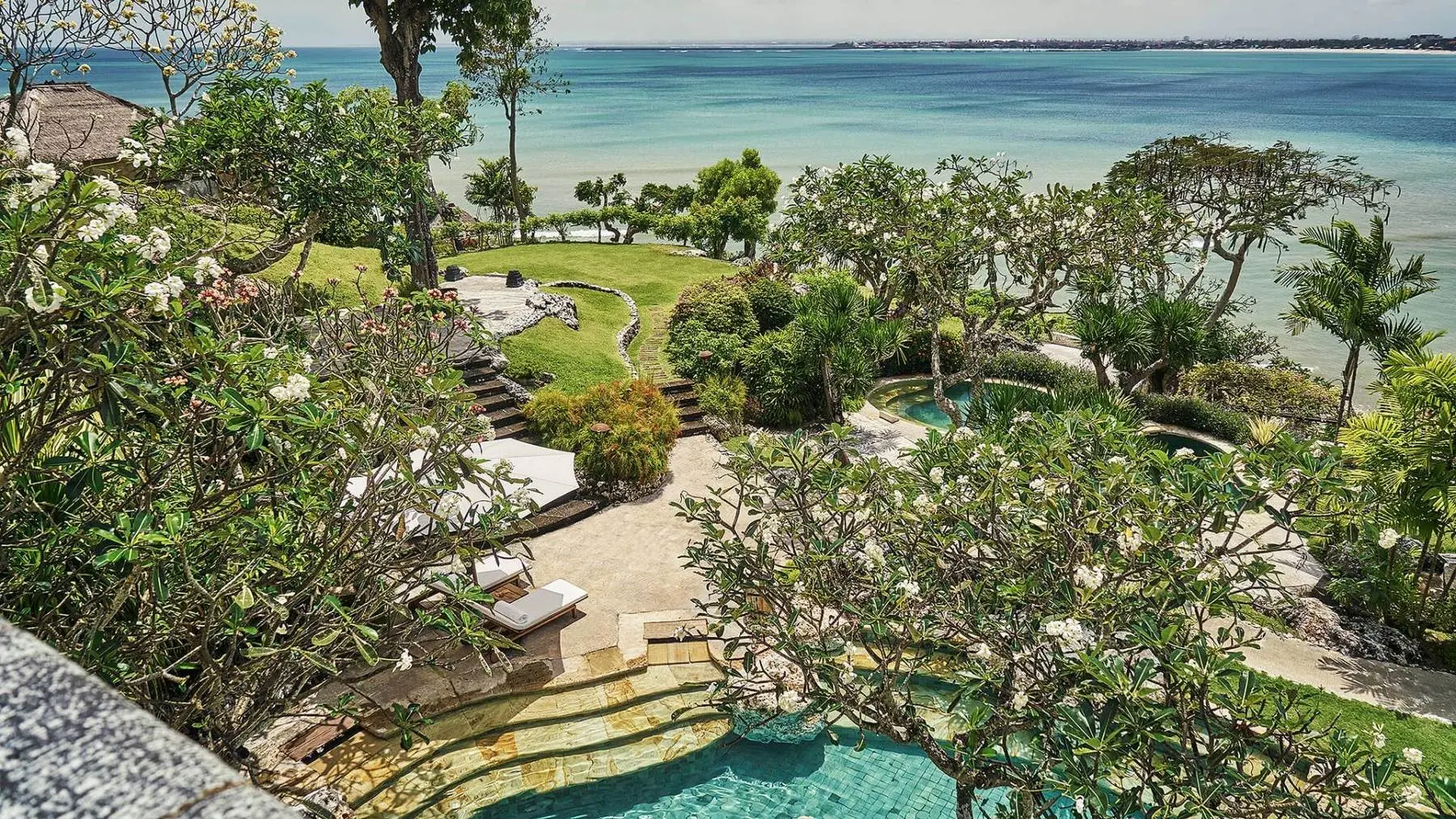
Jimbaran Bay is the opposite geography: a hillside of villas stepping down through old gardens to a sheltered bay, fifteen minutes from the airport. Its gardens are lovely, thirty years grown in, with more than three hundred shrines tucked among them. But take away its warm villas and Balinese atmosphere, and the grounds and the sea are beautiful rather than magical. And because the airport sits just across the bay, you watch planes landing and taking off throughout the day. You never get the hideaway feeling that Sayan gives you from the first step.
Which feels more like Bali?
Jimbaran, which surprises people, though neither lets Bali in as far as the island's more personal hotels do. Sayan is an extraordinary world of its own, and at times I felt I was inside that world rather than inside Bali. Jimbaran was conceived in the early 1980s as an Adrian Zecha project, the same Zecha behind Amandari, and it still carries that blueprint: a Balinese village of villas around small squares, with a resident priest tending a temple on the grounds. When it opened in 1993, it was the first large villa resort in the world and the first hotel anywhere to give every villa its own plunge pool.
Where is the service better?
Jimbaran, by a full class. It feels like a well-oiled machine that knows exactly what it's doing. It's polished, yes, but many of the staff come from families who have worked here for generations, and that gives the polish real personality. I once mentioned in passing that I hadn't decided what to do with the day, and within the hour someone had built me a thoughtful plan around what I'd actually enjoy. At the beach club I watched staff step in, unprompted, to teach a guest who was struggling with a sport for the first time.
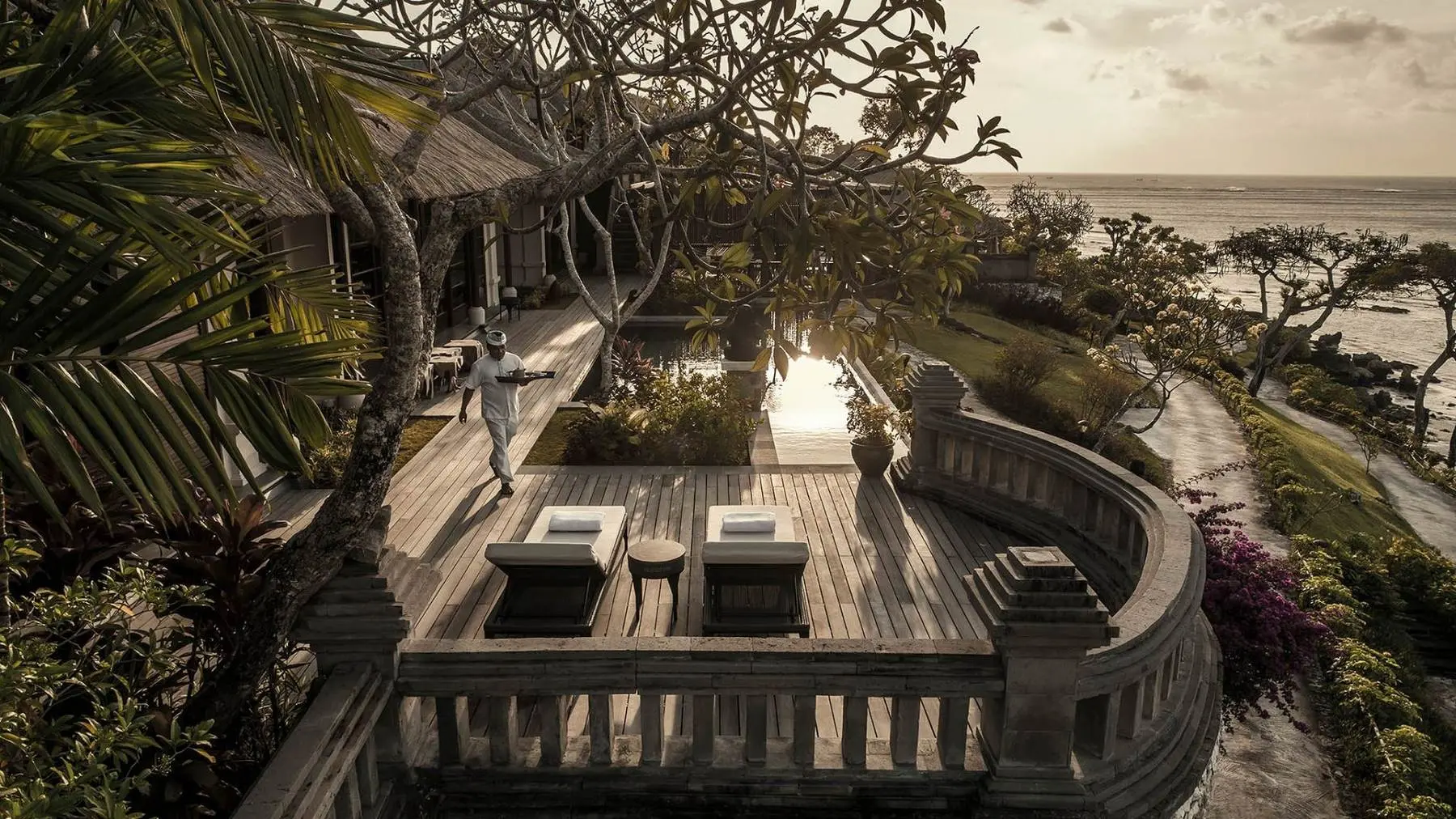
Sayan's staff are unfailingly friendly, but a little too deferential for my taste. Everything is correct, and it lacks spark. I've slept at both and gone back to both many times just for lunch or dinner, and when I think back, nearly all the good conversations I've had happened at Jimbaran. It's a happy place. Ubud isn't colder or more sterile, I wouldn't say that, but Sayan is quieter in every sense, including this one.
Where will you eat better?
Jimbaran, on overall quality. Its international offer is well balanced and, more importantly, well executed, and you can feel how much attention goes into both the food and the drinks: nightly seafood from the local fish market at Jala, inventive cocktails at Telu, and a five-minute buggy ride to Rumari at Raffles next door, which the hotel will happily arrange. Not every hotel sends you to a competitor for dinner. This one does. The one place I'd be careful is Sundara, the beachfront restaurant and pool: excellent, but with its own public entrance from the beach and first-come daybeds, it can feel properly touristy after the privacy of the rest of the property.
Sayan's food is a fraction weaker, perhaps because the setting does so much of the work. At the Riverside restaurant in particular, too many dishes were bland and uninspired, and more than once I left the grounds to eat in Ubud. The exception is Sokasi, the riverside cooking school in a bamboo building whose roof curves with the river, where you pick lemongrass and chillies straight from the herb garden before they go into your pan.
Where is the spa better?
Sayan, clearly, and it's the reason many people go. Spa is something Four Seasons takes seriously everywhere, and Jimbaran's Healing Village Spa would be the best thing about most hotels, with a crystal bed that hums beneath you, singing bowls and a private garden ending in an ice bath. But Sayan's Sacred River Spa is in a different category. It sits down by the river, so the roar of the water is part of every treatment. It's led in part by Ibu Fera, a former Buddhist nun who studied in monasteries across Asia, and its signature is the Sacred Nap: guests cocooned in suspended silk hammocks and guided through meditation and sound rather than massage. There's a chakra ceremony that combines energy work and bodywork, and Laughter Yoga by the lotus pond, which sounds absurd until you're in it. Someone here decided that wellness should be distinctive rather than default, and it shows. It isn't cheap, even by Bali's five-star standards, but it's the one spa on the island I'd plan a trip around.
Who is each one for?
Jimbaran for families and people who like company. Sayan for couples and people who come to be still. I don't think there's a better high-end resort for children in Bali than Jimbaran. The Umah Rare Kids' Club runs crab hunting, kite making and Balinese dance, children under six eat free with a parent, and the beach team will build sandcastles with your children for as long as they want, so you can actually read a book. The villas suit that life: authentically Balinese and warm, a touch dated next to the newest builds, and made for long days in your own garden and plunge pool.
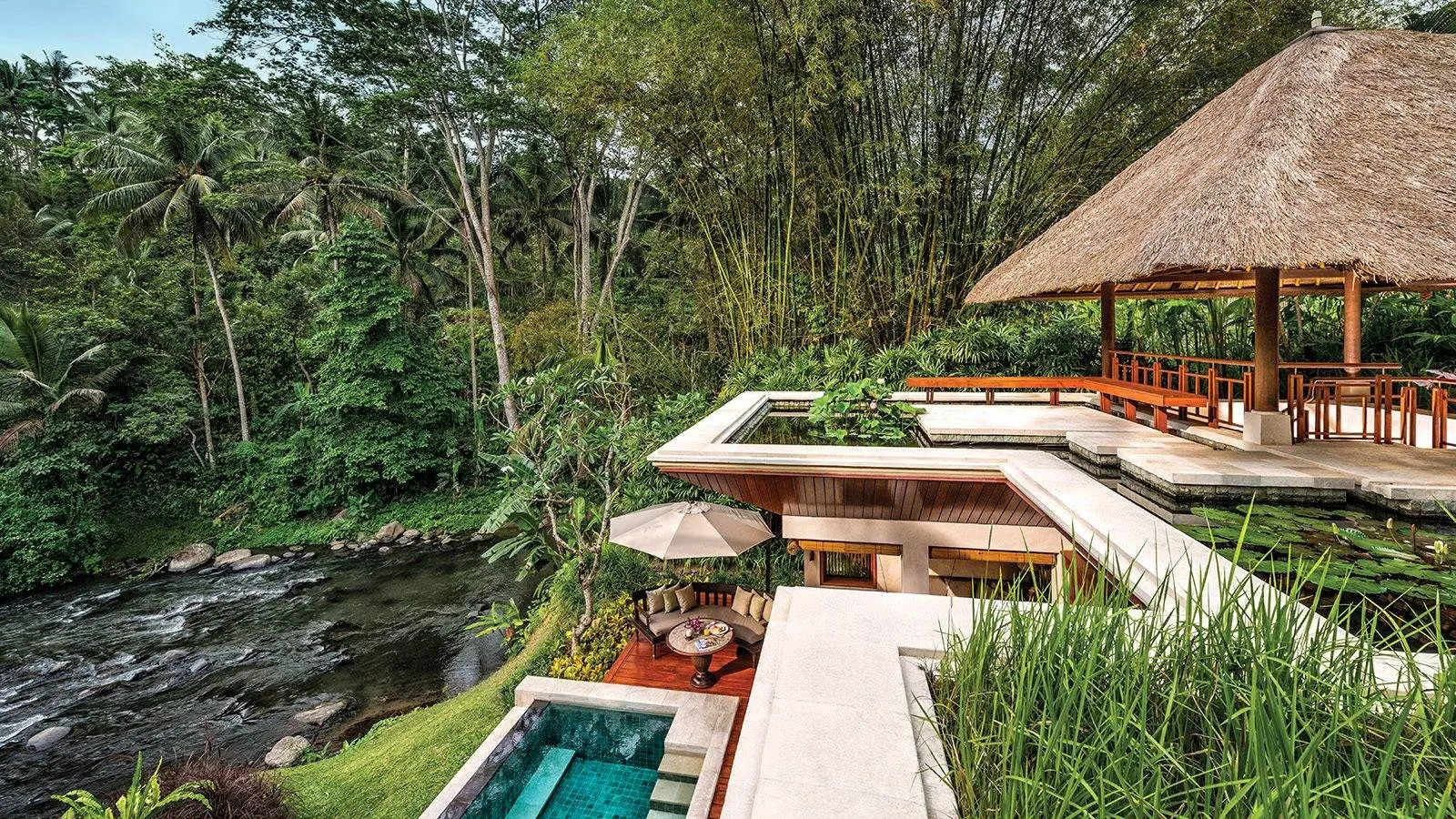
Sayan is built for the opposite holiday. Its rooms have been beautifully renovated and now feel more modern and more luxurious, which is also why it now starts from around $800, noticeably more than it used to. It's a place for couples, for wellness, and for people who want the valley to themselves. Choose your villa carefully, though: the riverside villas with the postcard view come with the constant rush of the river and the passing rafts, so the standard rooms and garden-facing villas are the quieter choice.
Can you do both?
Yes, and Four Seasons will even float you between them. Guests staying at both can choose what the hotel calls the world's only check-in by river raft: your luggage goes by car, and you spend an hour on the rapids of the Ayung before arriving at Sayan's riverside pool. I'd start at Jimbaran, close to the airport, while you're jet-lagged and want company and the beach, and finish in the valley when you're ready to be still.
Doing both can also be surprisingly good value, especially if you book it the right way. Four Seasons regularly runs offers with free nights, and some of the best of them, such as a fourth night free, are available only through affiliated advisors like us. Others, like Bali, Twice the Magic, which gives you a free night at each resort when you stay at both, can be booked directly, but only through an advisor do the free nights come on top of the Virtuoso benefits, so you keep the upgrade, the resort credit and breakfast as well. They're my favourite way to book Four Seasons, and it's how I've booked most of my own Four Seasons stays around the world. Ask us which offer fits your dates, and we'll put together the best combination before you book.
Sayan or Jimbaran?
Jimbaran for people, food and pleasure. Sayan for the place itself. Jimbaran is the better hotel, the one I'd point anyone to, and the one I'd book again with children without a second thought. Sayan is the more extraordinary place, a valley you'll remember for its sound as much as its view.
The full reviews are here: Four Seasons Sayan and Four Seasons Jimbaran Bay. For Jimbaran's neighbours, see Jimbaran Bay compared.
Either way, you're buying the most reliable name in luxury travel. In Bali, that's both the reason to book a Four Seasons and the reason I sometimes don't. If certainty is what you want from a holiday, you won't find it done better anywhere on the island.
We can book both at the hotels' own rates, with the benefits attached.
PLAN A FOUR SEASONS STAY →