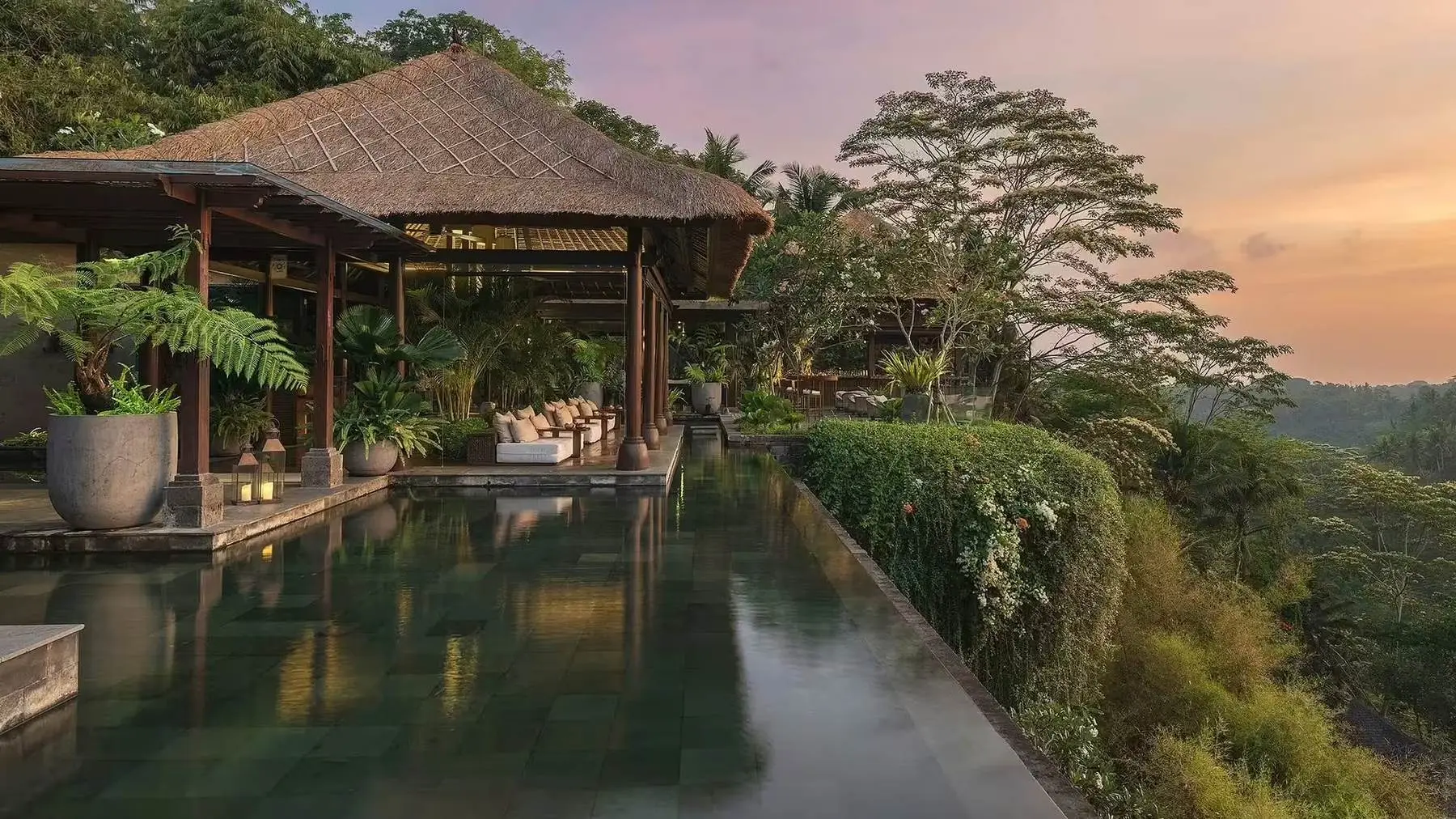
The verdict
Mandapa is the better hotel. Four Seasons Sayan is the more remarkable place, and it’s still where I’d sleep. Choose Mandapa for the food, the rooms and a stay that never stops showing you something. Choose Sayan for the setting, the architecture and a quieter kind of luxury. Travelling with children, Sayan costs far less. If stairs are a problem, Mandapa is far easier. And if one of them has a good offer for your dates, let that decide.
They’re about ten minutes apart on the same river, and on paper they’re almost the same hotel. Both sit on the Ayung. Both have exactly sixty rooms. Both cost roughly the same for two, and both are aimed squarely at the well-off traveller on a first trip to Bali. And yet I’ve never met anyone who liked them equally.
I think the reason is that they were built seventeen years apart, and those seventeen years changed what a luxury hotel thinks it’s for.
At a glance
| Four Seasons Sayan | Mandapa | |
|---|---|---|
| Where | Sayan, on the Ayung, 6 km from central Ubud | Kedewatan, on the Ayung, about 10 min from Ubud |
| Opened | February 1998 | September 2015 |
| Keys | 60: 18 suites, 42 villas | 60: 35 suites, 25 villas |
| The arrival | On foot, across the bridge | By buggy, after the gong |
| Michelin | One Key | Three Keys, the only three in Bali |
| For two, mid-November | $1,170 | $1,368 |
| Family of four | 1.4×, a Family Suite | 4.4×, a three-bedroom villa |
| If stairs are hard | Difficult | Manageable |
| Wins on | Setting, architecture, quiet | Food, rooms, service at its peak |
| The Bali 20 | No. 18 | No. 7 |
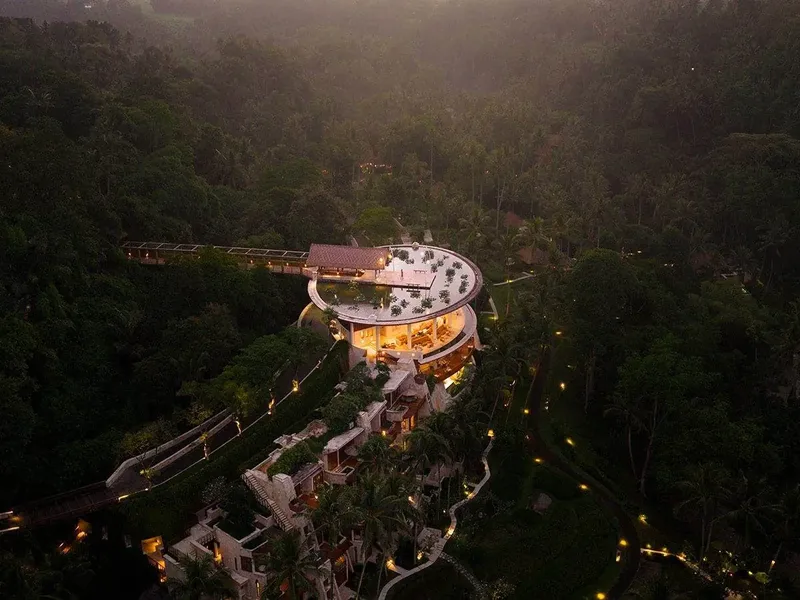
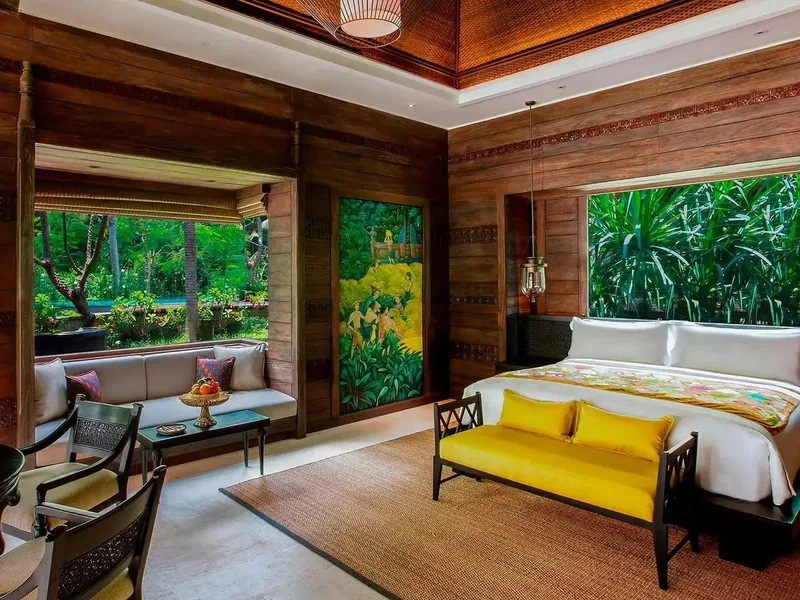
Numbers on the photos are positions on The Bali 20. Rates are the cheapest with breakfast, taxes and service on each hotel’s own website for two nights in mid-November 2026.
Theatre in stone, theatre in people
Four Seasons Sayan opened in February 1998. You arrive across a bridge, step onto a lotus pond floating on the roof, and walk down into the valley one level at a time. The architect, John Heah, meant the bridge as the moment you leave your own world behind. It’s pure theatre, but the building does all of it. Once you’re down, the show is over and the hotel leaves you alone.
Five months after Sayan opened, in July 1998, Joseph Pine and James Gilmore published the essay that gave us the phrase “the experience economy”. I’d read about the idea for years in one form or another before I learned who named it, or when. A year later it became a book, subtitled Work Is Theatre and Every Business a Stage. Sayan didn’t need the phrase. It had already built it.
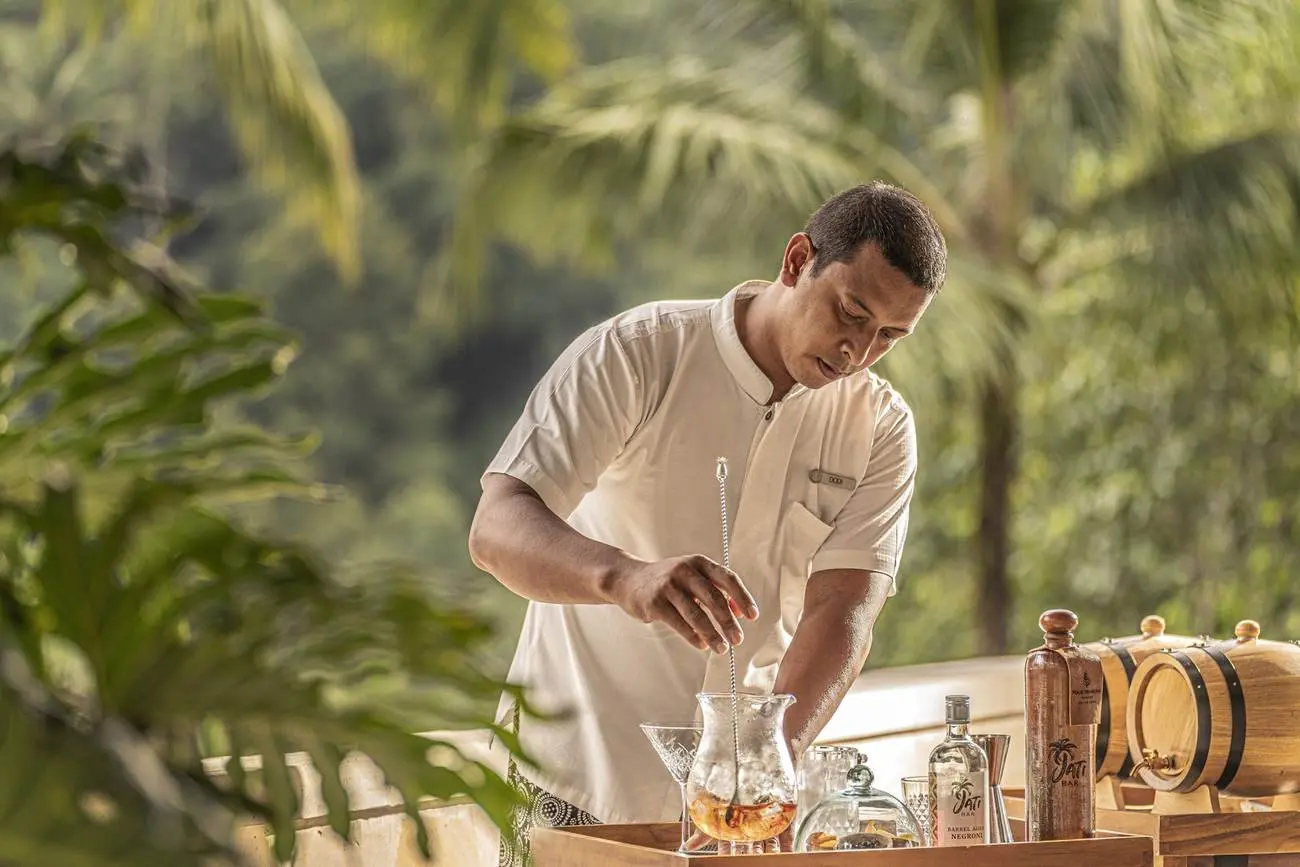
Mandapa opened in September 2015, the third Ritz-Carlton Reserve in the world, and it was clearly built by people who’d read the book. Here the theatre isn’t in the stone. It’s in the people. The gong, the butler kneeling to your eye level, dinner in some corner of the grounds you didn’t know existed, a morning planting rice. Sayan stages one great entrance. Mandapa stages your entire stay.
Once you see that, almost everything else about the two hotels makes sense.
Who's at the pool?
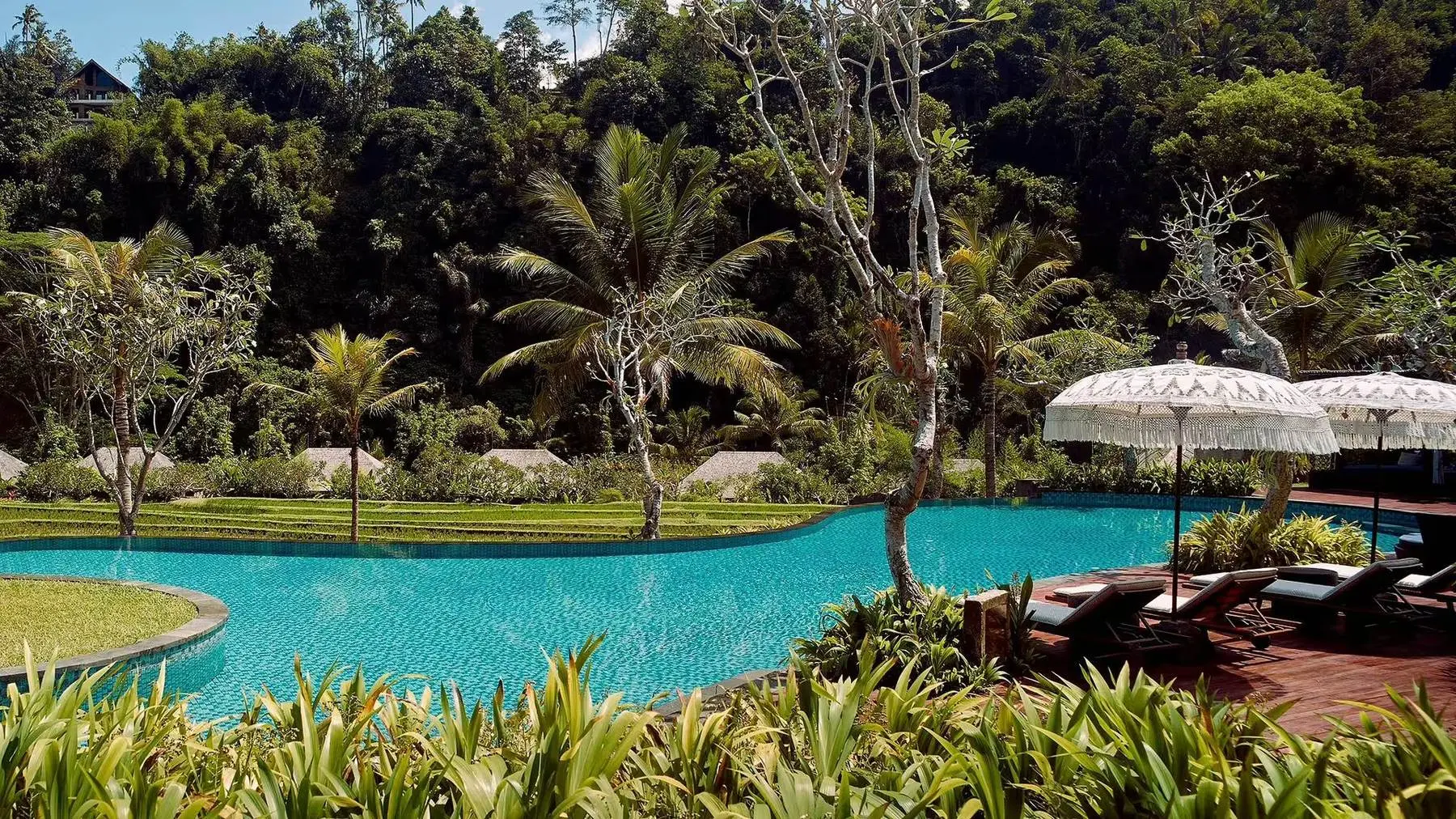
The setting is where my heart goes, and I’ll admit that’s taste. Sayan sits low in the ravine, hemmed in by jungle, discreet to the point of shyness. Mandapa spreads out over the slope with the confidence of a place that knows it’s being photographed. It’s more cosmopolitan, more in your face, and more fun at dinner.
The guests follow suit. Mandapa’s are noticeably younger and better dressed, and several of them seem to change outfits for breakfast. Sayan’s are older and more conservative, and some of them have clearly owned the same linen shirt since the bridge opened. Neither crowd is wrong. But you’ll know within an hour which one you belong to.
Which has the better food?
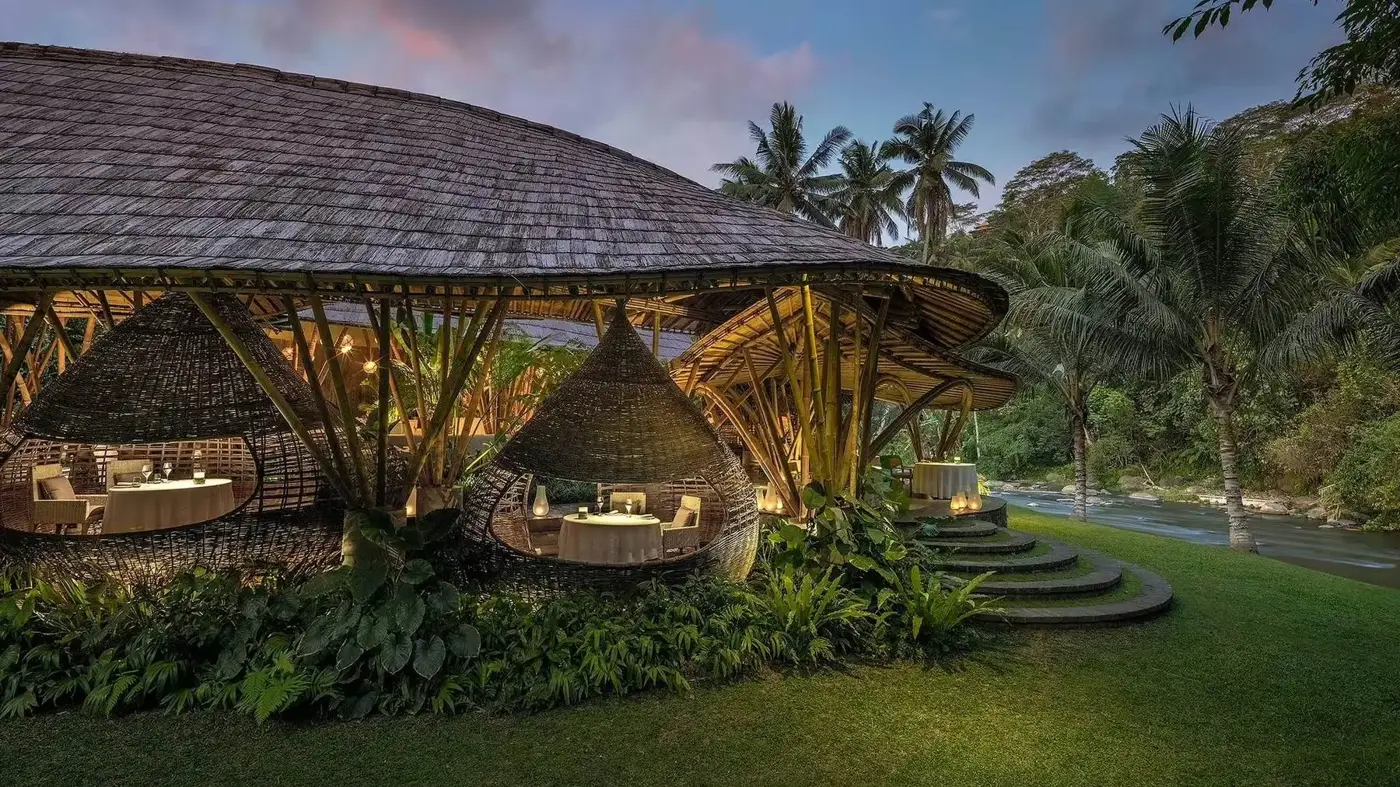
Mandapa, easily. A kitchen cooks for the dining room it has. Mandapa’s dining room wants something to talk about, so the cooking is current, braver and more fun. It tastes like 2026. Sayan cooks for people who know exactly what they want and would like it the same as last year. It’s competent and safe, and honestly a little uninspired, which for a hotel at this price is the one thing I find hard to forgive. If food matters to you, this is the easiest call in the piece.
Which has the better staff?
A draw, for opposite reasons. At Sayan the staff are polished and still themselves. The building carries the drama, so they don’t have to. At Mandapa they’re the cast, and a cast works from a script. On their best days they hit a level of service Sayan never quite reaches. On other days you can feel the instructions behind the smile. They want it a little too much, and wanting it shows.
Nine years after that first essay, Pine and Gilmore published a book called Authenticity, about the one thing a staged experience finds hardest to deliver. I thought of the title more than once at Mandapa.
Which has the better rooms?
Mandapa, easily. This is where the seventeen years show most. Mandapa was built for a guest who expects the bathroom to be a destination. Even the entry suites run to around a hundred square metres, with a freestanding tub looking into the jungle. The villas are small houses: a bedroom, a separate living pavilion, and a pool of around thirty square metres you can actually swim in.
Sayan’s villas were drawn in the nineties. They’re beautiful, all teak and stone, and you step down into an outdoor living room with a plunge pool. But a plunge pool is for cooling off, not for swimming, and the layouts come from a time when a villa in Bali was a novelty in itself. Seven suites have just been redone, and they’re lovely. The villas are still waiting their turn.
Which has the better architecture?
Sayan, though you’ll probably fall for Mandapa. Heah designed one idea and had the nerve to build all of it. After the bridge, everything is restraint. Nothing is decorated for the sake of it, and the valley does the rest.
Mandapa takes its name from the entrance to a Hindu temple, and it builds the Bali you pictured before you came: carved gates, painted murals, a working rice field in the middle of the resort, dining pods hanging over the paddies. A good deal of it was made new to look old. There’s a temple on the grounds that’s genuinely old, and the families who own it kept their right to reach it when the hotel opened. That’s the most real thing on the property, and it’s easy to walk past.
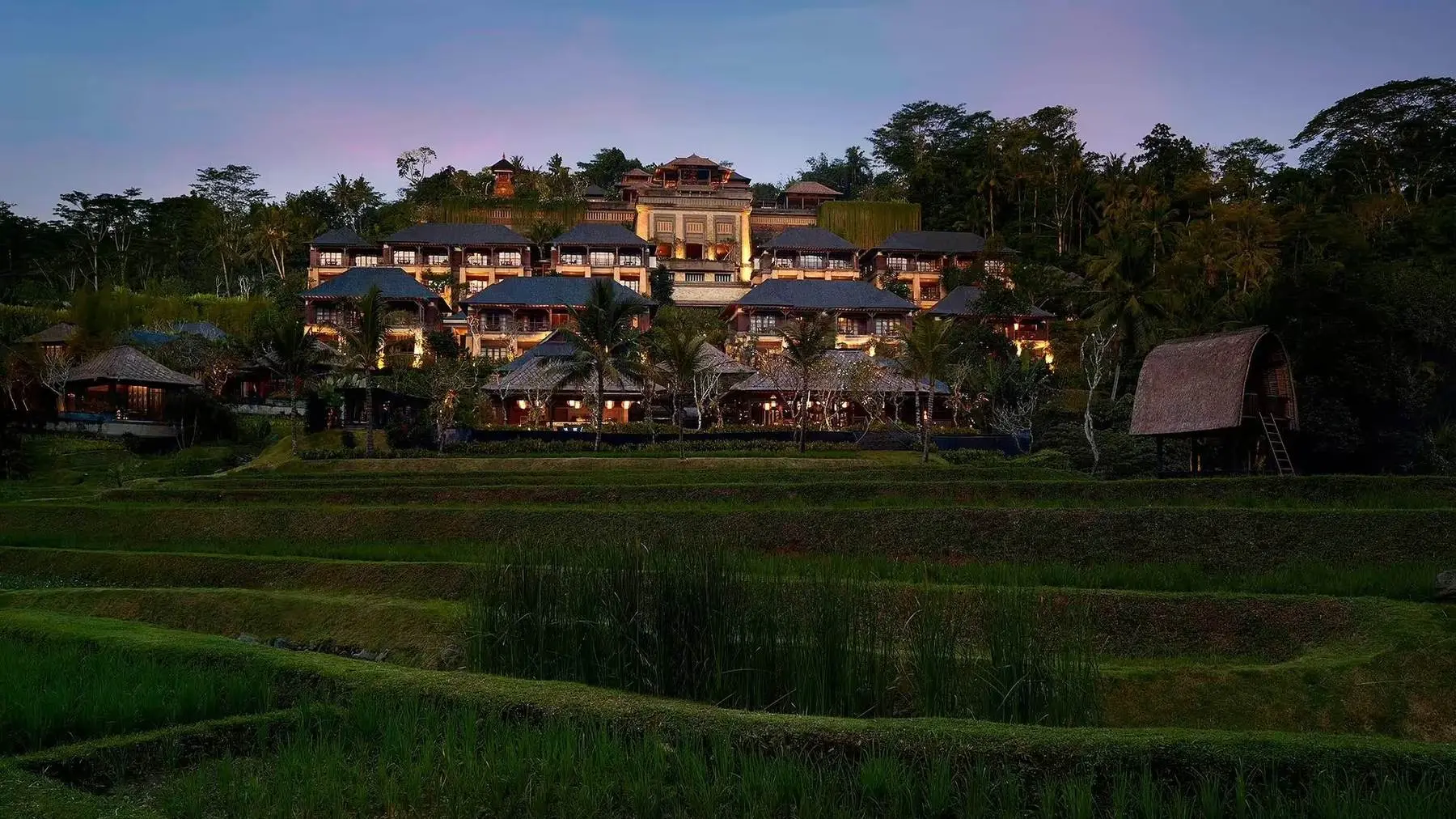
Most people choose Mandapa’s architecture, and I get it. Its beauty is instant. You see it, you photograph it, and it keeps coming for your whole stay. Sayan’s is in the arrival and in what the building leaves out. It asks you to notice, and not everyone on a first trip wants to be asked.
Does each one know what it wants to be?
Mandapa does. Sayan, I’m not so sure. The best hotels these days make a choice about what they are, and commit to it. Mandapa chose: it stages Bali, loudly and confidently, from the gong to the dining pods, and everything on the property serves that idea. You may find it too much, but you never wonder what it’s for.
Sayan made one magnificent choice in 1998, the building, and has been polishing everything else ever since. It’s immaculate and it’s tasteful, and it’s a little timid. I kept wanting more swing from it: a kitchen that takes a risk, a bar that gets loud once in a while, something that tells you who this hotel is now rather than who it was when it opened. The setting has a personality. The hotel is still a bit too well-behaved to show its own. If Sayan ever found its nerve in the kitchen and the bar, I’d put it above Mandapa without hesitating.
Are they changing?
Both, and towards each other. The old hotel has been the restless one. Sayan rebuilt its spa in 2024, from three pavilions to seven spa villas, added a yoga pavilion by the river, and redid its suites. It learned to stage experiences without losing its quiet. Mandapa, at ten, is only now renovating its public spaces and its spa, and it has just reimagined its three-bedroom villa. The building is finally catching up with the show.
So each is trying to get what the other had from the start. That’s the most interesting thing about the pair, and the reason this comparison will look different in five years.
What about price, children and stairs?
Price barely separates them for a couple. When we checked both websites for two nights in mid-November, the cheapest rate with breakfast and taxes came to $1,170 at Sayan and $1,368 at Mandapa.
Children separate them completely. For two adults with children of four and one, Sayan offered a Family Suite at $1,615, about 1.4 times the price for two. Mandapa’s website sent us to a three-bedroom villa at $6,011, more than four times as much. What 43 hotels charge a family of four →
Stairs reverse it. At Sayan you reach each villa down a spiral staircase. Mandapa has a ramp and a lift to the suites, a few adapted rooms, and a butler who’ll drive you anywhere by buggy. The easiest hotels in Bali →
Should an offer decide it?
Yes, and here’s why. This is the advice I give clients, and it’s less romantic than everything above. These two hotels are close enough that a good offer should settle it. If one has a free night and the other doesn’t, book the one with the free night and stop agonising.
Right now both have something, and the length of your stay decides which wins. For three nights, Mandapa gives you the third free with half board: on the rates we saw, around $2,700 against roughly $3,500 at Sayan, with dinner every night thrown in. For four nights it flips. Sayan’s fourth night is free, and you’d pay around $3,500 against roughly $4,100 at Mandapa. Treat those numbers as an illustration: offers sit on their own rates, so we always compare the real totals for your dates.
Then spend the difference well. Six or seven hundred dollars is a couple of long treatments at the spa, a dinner you’ll talk about for years, or two days out with Wayan. That does more for a trip than the gap between these two hotels ever will. Both offers, with the small print →
Which one would I book?
If you’re coming to Bali for the first time, there’s a good chance Mandapa will win you over before you’ve reached your room, and it deserves to. It’s the better hotel: better food, better rooms, a clearer idea of itself, and a show that never drops.
But I’d still sleep at Sayan, for the place rather than the hotel. Mandapa shows you Bali, beautifully and all day long. Sayan leaves you alone with it, and that’s what I came for. By your second trip, I suspect it’s what you’ll be looking for too.
Unless one of them has a better offer that week. Then I’d book that one, and spend the difference at the spa.
The full reviews: Four Seasons Sayan and Mandapa, a Ritz-Carlton Reserve. For a third option in the same hills, see Mandapa vs Capella vs Buahan.
Choosing between the two? Send your dates, and we’ll compare the real totals with whatever offer is running.
COMPARE THEM FOR MY DATES →