The verdict
Three hotels in the hills around Ubud, all at roughly a thousand dollars a night, and each selling an experience rather than a room. Mandapa, a Ritz-Carlton Reserve, from around $1,200, is my choice: the most conventional of the three and the only one that is also, unmistakably, an excellent hotel. Capella Ubud, from around $1,000, is the most theatrical: a tented camp with a story, for couples who want that story to be the holiday. Buahan, from around $1,000, is the most extreme: no walls, no doors, no locks, and worth exactly one night. The question isn't which is best, but how far along this line you want to go.
A man in the jungle once handed me a military-grade walkie-talkie. I had asked, innocently, whether there was anything to do around the property, and been told about a waterfall at the bottom of the site. What arrived was not a map but a radio, a channel to call in on, and firm instructions to report the moment anything went wrong. This was at Buahan, a resort whose entire proposition is dissolving the barrier between you and nature, issuing me emergency communications to walk down its own garden.
I loved it, and I've thought about it ever since, because it tells you exactly where luxury has arrived on this island. Three hotels in the Ubud hills, all at about the same price, are each selling an experience rather than a room, and each has pushed the idea further than the last.
At a glance
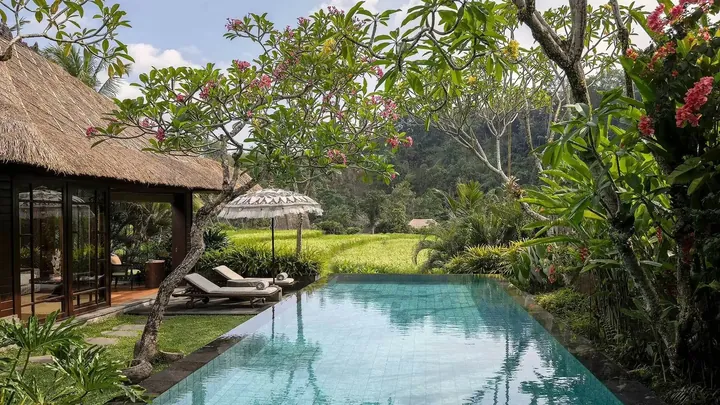
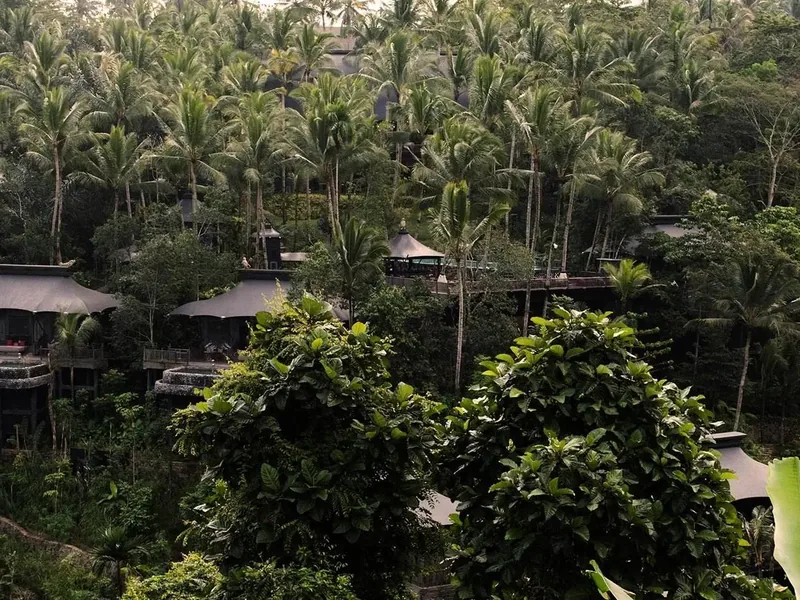
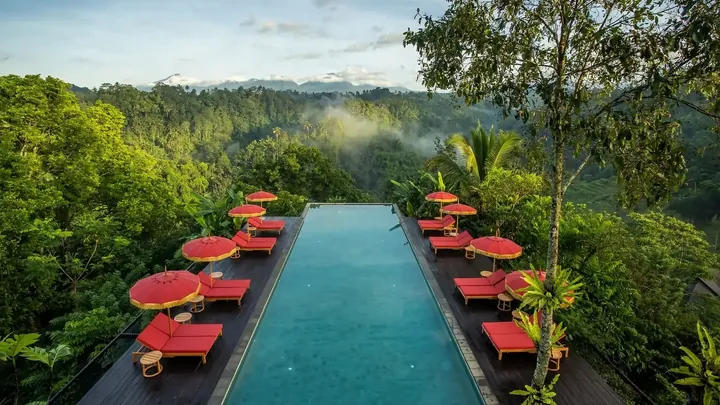
| Mandapa | Capella | Buahan | |
|---|---|---|---|
| Where | Kedewatan, on the Ayung, 10 min from Ubud | Keliki, 20 to 30 min from Ubud | Payangan, 40 min north of Ubud |
| Entry room, per night | From around $1,200 | From around $1,000 | From around $1,000 |
| Keys | 60 suites and villas | 22 tents and a lodge | 16 balés, adults only |
| The idea | A five-act arrival, staged Bali | A 19th-century explorers’ camp | No walls, no doors, no locks |
| Recognition | 3 Michelin Keys, the island’s only one | Built without felling a tree | 2 Michelin Keys |
| Eating | Kubu, Sawah Terrace, Ambar | Api Jiwa, Mads Lange | Foraged, 80% plant-based |
| Stay | Three nights or more | Two nights | One night |
| Watch out for | The gong, every twenty minutes | Steep steps, no buggies | Damp, sound, and the kitchen |
| The Bali 20 | No. 7 | No. 15 | No. 12 |
Numbers on the photos are positions on The Bali 20. Rates are for the entry category at the time of writing, September 2026, and move with the season.
What kind of luxury are you buying?
Almost nobody asks this out loud, and it decides everything. For me, the summit is still the classic Aman idea: not marble and gold, but the opposite. Restraint, space, silence, a building set so precisely into its landscape that it looks as though it grew there, and service that anticipates rather than performs. Fewer things, better ones, and nothing shouting for your attention.
That isn't everyone's definition. I have friends who are happiest spending an entire day in the lobby of a grand hotel, Le Bristol in Paris or Claridge's in London. They're there for the people-watching, the hum, and the old-fashioned attention of a team that has done this for a century. There are other schools too, some more interesting than others.
And then there's what's happening now, faster in Bali than anywhere: hotels conceived as concepts, built to hand you an experience above all else. The new luxury isn't a butler who reads your mind before you've had the thought. It's something to feel and to tell, ideally extraordinary enough to share with the rest of the world, and at its most ambitious, something that shifts how you see yourself. The ideas get stranger every year, and because the money and the craft now exist to build almost anything, the ceiling has quietly disappeared.
I don't say that as a cynic. This friction is exactly what makes Bali the most dynamic hotel market in the world: a nursery for strange ideas, where somebody is always testing what works and, just as usefully, what emphatically doesn't. These three are its clearest results, and they line up in order.
How far does each one go?
Mandapa stages Bali. Capella invents a world. Buahan takes the walls away. You feel the difference before you've unpacked.
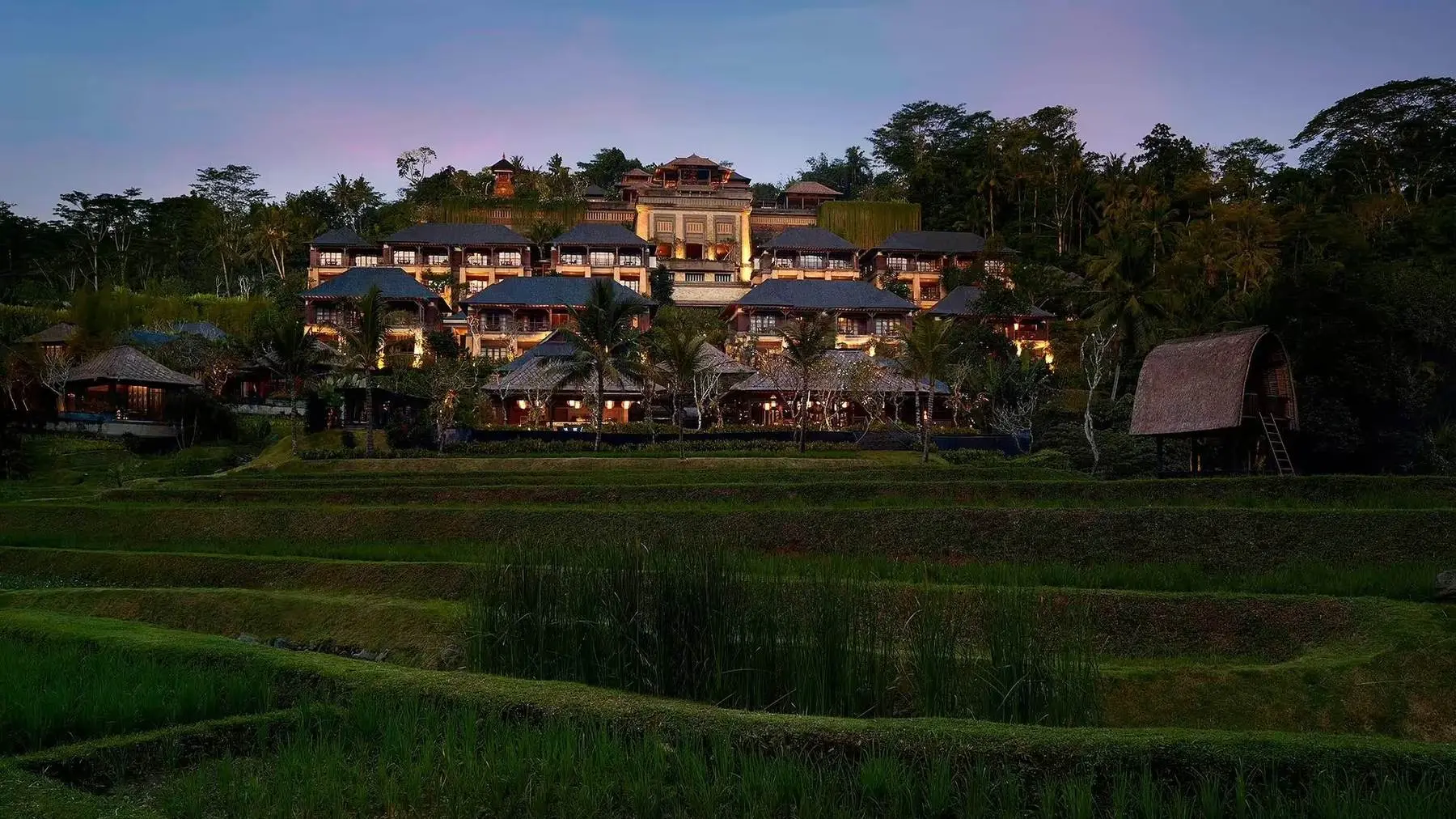
At Mandapa, the arrival is a five-act performance. You cross a guarded gate, climb to the highest point of the property and step out into a view of the Ayung valley that knocks the wind out of you, and a gong is struck the second your foot lands. Then a cooled jasmine-scented towel, a herbal welcome drink, and a butler who kneels to your eye level. A Tridatu bracelet goes around your wrist and a frangipani garland around your neck, and a buggy takes you down ten storeys of valley to your suite, where the paperwork is signed almost as an afterthought. It's a lot. It's also brilliant, and it made me laugh out loud.
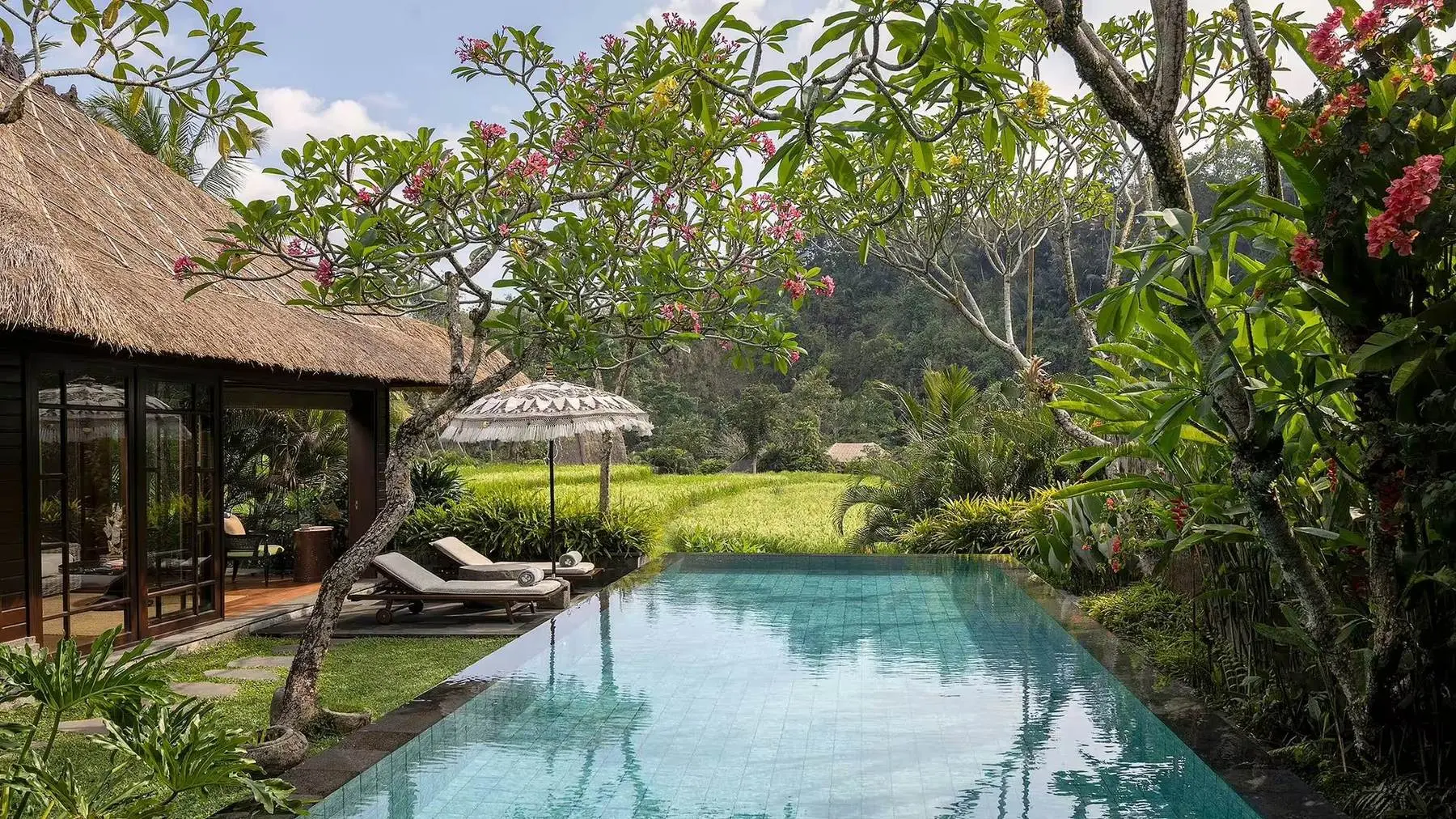
At Capella, a Balinese blessing greets you at the entrance, holy water over your head, a walking stick pressed into your hand, and then you're led down wet stone steps into a camp modelled on the tents of 1800s Dutch explorers. Hand-drawn maps, antique curiosities, gas lamps along the paths, a tent called the Cartographer's, another the Naturalist's, and black-and-white films of old Bali flickering by the campfire each evening.
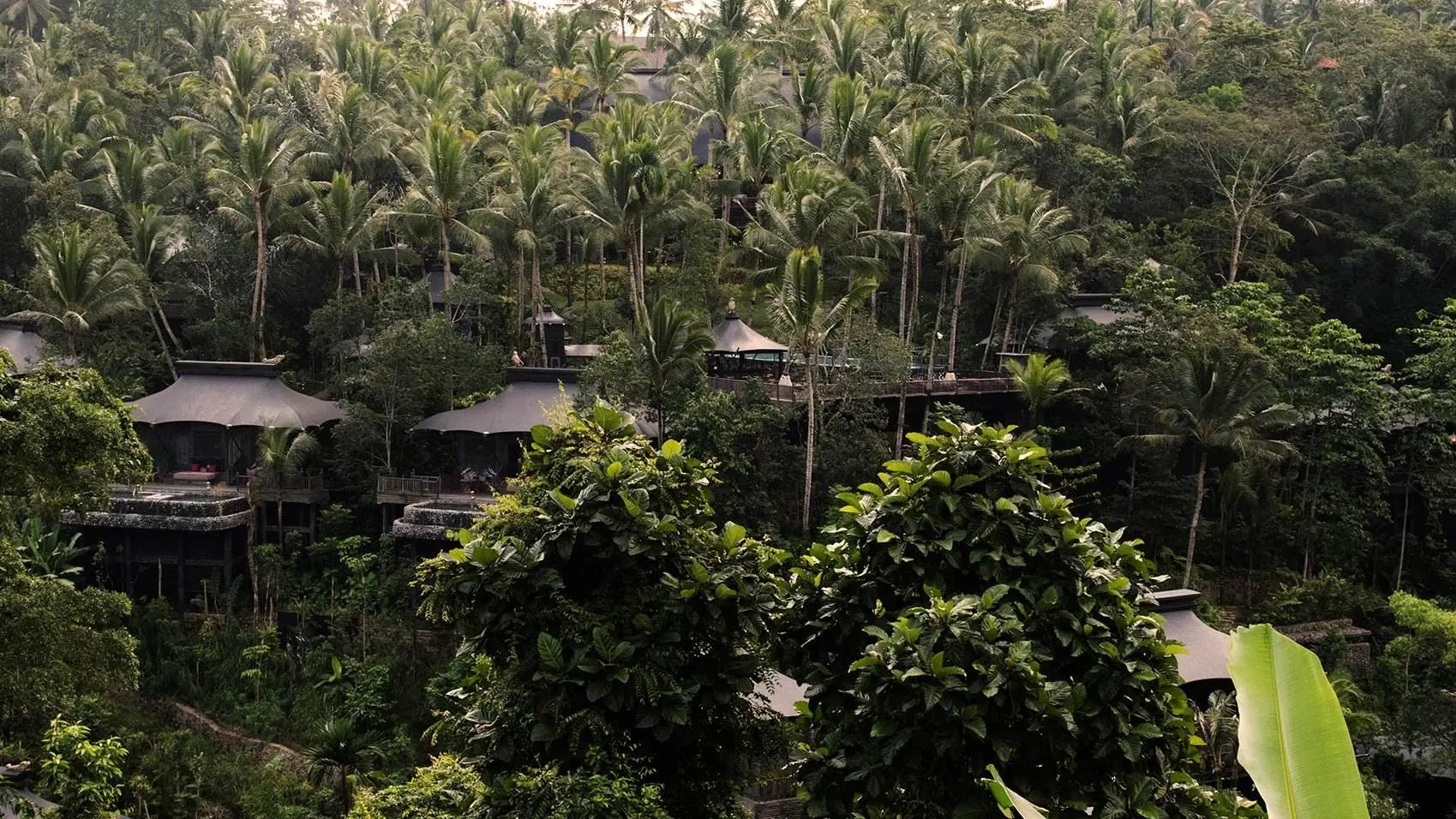
At Buahan there is no lobby to arrive in, no key, no room number and no door. Sixteen balés are strung down the valley at six hundred metres, adults only, with a curtain as the entire barrier between you and everything on the other side of it. Their own line, that only a thin veil separates you from nature, may be the most accurate sentence any hotel on this island has written about itself.
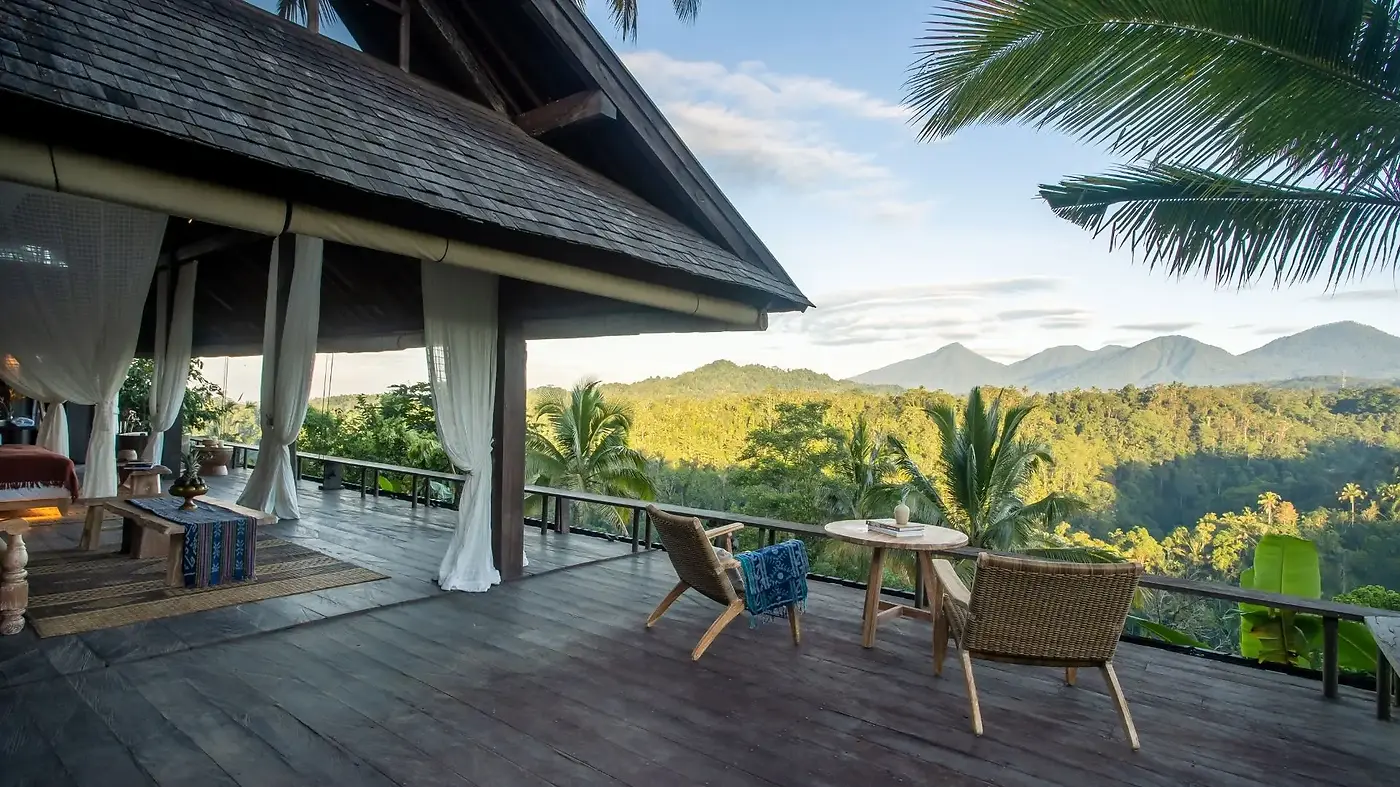
The discipline underneath all three is real, by the way. Mandapa was carved into a ten-storey descent and then built to look as though it had always been there. At Capella, the owner wanted a hundred-room resort and Bensley talked him down to 23 tents, laid out around the existing canopy without felling a single tree, so a palm still comes up through a terrace. Some trees were moved and didn't all survive it, but as an act of restraint it's remarkable. At Buahan, the architect Gede Kresna spent four months researching the site before drawing anything, and the balés use ironwood salvaged from old boat jetties and hand-smithed copper baths.
Which one feels most like Bali?
Mandapa, and it isn't close. It takes the finest facets of Balinese culture, nature and history, blends them and pours a utopian sauce over the whole thing. You experience the rice fields, the architecture, the jungle, the gong, the temple you pass on the buggy ride down. What you remember is the experience of all of it, and it lodges somewhere as something close to magic.
Capella is the opposite, and knowingly so. Strip away the explorer narrative and the jungle setting, and the tented camp, the storytelling and the theatre could be transplanted almost anywhere in the world and still work. It doesn't interpret Bali; it stages a story on top of it. That's a choice rather than a failure, and it changes what you're buying.
Buahan is the strange one. It gives you more of the actual island than either, in the sense that you are lying in it, unprotected, with the frogs and the humidity and whatever is moving through the trees. But it gives you almost nothing of Balinese culture, and its kitchen is so tied to its own concept that it tastes of an idea rather than of a place. Immersion in nature, not in Bali.
There's one more thing you only notice with the three of them in a row. Mandapa's look was shaped by international designers, and its ambition, openly stated, was to appear centuries old. Capella was drawn by Bill Bensley, an American based in Bangkok, around a story of Dutch explorers. Buahan, the one that gives you the least of Balinese culture, is the only one designed by a Balinese architect, Gede Kresna, who spent four months on the site before he drew a line. Three hotels selling an authentic Bali experience, and the most authentic thing about any of them may be that a local architect was the only one who began by listening to the land.
Where does each one break?
At Mandapa, at the gong. At Capella, on the stairs. At Buahan, roughly everywhere, on purpose. These are the cracks that tell you the most about each place.
Mandapa's gong sounds for every car, every time, roughly every twenty minutes, all day. You hear it from the valley floor, from the breakfast terrace, from the path to the spa. A gong exists to mark that something out of the ordinary is happening; strike it for everyone and it stops marking anything at all. Batch received. The awkward part is that Mandapa did nothing wrong. It gives everybody the same thing at the same level with the same care, and that consistency is both its achievement and the thing that eventually tells you what you are.
Capella's problem is physical. There are no buggies here, only steep, wet stone steps, which is why they hand you that walking stick at the gate. I'm reasonably fit and still arrived back at my own tent out of breath, and by the third day it wears on you. Because the tents sit deep under the canopy, the sun rarely reaches the plunge pools either, so ours stayed cooler than I'd have liked, given how beautiful it looked. If anyone in your party has trouble with stairs, weigh that seriously before booking.
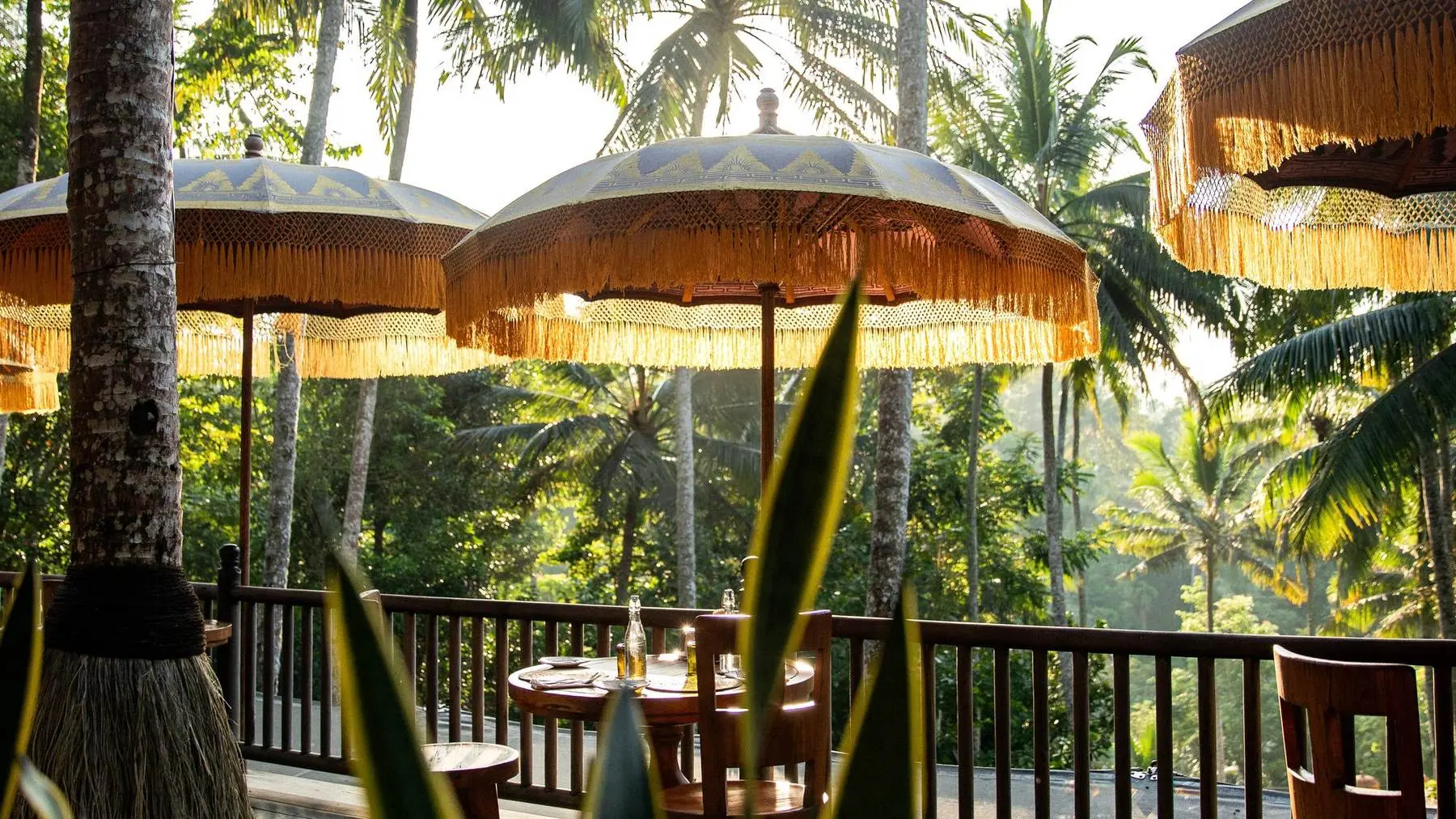
Buahan breaks by design, and that's what earns my respect. A curtain cannot hold back humidity, or sound, or wildlife. The jungle at night is not the gentle soundtrack the brochures imply. It's a prehistoric battlefield: things scream and other things answer, and somewhere in the middle of it a very large lizard produces a noise I can only describe as a dinosaur passing overhead. I lay awake for hours, not anxious but fascinated, trying to identify every sound. The damp turned out to be the defining physical fact: there's no wardrobe, and my wife spent a morning trying to rescue her clothes from actual mist with the determination of someone running an experiment. It didn't work. There is a cooling system here I've never seen anywhere else, engineered to condition the bed rather than the room, on the sensible grounds that there isn't a room. On the bed it works. Step off it and you're standing in a very hot, very wet space. Nothing has been quietly walked back to make a guest more comfortable, and an extreme concept only works if somebody sweats the details at exactly that level.
Where is the service best?
At Buahan, which surprised me more than anything else about it. Its escape hosts took most of the sting out of the entire business. We reported large spiders and various implausible insects more than once, and somebody arrived immediately, always calm, never once making us feel ridiculous. My best conversations of the stay came out of those visits, standing in the dark discussing what had just been removed from the bathroom. And at some point my host worked out, without my saying a word, that I wasn't enjoying the food, and offered to bring proper satay up to the balé instead. It arrived free of charge and it was excellent.
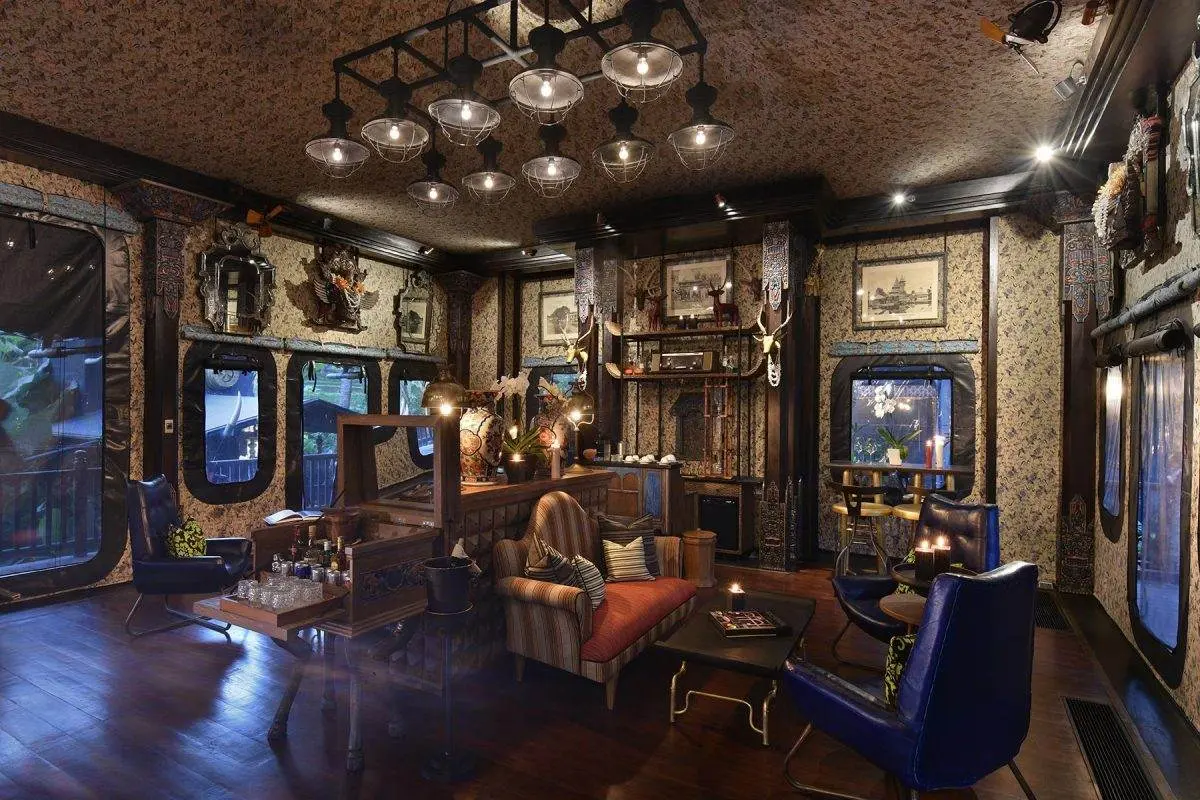
Capella's Culturists deserve credit too, because reinventing the butler isn't easy. And the Officer's Tent, the camp's living room and library, is one of the few luxury hotel spaces where guests actually end up talking to each other rather than politely looking away. Mandapa's people are never less than excellent, and that's precisely the issue. More than once I watched a real, unscripted laugh land and then get pulled back half a beat later, as if a supervisor might be watching. The Reserve standard is set so high that it leaves very little room for anyone to step outside it. I found myself rooting for the person under the uniform and getting fewer of those moments than I wanted.
Where will you eat best?
Mandapa, by a distance. Kubu, the bamboo dining cocoons almost at river level, is a legend and deserves it. Sawah Terrace, raised above a working rice field, served some of the most authentic Indonesian cooking I've had on the island, and its Sunday brunch was my favourite in Ubud. Breakfast alone runs to foie gras cocotte, crab eggs Benedict, wagyu nasi goreng and scrambled eggs with avruga caviar. Capella's Api Jiwa, a robatayaki restaurant in the middle of the jungle, is a genuine highlight and worth a visit even if you're not staying, although the prices are Bali-atypical.
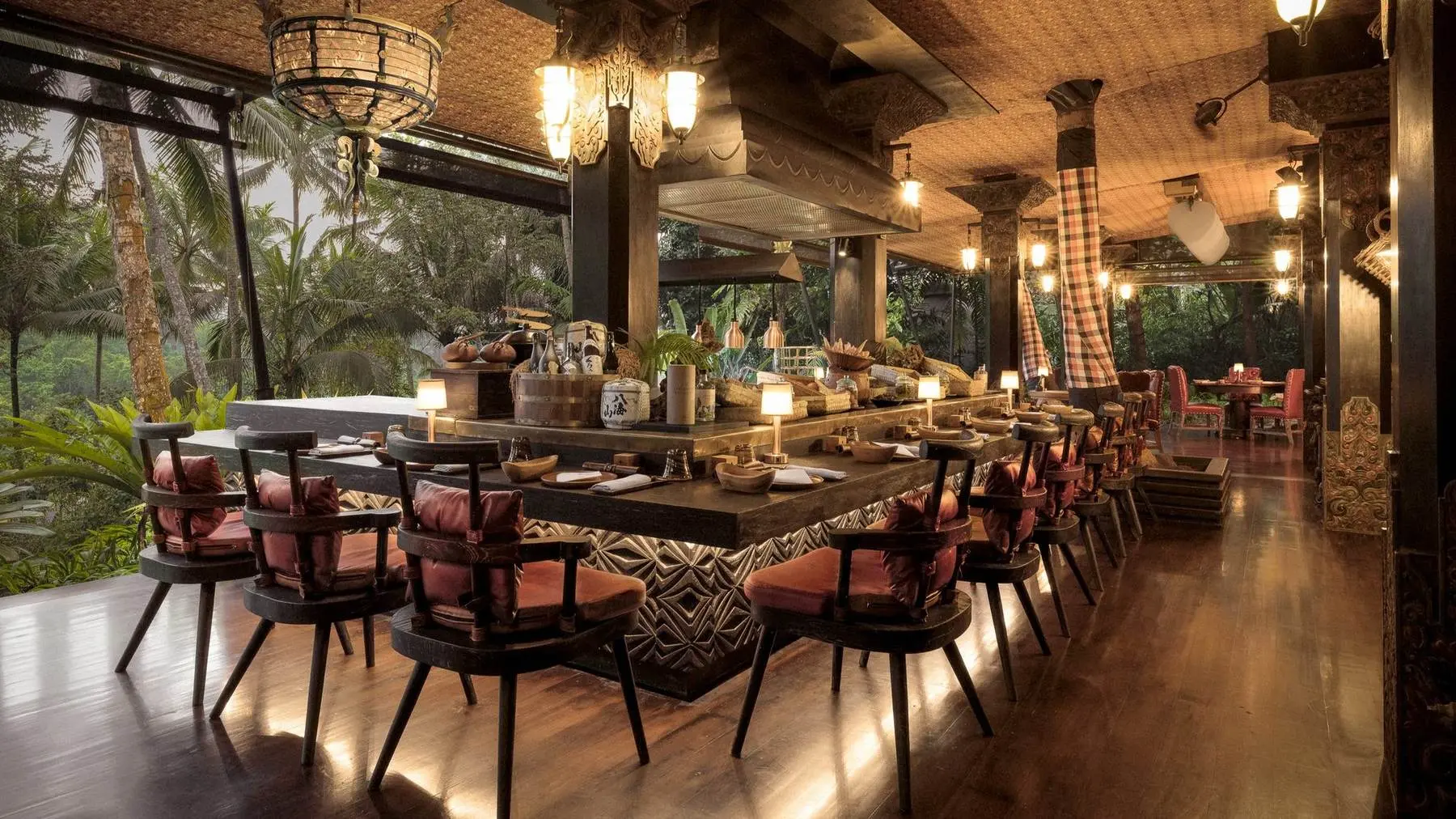
And then there's Buahan, where the kitchen is the one part I want to be direct about, as someone who inspected restaurants professionally for fifteen years. It cooks almost entirely from what the jungle and the surrounding land provide, and its published figures run to around 80 percent plant-based and 80 percent local. Those numbers are the giveaway: targets fixed before anybody lit a stove, and once a number like that exists, every dish has to serve the narrative, and the narrative wins every argument. I still get a small chill remembering the jungle salad, assembled from leaves of a bitterness I hadn't previously encountered and a texture best described as slimy. Breakfast brought a poached egg sitting in a heavy, reduced fermented miso so ferociously salty that the dish had nowhere left to go. If the concept is that only a thin veil separates you from the jungle, that was the concept applied to breakfast, and I'd like to request a slightly thicker veil in that one area. What struck me almost as much was everybody else: the oohs and aahs were flying and they were entirely sincere. I have rarely felt so precisely identified as the wrong demographic.
I'm still reluctant to be too hard on it. They tried to reinvent the wheel, and some of it doesn't work. That's what reinventing a wheel looks like. And the moment the kitchen stopped trying to prove something, it sent up satay that was perfect.
Is any of it worth a thousand dollars a night?
Here's what you notice when you put them side by side: the price stays the same while the hotel disappears. For roughly the same money, Mandapa gives you a complete resort. There's a Reserve Suite of a hundred square metres, which may be the best hotel room I've slept in on this island. There are three restaurants, a spa, a pool you can swim lengths in, and an included minibar restocked without anyone asking. And there are several hundred people employed to keep all of it running. Capella gives you 22 tents, a story and a campfire. Buahan gives you sixteen balés, no walls, no door, no wardrobe, and a walkie-talkie.
That isn't a criticism of any of them; it's the clearest definition of the new luxury I can offer. You are paying less and less for things, and more and more for a feeling. Whether that's good value depends entirely on how long the feeling lasts. Mine lasted one night at Buahan, two at Capella, and I'd go back to Mandapa next week. At around $1,200 it's also the only one of the three where, if the concept left you cold, you'd still be staying somewhere superb. Book a rice-field villa rather than a river one, by the way; the river villas sit closer to the rafting groups drifting past below.
Who is each one for?
Mandapa for an occasion. Capella for a contrast. Buahan for one extraordinary night. Mandapa is close to unbeatable for a honeymoon, an anniversary or a stay you've saved toward: the bigger the moment you bring, the better it serves it. If what you want is to be recognised rather than received, Amandari or Tanah Gajah will give you less on paper and remember you. Capella suits couples who want the story itself to be the holiday, and it works beautifully as a two-night detour from a trip based in Canggu or Seminyak, where its placelessness stops being a flaw and becomes the point. Buahan is for adults who want their frame of reference shaken, and it is not for light sleepers, long stays, or anyone who would like a wardrobe.
Which would I do again?
Mandapa, and the reason is what survives afterwards. All three changed me a little. I enjoyed them, I marvelled at them, and occasionally they irritated me, and I'm still not sure any of it is classic luxury. Thinking about that is where most of my pleasure lies. Food for thought, quite literally, at Buahan.
But Mandapa is the one whose experience I'd want again, because it's the only one of the three that is also, unambiguously, a hotel, and a superb one. Capella is a magnificent stage set, and after two nights I want the island back. Buahan is an experiment I'm glad I did exactly once, and I mean that as the compliment it is. Either it's the start of something, and in twenty years a whole category of travel traces back to it. Or it isn't, and in twenty years we'll be saying: do you remember that mad open-air place in the jungle?
The full reviews are here: Mandapa, a Ritz-Carlton Reserve, Capella Ubud and Buahan.
Meanwhile the best thing about Mandapa remains the part nobody designed. Every morning we walked to breakfast while the dew was still on the rice fields, mist low between the trees, birds going off everywhere, the river loud somewhere below. The valley was doing all of that for free, long before anyone built a lobby on top of it, and it was the only part of the day when nobody was performing anything at me.
That's the picture I keep from all three. A gong going off in a green valley for somebody who has never heard it before. A silent film flickering against the dark while strangers toast marshmallows. And me, lying under a curtain at three in the morning, listening to something enormous move through the trees, and deciding it could wait until morning.
We can book all three at the hotels' own rates, with the benefits attached.
PLAN AN UBUD STAY →