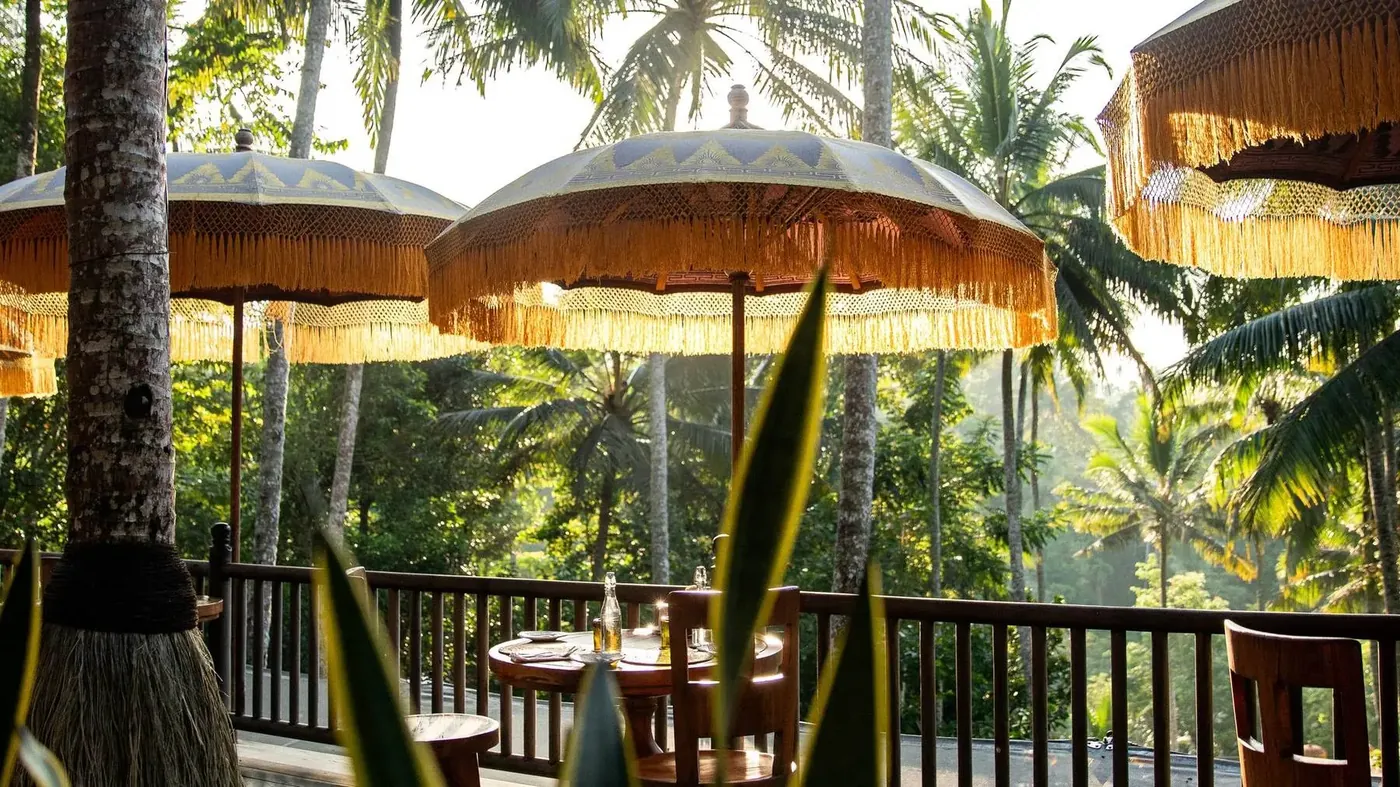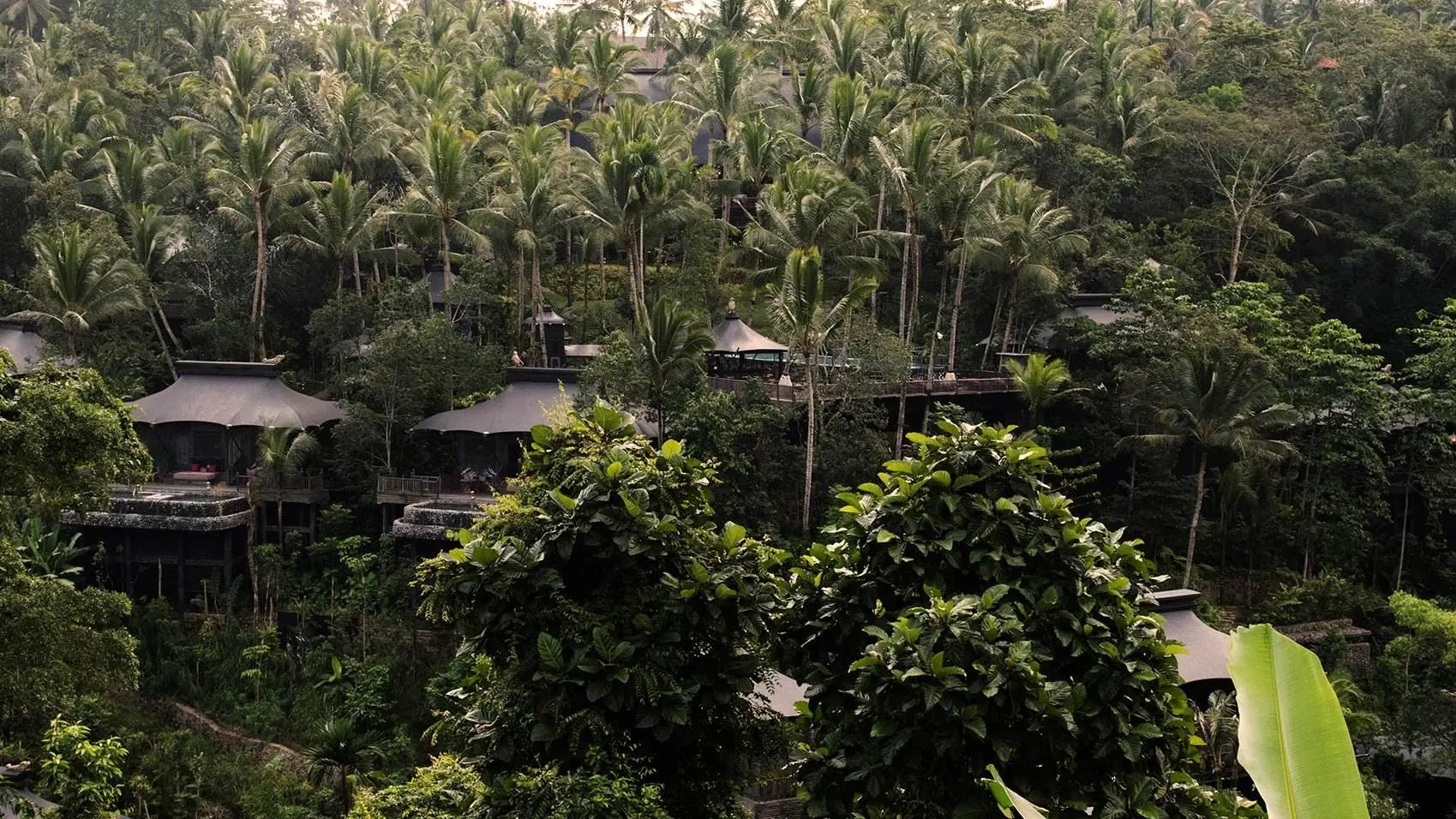
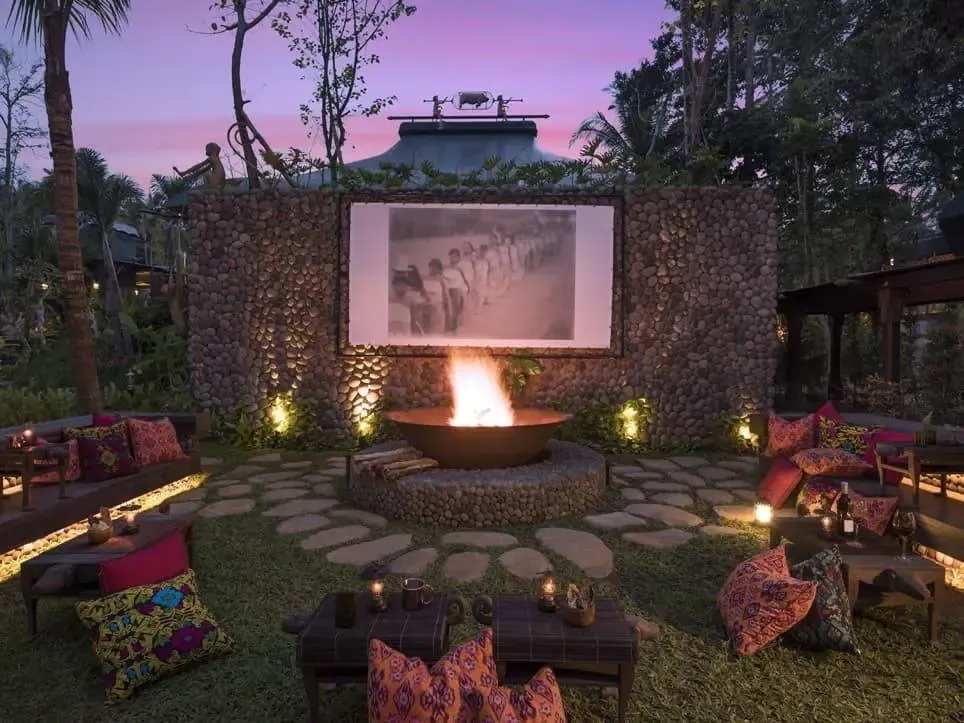
A Balinese blessing greets you at the entrance, holy water sprinkled over your head, a walking stick pressed into your hand, and then you're led down cobbled paths and steep, wet stone steps into a jungle camp modelled on the tents of 1800s Dutch explorers. Black-and-white films of old Bali flicker on a screen by the campfire each evening. There's a tent called the Cartographer's, another called the Naturalist's. It is, by any measure, one of the most inventive hotels on the island, and possibly one of the most inventive hotels I've stayed in anywhere.
It's also, I'll admit, not entirely my kind of place. And that admission is the actual subject of this piece, more than Capella Ubud itself.
The thing spectacle can't quite give you
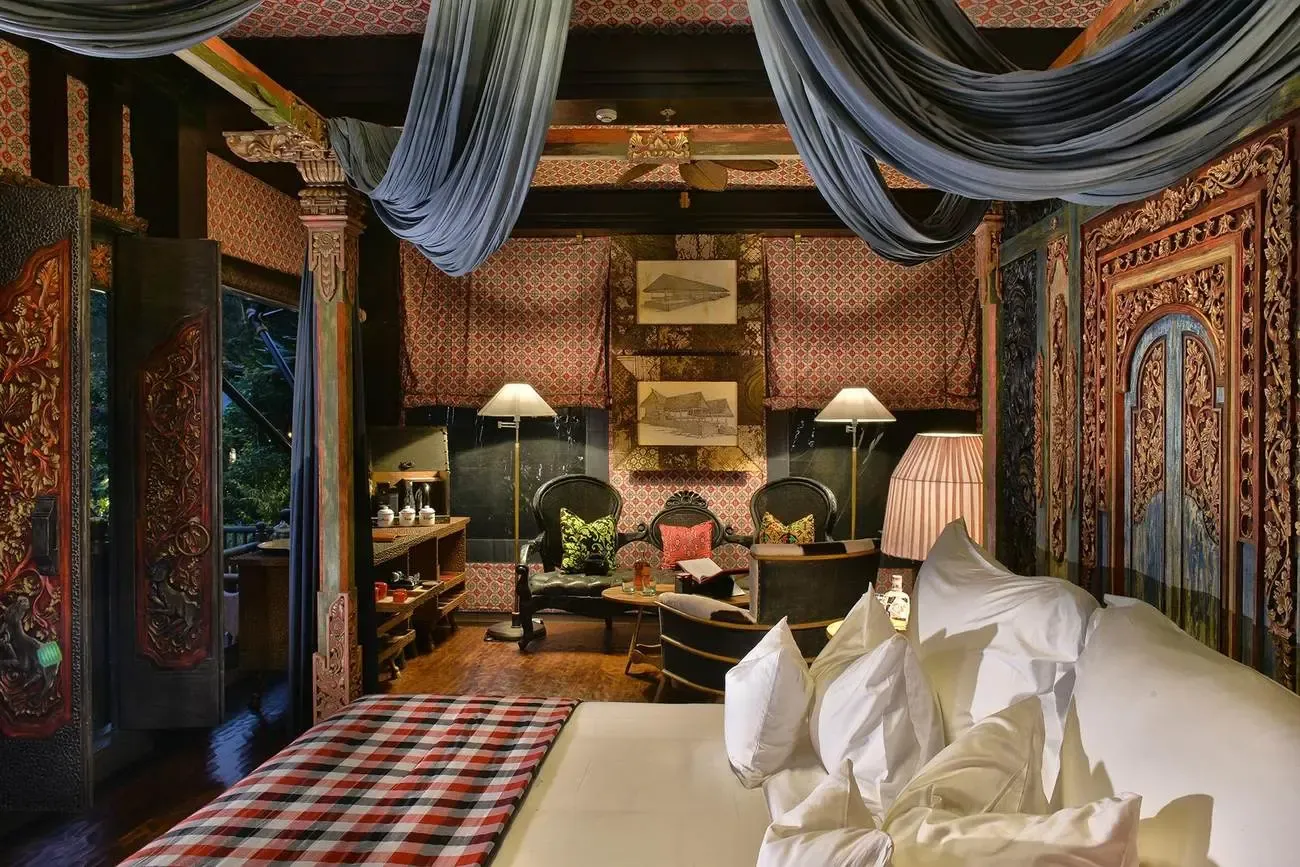
Bill Bensley, the architect and designer behind Capella Ubud, doesn't do anything by half measure, and this camp is no exception. It's built around a fictional 19th-century narrative, colonial explorers pitching camp in the Balinese jungle, and every detail plays along: the antique curiosities, the hand-drawn maps, the gas lamps lighting the paths. It's theatrical in the best sense, obsessively detailed, clearly the product of real vision rather than a formula. I understand completely why people fall in love with it. It's become something of a paradise for anyone who loves a photogenic frame, a younger generation especially.
What I lose here, though, is a sense of place. Strip away the explorer narrative and the jungle setting, and the underlying idea, the tented camp, the storytelling, the theatre, could be transplanted almost anywhere in the world and still work. It doesn't pull its identity from Bali specifically so much as it builds an entirely new, self-contained world on top of it. Compare that to somewhere like Tanah Gajah or Como Uma Ubud, understated, rooted in Balinese materials, rhythms and hospitality, and the contrast is obvious. Capella doesn't interpret Bali. It stages a story on top of it.
I don't say that as a criticism exactly. It's a choice, and it changes what kind of stay you're actually buying, whether or not the marketing ever quite says so.
An experience, unmistakably, even if not always a place
None of this means Capella fails to deliver. Quite the opposite. This is a Capella property, and in my experience that name means one thing: nothing is left unfinished.
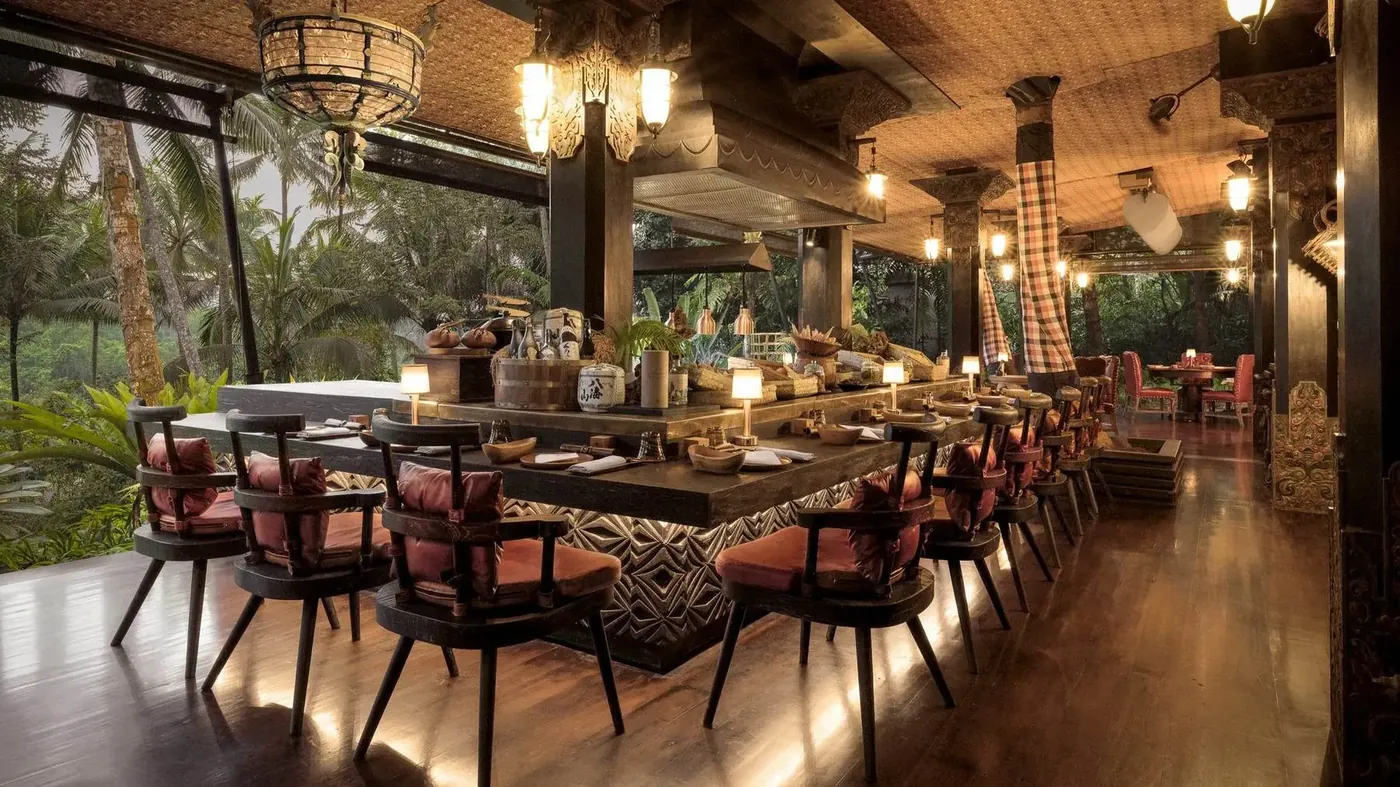
Api Jiwa, the resort's robatayaki-style restaurant, is a real highlight, unusual for a jungle setting in Bali, but the quality justified the concept entirely. It did something to me that I didn't expect from a hotel restaurant, and I'd recommend it even to someone not staying at the property, though be prepared for Bali-atypical prices.
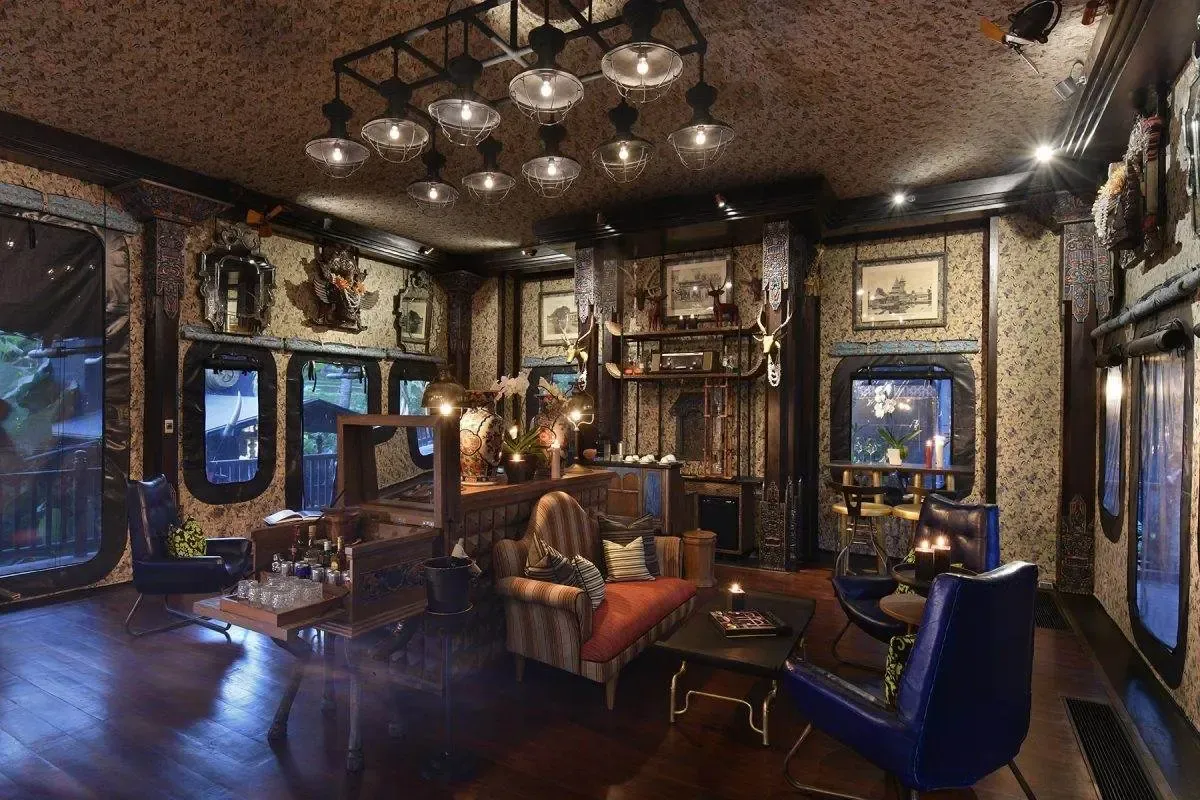
Then there's the Officer's Tent, the camp's exclusive living room and library, open all day to guests for coffee, tea and snacks, building to a daily evening ritual of cocktails and canapés. What struck me most wasn't the amenity itself but the atmosphere it creates: genuinely jovial, and one of the few luxury hotel spaces I've been in where you actually end up talking to other guests rather than politely avoiding them. That sense of shared occasion continues at the campfire each night, hot chocolate, toasted marshmallows, old silent films of Bali projected against the dark, guests in loungewear swapping stories by the fire.
The Culturists, Capella's answer to the traditional butler, deserve real credit too. Reinventing that role isn't easy, and there's something admirable about a hotel group trying to do it rather than defaulting to the industry standard.
What I'd flag before you book
The tents themselves are, for my taste, a touch too gimmicky, though undeniably luxurious and comfortable. This is somewhere you have to want, not something you fall into by accident. One practical note: because the tents sit deep under the tree canopy, the sunlight rarely reaches the plunge pools directly, and ours stayed cooler than I'd have liked given how beautiful it was to look at.
The bigger consideration is the terrain. I'm reasonably fit, and I still found the resort's steep, stepped pathways genuinely demanding, there are no buggies here, only stairs, and arriving back at your tent consistently out of breath does wear on you over a multi-day stay. If mobility is a concern for you or anyone you're travelling with, this is worth weighing seriously before booking.
Capella Ubud is not, and doesn't try to be, a hotel for everyone.
Who this is actually for
This is where I'd point you back to the wider question I keep returning to across these reviews: not whether a hotel is good, but what kind of good it is, and who it's good for. Capella is, unmistakably, a proposal hotel, an anniversary hotel, the kind of place people choose specifically because the experience itself is the point, not the backdrop to some other kind of trip. If that's what you're after, an immersive, wholly original narrative you step into for a few days, few hotels anywhere do it with this much conviction.
There's another traveller this suits particularly well, and it has nothing to do with sense of place at all. If your trip is mostly based in Canggu, Seminyak or Kuta, matcha lattes, beach clubs, the whole coastal scene, Capella makes an excellent two-night detour. You're not coming here for an authentic read on Bali. You're coming for total contrast: a couple of nights fully submerged in jungle theatre before heading back to the sand and the smoothie bowls. Used that way, the very qualities that make it feel a little placeless stop being a drawback and start being exactly the point.
If what you want instead is to feel like you're unmistakably in Bali, in a way that couldn't be replicated on a hillside somewhere else in the world, Capella may leave you slightly outside the very thing you came for, as it occasionally did me.
Capella Ubud is available through The Banjar Collective.
GET IN TOUCH TO PLAN A STAY →