Anantara has not had a good run in Bali. Their Vacation Club in Legian isn't somewhere I'd send a client, and I'd have said much the same about Anantara Uluwatu, which is now being remodelled under new ownership and will reopen under a different name entirely. Two attempts on one island, neither of them convincing, which is a strange record for a group I rate highly almost everywhere else in Asia.
So when I drove north out of Ubud to see the third, my expectations were somewhere near the floor. What I found is the third genuine surprise I've had in Bali in recent years, after Hyatt Regency in Sanur and The Laguna in Nusa Dua, and the most interesting of the three because of how they got there.
The arrival is not the surprise
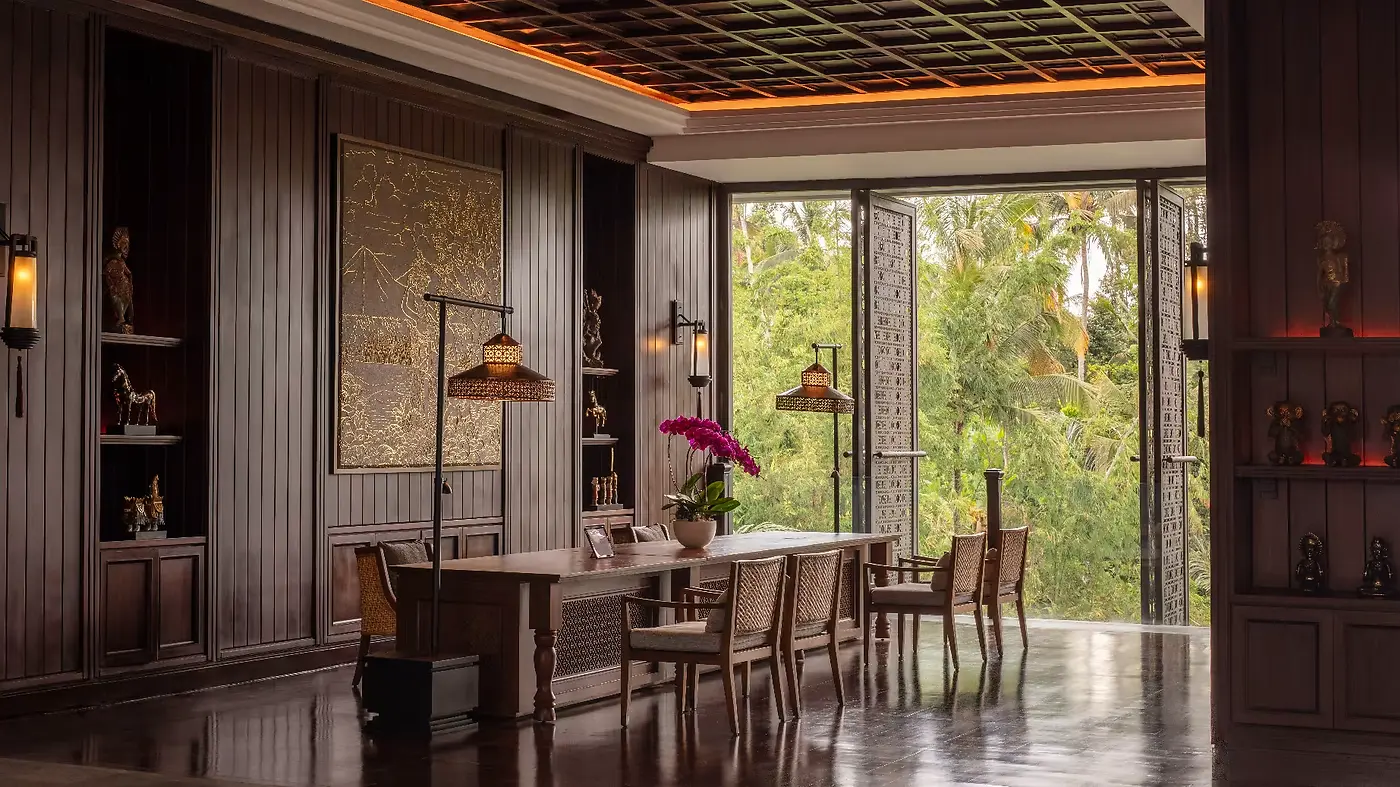
The tone is set immediately and with some confidence. You come in through the arrival pavilion into a lobby that opens onto a single wide valley, with Mount Agung sitting behind it on a clear morning. The three separate valleys the resort looks over reveal themselves later, as you move down through the levels, which is unusual in itself: most resorts on this island have one good outlook and occasionally two.
The first thing you meet is a Gamelatron, a site-specific sculpture by the American artist Aaron Taylor Kuffner. A gamelan is normally played by an ensemble of musicians; this one plays itself, the bronze keys struck mechanically so the instrument produces its own gong-like patterns all day long. You walk into Balinese music with nobody performing it, mist lifting off the valley below.
I was impressed, and I assumed I knew what came next, because after fifteen years of this I always do. In Ubud you drop your bags and go and walk the grounds.
Then you go looking for the resort
There isn't one.
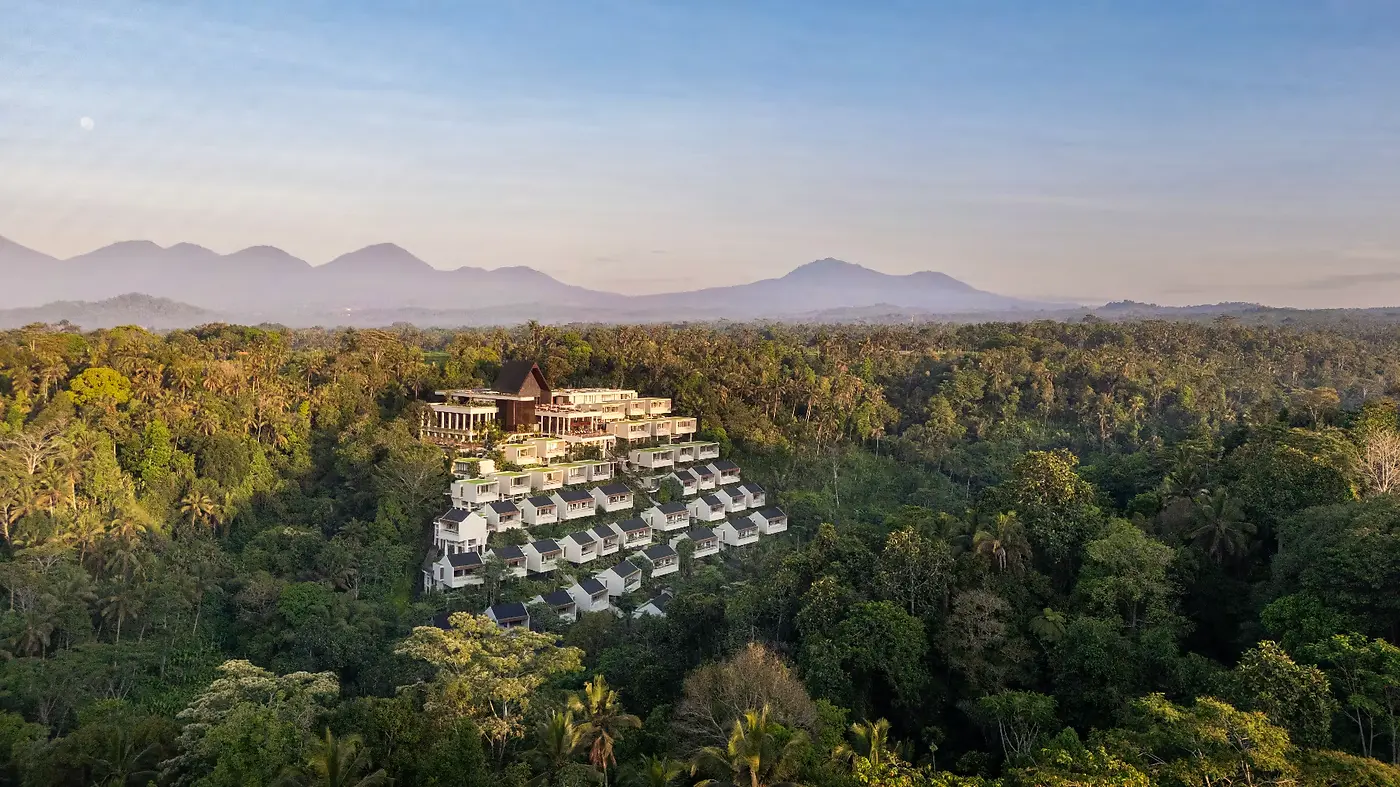
Anantara Ubud is 85 suites and villas on terraces down a forested hillside, connected by a funicular, and what it is not is an estate. No lush gardens to get lost in, no quirky corners to hide in with a book, no path you haven't taken yet. It's a large but compact building on a hilltop, and once you've walked it, you've walked it.
In Ubud that ought to be fatal. Every resort in these hills sells land: gardens, terraces, rice paddies, valleys, something to disappear into for an hour. Amandari is a village. Tanah Gajah is grounds with a hotel standing in them. That's the game here and everybody plays it.
Anantara got a hilltop with three superb views and almost no usable estate, and rather than pretend otherwise they turned the entire thing inward. Every bit of the money, the thought and the atmosphere has gone into the interiors, and the building now does the work that landscaping normally does. I suspect that's precisely why this one worked when the other two didn't. They stopped competing on the thing they were never going to win.
Which means that a day here isn't a walk. It's a sequence of rooms, and the only fair way to describe the place is to take you through one.
A day inside a building
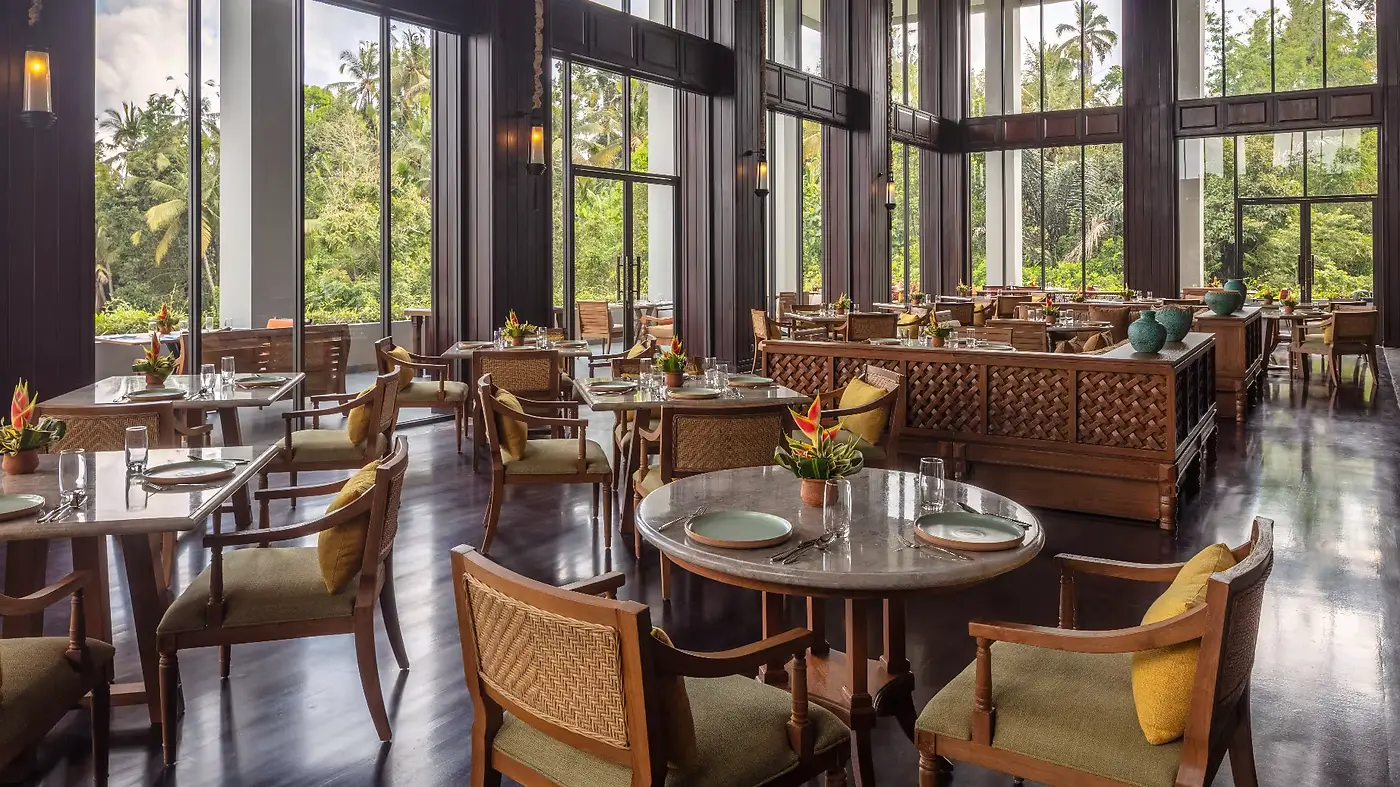
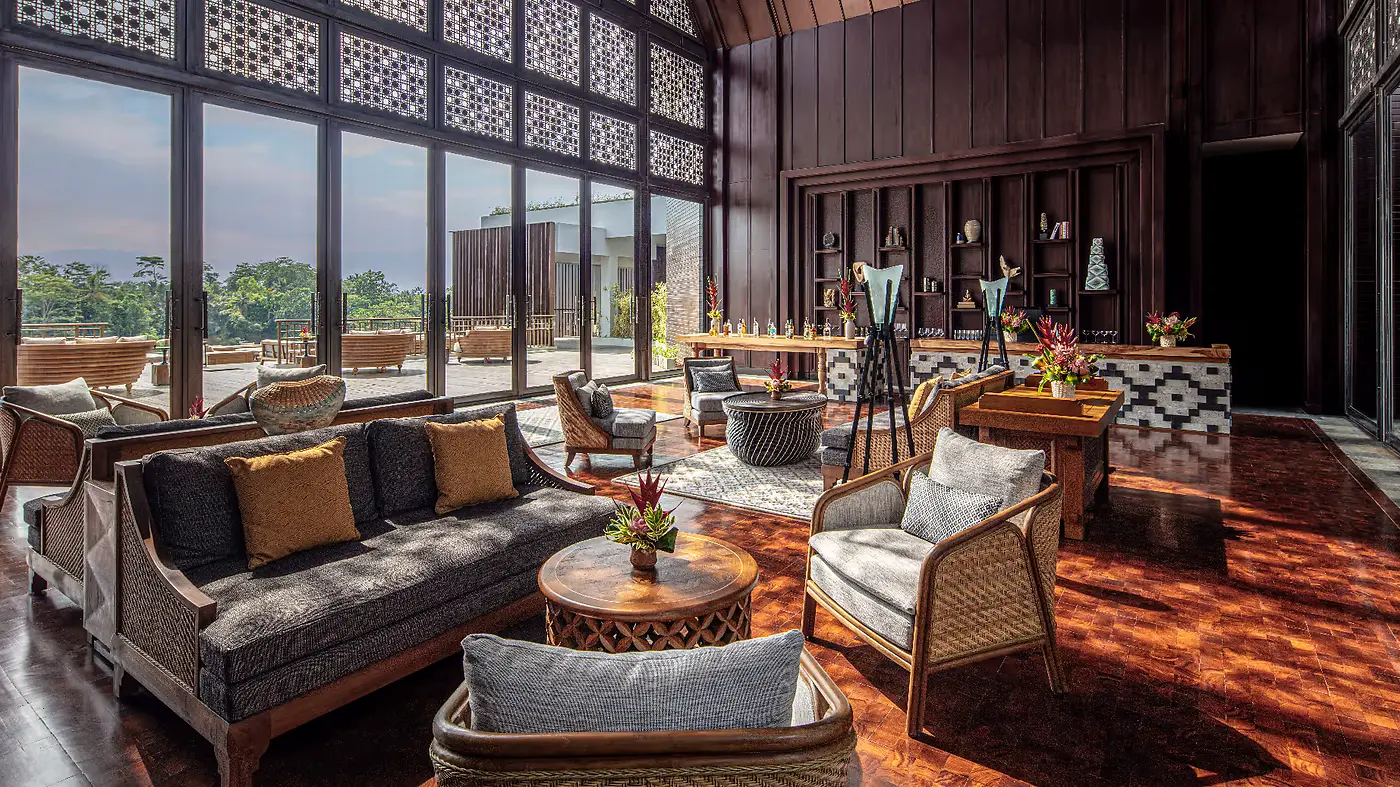
Breakfast happens at Kirana, and Kirana is the reason this resort feels alive rather than reverent. It runs all day, with a terrace over the misty rainforest and an interior that manages to be air-conditioned without feeling shut in: very high ceilings, polished wood floors, glass walls several metres tall. Casual chic at its best. The service is extraordinarily proactive, and by the second morning the staff had my name, how I take my eggs and my exact coffee order, which is the sort of thing hotels claim and rarely do. The cooking is precise as well. The eggs benedict there may be the best I've had in Bali, which is not a sentence I expected to write about a resort breakfast.
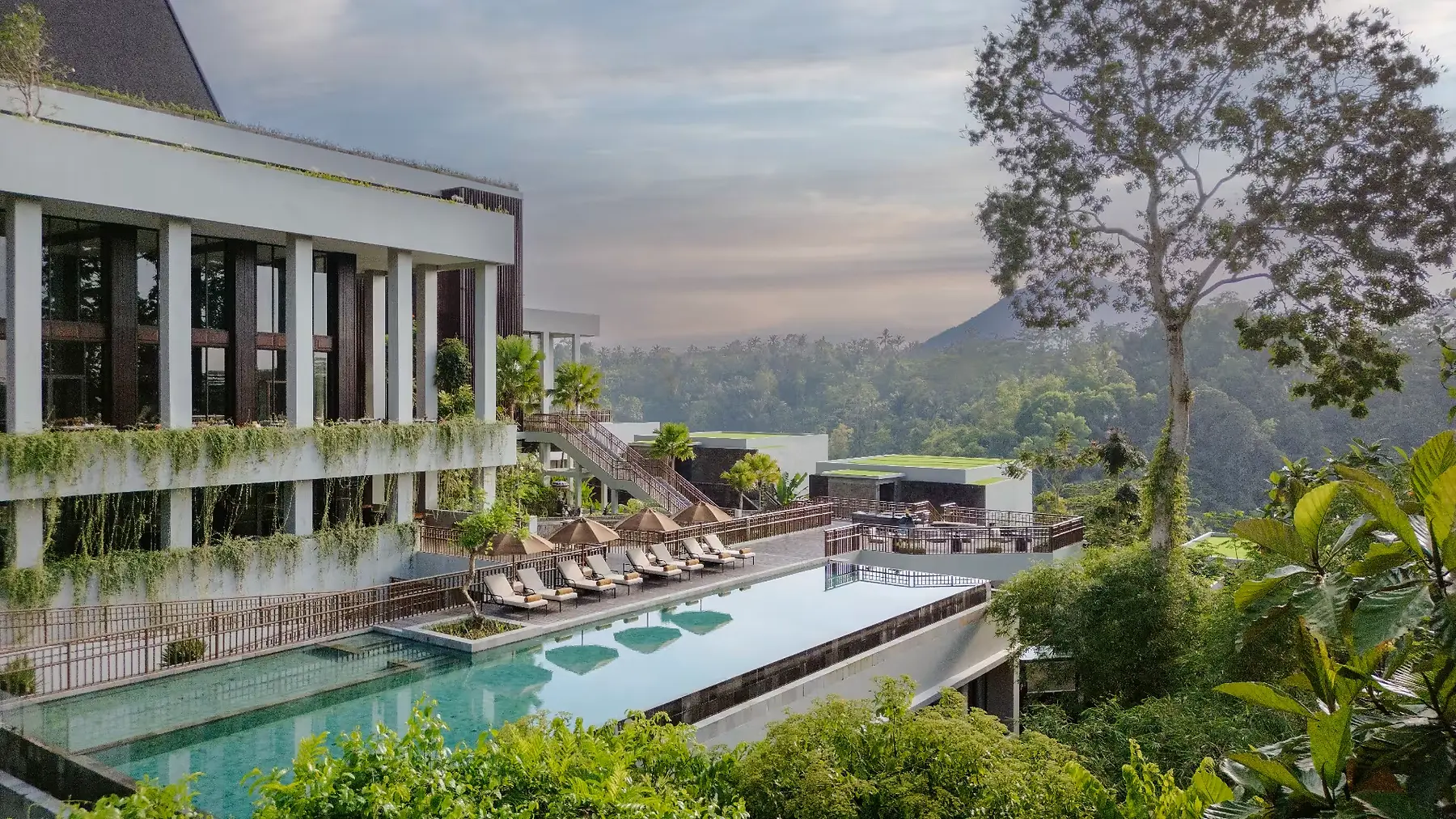
By mid-morning you're at one of the two pools, and which one you choose says something about your mood. The family pool sits high on the central level and looks straight out over the treeline: a wide open panorama, and on a clear day the one place you'll properly see Mount Agung. The adults-only pool by Sulang bar is built down in the fold of the valley, where you don't look over the jungle but directly into the dense green of the treetops, and where the sound of the forest and the mountain river below arrives far more intensely. One pool looks outward, the other closes around you. Nobody put those two in the same place by accident, and that's the whole design philosophy in miniature.
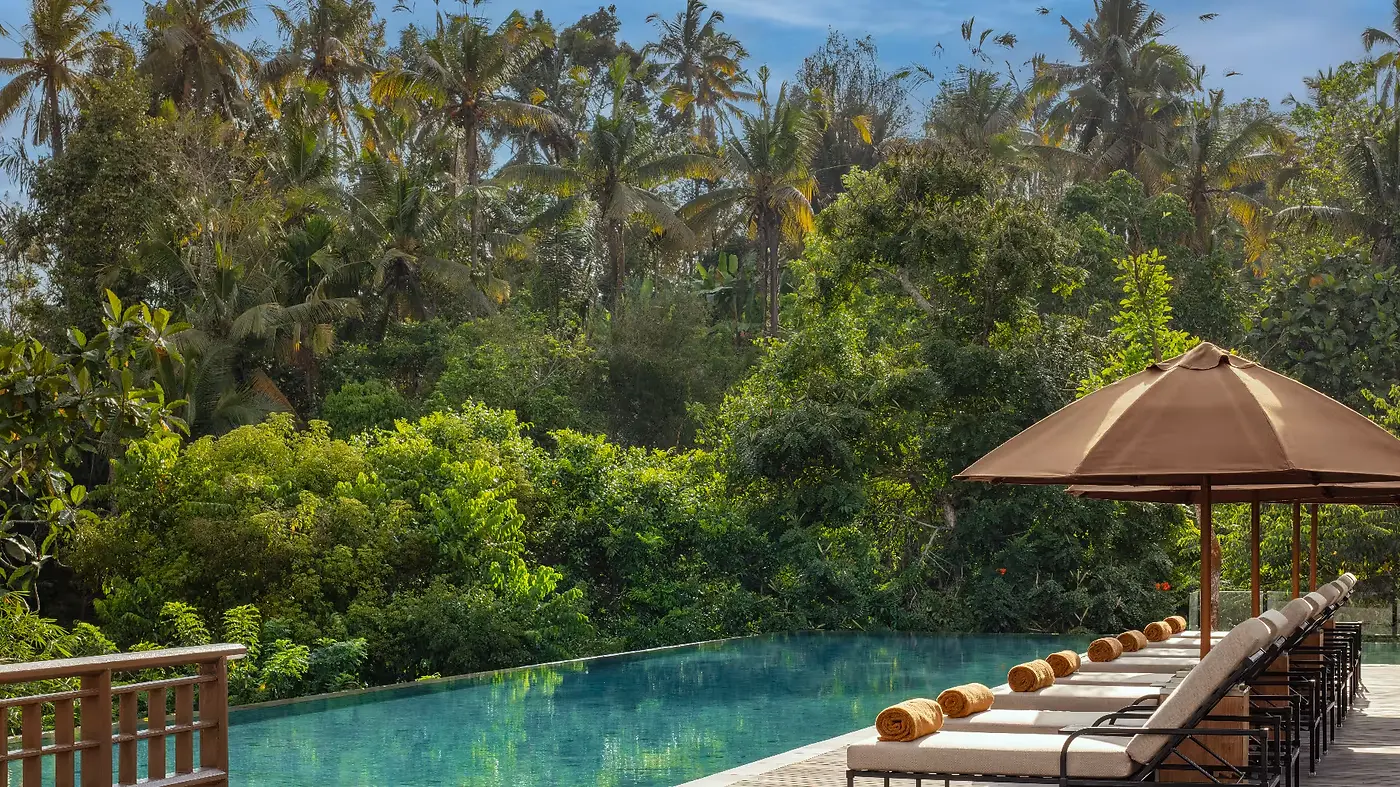
Both of them are heated, which sounds like a footnote and isn't. Pools in Bali are almost never heated, and up here in the hills the altitude means the water is regularly too cold to enjoy, which is a problem I've run into at some very expensive addresses in Ubud. Heating a swimming pool wins nobody a photograph. Somebody did it anyway because they were thinking about what a guest actually experiences at nine in the morning, and that decision tells you more about this hotel than the architecture does.
Lunch tends to be back at Kirana, because there's almost nothing nearby and because it turns out to be a very good one-stop shop. I ate there repeatedly without ever resenting it, mostly local dishes, the ayam taliwang and the babi kirana in particular.
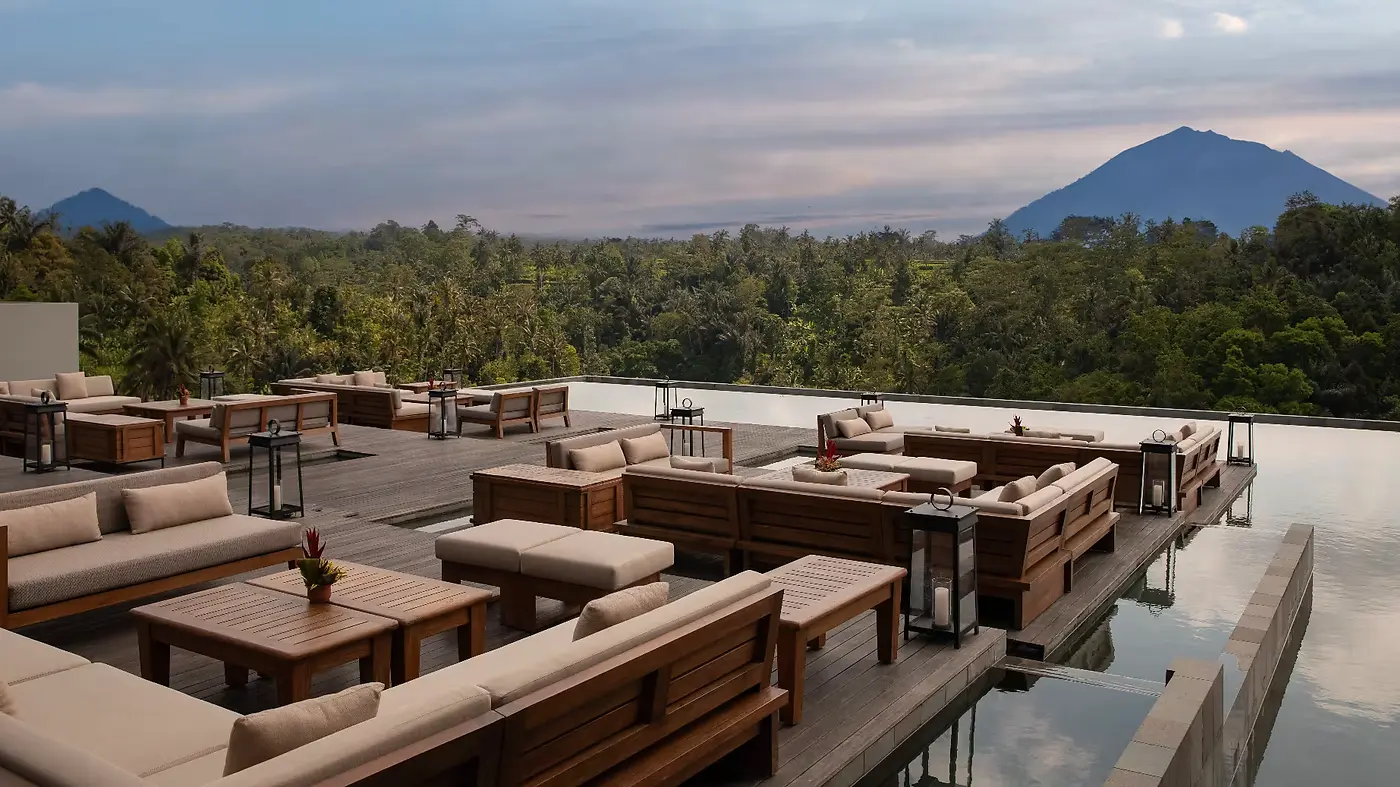
Late afternoon belongs to the Lobby Lounge, which was my favourite place on the property: an enormous open-air roof, cleanly designed, with a view that does most of the work by itself. At sunset it comes close to magical, and the Gamelatron is still chiming somewhere behind you while you sit there.
Dinner is either Kirana again or Amerta, the other end of the register, chic and more formal and built around a wood-fired oven. It's a fraction too polished for me and a fraction too expensive, but the quality is genuinely there and I was happy to go back. Afterwards the two bars take over, one focused on serious cocktails and one leaning towards comfort food, both staffed by people who are unusually kind and, in the case of the cocktails, unusually serious about what they're making.
That's the day, and the point of describing it that way is that I never once wished for a garden. There isn't a space here that hasn't been thought about properly. I couldn't find a room, a terrace or a corner that felt like an afterthought, and this is exactly the kind of site most hotels would ruin.
The catch, and it's a real one
All of which comes with one honest warning, and it follows directly from having no grounds and no neighbours.
The food here is priced above the local average and pitched more formally than the area around it. If you arrive without realising that, you'll spend a week eating at prices you think are too high with nowhere else to go, and a strength turns into a trap very quickly. The remoteness that makes this feel like a proper escape also means the restaurants have you.
I didn't mind, because I liked them and I'd factored it in. But it's the one thing I'd want somebody to know before booking, and it's why I'd say this more firmly here than almost anywhere else on this site: know exactly what you're buying.
The rooms, briefly
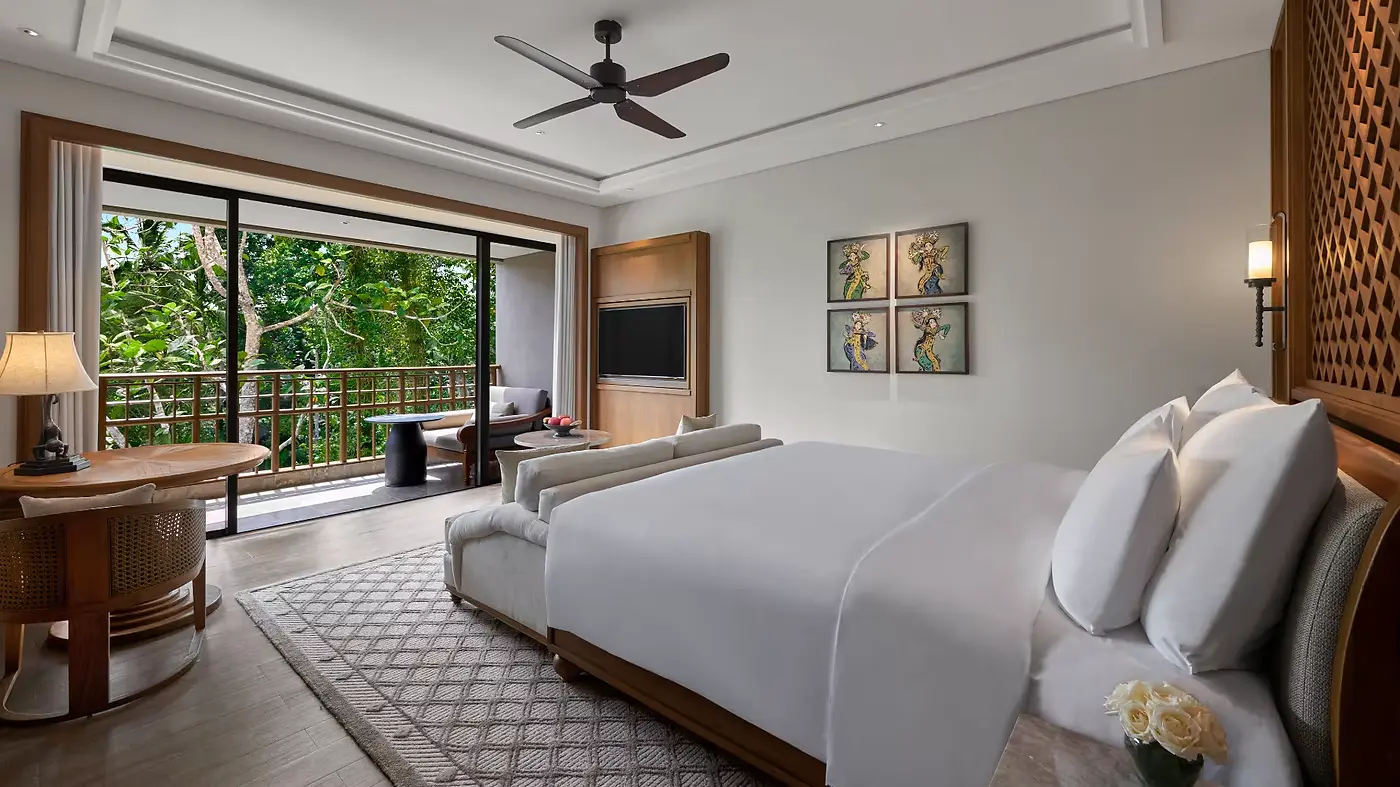
Suites are 53 square metres, modest for this hillside, and I didn't mind that either given how much of the day happens elsewhere. They're beautifully kept, stylish, unmistakably Indonesian in the detailing, with a good balcony and an oversized bathtub angled into the trees. Above them sit the 71-square-metre Payangan Suites, which swap the balcony for a private garden, and one- and two-bedroom villas from 105 square metres with infinity pools and a dedicated host. Unless you specifically want your own pool, the entry suite is plenty.
Service throughout is very responsive and a good deal of it runs over WhatsApp, which works well here. It isn't refined pampering of the sort the grand old properties do, and nobody is anticipating your third thought, but everything you ask for arrives quickly and cheerfully, and at this price that's the right trade.
The gap they found
Which brings me back to why this matters beyond one hotel.
Ubud is oddly polarised. At one end are the larger-than-life resorts, world-famous and priced to match. At the other is an excellent supply of hotels around $100 to $150 a night, The Lokha, several of the Adiwana and Komaneka properties, all offering real value. In between there was almost nothing, other than COMO Uma Ubud and Tanah Gajah, two of my favourite hotels anywhere on this island.
Anantara has walked into that space, and it got there by being the one resort in these hills that doesn't sell you land. That's a strange way to win in Ubud, and I don't think it was luck.
Come for the pools, the bars, the restaurants and the views, and use it as a base for exploring Ubud and the north. Expect exactly that and you'll have a very good week. Expect an estate to wander and you've booked the wrong hotel.
Anantara Ubud is available through The Banjar Collective.
GET IN TOUCH TO PLAN A STAY →