The Ubud hotel that stops pretending Ubud isn't there
Every hotel I have written up in this valley sells the same thing, which is distance. Amandari, COMO Shambhala, Mandapa, Four Seasons Sayan, Capella: they sit out along the ridges and above the gorges, and the arrangement is that you retreat from Ubud and visit it when you feel like being visited upon. It is an excellent arrangement and most people should take it. I have recommended it more times than I can count.
But I wrote a piece recently about how the most beautiful parts of this island have ended up behind gates, and how uneasy that makes me. Bisma Eight is the hotel that answers it, and I did not expect to find the answer on a side street in central Ubud, in a building made largely of concrete.
A street that plays both sides
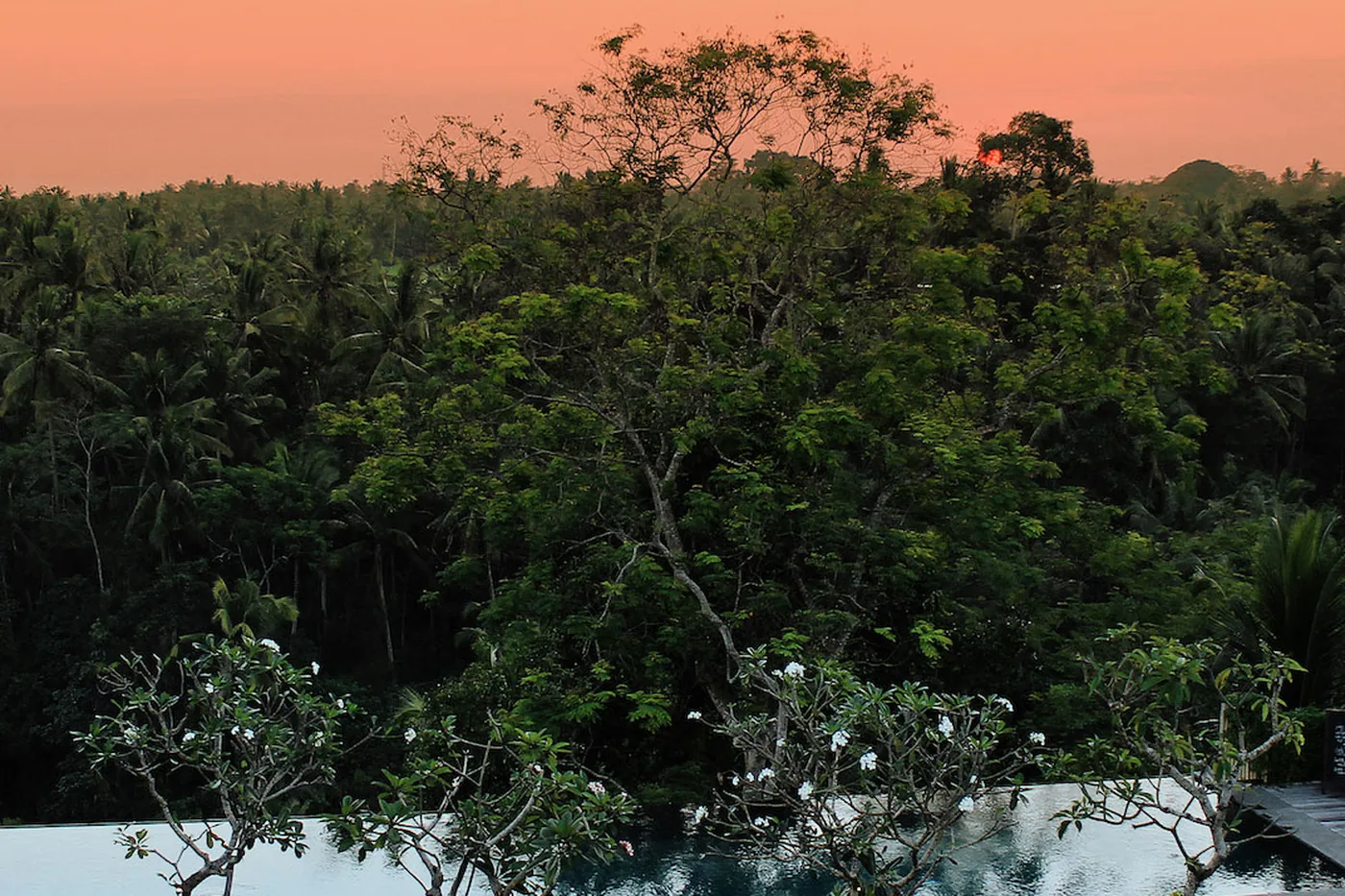
Jalan Bisma runs parallel to Monkey Forest Road, which is the busiest strip in town, and that single fact is the entire hotel. You are a few minutes' walk from the crowds and the coffee and the shops, and you are also looking straight down into the jungle of the Campuhan valley. Nowhere else at this level gives you both. Every other hotel with this view is half an hour of traffic from a cappuccino, and every other hotel this close to town is looking at a wall.
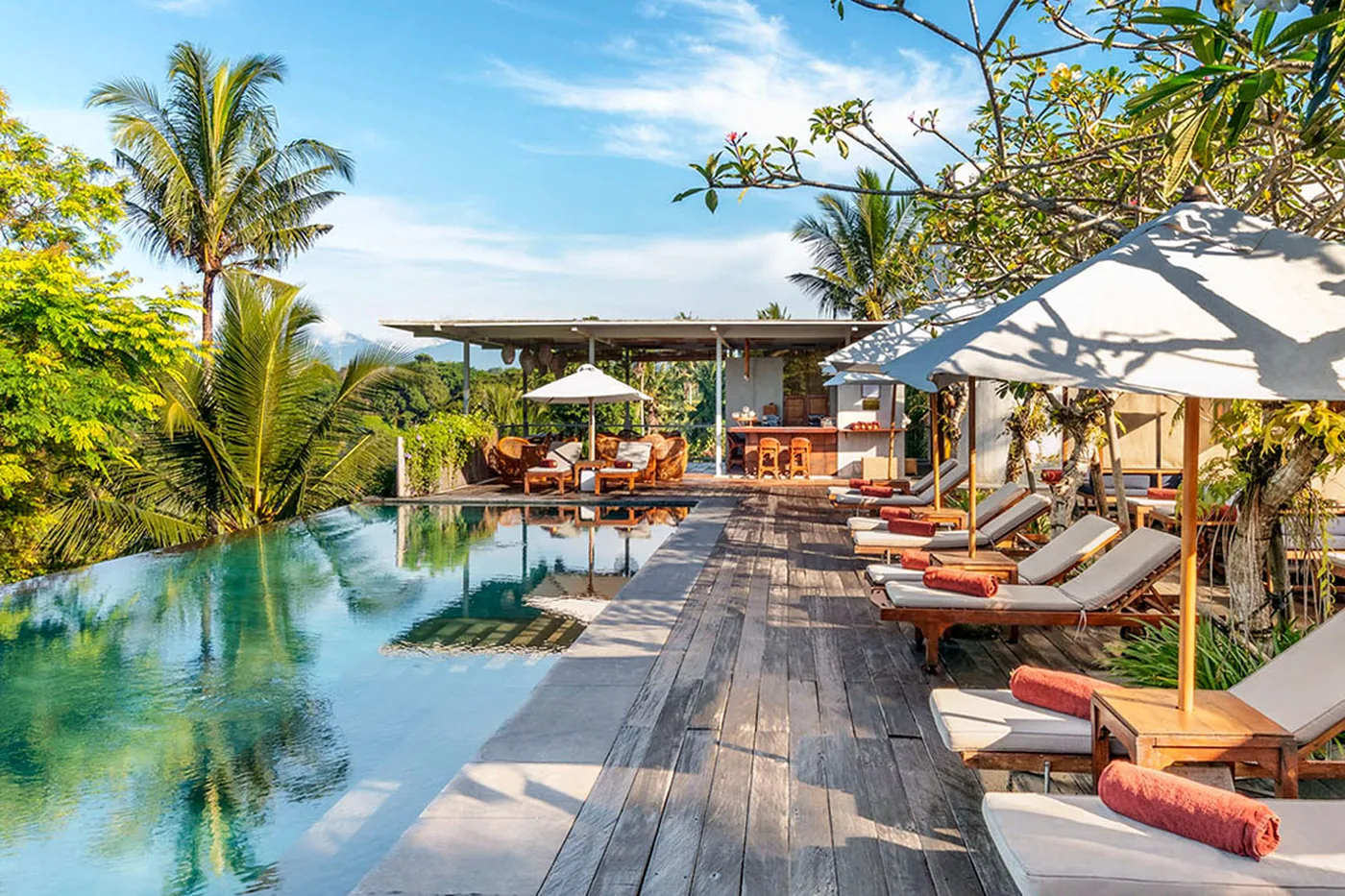
What that buys is a shape of day you cannot construct from a ridge. We walked into the Monkey Forest at opening, several mornings running, when it is still cool and briefly almost empty, and then drifted through the rest of the morning: shops, a cheap and entirely adequate massage, coffee, more coffee, the market, the Saraswati temple sitting in its lotus pond looking like a postcard of itself. And when we had had our fill of other human beings we walked back, lay by the infinity pool with the vegetation dropping away below us, and let the afternoon go. Out and in, twice a day, no car, no driver, no plan. If you have ever spent a week in the Ayung valley calculating whether a trip into town is worth the journey, you will understand what an unusual luxury that is.
The inversion, which is the clever part
Here is what I did not expect. The obvious move, for a building on a loud street, is to become a monastery: high walls, silence, incense, a discreetly closed door. Bisma Eight does the opposite. It takes Ubud's energy indoors and runs on it. This is a lively hotel full of young people, with restaurants that pull in a good number of guests who are not staying here, and the effect is that you are not sealed in a bubble with forty other people who paid the same rate. You are in a public room in a town.
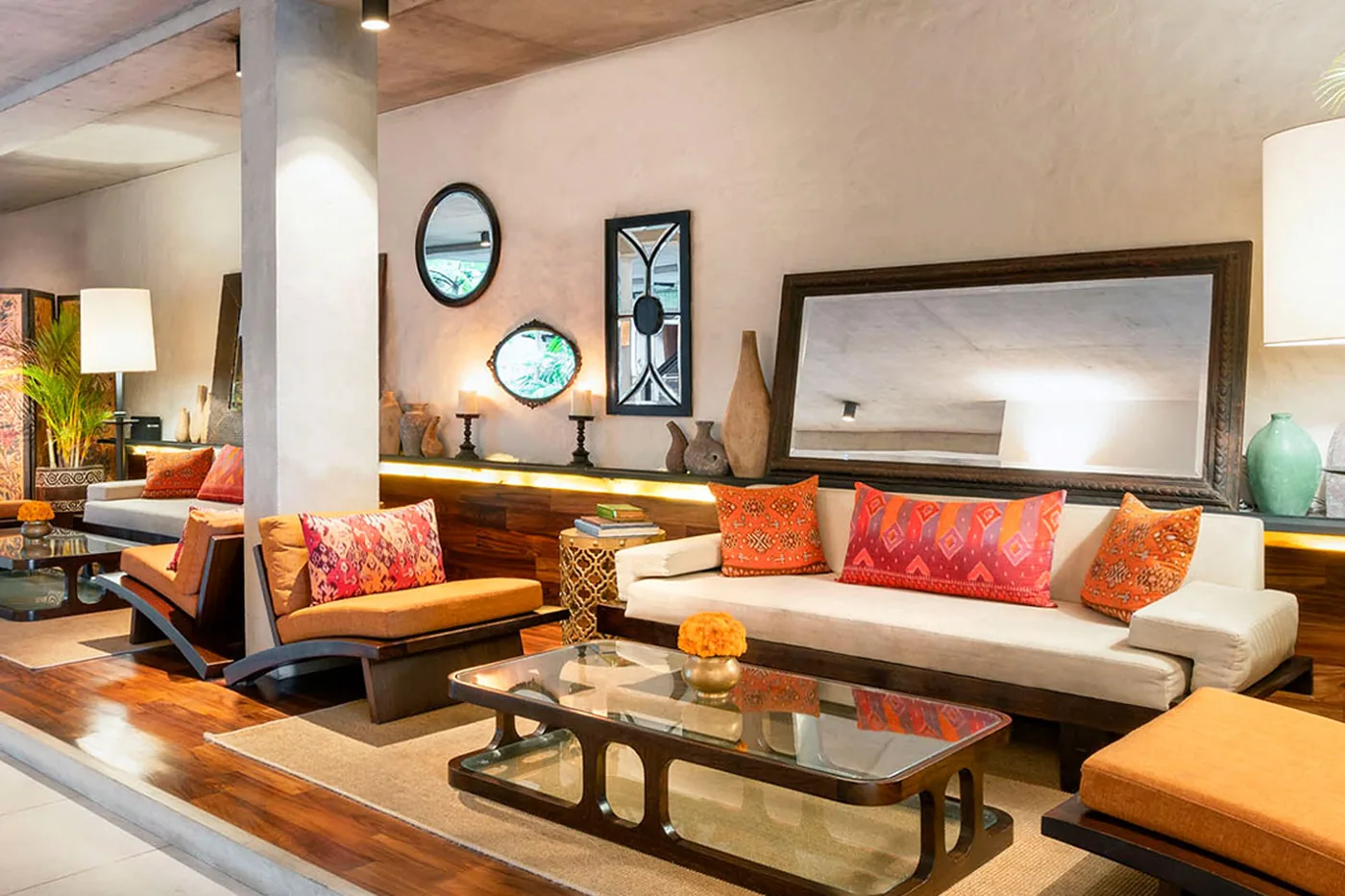
After years of the conventional version, in which the gate closes behind the car and the world outside politely disappears, I found that genuinely refreshing. It also turns the property's obvious weakness into its strongest card, which is the kind of thinking most hotels are too nervous to attempt.
The building does the work quietly
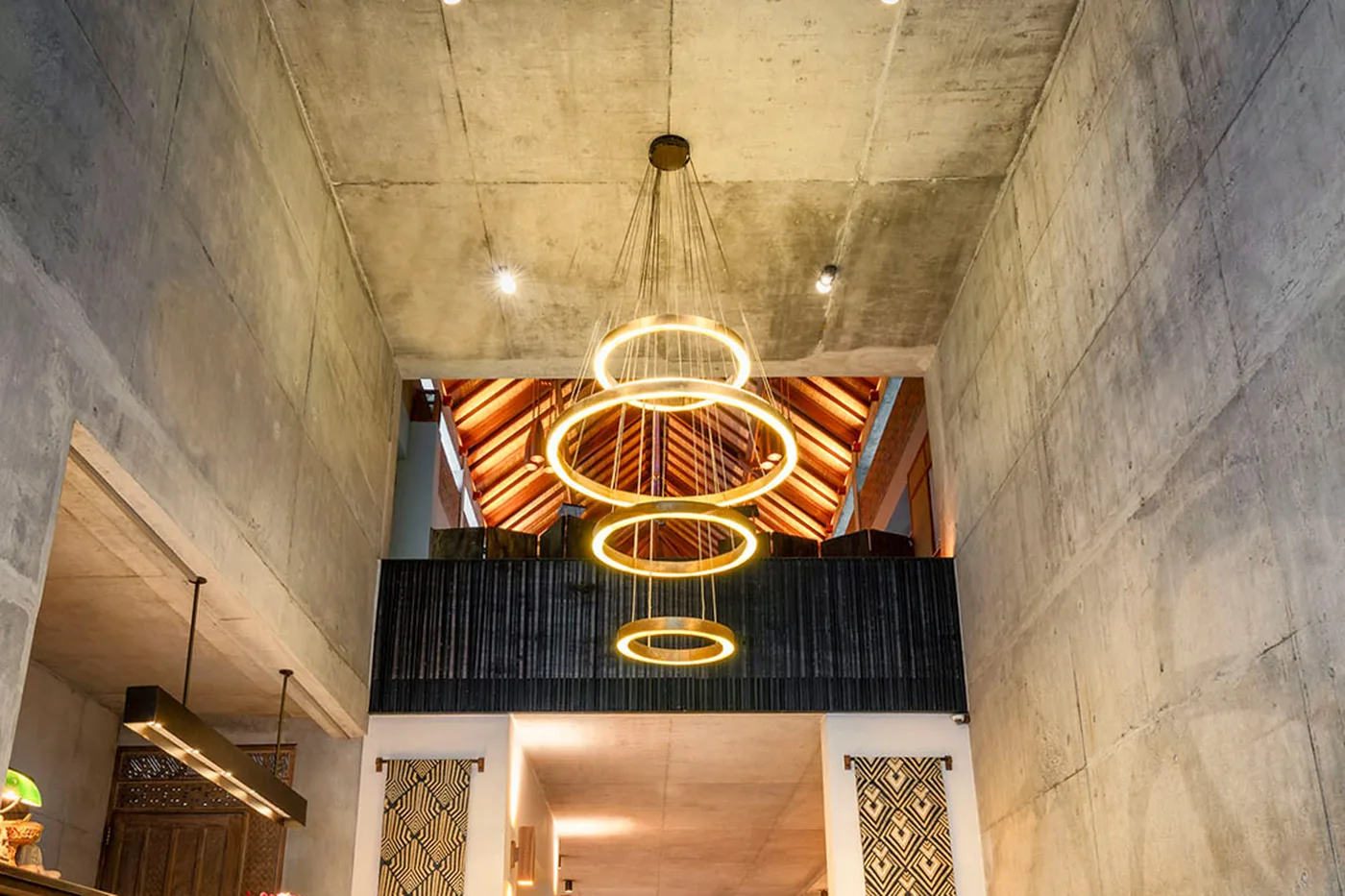
It opened in 2015, it is locally owned, and it looks like nothing else in Ubud: raw concrete, steel and glass, cut with teak and heavy planting, brutalism softened by the tropics. The layout does something sly on the way in, walking you through greenery that takes the street noise away before you have registered that it has gone, and the glass in the suites is insulated so thoroughly that you hear neither the scooters nor the jungle. With thirty-eight suites it never feels crowded, even at capacity.
And there is a smell, which I have not met anywhere else and can still summon: frangipani, incense and burning oil, layered, everywhere, all day.
Rooms, and what $200 buys
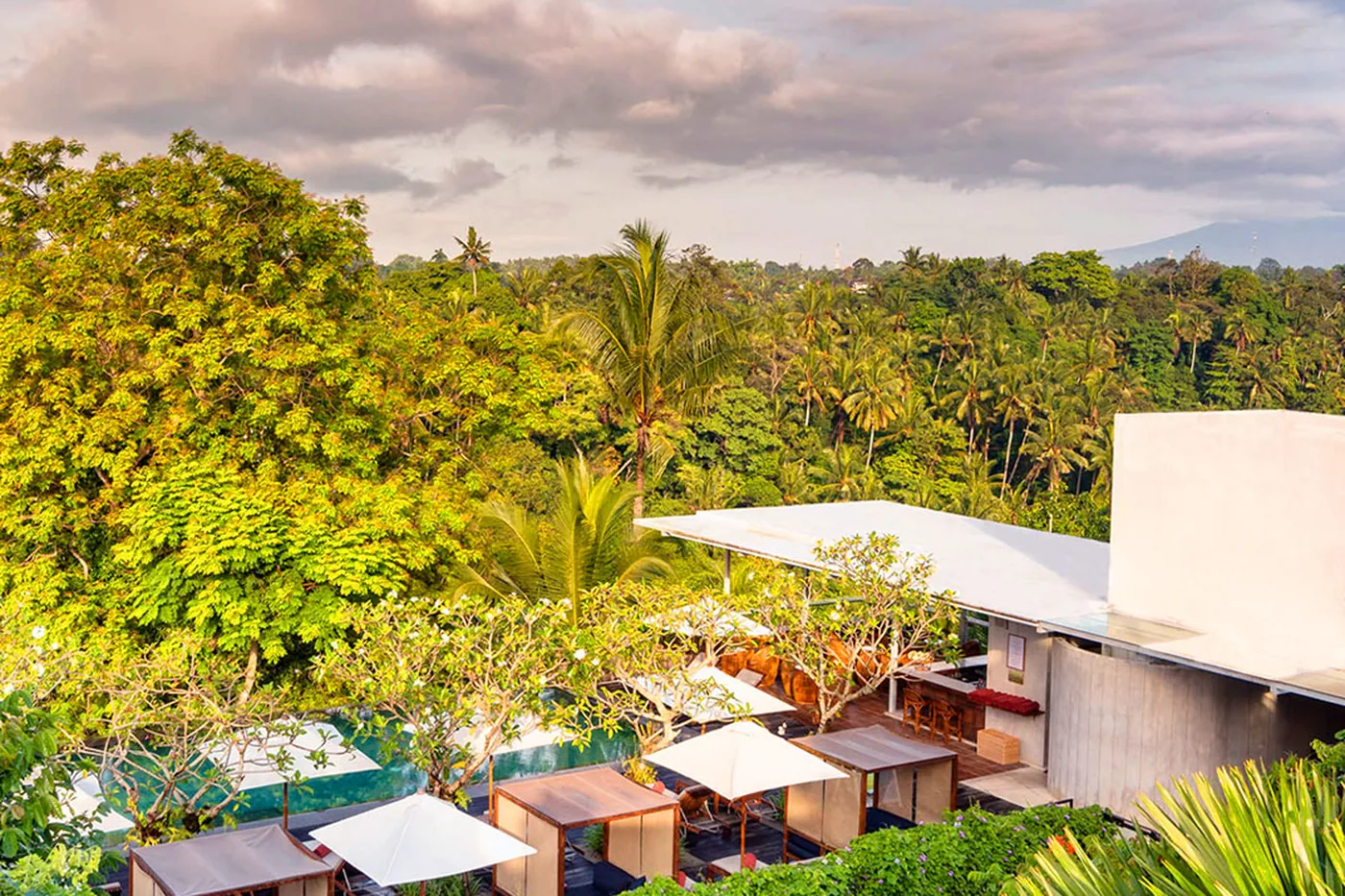
The rooms are good rather than luxurious, and I mean that as a compliment at this price. Mine was well made and thoroughly hip, with a Japanese soaking tub, and a french press with coffee to grind yourself, which is precisely the sort of small decision that buys a hotel a great deal of goodwill from me. The suites come in three grades: Garden on the ground floor with a private patch of green, Canopy above with a balcony, and Forest, which hang out over the valley like treehouses and are the ones worth asking for.
Is good rather than luxurious a problem at around $200 a night? Not remotely. This is a great deal of hotel for the money, and a fraction of what the ridge hotels ask for a view of the same jungle. The pool is heated, for which I award points and offer no apology whatsoever.
Copper, the rooftop, and the table next to ours
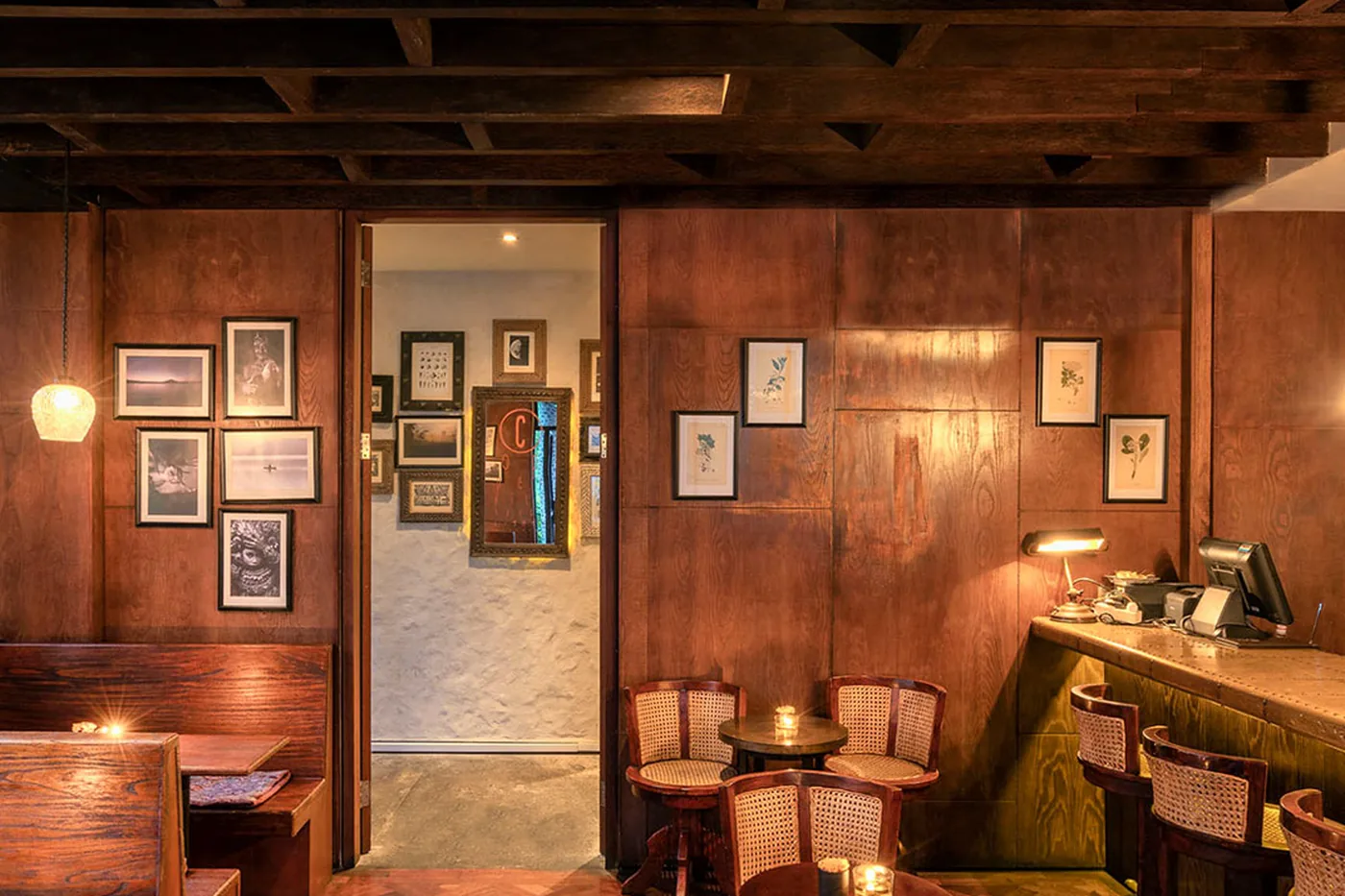
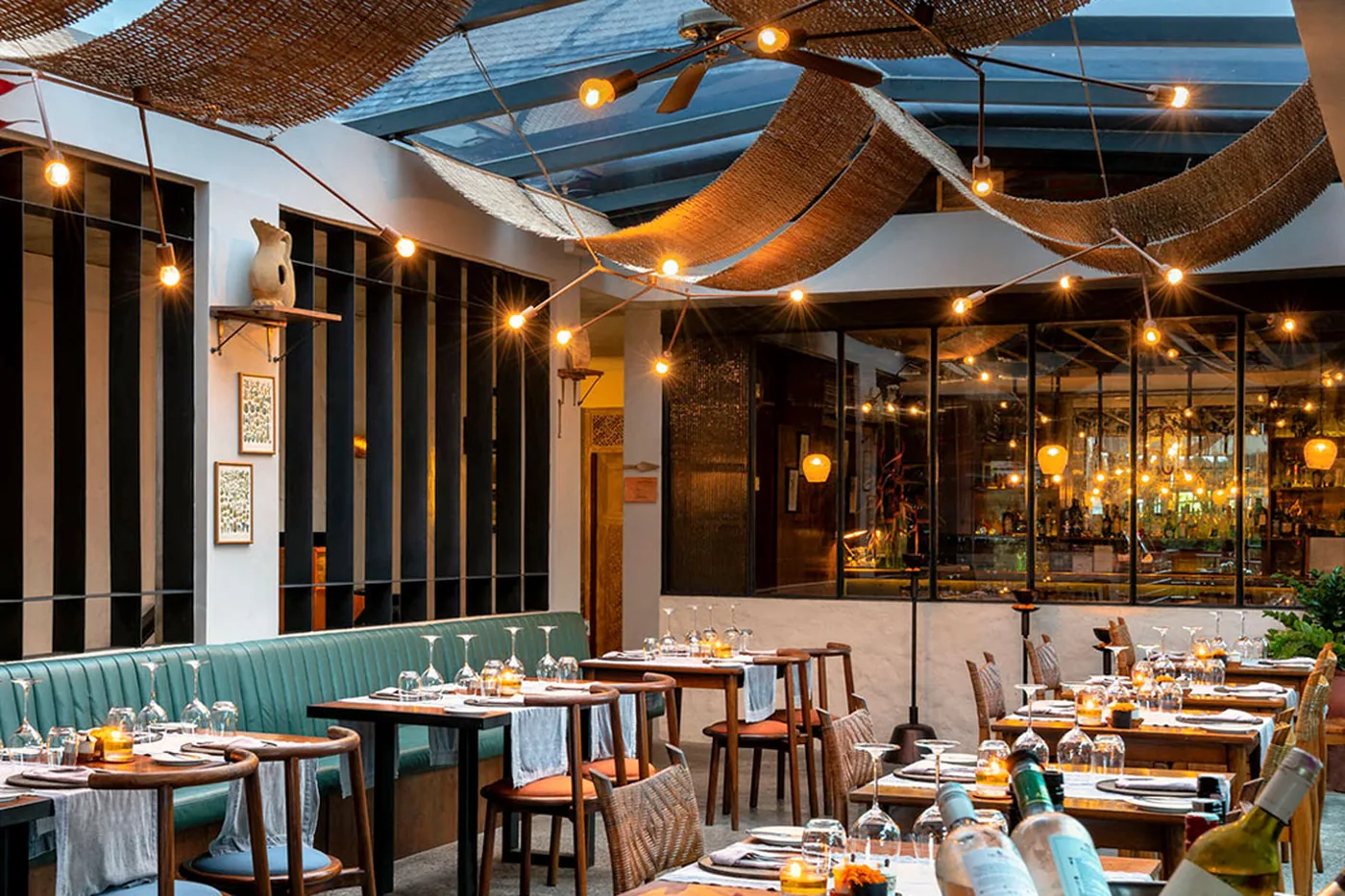
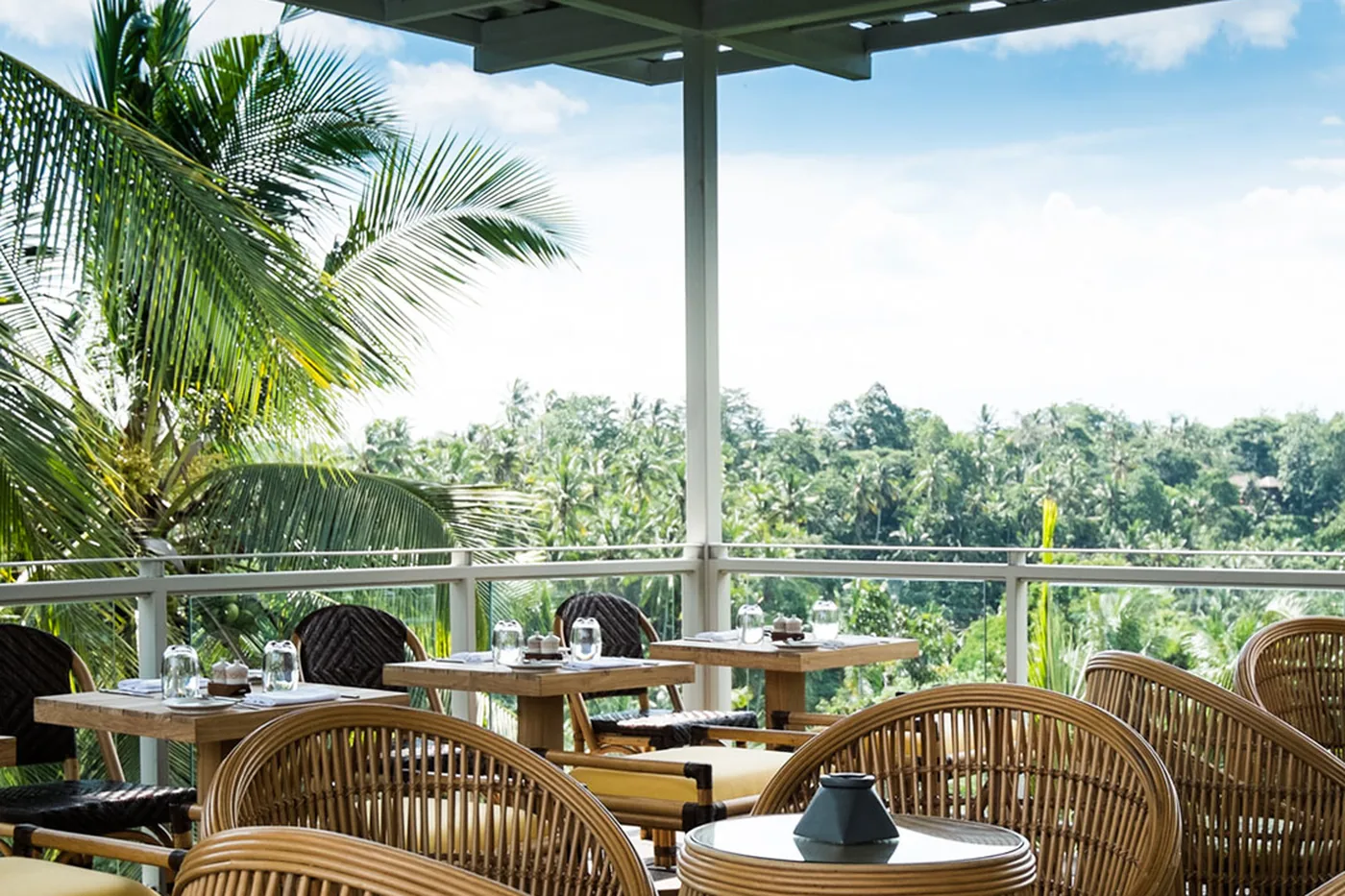
Copper Kitchen, Bar & Rooftop is where I spent most of my evenings, and it took me by surprise, because I had assumed the infinity pool would be the best thing here. It is not. The roof is. It sits half in the open air among the treetops with the lighting done properly, and the kitchen is at its best when it stops being polite about borders: the sticky pork ribs and the tuna tacos I ordered more than once, and the straight Western plates I would leave alone. Breakfast is where my patience gave out, but that is generational irritation rather than bad cooking, because the avocado toast era has now run longer than several European monarchies and I have reached the age where I mention it.
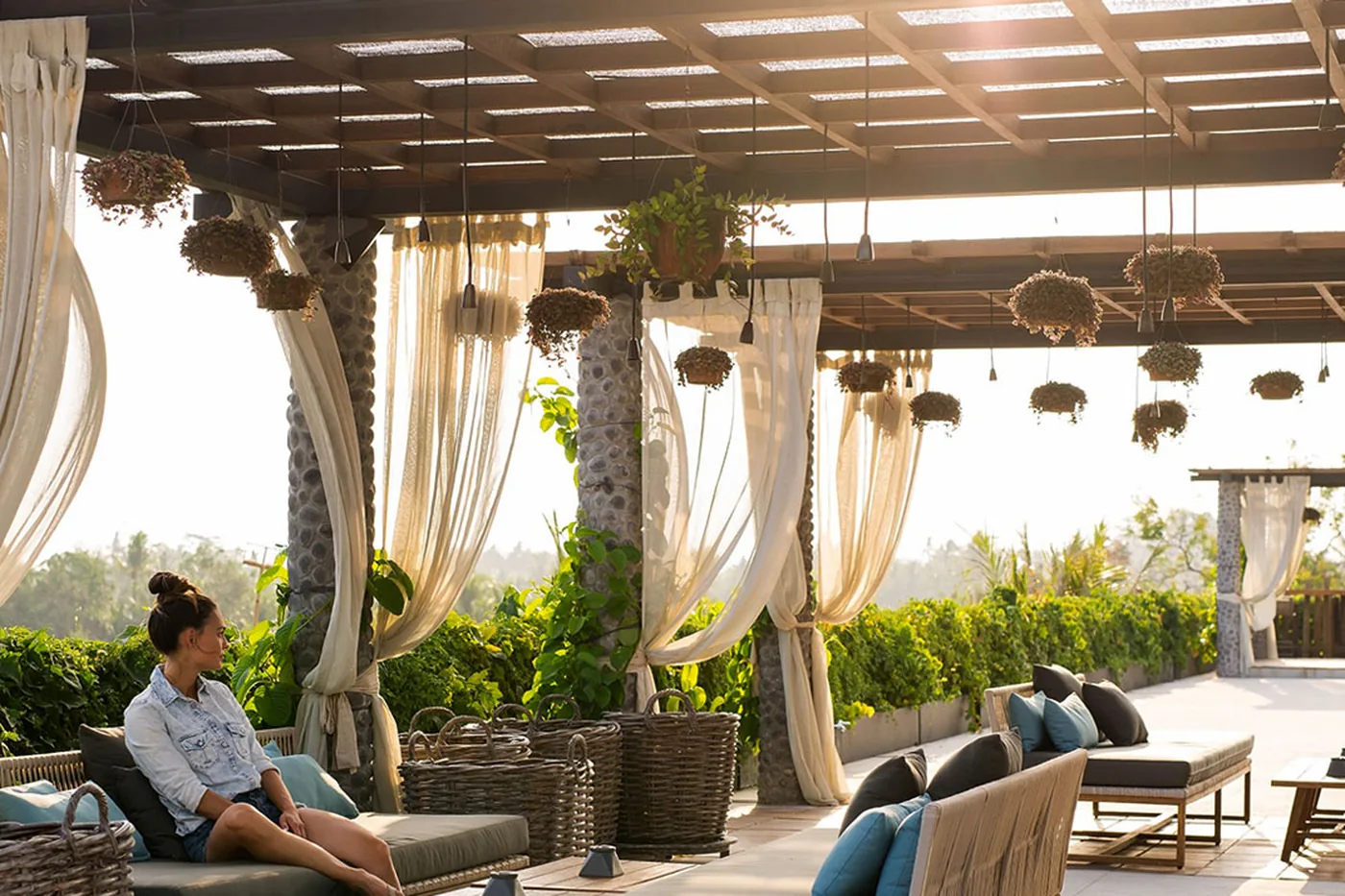
One evening my wife and I were seated beside four Australian girls of about twenty, and I have thought about that table ever since. They were impossibly hip and good-looking and entirely at ease, working their way through the house sling, and as the hours went on they became steadily less discreet about boys and various other matters of youth. We sat there listening, transfixed, understanding perhaps two thirds of the vocabulary. It was like being handed a viewing window into a reserve. I have rarely felt so old and rarely enjoyed it more.
What stayed with me was not the comedy of it but what dawned on me somewhere around the second round. I am European, and when I was that age I went to Ibiza and Mallorca and the loud Mediterranean beach towns, and Bali was somewhere I would get to later, when I wanted temples and rice terraces and the classical version of the island. For an Australian, Bali is that first trip. It is the six-hour flight, the cheap flat, the first holiday without parents. The island I came to for silence is the island they came to for noise, and we were sitting at adjacent tables.
That, more than anything else, is what I like about this place. Bali runs several parallel worlds at once and almost nobody has to compromise: the valley hotels an hour away are selling the version I usually want, and this rooftop is selling a different one to a different generation, on the same evening, four minutes from the Monkey Forest. Very few destinations manage that without one world spoiling the other.
The spa, and the small things
The spa deserves a paragraph for a reason that will sound like accounting. Treatments cost markedly less than at the grand names up the valley, and the menu is considerably more interesting than theirs: candlelight yin yoga with sound healing, chakra tea meditations, a session in which you make your own jamu. Cheaper and braver is an unusual direction of travel in Bali, where the normal trade is the reverse.
Then the details that cost almost nothing. Staff who make a visible effort to learn your name and mostly manage it. A handwritten goodnight note on the bed. Somebody who remembers which coffee you asked for. Those things are the entire argument for small, owner-run hotels, and no brand specification has ever produced one of them.
Who this is for
Anyone who wants to be in Ubud rather than near it. Couples who would rather walk to dinner than order a car. Travellers in their twenties and thirties, and those of us who are not but still want the room with the energy in it. Anybody who has decided that a heated pool, a serious coffee and a bar with strangers in it beats a butler.
And who it is not for. Anyone who came to Bali for silence, for a private pool, or to be looked after in a manner that feels ceremonial. The hotels across the valley do that magnificently and charge five times as much for the privilege, and on a different trip I will be in one of them.
Bisma Eight does not really compare with anything else on this site, which is probably why I enjoyed it as much as I did. It took one Michelin key in the first year they were handed out, and for once I have no argument at all. And if you want to know what the next decade of travel in Bali is going to look like, I can tell you that the answer was sitting at the next table, ordering another round, and that it sounded like a great deal of fun.
Thinking about central Ubud rather than the ridges? That is exactly the question to send us before you book.
ASK BEFORE YOU BOOK →