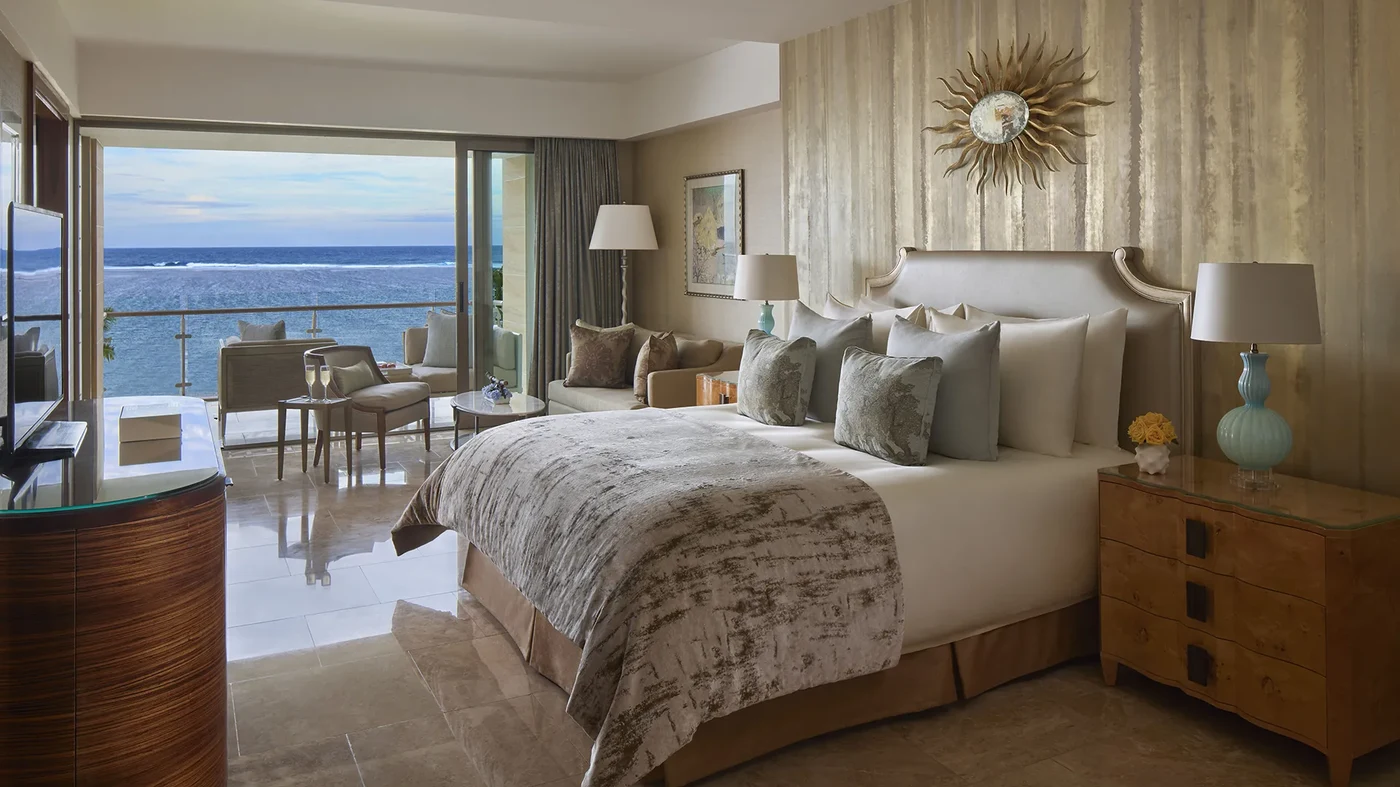
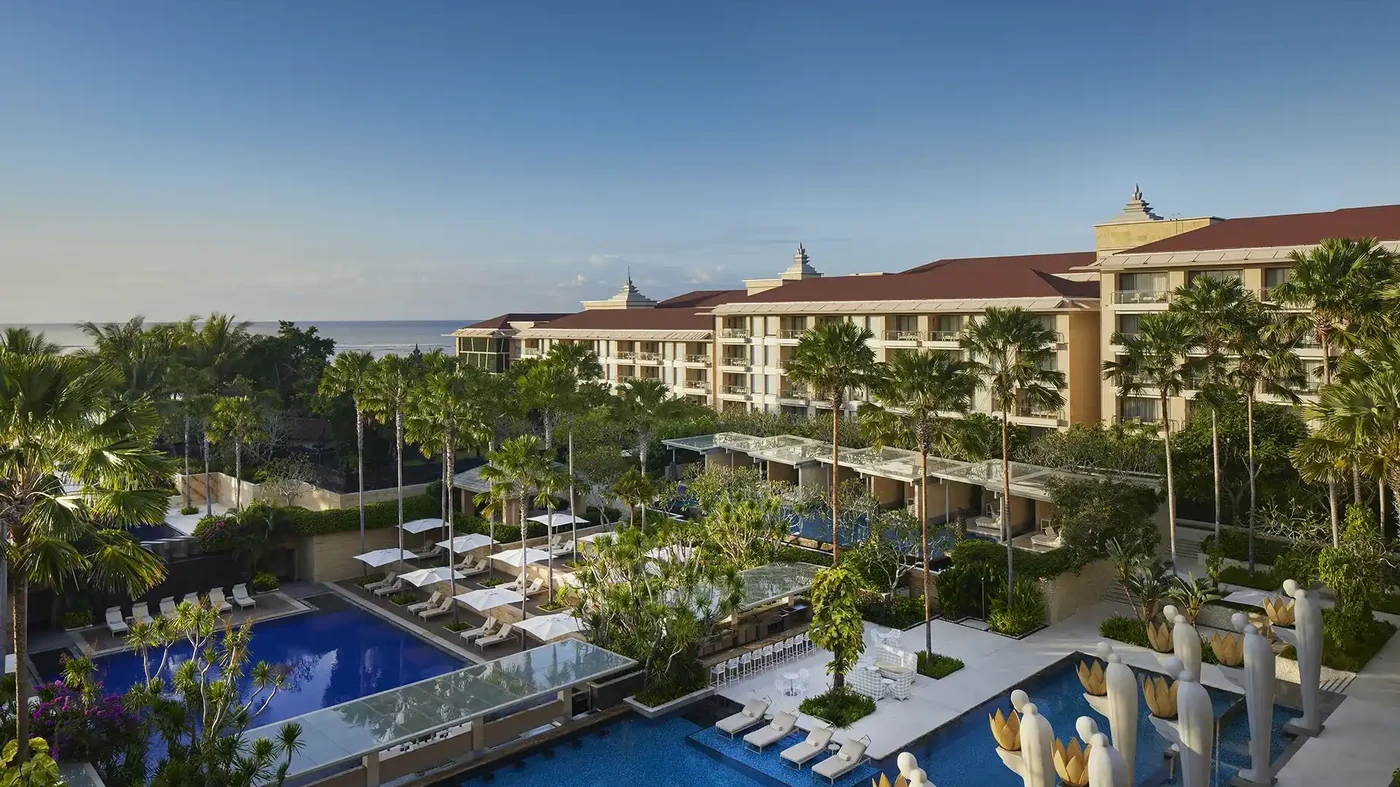
We were there four days and I never once held a picture of the place in my head.
That sounds like a complaint and it isn't, or not entirely. The Mulia is built out of corners. Dense vegetation, paths that bend before you can see where they end, courtyards that open unexpectedly and close again behind you. I'm a curious person and I walked constantly, and there was always something around the next turn. What there never was, at any point in four days, was an overview.
By the second evening I'd worked out that this isn't a flaw in the design. It's the entire design.
The trick
Seventy-four acres. Close to 800 rooms across three hotels. One of the largest properties on this island, and the overwhelming feeling is that you have it to yourself.
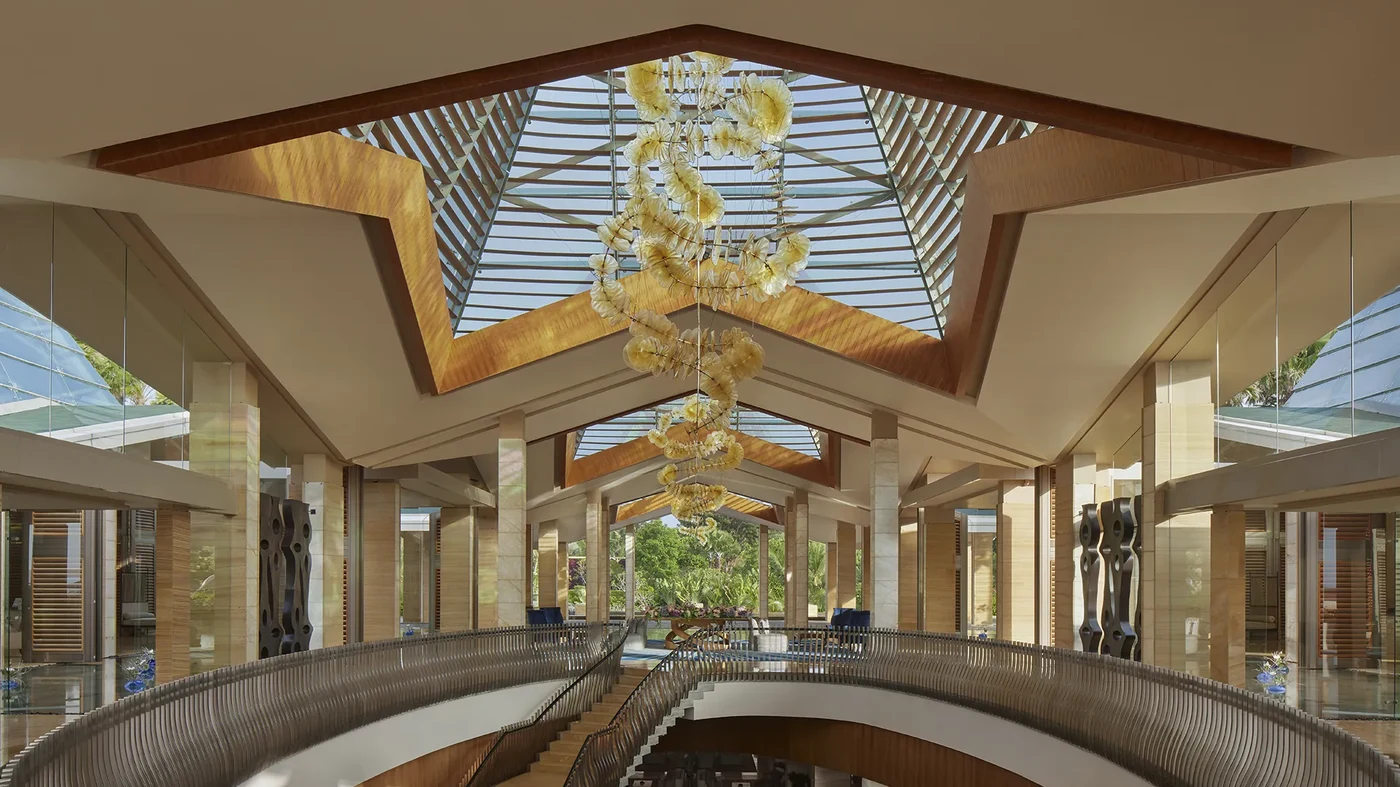
Walk out after dinner and you get these enormous illuminated spaces, colonnades and staircases and terraces running off into the dark, with almost nobody in them. It reminded me of those science fiction films where a character wanders through a deserted shopping mall, everything still lit, everything still running, no people. Beautiful and slightly unnerving at once.
That's the trick, and it's clever. By refusing to give the resort a centre, The Mulia disperses hundreds of guests into the architecture until you stop noticing them. You are staying in a mega-resort at full occupancy and it feels like a private palace kept open for you.
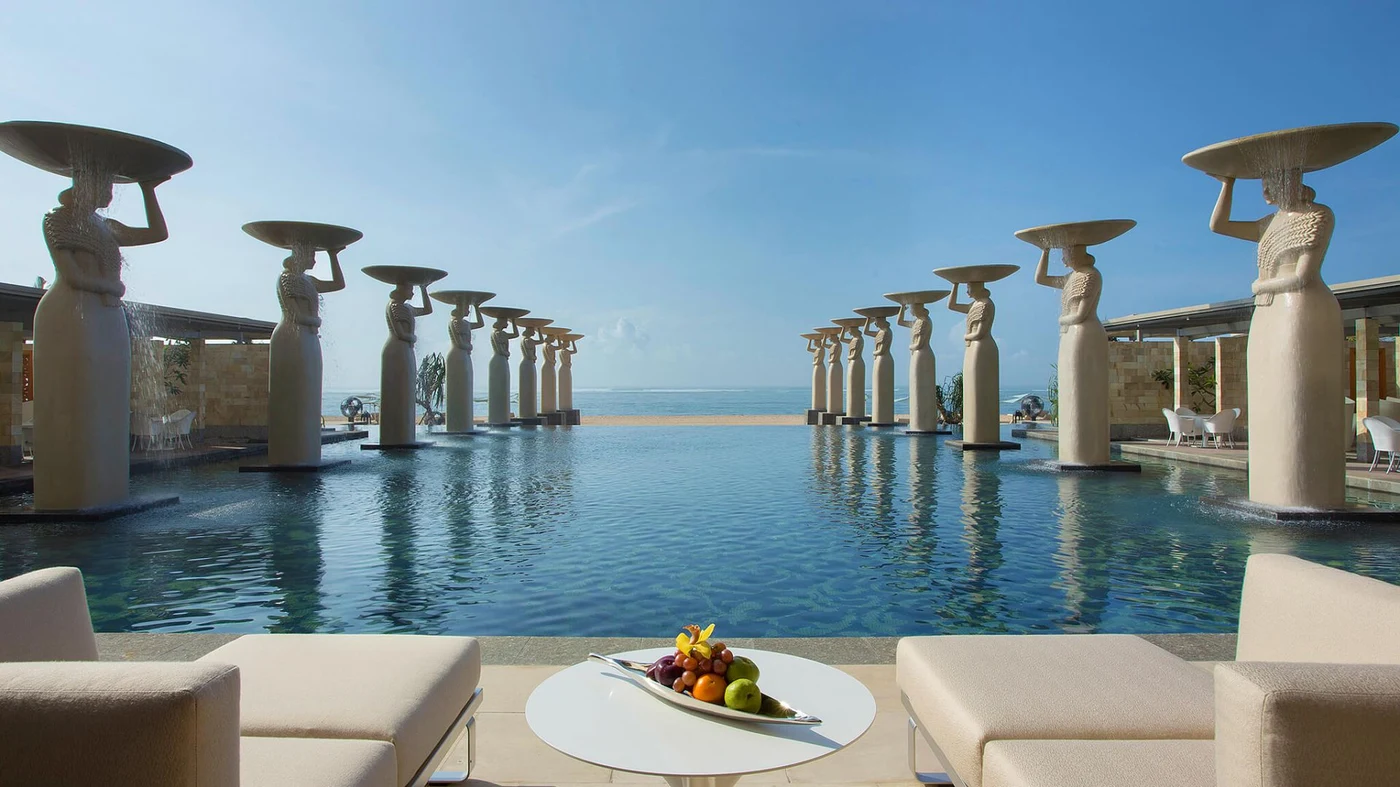
The statues finish the job. Metres-high figures of Balinese women carrying water stand along the Oasis Pool, and they force you to look up. You feel small in front of them, and the strange consequence of feeling small is a kind of serene grandeur, the sense of having been admitted somewhere.
It worked on me. I want to be clear about that before I say anything else, because I think it's also exactly why this isn't my hotel. I don't want to be made to feel small and admitted. But I stood there and felt it anyway.
Two hotels in one day
The missing centre means the property changes character with the light, more completely than anywhere else I've stayed.
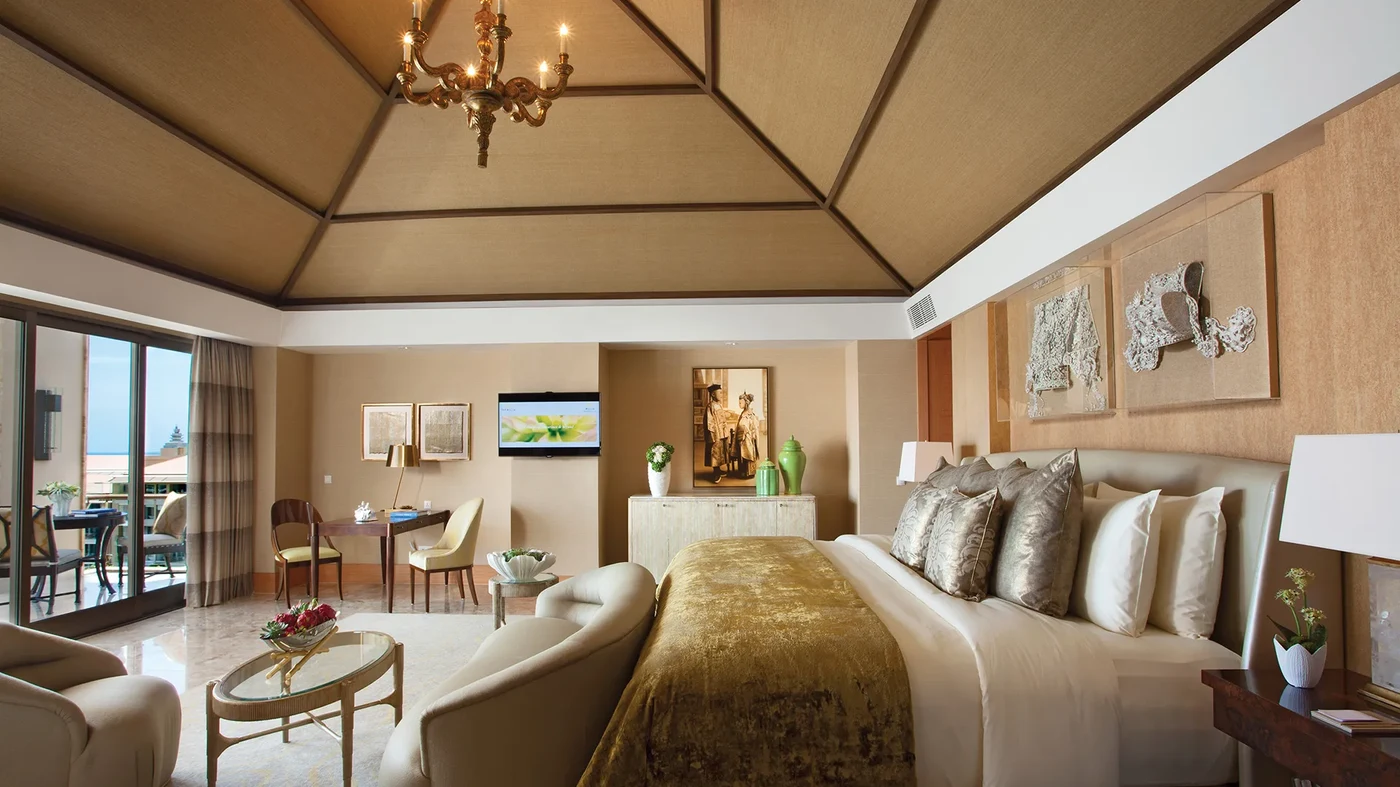
In daylight it's marble and glass and reflection, and I found it sterile. Nearly every hotel on this island reaches for Balinese architecture in some form. The Laguna builds its rooms around temple offering baskets. Amandari is a village. The Apurva does spectacle in the shape of a hillside temple. The Mulia breaks with all of it, deliberately, in favour of something pan-Asian and metropolitan: Bangkok, Hong Kong, Singapore. In the sun, all that stone throws the light straight back at you and the place reads like an airport for very rich people.
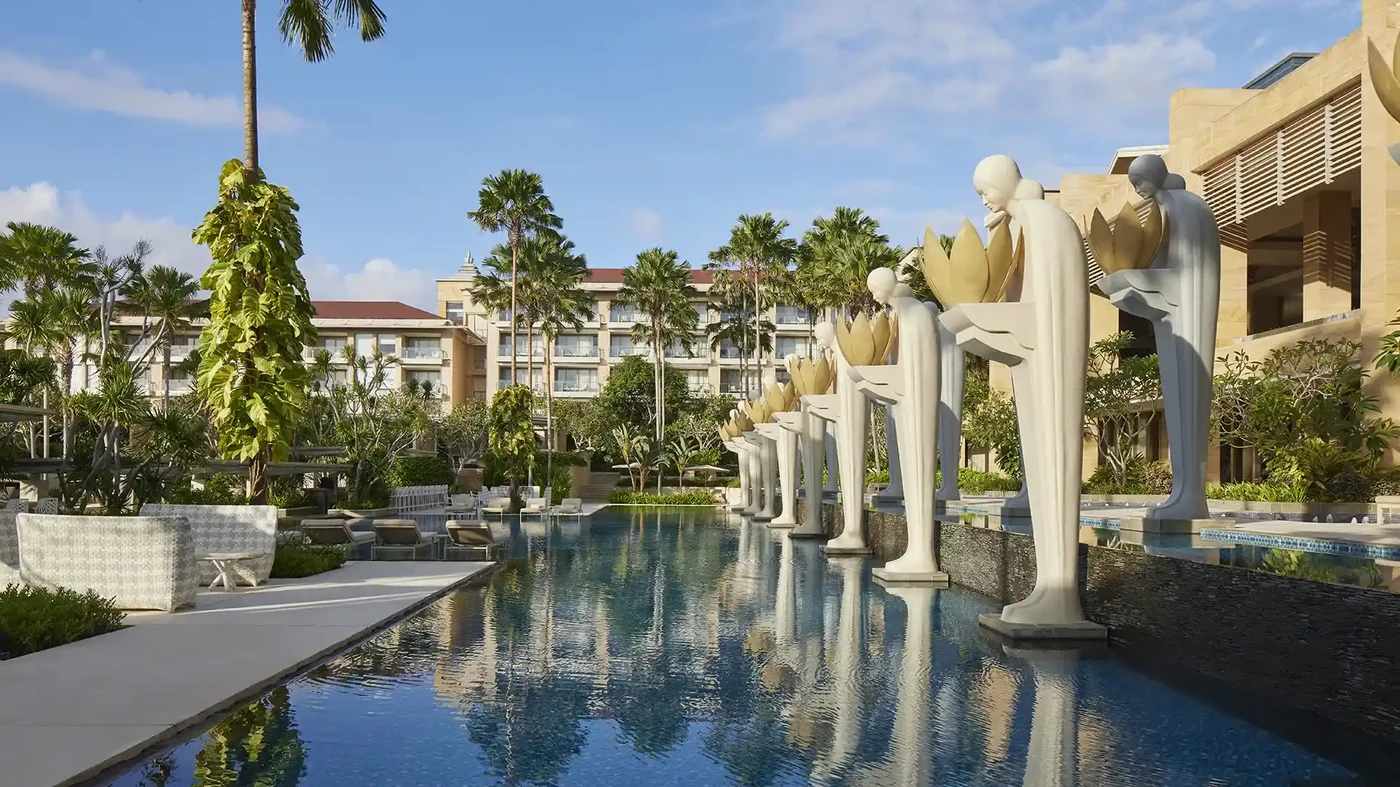
Then the sun goes down and the lighting comes on, and it becomes a genuinely beautiful hotel. Warm, layered, every hard surface softened. I looked forward to the evenings and enjoyed them more than the days, which I did not expect and still find slightly funny. This is a resort that is better in the dark.
The four days my daughter had
My daughter would tell you a completely different story about this hotel, and hers is the one worth listening to if you have children.
She had the best time of anyone in our family and it wasn't close. Three kids' clubs split by age, a splash pool with water slides and a giant tipping bucket, sprinkler features, a bouncy castle on the beach. Children get their own check-in when you arrive, with games and an ice cream and a Polaroid taken, and the daily programme runs treasure hunts, crafts and Balinese cultural sessions. She wanted to go to the kids' side every single day, and said so before breakfast.
That's the strongest recommendation I can make for this place. It's also where the missing centre stops being interesting and starts being a problem, because everything sits so far apart that we never found the spot where all three of us were happy at once. At most resorts you locate your corner by day two and that corner is where the holiday happens. Here I was always walking to collect somebody from somewhere. For a couple, no centre is an atmosphere. For a family, it's a logistics problem you keep solving all week.
What you find by wandering
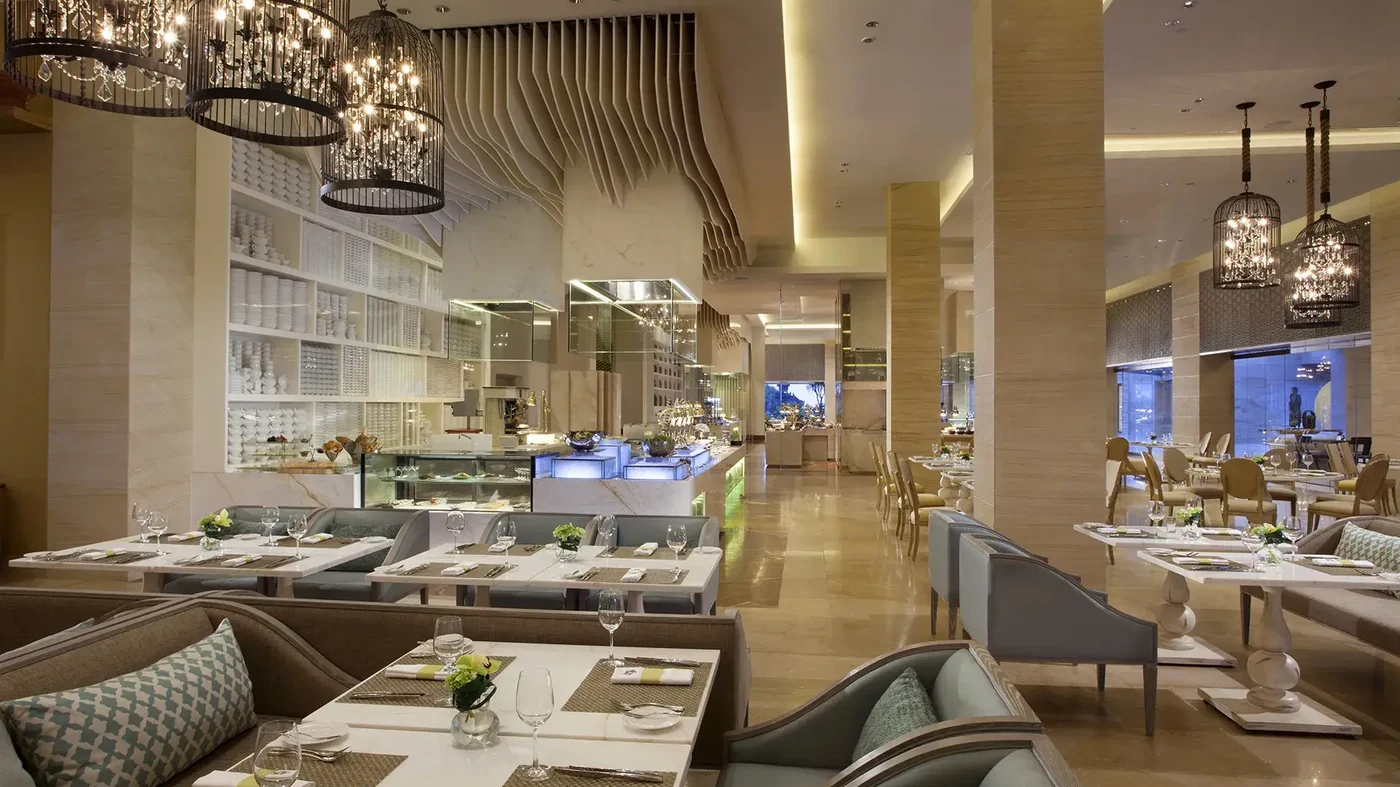
Everyone talks about the Sunday brunch at Soleil, and rightly, it's excellent and books out a week ahead. My actual recommendation is the Chinese buffet at Table8.
I'm not a buffet person outside breakfast. What impressed me is that a Sunday brunch runs to a fairly standard playbook, whereas making a Chinese buffet broad and deep without the quality falling apart somewhere is genuinely difficult. This one holds all the way through, and it was the best meal I had here.
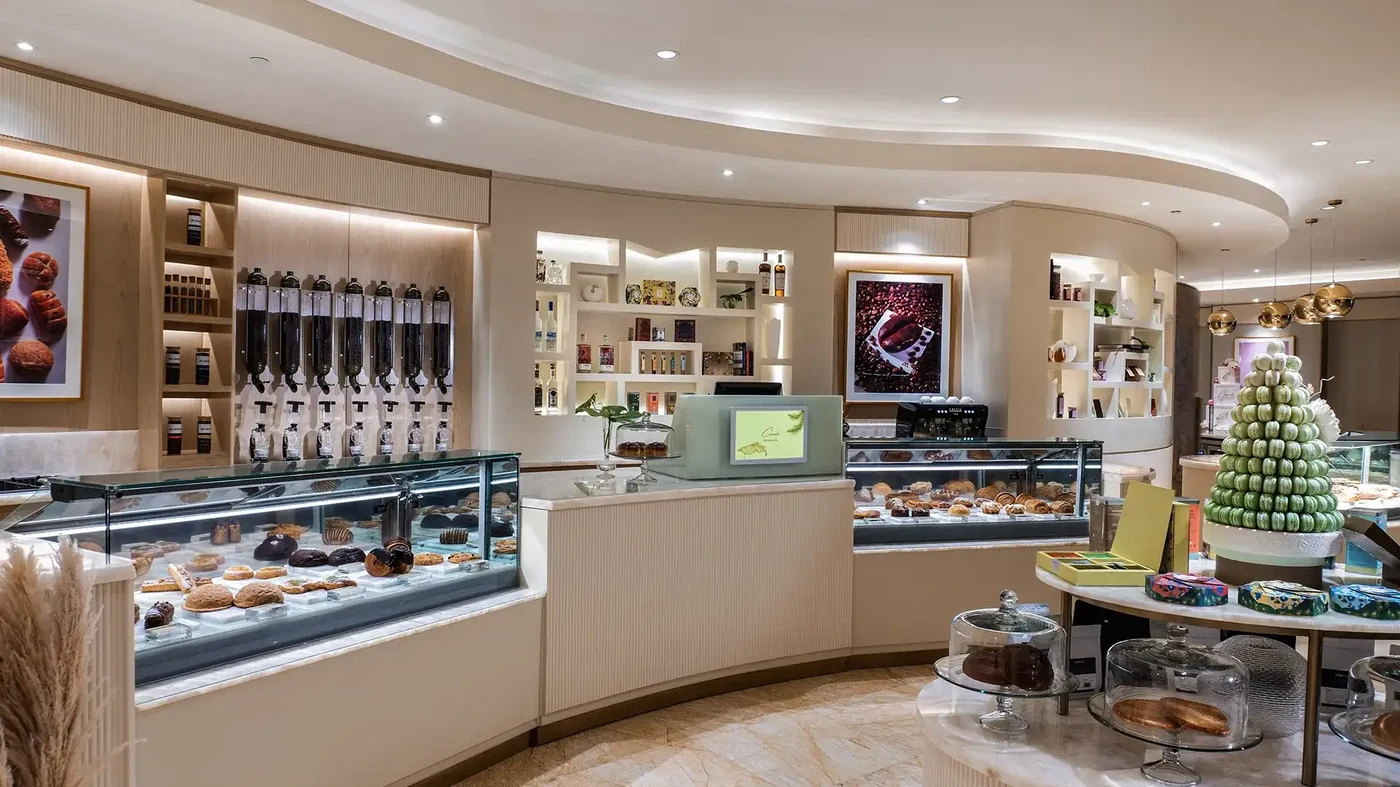
The other find, and I'd never have reached it without all that aimless walking, was Canelé: a pastry shop and bar that belongs in a high-end mall in Hong Kong. Better pastry than anywhere else on this island, and an unexpectedly lovely place to sit after dinner. Nobody tells you about it. You come across it.
That's the honest case for a hotel with no centre. Nothing is presented to you, so whatever you find feels like yours. The same goes for the gym, which is spectacular in a way I noticed despite having no real interest in gyms, and for the service, which is not only excellent but unusually human: staff here want to talk to you, and mean it, which is rare at any size and almost unheard of at this one.
Where the spell breaks
Two things punctured all of it for me, and it's telling that both work in the same direction.
The security presence is intense and extremely serious, enough that I felt uncomfortable near it more than once. And the upselling is persistent in a way I find wearing anywhere, let alone at this price. Neither is a reason to stay away. But a private palace only stays private while nothing reminds you where you actually are, and one of these reminds you that you're inside a controlled facility while the other reminds you that you're a customer.
What it taught me
I've stayed in plenty of hotels I didn't like. This is the only one that made me work out what kind of traveller I'm not, which is a more useful thing for a hotel to do than most hotels manage.
I don't want to be made to feel small and admitted, however beautifully it's done. I don't want a resort that has engineered the island out of itself. If you came to Bali for Bali, you'll spend the week here feeling that something is missing and you'll be right about it.
But my daughter would have stayed another month, the best meal I ate on this coast was here, and I walked those empty, gorgeously lit courtyards every night after dinner, alone, with no idea where I was. I understood completely why other people never want to leave.
The Mulia, Nusa Dua is available through The Banjar Collective.
GET IN TOUCH TO PLAN A STAY →