I decided I disliked The Apurva Kempinski Bali in 2019, before it had even finished welcoming its first guests. I hadn't set foot inside, and didn't feel I needed to. A building of that size, dropped onto a cliff in Nusa Dua, looked to me like a summary of everything wrong with how this island was developing: scale for its own sake, imported spectacle standing in for place, a hotel built to dominate its surroundings rather than sit inside them. I filed it away as exactly the kind of resort I don't write about, and didn't think about it again for years.
Then people whose taste I trust kept coming back from it unable to talk about anything else, in a register I don't usually hear from seasoned travellers. So I booked four nights for the whole family, fully expecting the trip to confirm what I already believed.
It didn't, and four days later I still don't have a completely tidy explanation for why. Nothing about the place tries to convince you it's a genuine slice of old Bali, and it never bothers pretending. What it offers instead is one considered set-piece after another, timed and sequenced with a precision I associate with theatre production rather than hotel design. My instinct told me that should feel hollow. Mostly, it didn't, and I spent the rest of the stay trying to work out what I'd missed.
A hotel that treats its own scale as the argument
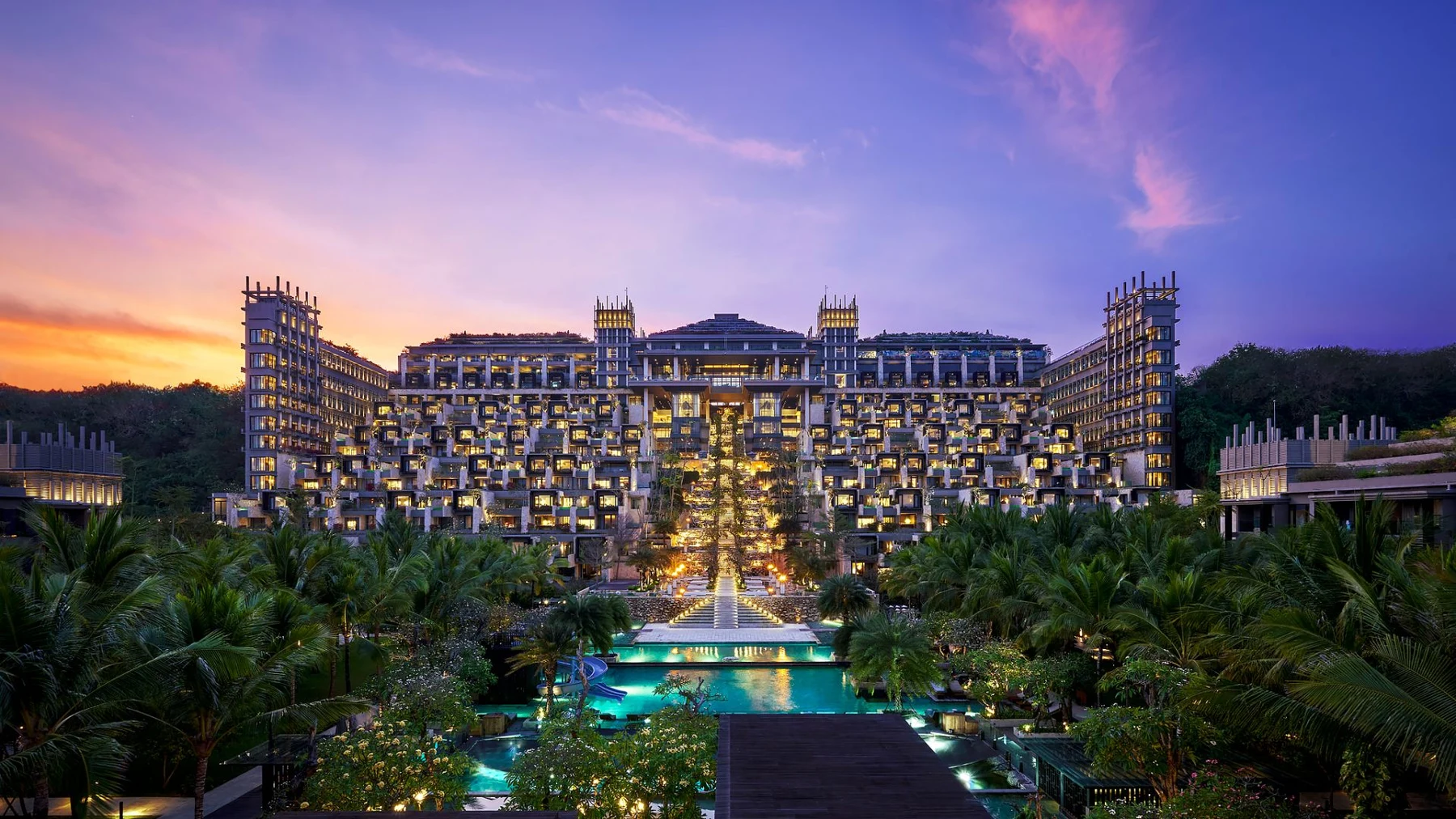
The numbers back up the first instinct. The Apurva Kempinski Bali sits on fourteen hectares of clifftop in Sawangan, at the southern end of Nusa Dua, flanked by the Hilton and the Ritz-Carlton on a stretch of coast that has quietly become Bali's district for hotels built at the size of small towns. It holds around 465 rooms, suites and villas. In 2022 it hosted the main events of the G20 summit, heads of state and all, which tells you plenty about the register this building was designed to operate in. This isn't a resort that apologises for its footprint. It's a resort that treats its footprint as the entire pitch.
That's precisely what I object to, in principle, about a certain strain of Bali hotel: a building so large and so self-contained that it stops being a way into the island and starts being a substitute for it. Most mega-resorts try to disguise that fact behind a thin layer of local motif. Architect Budiman Hendropurnomo of Denton Corker Marshall did the opposite, staging the entire property as what his own team calls a "majestic open-air theatre," modelled loosely on the terraced rice fields and centuries-old subak irrigation system that shape so much of Bali's actual landscape. It doesn't hide the scale. It performs it, on purpose, as the whole point.
Nothing prepares you, and that's the design
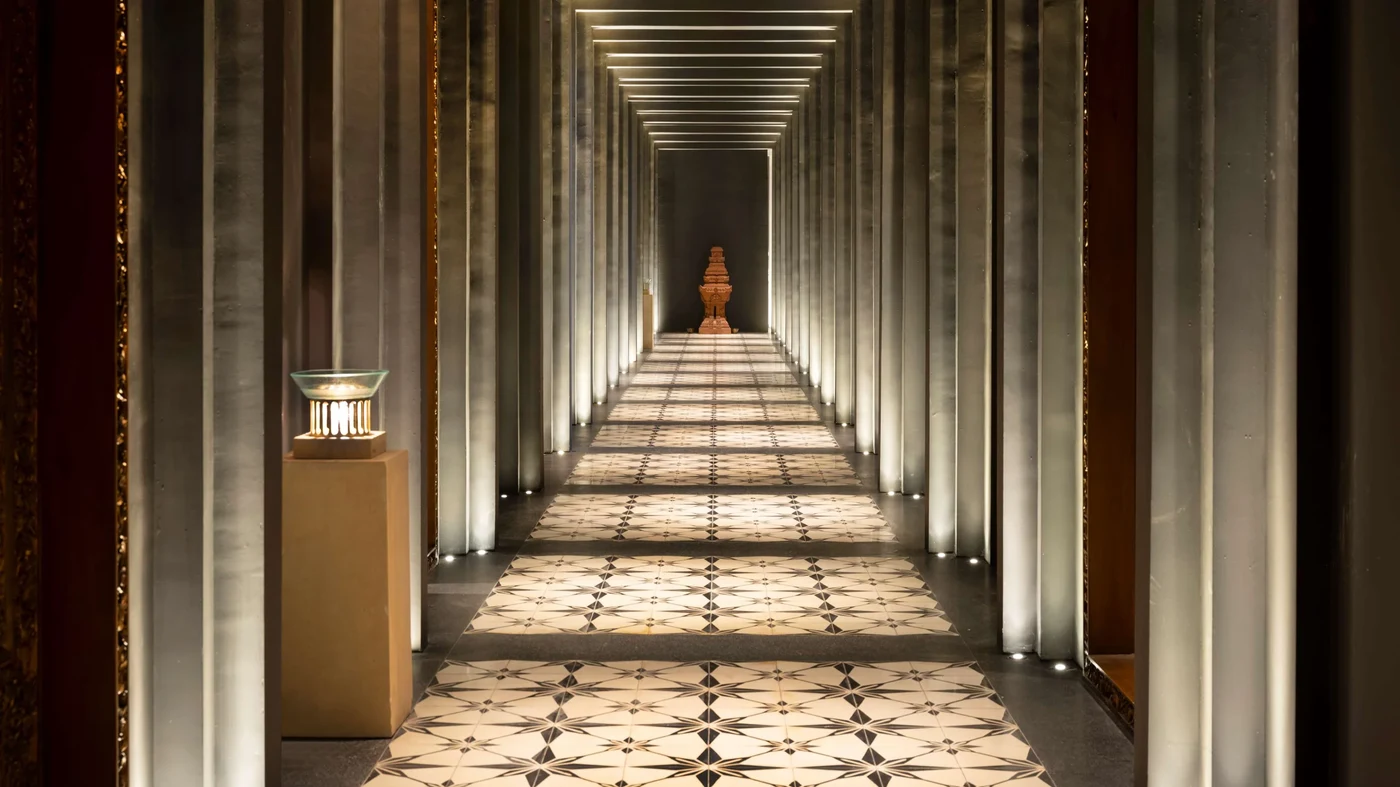
What makes the theatre work isn't any single moment. It's the sequence. The taxi drop-off gives away nothing at all, a modest porte-cochère and a short, understated walk, nothing that prepares a first-time guest for what's on the other side of the doors. That gap between arrival and reveal is entirely deliberate, and it's the first sign that this hotel understands pacing better than almost anywhere else on the island.
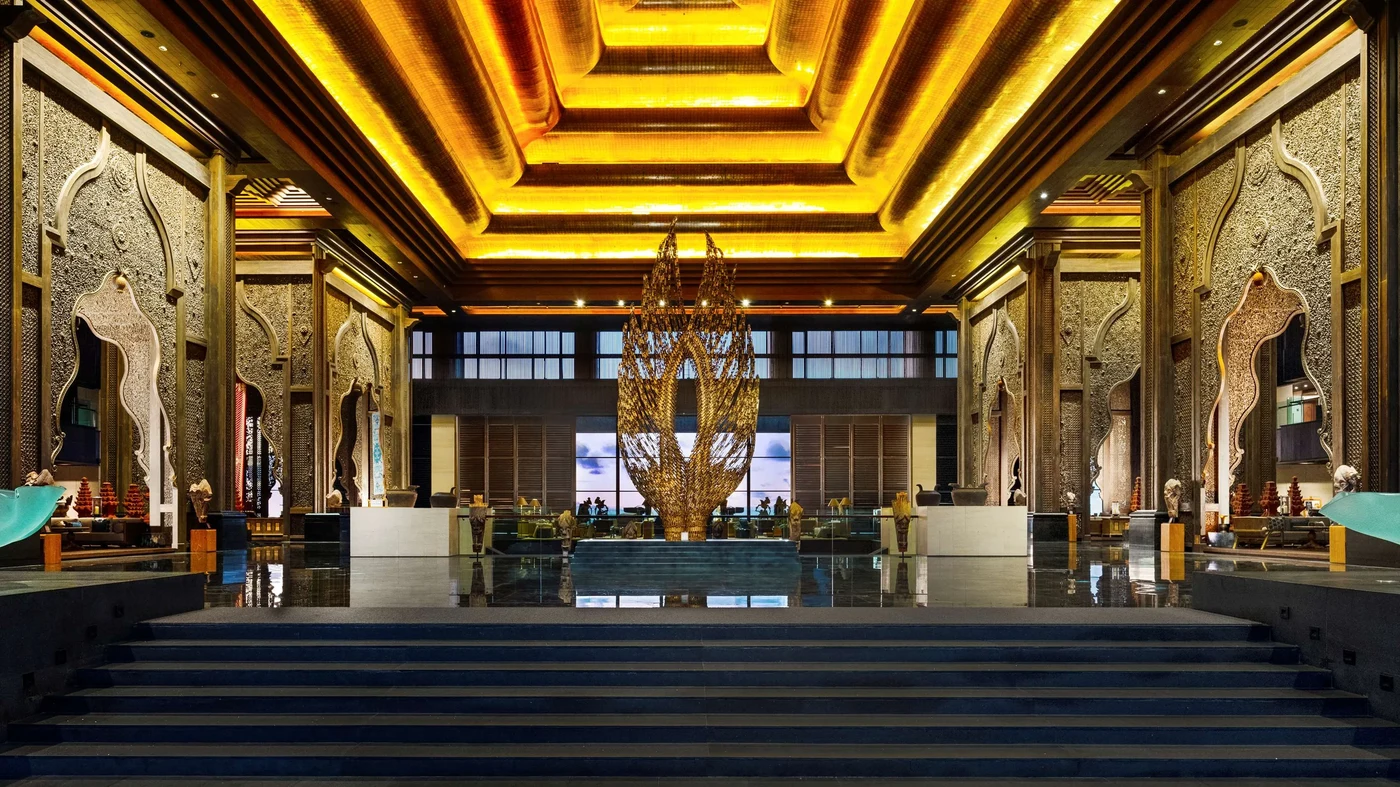
Then comes the Pendopo lobby, where the ceiling simply keeps going. Gebyok partitions, hand-carved by more than 600 artisans from Java and Bali, tower on either side, cut with the kind of ornamentation that belongs to the Majapahit empire's visual language rather than to anything built in the last century, Labradorite granite floors catching the light differently by the hour. It's less a check-in desk than a stage set for one, built at a scale that has nothing to do with practicality and everything to do with making a guest feel small in a specific, orchestrated way. I've felt that exact sensation exactly once before, walking into the lobby at Aman Tokyo, another building that treats ceiling height as an emotional instrument rather than an architectural afterthought. Very few hotels manage it deliberately. This one does.
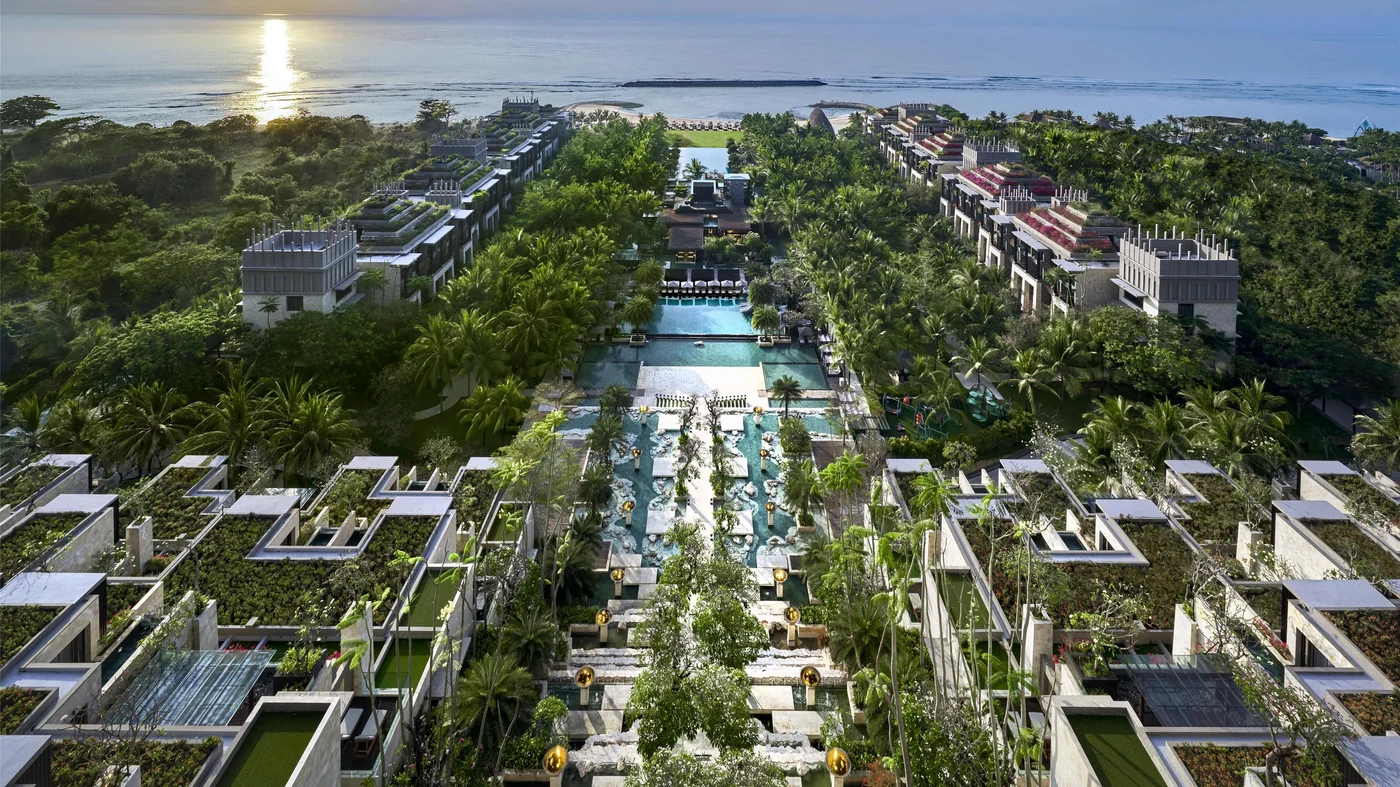
The third jolt arrives before the first two have even settled: the balcony, and below it, the Grand Staircase, 250 steps cut straight through the centre of the resort, explicitly modelled on the water temple at Pura Besakih, Bali's mother temple, flanked the entire way down by cascading water. It doubles as a stage for nightly ritual performances, and standing above it, watching guests and staff move along its length, the point of the whole design lands immediately: this isn't a view from a balcony, it's a look down into an amphitheatre, and the moment a guest steps onto that staircase themselves, they stop being an audience and become part of the set. That's the specific, slightly dizzying thing a hotel this scale can do that a smaller one never could: fold you into its own architecture within the first ten minutes of arrival.
Yes, it's kitsch. It's about as far from an "authentic" Balinese village as a five-star hotel gets, and I'll say that plainly, because I'd said worse about the place before I ever walked down those steps. But descending past the terraced gardens toward pools that fold into more pools that fold, eventually, into the beach, the reason people kept telling me to go anyway became obvious. It's an enormous, over-engineered piece of theatre. It's also genuinely enchanting to stand inside.
A pool that makes the question of authenticity feel beside the point
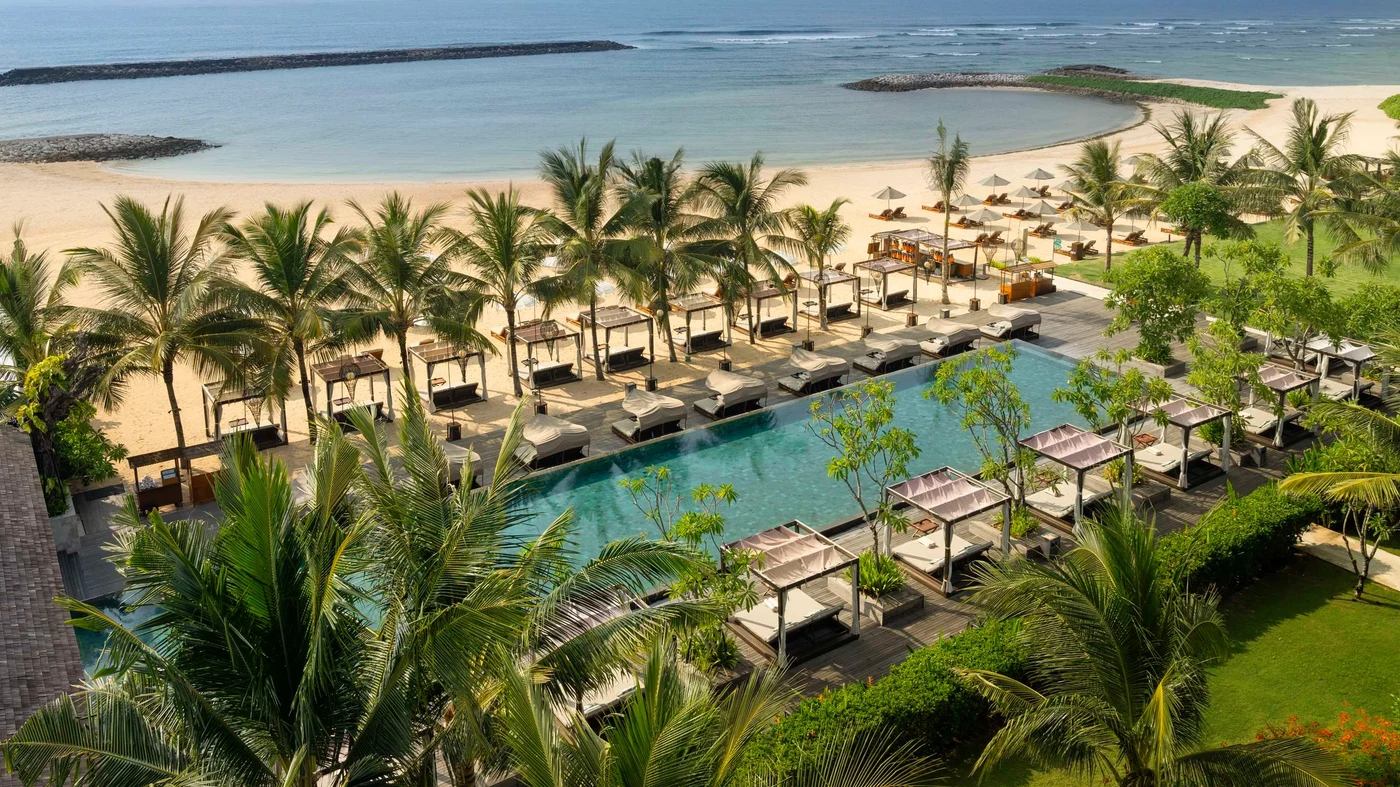
The pool is where the theatre stops being something to admire from a distance and starts being something to live inside, for days at a time. It's less a single body of water than a landscape of them, folding around small private coves and inlets where a sunbed tucks in with a clear sightline to the kids and still feels like its own corner of the resort. It reads as endless in the way only the best resort pools manage, and hunting a daughter down through it, cove by cove, becomes its own small daily ritual rather than a chore.
The beach carries the same logic in a different register. The sand is bright white, imported and maintained rather than the volcanic grey or gold that occurs naturally on most of this coastline, and it's worth knowing that going in. It's genuinely pleasant to spend time on, and genuinely disorienting in a way that catches most guests off guard: sitting there, it's easy to half-forget which island this actually is. That's the trade the whole resort makes, over and over, and it makes it with total confidence rather than apology.
The theatre we hadn't booked
One afternoon by the pool, a different production started up below us, and this one hadn't been staged for us at all. Down at the Apurva Chapel, a wedding was underway, and it was not a quiet one. A live band, a singer working several notes short of the note they were aiming for, guests dancing with a total absence of restraint that no international five-star crowd ever quite manages. Sound travels well off water, and for the better part of an hour my daughter and I sat at the edge of the pool listening to it drift across the resort, half laughing, entirely unable to look away.
It turns out this hotel is something of an institution for Indonesian weddings specifically: an oceanfront chapel, a ballroom built for after-parties, a beachfront lawn advertised as the largest of its kind on the island. Nobody had mentioned any of that at check-in. It isn't in the brochure copy the way the Grand Staircase is.
Eight kitchens, and no sign of a factory floor
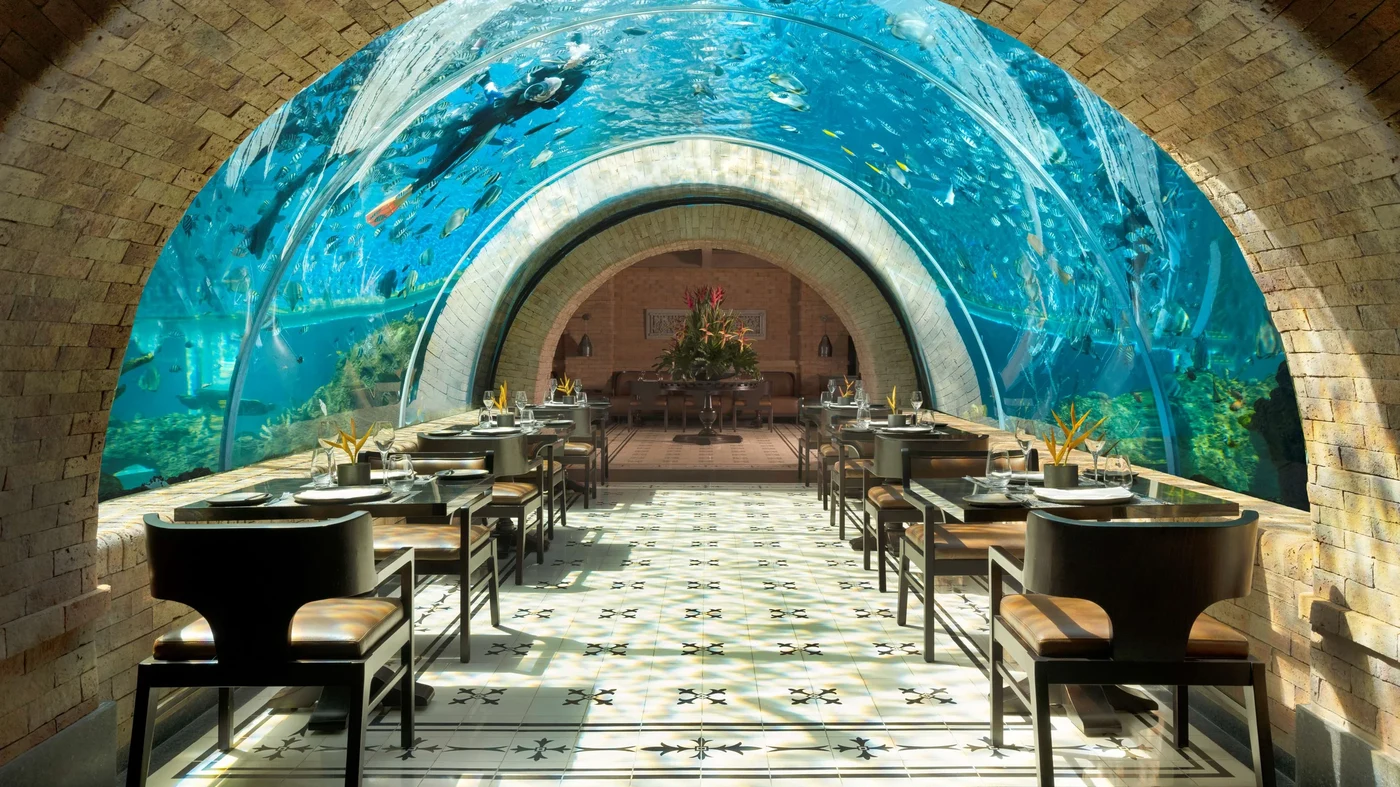
There are around eight distinct dining venues spread across the property, and they lean into genuine difference rather than repetition: Koral, Bali's first underwater aquarium restaurant, built beneath a working reef; Izakaya by OKU, an outpost of one of Jakarta's most respected Japanese kitchens; Bai Yun, a proper Chinese hotpot and dim sum room; Pala, the all-day dining venue with live cooking stations and a strong Indian repertoire; and Reef Beach Club, right on the sand. The izakaya and the hotpot room were the standouts for us, alongside what might be the best breakfast spread I've had at any hotel on this island.
None of those kitchens is individually the best I've eaten at in Bali. What's genuinely rare is the range, and how deliberately a resort this large has managed to make that range feel considered rather than bolted on for the sake of a brochure line. Most mega-resorts treat their eighth restaurant as an afterthought. This one clearly didn't, and it deserves a longer piece of its own at some point, more than a single paragraph in a hotel review usually allows.
Two ordinary things in an extraordinary building
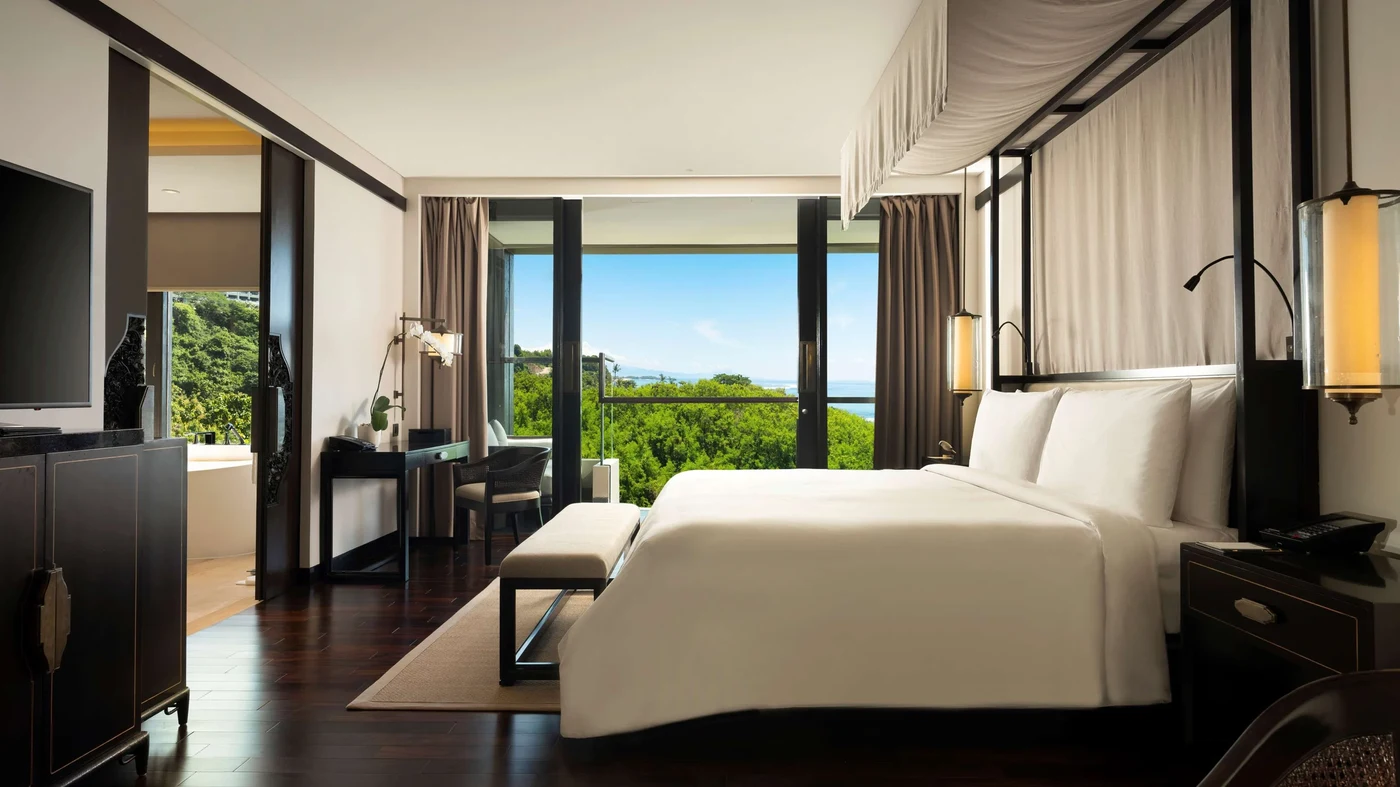
Everywhere the resort has staged a set-piece, it delivers. The moments it hasn't staged are where the seams start to show. The suite itself is good, but never more than that: comfortable, well-finished, unremarkable against the standard the lobby had already set. The plunge pool sat too deep in shade to ever really warm up, used exactly twice across four nights. Next time, the entry-level room is the smarter booking. With this many pools already on the grounds, a private one nobody can actually sit in isn't worth paying for.
Staff worked hard throughout and mostly succeeded, but there were more moments than expected where the service felt like it was following a script rather than reading the room in front of it. That's the honest cost of a hotel this deliberately built around spectacle: extraordinary at the scale of the whole production, occasionally less convincing the closer you look at any single moving part.
What kind of good this is
I don't think I was wrong, exactly, about what this building represents. It is enormous. It does dominate its stretch of coastline. It borrows more from theatre and mythology than from anything resembling an authentic read on Bali. Every part of my scepticism from 2019 still holds.
What I hadn't accounted for is how much genuine respect a piece of architecture this committed can earn simply by refusing to hold back. Few hotels anywhere attempt something this theatrical, at this scale, with this much conviction, and fewer still pull it off. The Apurva Kempinski Bali is one of the most fascinating hotels I've stayed at anywhere, not despite the size but because of the sheer nerve behind it. I'd return without hesitation, though only ever with the family, and only ever for a rate that reflects what it actually is rather than what its own marketing claims. Published rates here can run well past what considerably more refined hotels on this island charge for a genuinely superior stay. Watch for a real offer, and this becomes a far easier recommendation.
I still think about my daughter's face that afternoon by the pool, half laughing at a stranger's off-key wedding song drifting across the water. I went in certain a hotel this size couldn't possibly feel like anyone's actual, unguarded life. That afternoon is the reason I was wrong.
The Apurva Kempinski Bali is available through The Banjar Collective.
GET IN TOUCH TO PLAN A STAY →