
The verdict
Two of the most over-the-top hotels on the island, and the answer depends less on which is better than on which suits you. The St. Regis, from around $600 a night, is warm, opulent and, next to its neighbour, surprisingly serene: every room a 92-square-metre suite with a butler, and the most refined kitchen in Nusa Dua. The Mulia, from around $350, is cool, marble and enormous: a culinary theme park with three serious buffets and the best children's offering in Bali. I'll be honest: neither is my idea of a holiday, and neither made The Bali 20. Both are brilliant at excess and short on Bali. But they're built for a different kind of trip, and for that trip they're very good. If you want Nusa Dua with a sense of place, look at The Apurva Kempinski (No. 13) or Samabe (No. 16).
Only in Nusa Dua could the St. Regis pass for intimate. On its own, it's a masterclass in excess: a butler for every suite, two cars sent to collect us from Seminyak (one of them purely for the luggage), a breakfast that left me sitting with my mouth open. Put it next to The Mulia and something strange happens to your measuring stick. The grand resort becomes the quiet one, and its large grounds start to feel small, in the best sense. That's the pleasure of comparing two hotels at this altitude: everything becomes relative, including excess.
At a glance

| St. Regis | The Mulia | |
|---|---|---|
| Where | Nusa Dua beachfront | Geger Beach, southern Nusa Dua |
| From the airport | 20 to 30 min | 20 to 30 min |
| Entry room, per night | From around $600 | From around $350 |
| What that buys | A 92 m² suite with butler | A 57 m² room at Mulia Resort |
| Size | 123 suites and villas | Close to 800 rooms across three hotels |
| Style | Warm, dark wood, a little colonial | Cool, marble and glass |
| Eating | Kayuputi, Boneka, King Cole Bar | Nine venues, including Table8, Soleil, The Cafe |
| Best for | Couples, calm, three generations | Children, choice, spectacle |
Neither hotel is ranked on The Bali 20. Rates are for the entry category at the time of writing, September 2026, and move with the season.
Warm or cool: which one suits you?
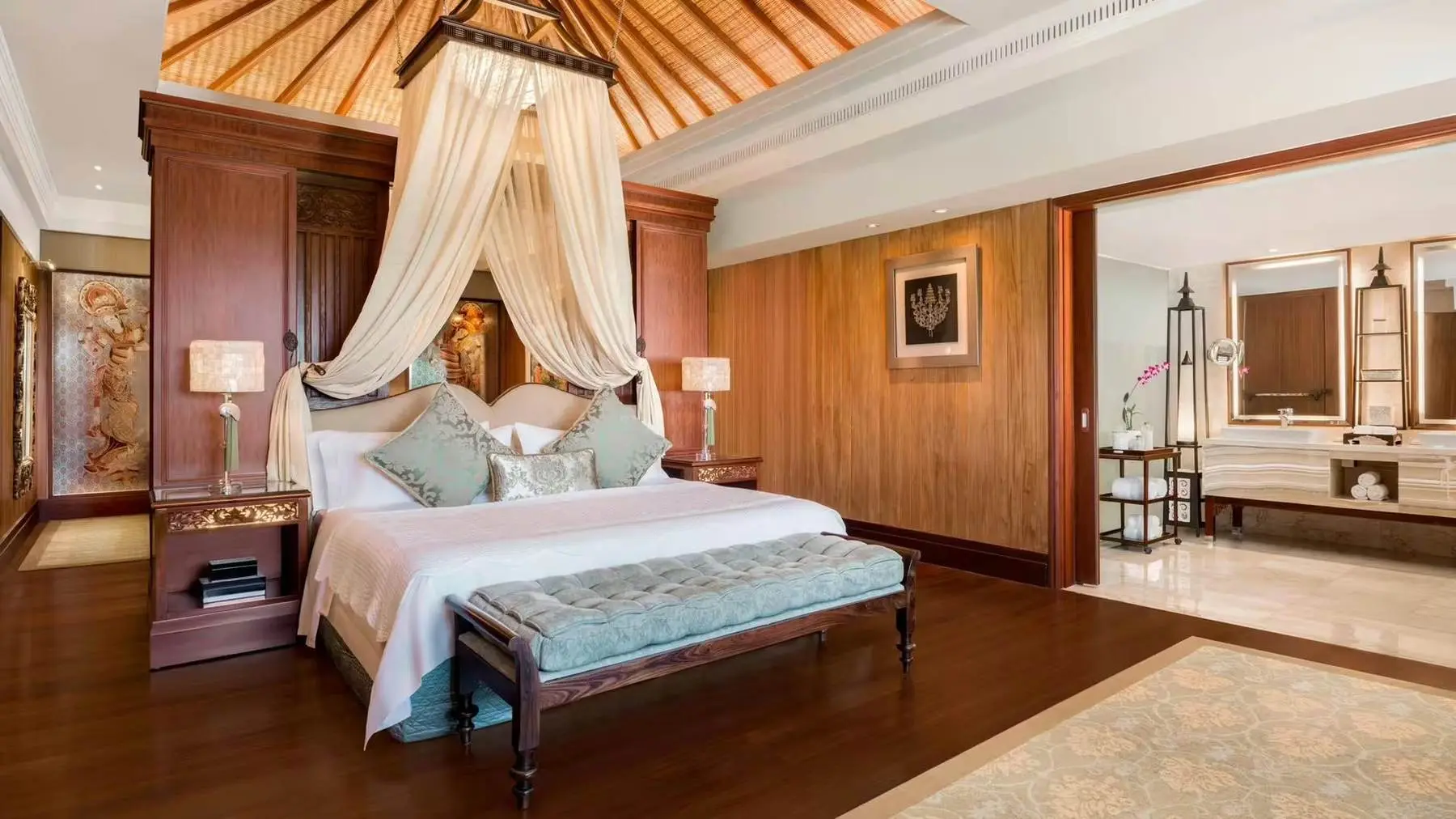
This isn't about which is better, but about which is more you. The difference starts at the door of your room. The cheapest room at the St. Regis is a suite of more than 92 square metres, with one of the largest hotel bathrooms I've ever had. The Mulia begins with a more conventional luxury room of 57 square metres. The styles could hardly be further apart. The Mulia is sleek, modern and clean, with marble and glass wherever you look, and it deliberately breaks with the Balinese architecture almost every other hotel here reaches for. In daylight all that stone throws the sun straight back at you, and I found it sterile. After dark, lit up, it turns into something else entirely.
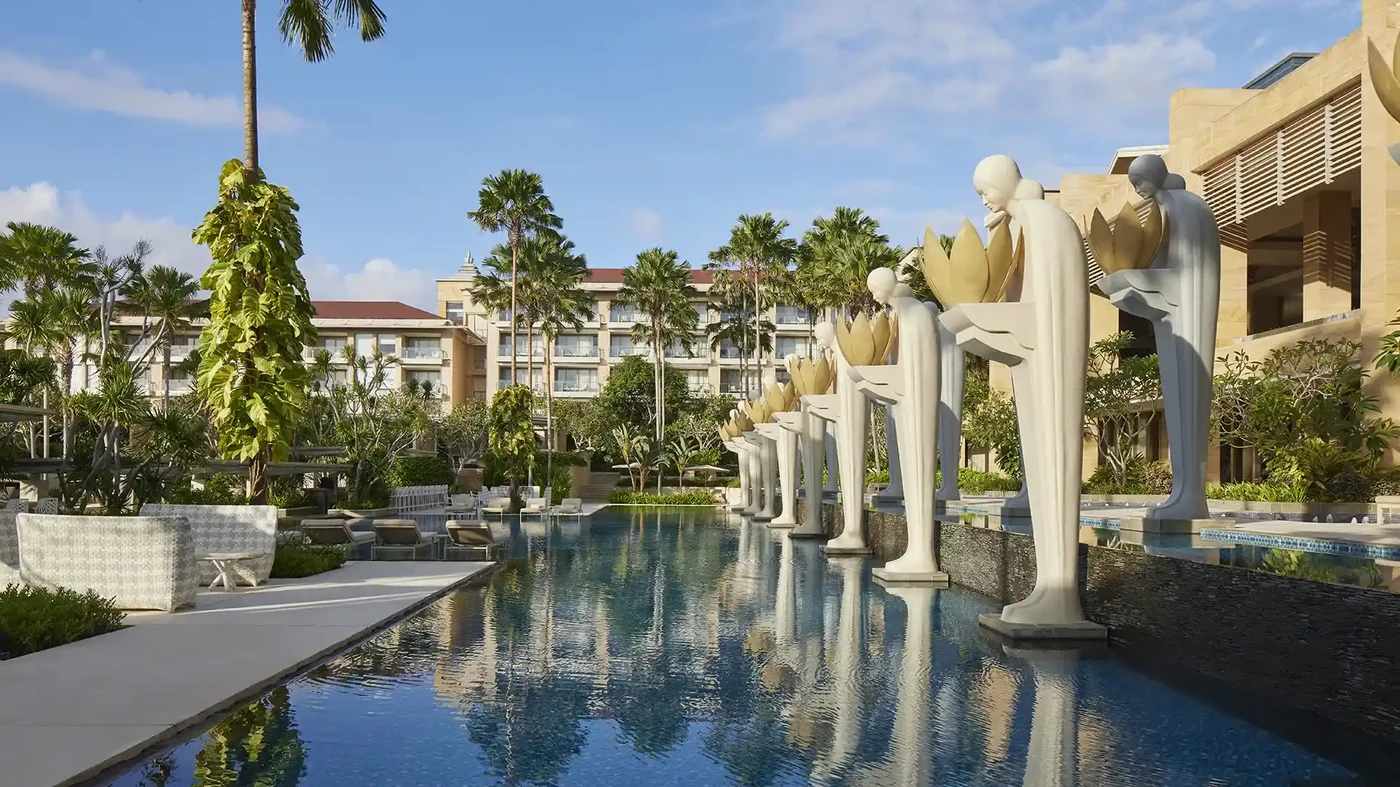
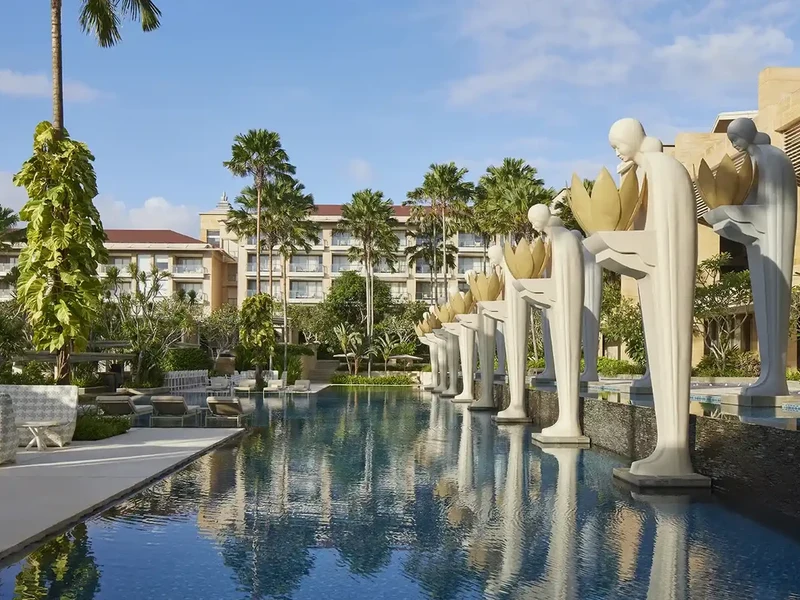
The St. Regis goes the other way: dark wood, heavy fabrics and a faintly colonial opulence. One feels like a very expensive city hotel that happens to be on a beach, the other like a Balinese palace that happens to have a butler. Only you know whether you want to come home to marble or to teak.
Is either of them actually quiet?
The St. Regis, by a distance, and that surprised me. By any normal measure it's a big resort. But The Mulia is a complex on another scale altogether: 74 acres and close to eight hundred rooms across three hotels, built out of corners, with paths that bend before you can see where they end and courtyards that open and close behind you. It never quite finds a centre. Next to that, the St. Regis feels intimate, even serene, its days drifting by around the saltwater lagoon. The Mulia is livelier in every direction. Some love that energy. You'll know by the second morning whether you're one of them.
Where will you eat best?
For choice, The Mulia wins by a landslide. For refinement, the St. Regis. You see the difference at breakfast, which is excessive at both, but in opposite ways.
The Mulia goes big. The buffet is vast, built around presentation and a string of live cooking stations. It's loud and crowded, and oddly charming for it. I loved wandering through that chaos, plate in hand, as if the rest of the world had been switched off. The St. Regis keeps its buffet modest, which here means merely enormous, and puts the excess on the menu instead: foie gras, the lobster omelette, wagyu, as many times as you like. The irony is that unlimited luxury brings out unlimited appetite, and I've rarely seen a breakfast room eat quite like it. At The Mulia the magic is the buffet itself. At the St. Regis, it's watching what the waiters keep bringing to the tables.
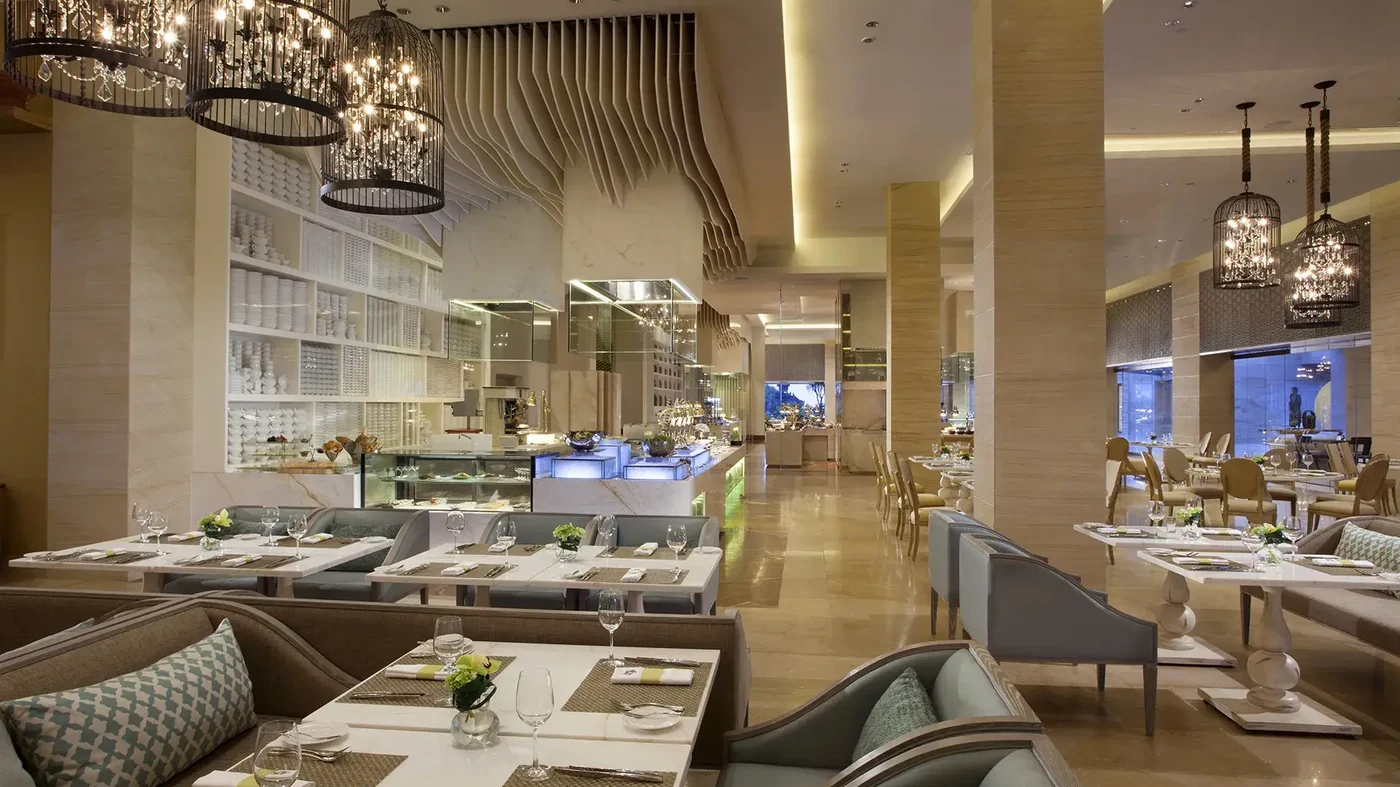
After breakfast, the two go their separate ways. The Mulia has nine restaurants and bars and, remarkably, three serious buffets, each more handsome than the last. The best meal I ate on this coast was one of them: the Chinese buffet at Table8. It's a high-end culinary theme park with the brakes off. The St. Regis plays a quieter game. Kayuputi is one of the best fine-dining rooms on the island, with the biggest wine list I've seen in Bali, and there's simply more attention to detail on every plate. If you want to eat something different every night, go to The Mulia. If you want to eat better night after night, go to the St. Regis.
Who are these hotels really for?
People who want to be entertained from morning to night, and both deliver exactly that. I sometimes forget that I come to Bali as a European. I want to be immersed in Balinese culture, and perhaps that's a romantic streak that says more about me than about the island. But many guests here have flown in from elsewhere in Asia or from Australia for a long weekend, and they want something else: to have fun, without going anywhere. At both hotels you never need to leave. The St. Regis has its rituals from breakfast to the last glass of champagne, The Mulia a pool for every mood and a restaurant for every craving. People come here to have a good time in the lap of luxury, and that's precisely what they get. There's no point judging either for not being Ubud. They were never trying to be.
For the record, the St. Regis won me over more than I expected. The Mulia never quite did: I never found its warmth, the one corner where it felt like somewhere to be rather than something to see. My daughter would say I missed the point entirely, and she may be right.
Which has the better beach?
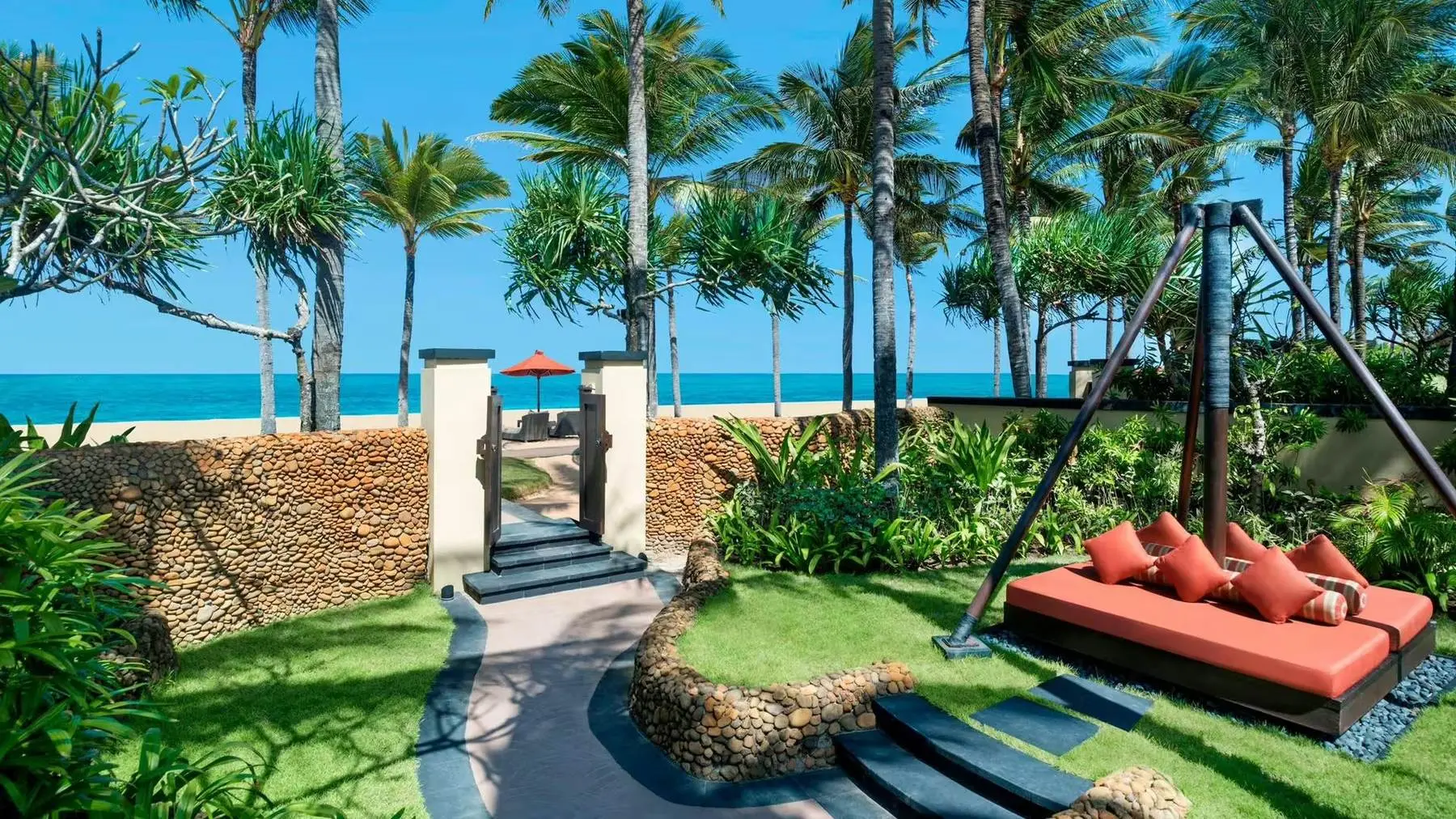
It hardly matters, and that says a lot about both. These are inward-looking resorts, built around their own pools, lagoons and epic gardens. At the St. Regis we barely used the beach; it felt like a quieter, separate wing, and the lagoon won every day. The Mulia sits on Geger Beach, and there, as everywhere else in the complex, things are livelier.
Which is better for families?
The Mulia for children, the St. Regis for three generations. My daughter had the best time of anyone in our family at The Mulia, and it wasn't close. With three kids' clubs split by age, water slides and a bouncy castle on the beach, it's the best children's offering in Bali. The catch, again, is scale: everything sits so far apart that we never found the one spot where all three of us were happy at once. The St. Regis is the calmer choice. I was there with my parents, and the lagoon, the suites and the butlers made it effortless for everyone. Relative to The Mulia, it's practically a family home.
What do you get for your money?
Oddly, the more expensive hotel is the better deal. At around $600 a night, the St. Regis gives every guest a 92-square-metre suite and a butler: there's no such thing as a lesser room. The Mulia starts at around $350, but that buys you a 57-square-metre room at the Mulia Resort, the largest and most affordable of its three hotels, and its guests don't have the run of the whole complex. The one to book is The Mulia itself: 111 suites on the sand, with butlers, a jacuzzi on every balcony, the oceanfront Oasis Pool and access to everything. It costs considerably more, and at that point the gap with the St. Regis largely disappears. Budget for drinks at both, because Indonesia taxes alcohol heavily and you'll feel it.
What's the catch?
At The Mulia, the feeling of being managed. At the St. Regis, the volume. The Mulia's security is intense and very serious, and the upselling is persistent. Neither is a reason to stay away. But a private palace only stays private while nothing reminds you where you are, and here one reminds you that you're inside a controlled facility, the other that you're a customer.
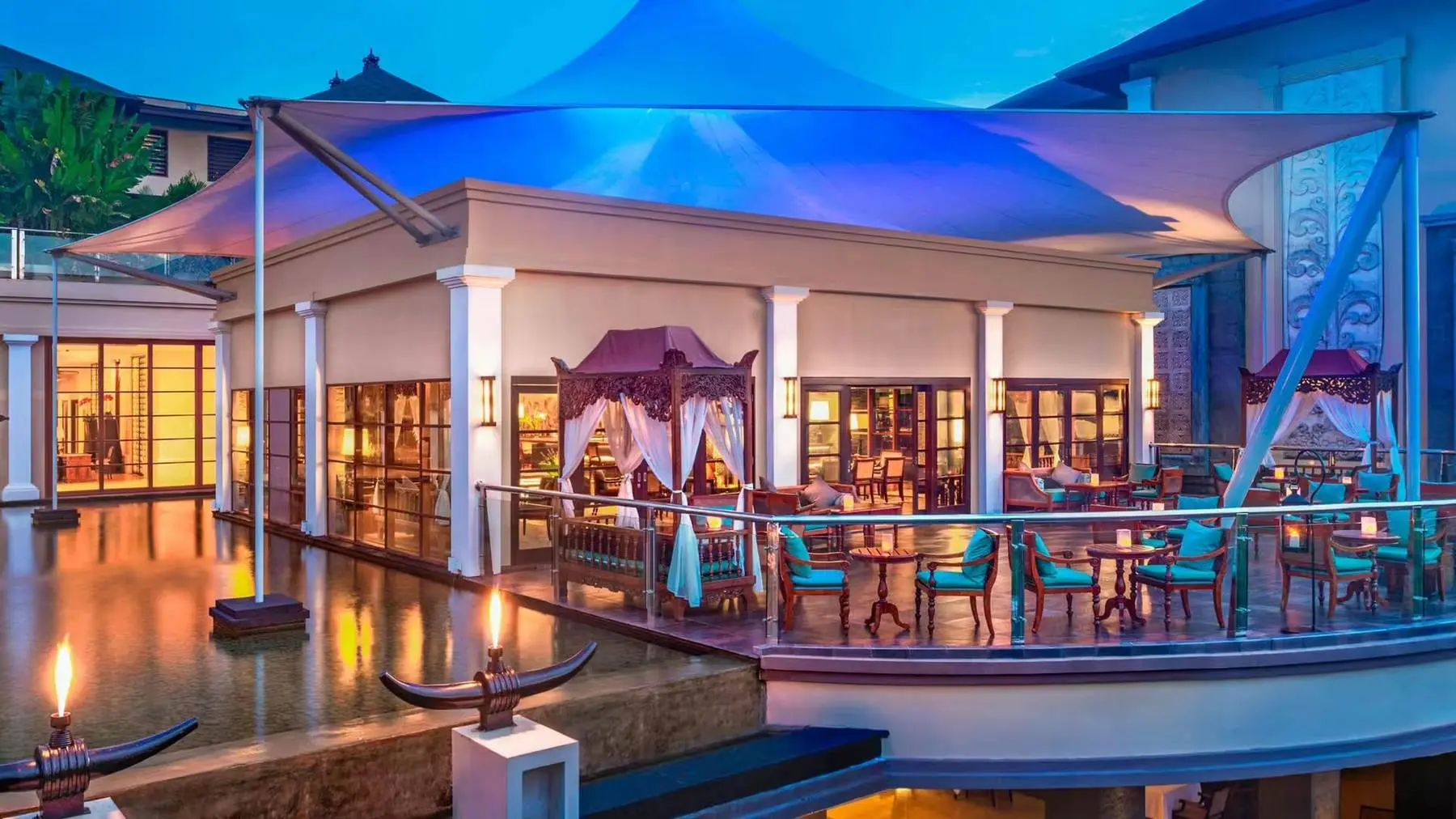
The St. Regis's catch is subtler: the ritual never stops. Every evening at 6.30, fire dancers perform against the Grand Staircase, and a sommelier sabres a bottle of champagne at the King Cole Bar straight after. It should feel kitsch, and somehow it doesn't. But after a few days the sheer volume starts to feel as if the point has already been made.
St. Regis or The Mulia?
The St. Regis for calm, craft and a butler. The Mulia for choice, energy and children. I'd go back to the St. Regis, just not for too long; a few days there does exactly what it's meant to do. My daughter would go back to The Mulia for a month. And after walking its empty, gorgeously lit courtyards every night after dinner, I understood completely why so many people never want to leave.
The full reviews are here: The St. Regis Bali and The Mulia. For Nusa Dua with more of Bali in it, see The Apurva Kempinski and The Laguna.
In Nusa Dua, even restraint comes with a butler. It isn't my Bali, but if it's yours, you won't find it done better.
We can book both at the hotels' own rates, with the benefits attached.
PLAN A NUSA DUA STAY →