The short answer
Bali has slipped off the list of places couples choose for a honeymoon, and I understand why: for years it was sold as a suite with a view and a bath full of petals. But the honeymoon has changed, and the new kind, where you go home having felt a place together rather than just looked at it, is something Bali does better than almost anywhere. A living culture on your doorstep every morning, rituals you can take part in, kitchens with something to say, service that comes from the heart, and top hotels at a fraction of what you’d pay in the Caribbean or on the Amalfi coast. Bali isn’t the obvious choice any more. It’s the brave one, and the better one.
When advisors were asked where their clients wanted to go on honeymoon this year, the answer was Italy, Japan, Costa Rica, the United States and Greece. Bali, which for a generation was close to a synonym for honeymoon, didn’t make the list.
I think I know why, and I think it’s a mistake.
What did the old Bali honeymoon look like?
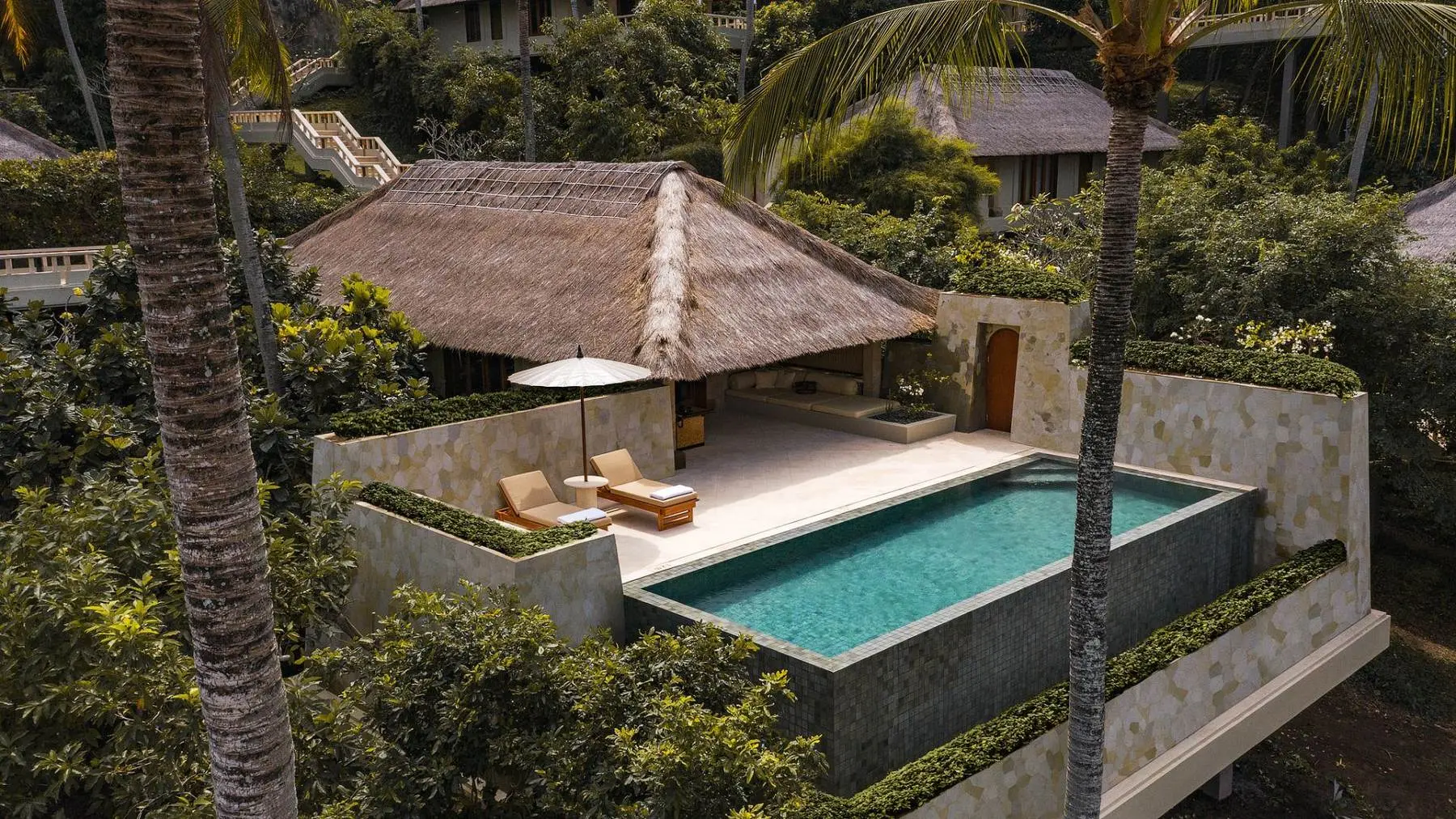
For years, a Bali honeymoon came with a script. You chose the hotel with the most beautiful villas and stayed there for the whole trip, because the more expensive and grander the hotel, the better the honeymoon was assumed to be. The highlights were bespoke and photogenic: dinner in a cave, champagne in a hot-air balloon, an afternoon in a cabana on the sand, and a spa treatment in the villa with enough petals in the bath to qualify as a flower show. The standard advice among seasoned travellers was simple: tell every hotel it’s your honeymoon, and they’ll decorate your room and leave chocolates on the bed.
The hotel decorated you. That was the whole idea. Couples came home with a tan and three hundred photos of the same infinity pool, and nobody has ever said, at their tenth anniversary, “do you remember the towel swan?”
It was lovely, and it was also interchangeable. You could have had most of it in the Maldives, in Mauritius or in Phuket. And when couples started wanting something else, Bali kept selling the same suite.
What do couples want now?
The honeymoon has moved from a status symbol of material wealth to a status symbol of emotional and cultural wealth. It used to prove what you could afford. Now it proves what you’ve experienced. Advisors around the world describe the same shift: travellers no longer satisfied with luxury for its own sake, wanting trips that feel meaningful, restorative and personal. Some have started calling it the slow-moon. And more and more couples begin not by choosing a destination, but by deciding what they want to feel.
There’s a good reason this works, and it isn’t just fashion. Psychologists have found that couples who do something new and exciting together rate their relationship higher afterwards, and treat each other with more warmth. At the start of a relationship you grow quickly simply by getting to know each other; new experiences you share start that growth again. A bath full of petals is pleasant. Learning to cook a grandmother’s recipe in a village kitchen is new. And new, it turns out, does more for a marriage than pleasant.
So the question for a honeymoon isn’t which suite is most beautiful. It’s where you’ll do something together that you’ll never forget, and that will still matter at your tenth anniversary.
Why Bali, of all places?
Because almost nowhere else gives you that as easily, as often, or in such variety.
Bali is a Hindu island in the largest Muslim-majority country in the world, and its faith isn’t kept in museums. It’s on the pavement every morning in small offerings of flowers and rice, in processions that stop the traffic, in temple festivals that come round so often that somewhere on the island one is happening today. You don’t have to look for culture here. You have to try quite hard to avoid it.
And you can take part. A water purification at a spring temple. Folding an offering with a family and watching them place it on their shrine. A dance lesson with children from the village next door. These aren’t performances put on for tourists; they’re part of daily life, and they’re shared with a generosity that still surprises me after many visits.
The island is also small enough to give you a whole country in a week: jungle valleys and rice terraces in Ubud, black sand and wild surf on the west coast, the quiet east with Mount Agung behind it, and the cliffs of the Bukit. A honeymoon in Italy or Japan asks you to choose. Here you can have all of it without a single long flight.
Why does your money go further here?
The very best hotels in Bali cost a fraction of their equivalents in the Caribbean or on the Amalfi coast. In Positano in season, a room without a pool at the most famous hotel on the coast regularly runs to two thousand dollars a night or more. For less than that in Bali you get a villa with your own pool at Bvlgari or Amandari, and for a fraction of it, a beautifully run boutique hotel in Ubud. In Positano the price of a room would buy you a villa here, and probably the dinner, and quite possibly the driver.
Why does the service matter more than the suite?
What makes or breaks a honeymoon isn’t the size of the villa. It’s whether the people looking after you understand what the two of you actually want, often before you do. And this is where Bali has an advantage no amount of money can buy elsewhere. Here, warmth isn’t a training module. It’s closer to a national character trait. At Raffles, I’ve seen a butler notice within minutes that a guest was overwhelmed, and quietly spend the rest of the week making sure nothing filled her days. Try asking for that in a hotel where service is something learned in a classroom.
The moment I understood it
The best morning of one of my own trips happened outside the hotel. Our guide took us through a village market at dawn, to an old fisherman knotting nets by hand as he had for fifty years, and finally to the veranda of a traditional house, where my wife spent an hour learning to fold palm leaves and flowers into an offering basket. She was quietly proud of it. The grandmother of the house took it from her, said a real blessing over it, lit incense and placed it on her family shrine.
Nobody had planned that part, and nobody was performing. It cost nothing, and it’s the thing we still talk about. That’s what a Bali honeymoon can be, and what the old script never offered.
Where should you stay?
Not everywhere has the feeling. Nusa Dua, for all its comfort, doesn’t; it was built to keep village life at a safe distance, which it does with great efficiency. The places that do are the ones where Bali still runs alongside the hotel, and the hotels that know how to build a moment for you that others can’t. I won’t give you a combination, because the right one is different for every couple. But these are the hotels I’d choose from.
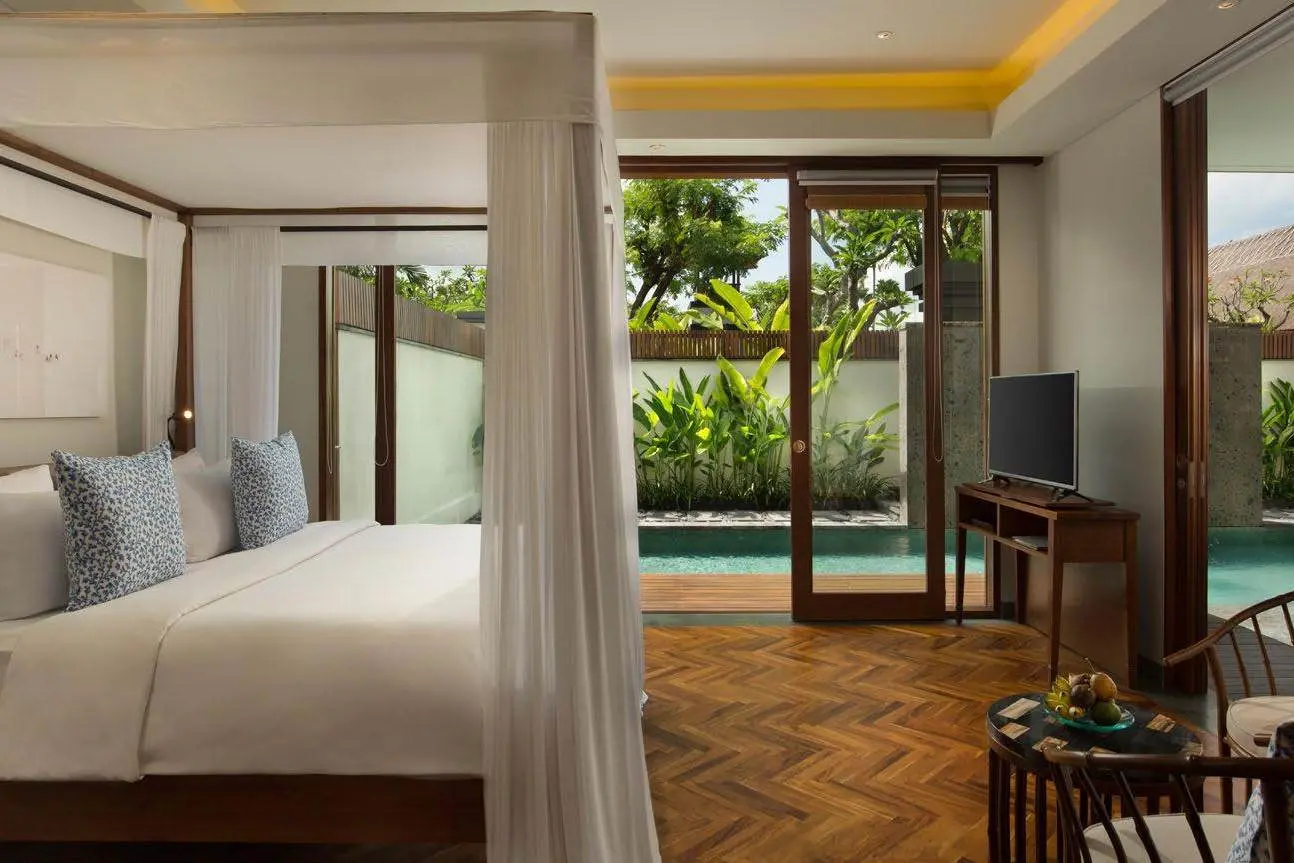
To land: The Legian, Seminyak. The perfect place to recover from the flight. It opened as an all-suite hotel in 1996, so every suite has a real apartment logic, with its own bedroom, bathroom and living room, and room to get over twenty hours of travel without tripping over each other’s suitcases. And it has a rare gift for small moments: my feet were washed like a small ceremony every time I came back, and a sunbed I’d liked one afternoon was waiting, set up exactly the same, the next day.
Where Bali still lives next door: Soori and Amankila. This is where the honeymoon I’m describing really happens. At Soori, on the black-sand west coast, villagers walk past the pool with offerings on their heads, on their way to the temple on the cliff, along paths older than the hotel. At Amankila, on the quiet east coast, young women move between the walkways in the afternoon laying palm-leaf offerings at the shrines. Choose your suite there with care; some have their own pool and a private corner of the cliff.
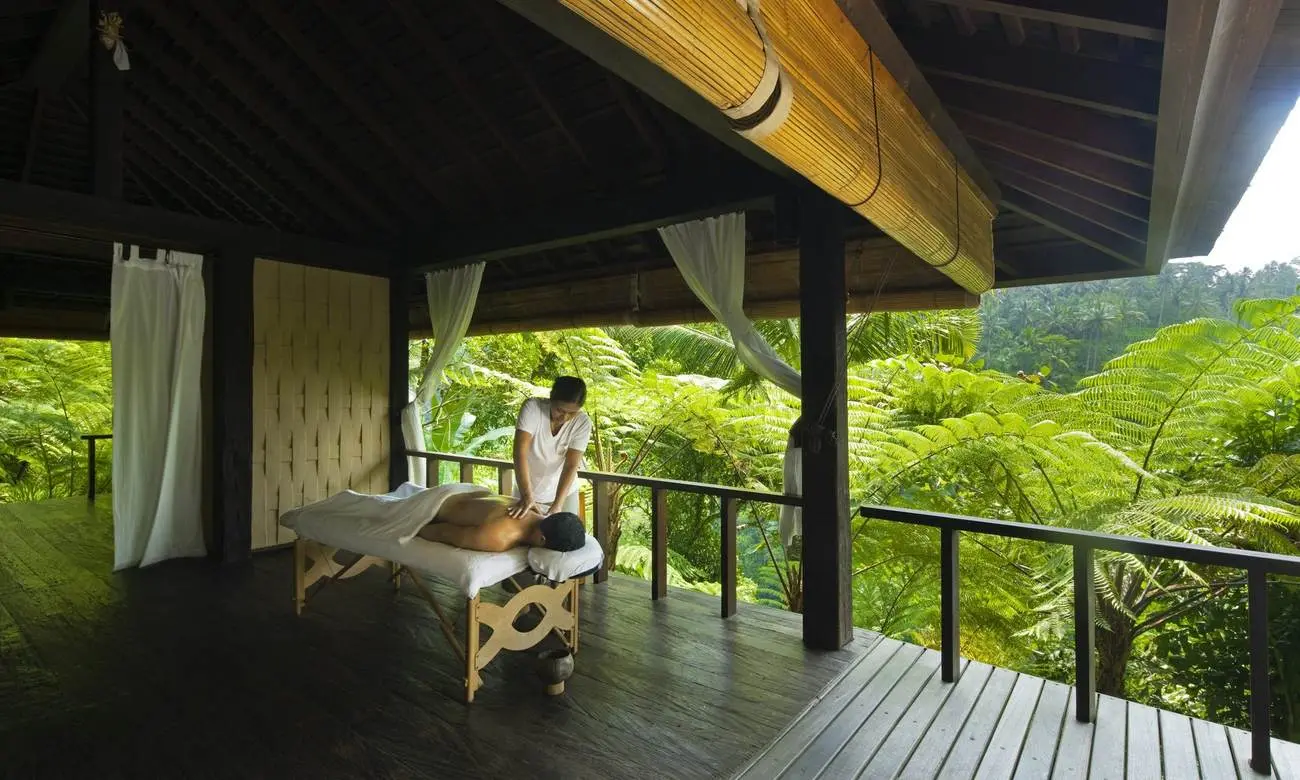
The valley: Amandari, Mandapa, Four Seasons Sayan, COMO Shambhala, Viceroy and Capella. Each gives you a different side of Ubud. Amandari has the best bedding I’ve ever slept in, and girls from the village next door learn the Legong dance at its lotus pavilion every afternoon. At Sayan, the spa’s chakra ceremony is a ritual rather than a treatment. COMO Shambhala is barely thirty rooms on twenty-two hectares of forest, built around a spring the Balinese consider sacred. And Capella is, unmistakably, a proposal hotel, where the experience itself is the point. More on how to choose in Ubud →
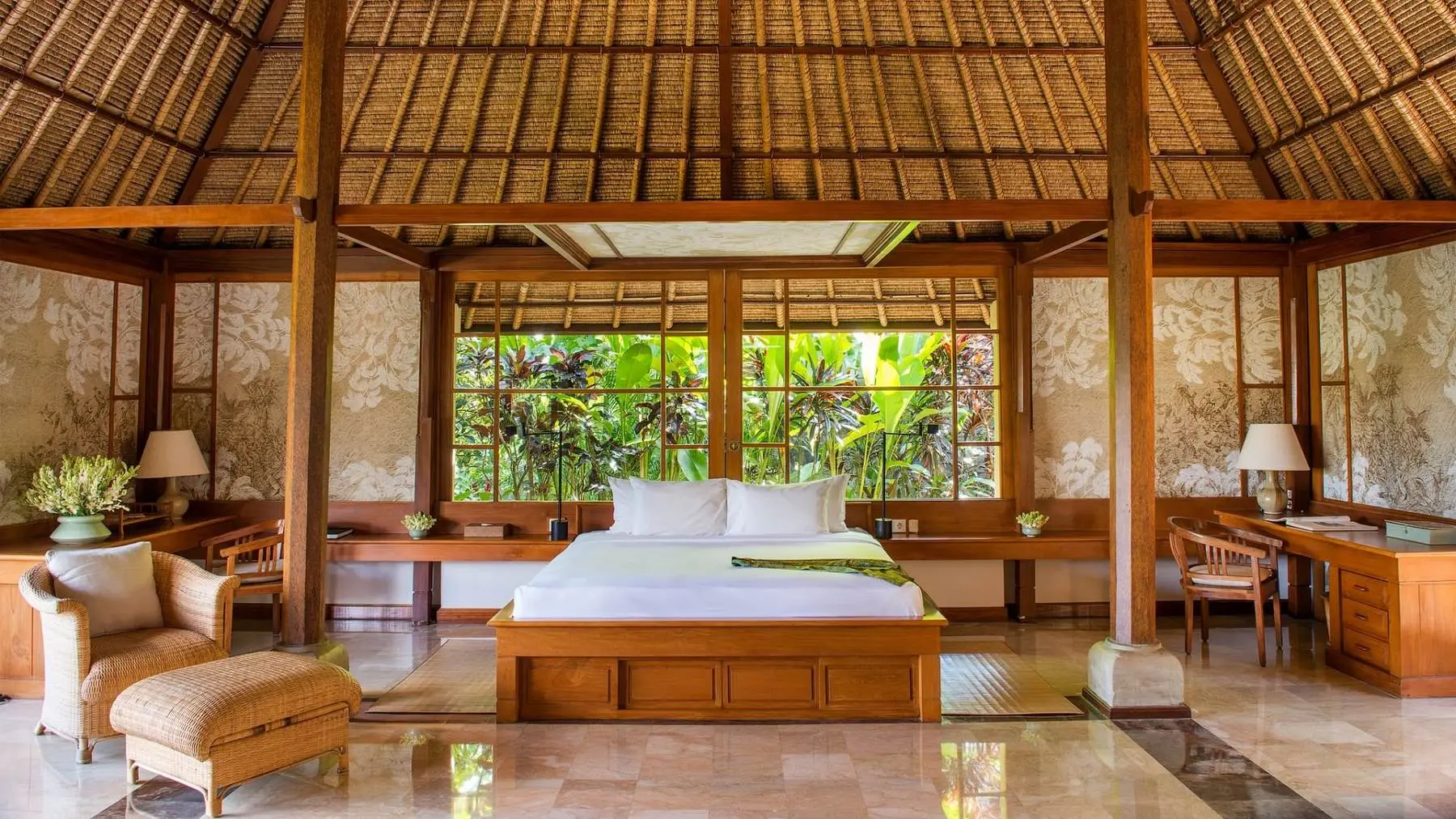
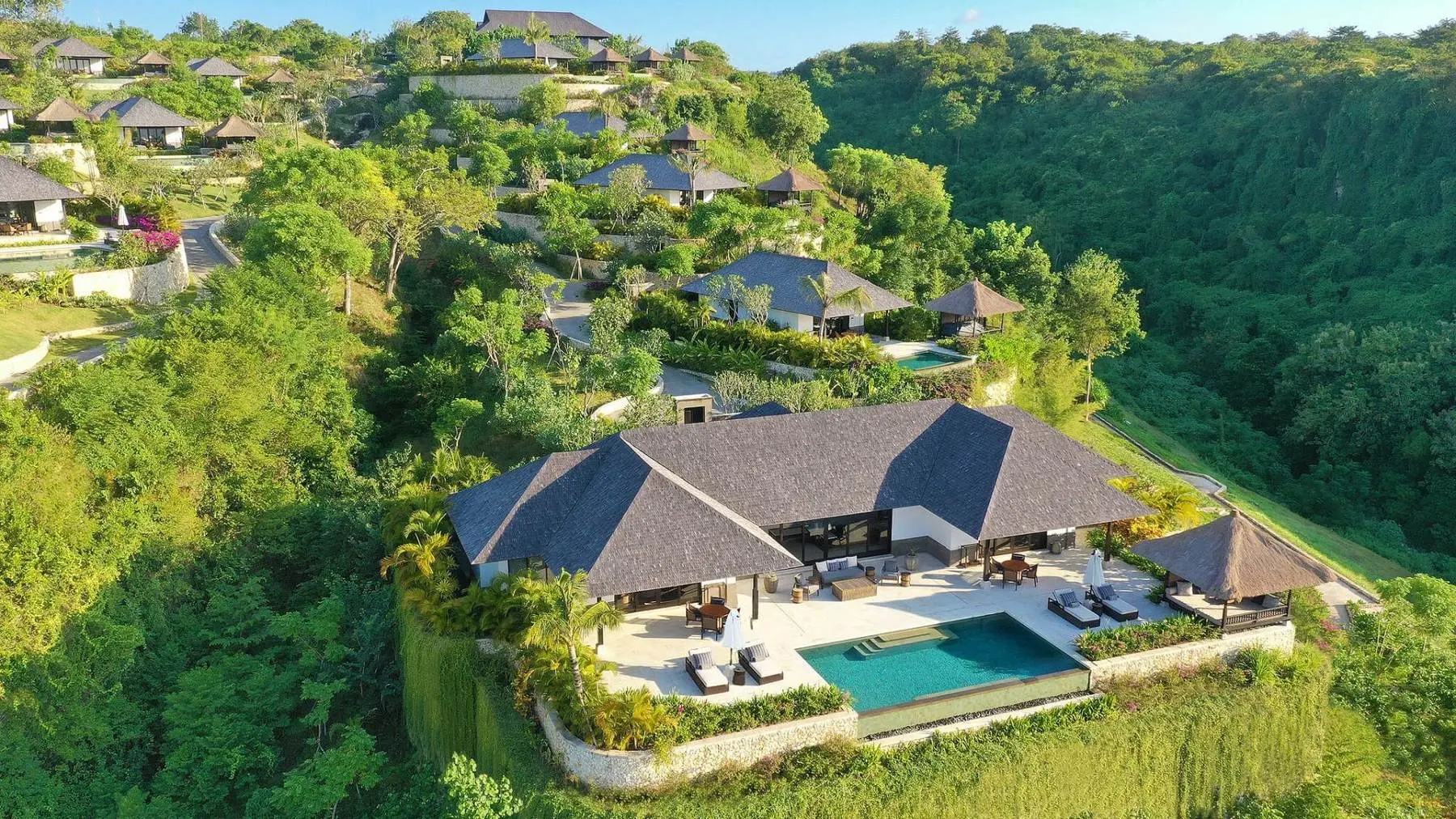
To disappear: Raffles, Samabe, Bvlgari and Jumeirah. For the days when you want nothing but each other. Raffles gives each of its 32 villas roughly eight times the land of its neighbours, and its butlers read people rather than schedules. Samabe still does the one old-fashioned honeymoon moment I’d keep, a dinner in a cave, and does it so well that it earns the word unforgettable rather than reaching for it. Bvlgari and Jumeirah are two private islands on the cliff: the first the purest bubble on the coast, the second a bubble with a window onto the surfers of Dreamland.
And on a smaller budget?
A honeymoon with feeling doesn’t have to start at a thousand dollars a night. COMO Uma Ubud, The Oberoi, Kayumanis Jimbaran, Jimbaran Puri and Tanah Gajah all cost roughly $250 to $400 a night, and every one of them can give you the moments this piece is about. Some, like Kayumanis with its private villas or Tanah Gajah with the Zecha years still in its staff, do it better than hotels charging three times as much. More on Bali’s best-value luxury hotels →
Where should you eat?
The chic French restaurant used to be the obvious place for a honeymoon dinner. In Bali the most memorable meals now come with a story about where you are.
Locavore NXT, in the countryside outside Ubud, is the next chapter of the restaurant that was for years the only Indonesian name on Asia’s 50 Best list. Room4Dessert builds a whole evening around dessert and is the most playful dinner on the island. And at Syrco BASÈ, fourteen guests sit at a single counter while Syrco Bakker, who held two Michelin stars in the Netherlands and has Javanese and Sumatran grandparents, cooks his way back to his roots. Base is a Balinese word with two meanings, spice and language. It’s hard to think of a better name for a dinner that is really a conversation with the island.
Or skip the restaurants altogether. Some of the best meals I can arrange are a cooking class in a remote village with a cook teaching you a recipe her family has made for generations, or a simple picnic laid out above a temple that most visitors never find.
The stranger, the better
When I help plan a honeymoon now, my rule is simple: the more unusual, the more it will mean. Luxury is easy to buy in Bali. The things couples remember can’t be booked online. They depend on knowing which temple is celebrating that week, which family will welcome two strangers for an afternoon, and which cook will let you into her kitchen.
That’s the Bali I’d ask you to give a second chance. Not the one with the petals, though you can have those too, but the one where you go home feeling you really met the island, together.
Planning a honeymoon? Tell us what you want to feel, and we’ll build the hotels, the moments and the meals around it.
PLAN OUR HONEYMOON →