The verdict
Every serious hotel in Bali has a food and beverage vision. They write them down. The difference is that some of them understand the thing they have imported and most do not. These ten do: Raffles and Tanah Gajah through a chef who owns the entire day, Soori and COMO Shambhala through a philosophy every kitchen has absorbed, Andaz and The Apurva through structure. None of it correlates with the room rate, and four of the ten cost a fraction of the hotels that are missing from the list.
It is half past three, I am wet, there is sand on my feet, and I am on a lounger wanting a club sandwich and a cold beer. This is the most revealing moment in a hotel's entire operation and almost nobody plans for it.
Think about what has to happen. Somebody has to notice me without hovering. The order has to reach a kitchen that is between services. Somebody has to cook it rather than defrost it. It has to arrive at a sunbed, in the heat, on a tray that is not a catastrophe, before the beer goes warm, to a man who cannot easily stand up because he is not wearing very much. I have eaten an enormous number of meals in exactly that position, and the gap between hotels is vast.
That gap is not about money and it is not about hiring a famous chef. Every serious hotel on this island has a food and beverage vision; they write them down and put them in the deck. The difference is that some of them understand the thing they have imported, and most do not.
You can see the strategies from the outside once you know to look. One hotel brings over a concept that has already proved itself in Jakarta. Another finds a Michelin-starred Frenchman in Hong Kong and hands him the keys to every kitchen on the property. A third designs its restaurant from abroad, on paper, around an idea about Indonesia formed somewhere else entirely. All three take nerve. Two of them work.
So my test is never the flagship. Dinner is where a hotel performs. Breakfast, the sunbed and room service are where it tells the truth.
1. Raffles Bali
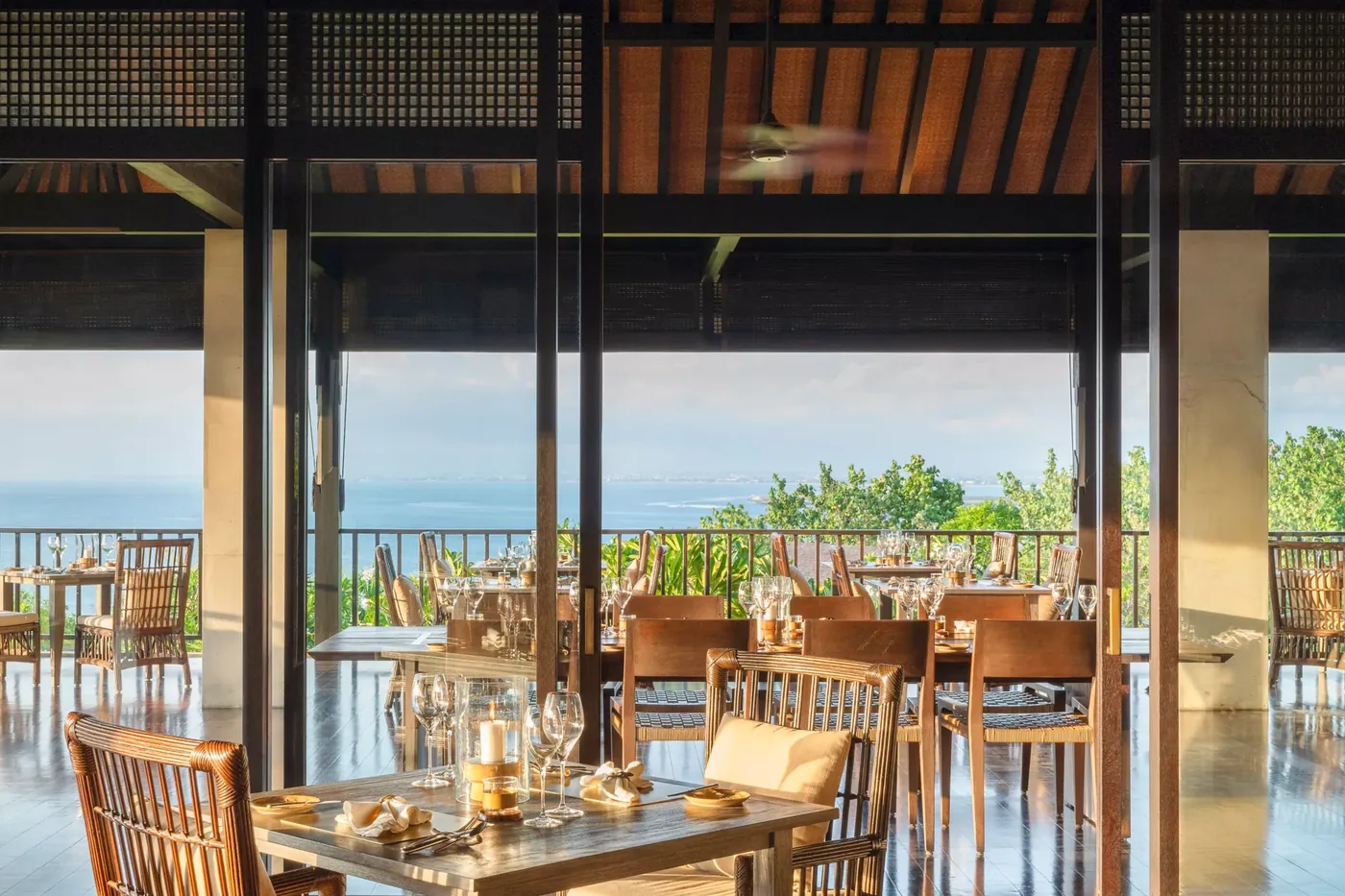
What they understood: that a programme needs a single author. Gaetan Biesuz trained in Lyon in a two-star brasserie and does not simply cook at Rumari, he directs the whole operation down to details no guest would ever name. Breakfast through to dinner, with seriously good cocktails in the middle.
What makes it exceptional is that the ambition does not thin out as it travels away from the flagship. The standard at eleven in the morning is the standard at eight at night, which sounds like the minimum you should expect at this price and is in practice almost unheard of.
2. Soori Bali
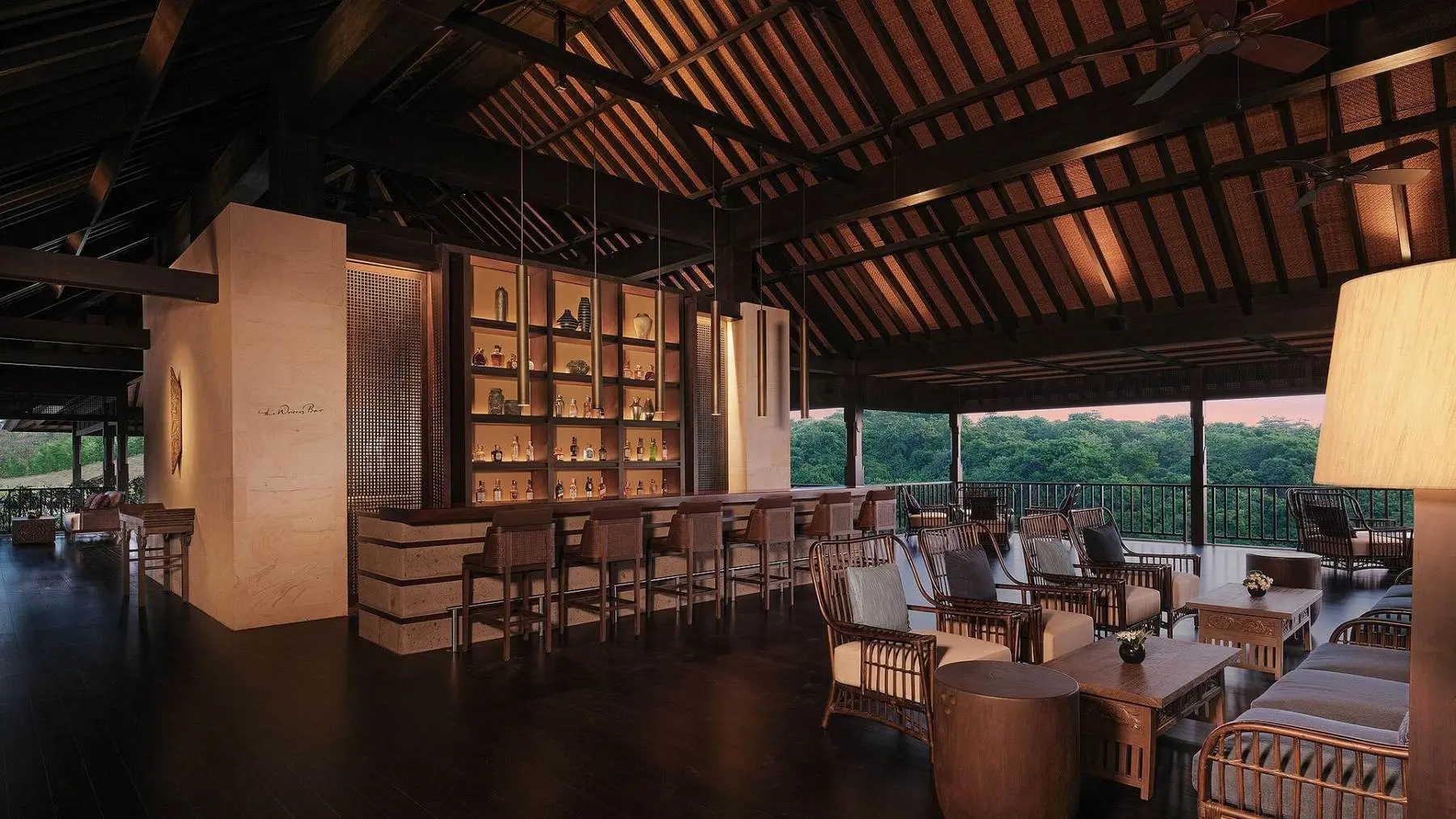
What they understood: that you get better by getting braver, not smoother. Cotta carries breakfast and a Balinese-led dinner, Ombak handles the Mediterranean register, The Reading Room does Indonesian teas and single-origin coffees, and a small teppanyaki counter has now been added on the cliff edge with a handful of seats.
A remote hotel that chooses to build a specialist counter for eight people rather than a second pool has told you exactly where the owner's attention lives. More refined and more authentic every year, which is the opposite of the usual direction of travel: most properties get smoother with age rather than braver.
3. COMO Shambhala Estate
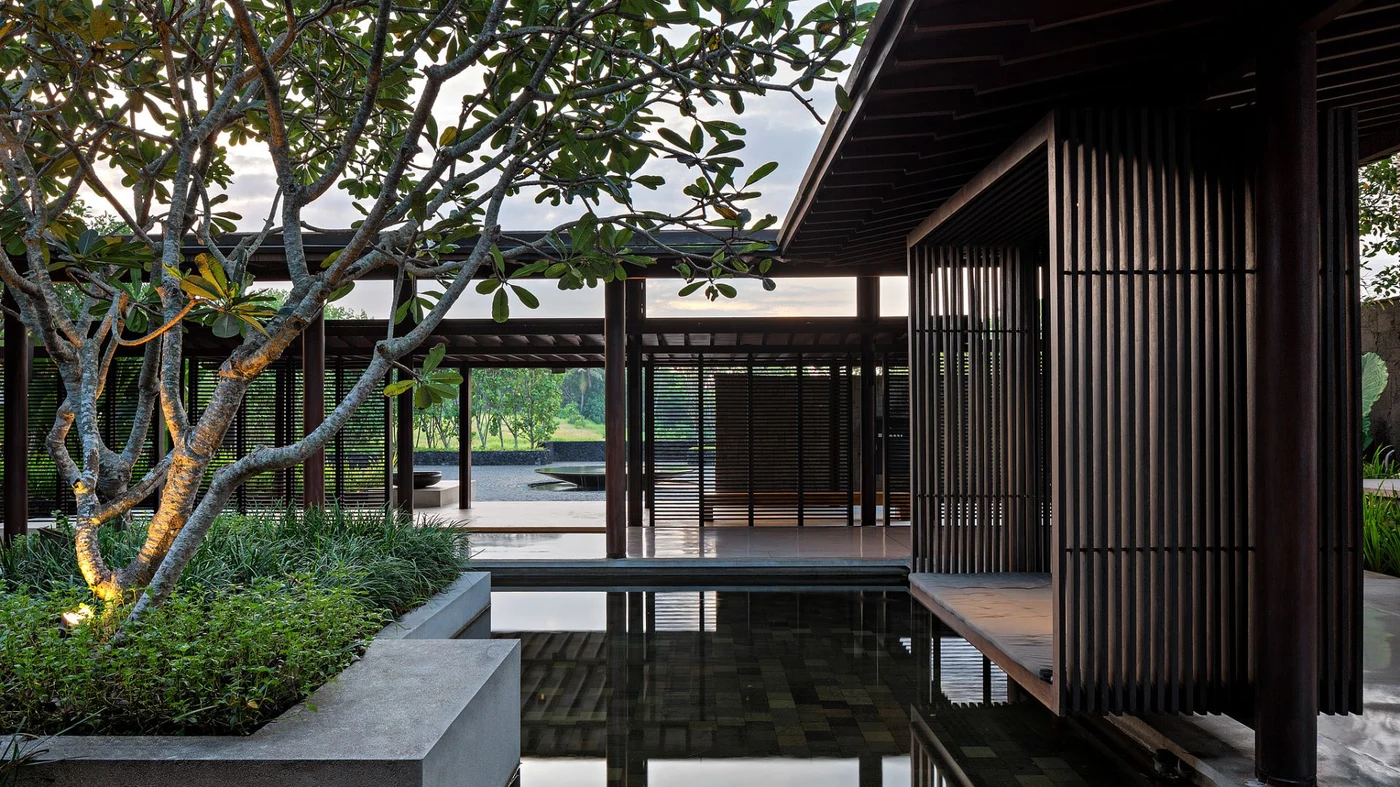
What they understood: that a philosophy travels further than a chef. Two restaurants, and between them the widest range on this list, delivered with a complete absence of visible effort. Kudus House sits in a 150-year-old Javanese residence that was moved here piece by piece and cooks Indonesian food with no dilution at all. Glow runs the COMO Shambhala Kitchen all day: health food that is intelligent rather than penitential, much of it raw, most of it picked hours before it reaches you.
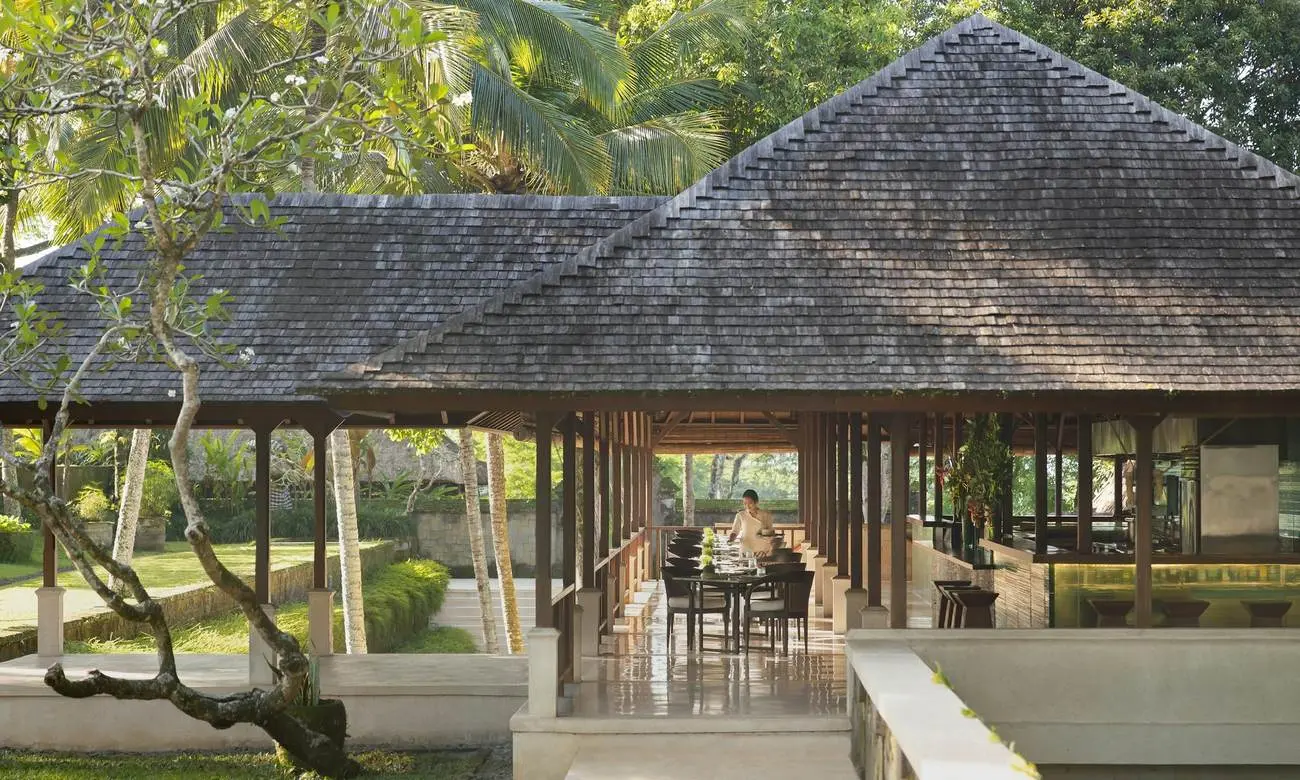
Japanese and Korean dishes arrive as convincingly as everything else, and a Rasa Nusantara series works through Indonesia's regional recipes with local farmers. I have never had a bad mouthful here, breakfast to room service, which at a wellness estate, where the pull towards being worthy instead of delicious is nearly irresistible, is genuinely strange.
4. Tanah Gajah
What they understood: their own history. This was The Chedi, and it drew some of the most demanding guests on the island, which is precisely why it still runs a chef who cooks bespoke and for whom no is not an answer.
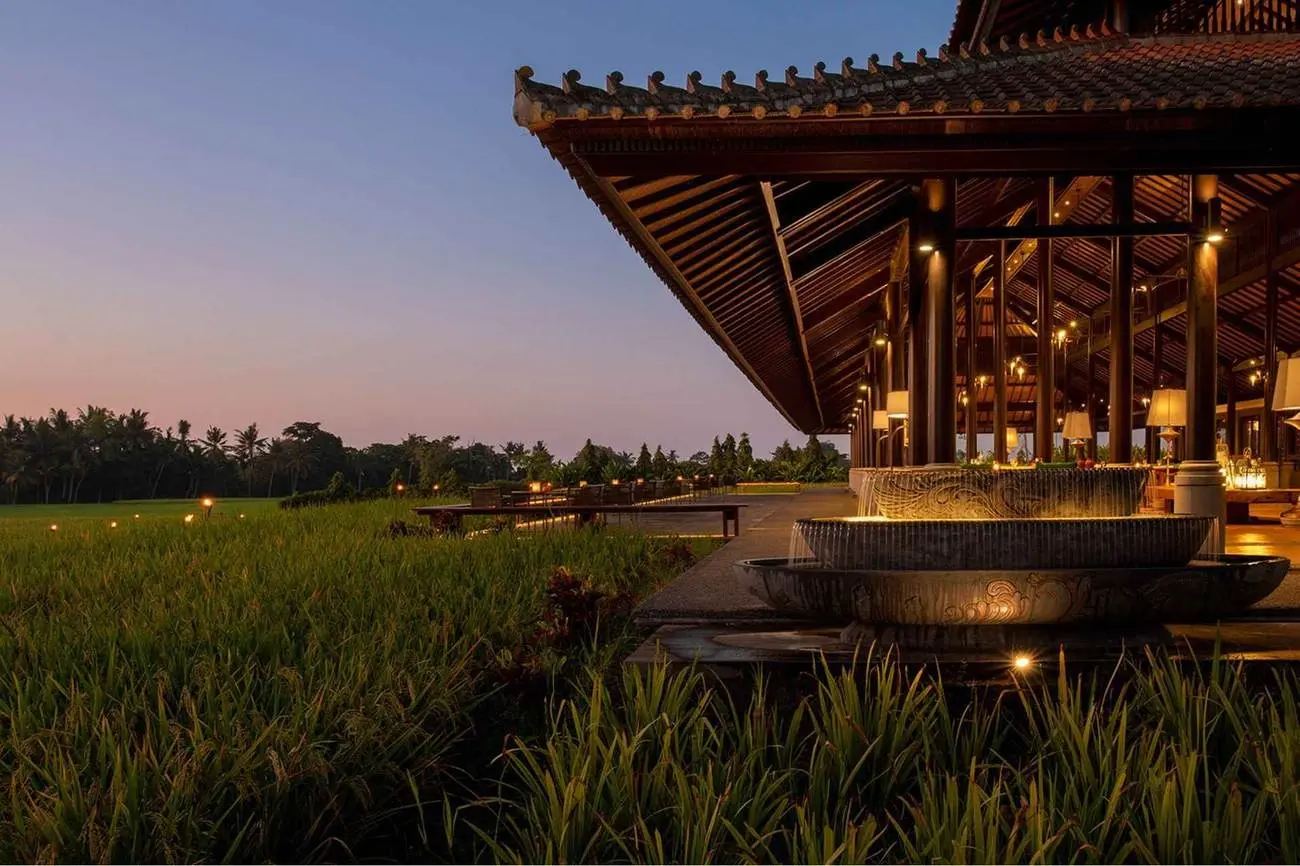
Dean Nor is Singaporean, has two decades in this region behind him, lives on the property beside his own restaurant, and is at the pass at seven in the morning and again at ten at night. Singaporean and Indonesian cooking done properly, Western classics done straight, a real appetite for wagyu and Hokkaido scallops, and a garden by the dining room supplying much of it. He runs a five-course omakase for a table of ten at which he turns out to be as much a raconteur as a cook.
I did get a no from him recently, as it happens. Lobster had become too expensive to buy that week and he said so, rather than serving me something he was not happy with. That is also the job.
5. Viceroy Bali
What they understood: that two very different registers can share a hotel without one becoming the other's poor relation. Apéritif, under the Belgian chef Nic Vanderbeeken, is arguably the best French restaurant on the island, and he still carves the venison Wellington at the table himself. Cascades is one of the best all-day rooms in Ubud, with a view you would cheerfully lie about having seen.
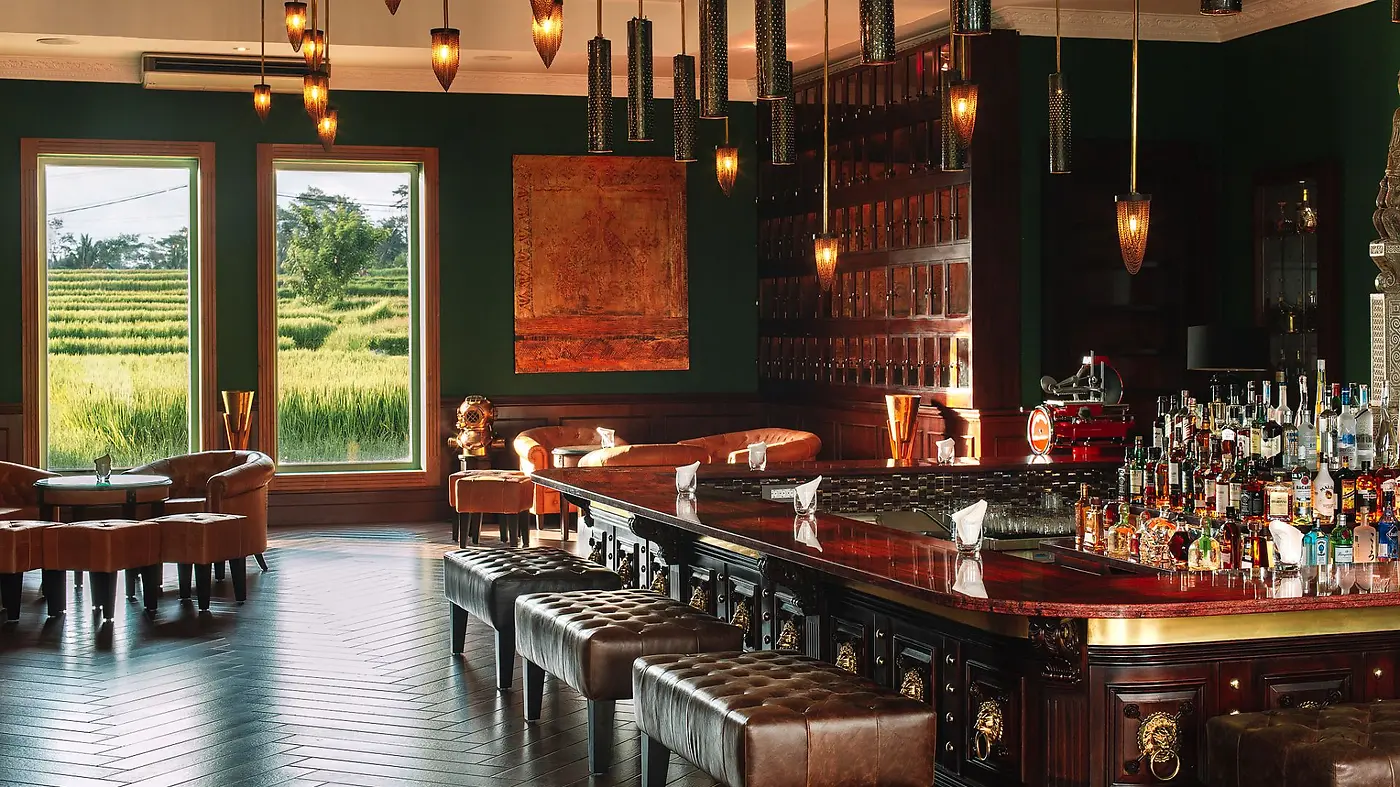
A family-owned hotel holding both of those at the same time, without letting either slide into being the other's overflow, is a serious achievement.
6. Mandapa, a Ritz-Carlton Reserve
What they understood: that food has to be central. What they have not quite solved: making it look effortless. Sawah Terrace pushes Balinese ingredients through modern technique, and Kubu has been working to a zero-waste philosophy since 2015, which they call conscious gastronomy and which is a good deal more than a line in a brochure.
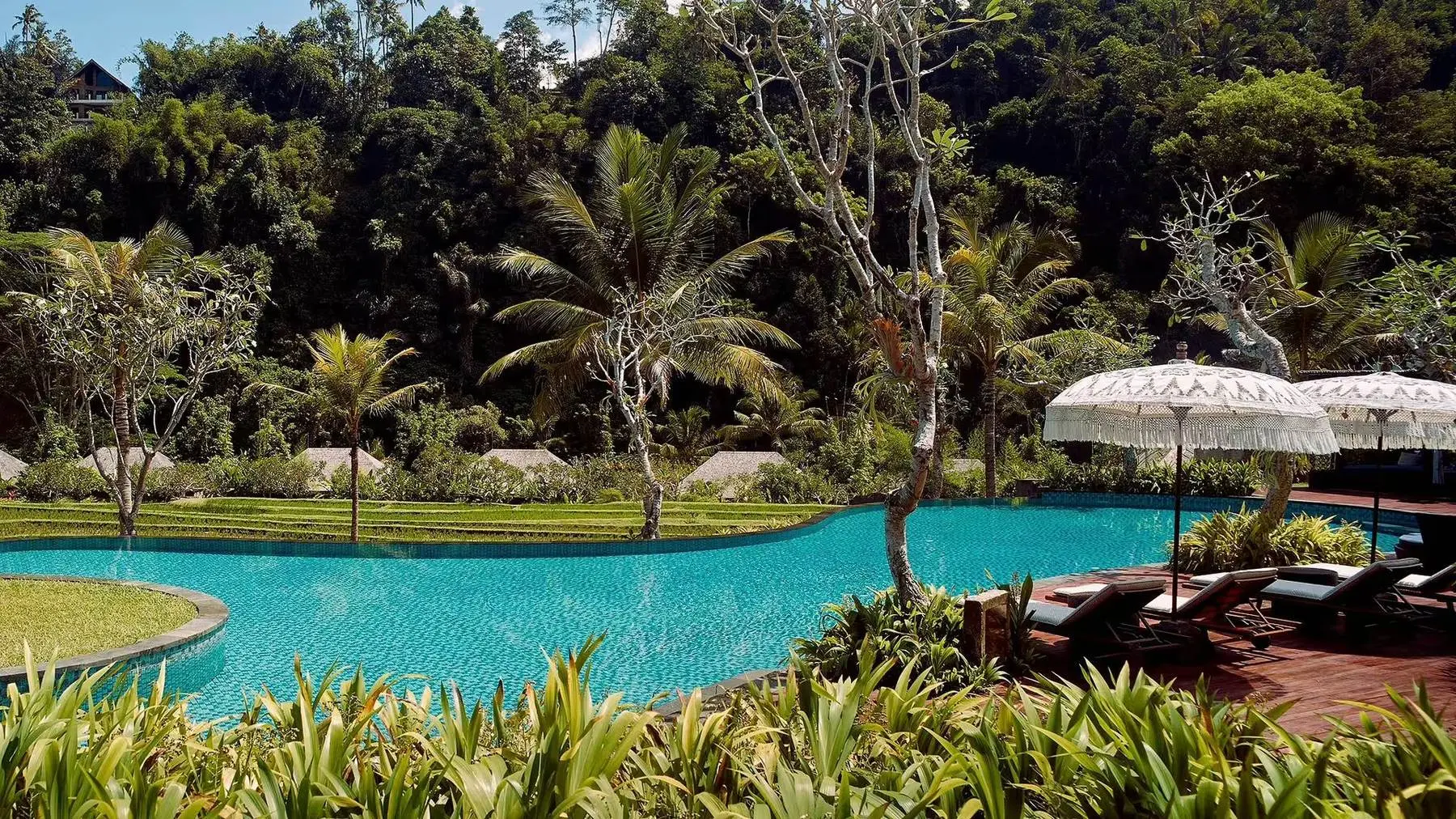
You can feel how badly they want this to succeed, and that wanting is faintly audible in the room. It does not land with the force of the four above it. It is still unmistakably a programme rather than a collection of outlets, which is why it is here.
7. Capella Ubud
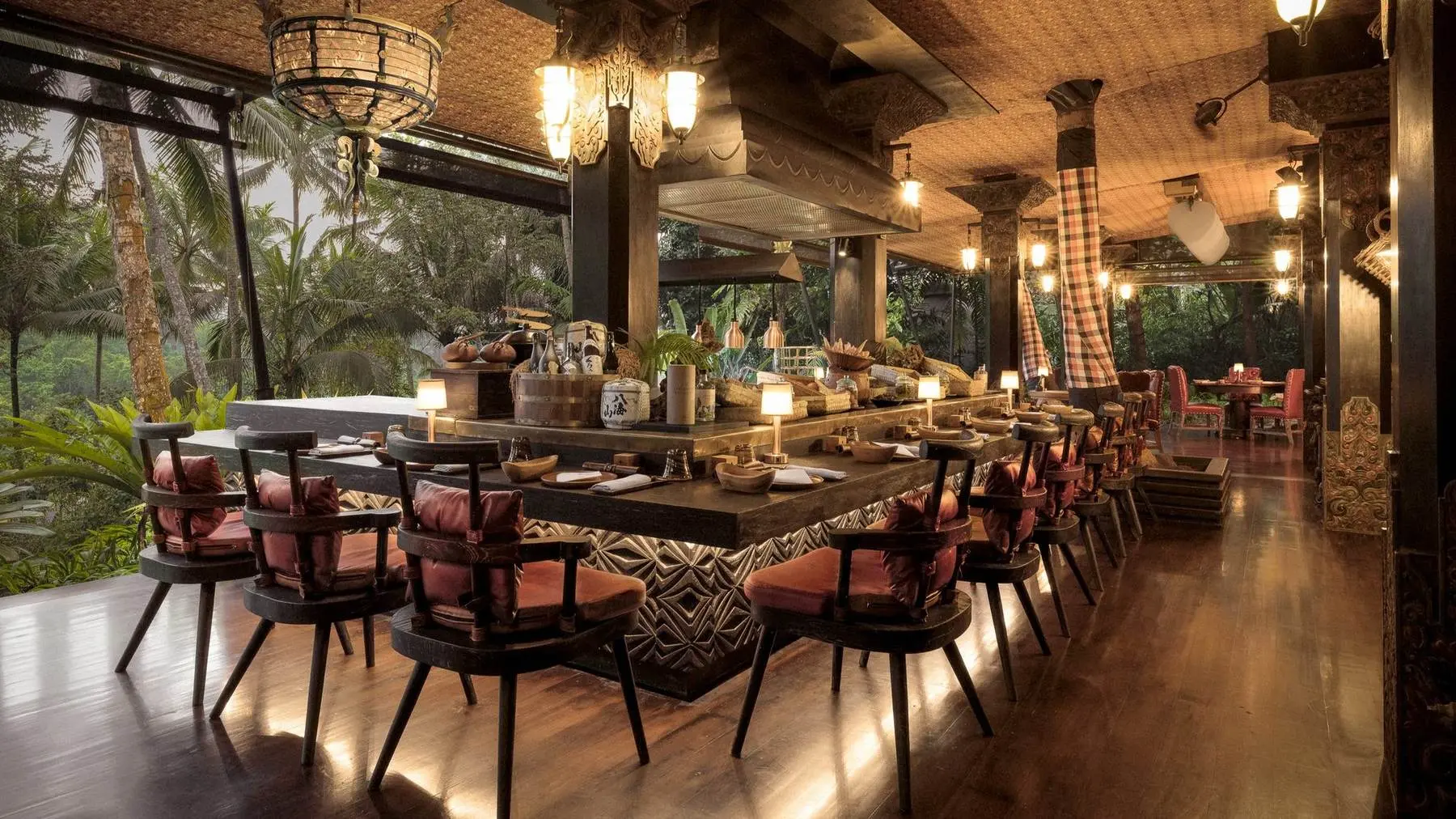
What they understood: that a hotel this theatrical has to be able to cook, or the whole thing collapses into costume. I arrived for the decor, which is deliberately over the top, and left more interested in the kitchens. Mads Lange runs from dawn until late, moving between Indonesian dishes and contemporary European cooking without dropping either. Api Jiwa is a serious Asian counter built around a grill. For twenty-two tents, that is a great deal of kitchen.
8. The Legian Seminyak
What they understood: that a star chef is only useful in a resort if he has worked in one. Stéphane Gortina came out of the Alain Ducasse system, by way of Le Louis XV in Monaco, and most French chefs with that stamp on them have only ever cooked in restaurants. He had also run a resort kitchen in Mauritius and a hotel kitchen in Hong Kong, which is a different trade entirely and the reason he works here.
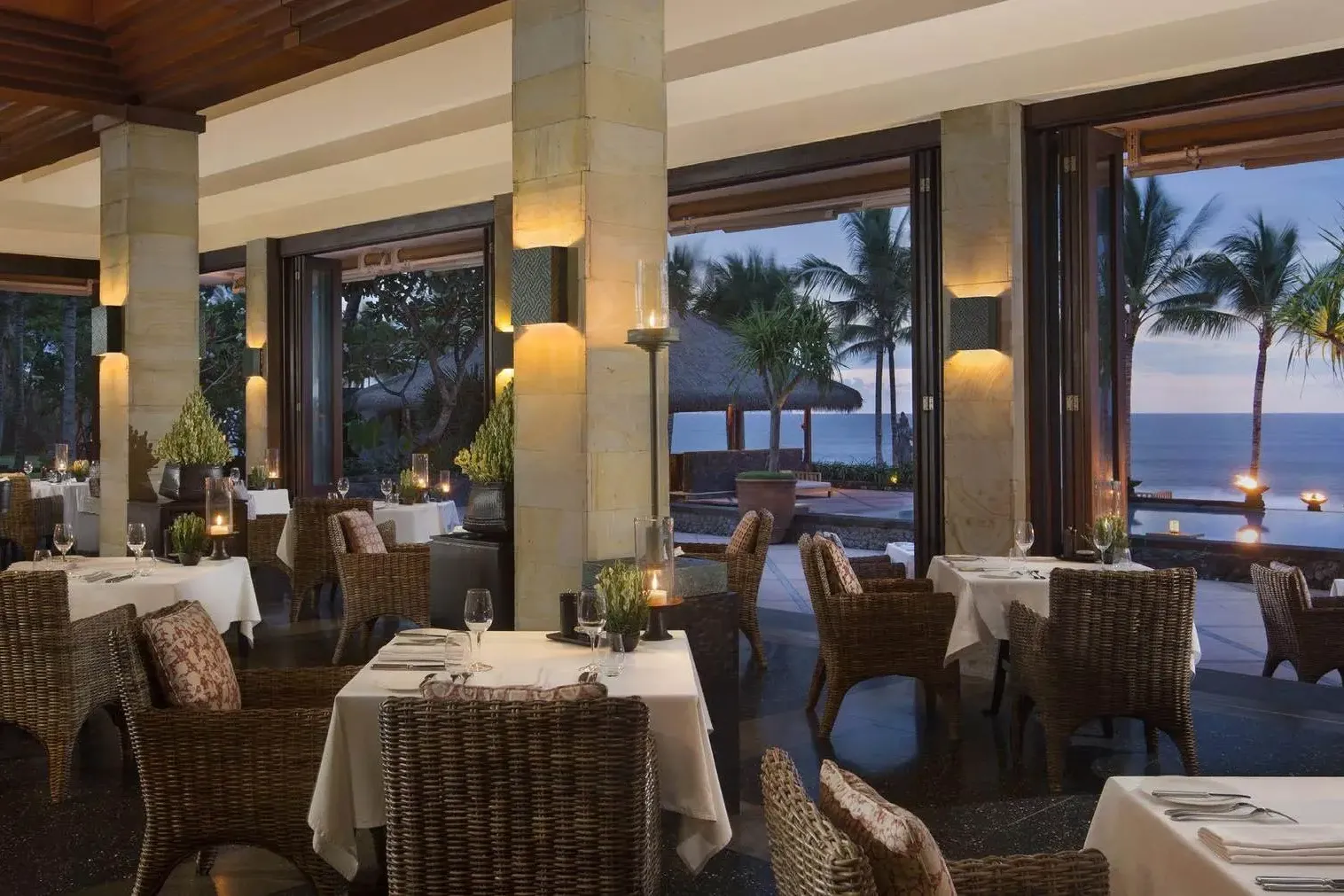
When The Legian brought him over in 2019 they handed him The Restaurant, the pool bar and the champagne bar rather than one dining room and a title. That is why the grip shows in small things: the bread, the butter, the sequence of a lunch. A chef who had only ever run a restaurant would have fixed the restaurant and let the rest drift.
One honest flag. The operation is now crowded. Five venues are working hard in a compact hotel and the kitchen has run out of places to put its ambition. This property needs a new room.
9. Andaz Bali
What they understood: how people actually eat, which is a different question from how restaurants are usually organised. Instead of four restaurants ignoring one another, Andaz built a village square with kitchens around it, each committed to a particular cuisine, and connected them, so you sit wherever you like and order from any of them.
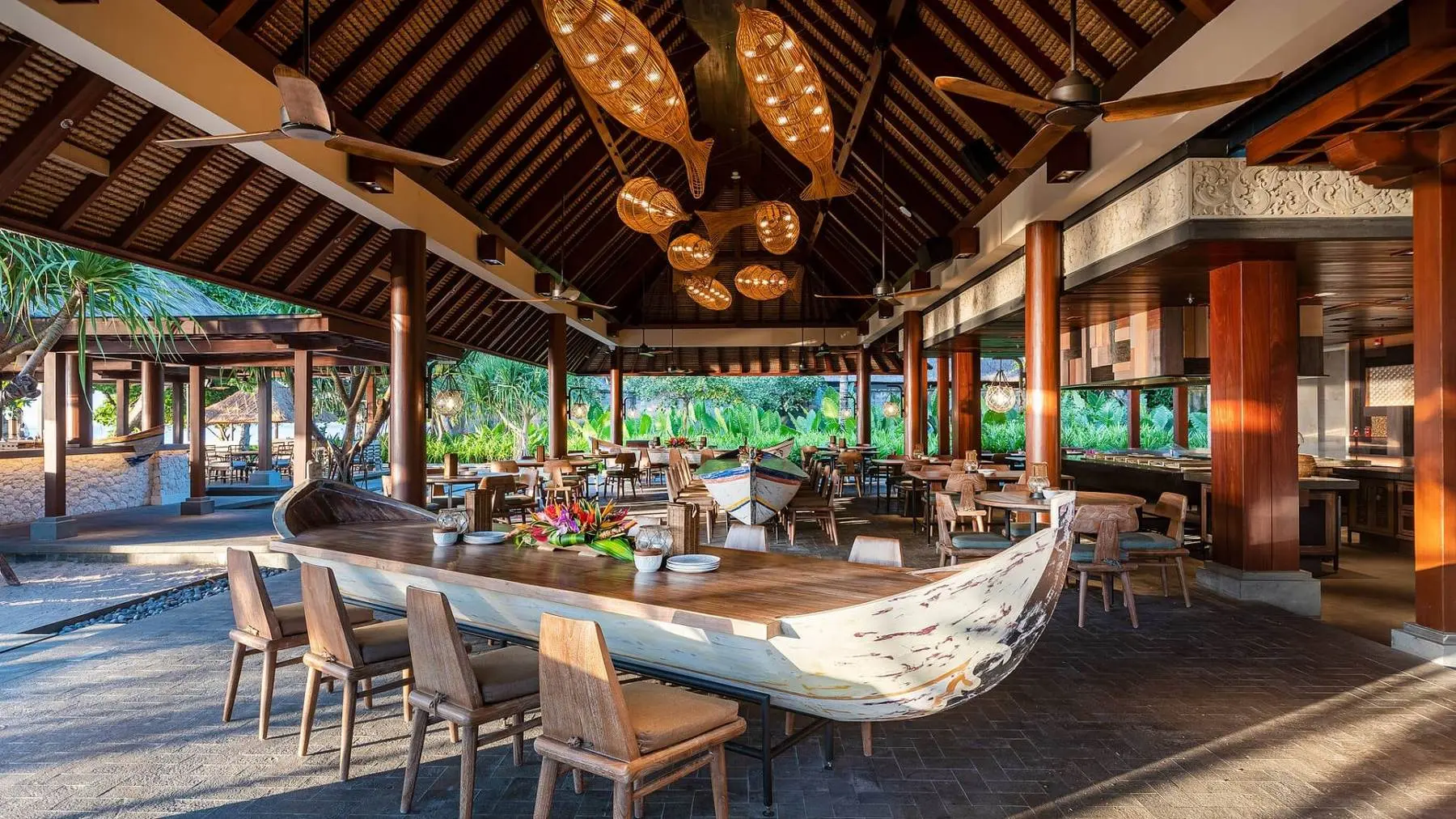
It removes the moment where a family has to agree on a cuisine before it can sit down, which sounds minor and reorganises the entire evening. It also produces my favourite breakfast in Bali. Nobody at a far more expensive hotel has thought this hard about the problem.
10. The Apurva Kempinski
What they understood: that buying a concept which already works beats inventing one you do not understand. Izakaya by OKU was imported from its award-winning parent in Jakarta rather than dreamed up in a meeting, and it lands. Around it sit Koral with its aquarium, Bai Yun for Chinese, Pala for all day and Reef Beach Club on the sand, all properly maintained.
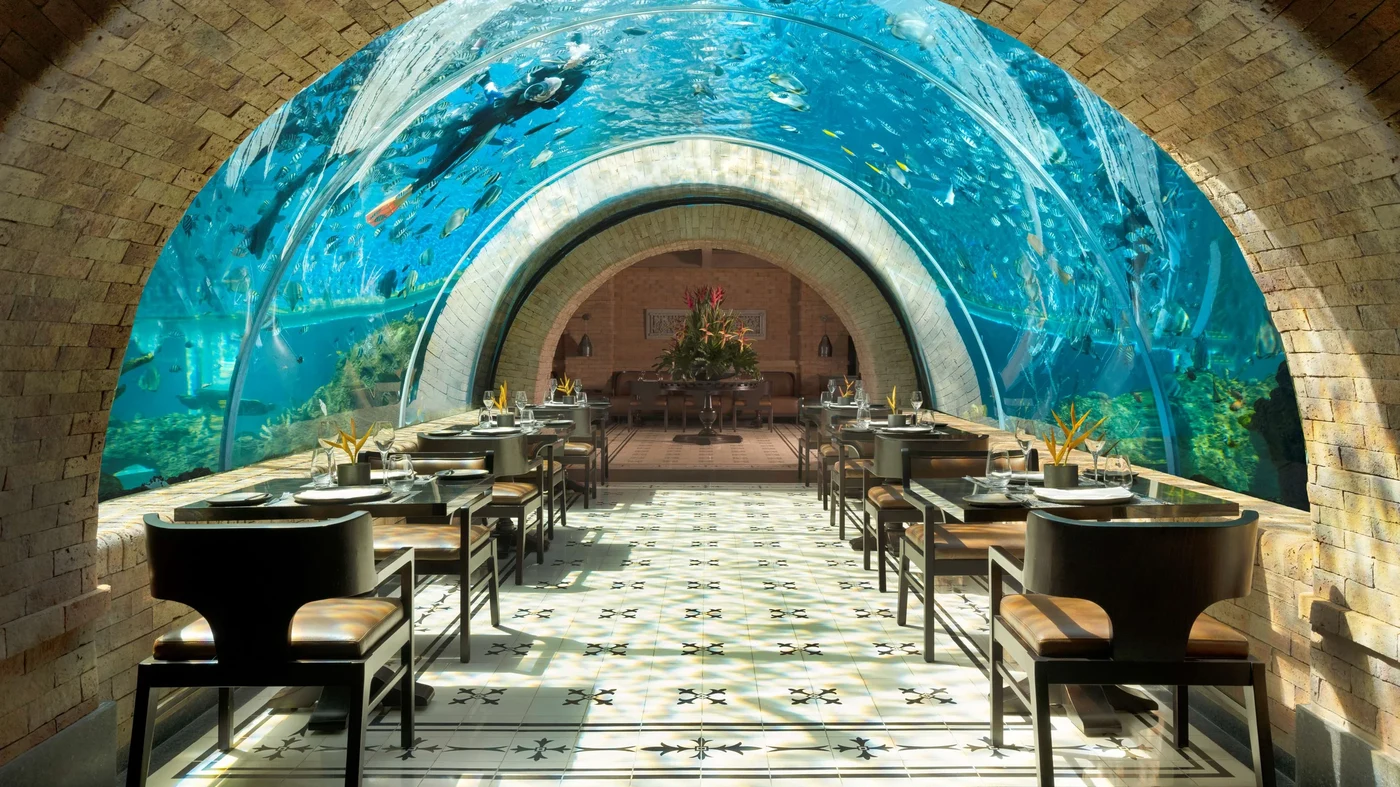
It can feel like a factory, and I mean that descriptively: a factory running at a very high standard. Not every hotel needs a soul in its food operation. Some simply need to be reliably excellent at volume, and this one is.
Ten programmes, and what each one worked out
| Hotel | The model | What they understood |
|---|---|---|
| 1. Raffles Bali | One chef owns everything | A programme needs a single author, not a flagship |
| 2. Soori Bali | Philosophy | You improve by getting braver, not smoother |
| 3. COMO Shambhala Estate | Philosophy | A philosophy travels further than a chef |
| 4. Tanah Gajah | One chef owns everything | Their own history as The Chedi |
| 5. Viceroy Bali | One chef owns everything | Two registers can share a hotel as equals |
| 6. Mandapa | Philosophy | That food has to be central, if not yet effortless |
| 7. Capella Ubud | Structure | Theatre collapses into costume without a kitchen |
| 8. The Legian | One chef owns everything | Hire a star who has worked in a resort before |
| 9. Andaz Bali | Structure | How people actually eat, not how restaurants are organised |
| 10. The Apurva Kempinski | Structure | Buying a proven concept beats inventing one |
Ranked on the whole day rather than the flagship restaurant, from our own paid stays.
The ones that are not here, and why that is the interesting part
Bvlgari has one superb Italian restaurant and an entirely ordinary operation around it, which is a choice rather than an accident.
Jumeirah brings serious know-how from the Middle East and applies it the way Dubai does: glamorously, and with a properly credentialled chef in Alessio Nallino, who spent years in Michelin-starred kitchens in Macau and cooks Mediterranean. Nothing is missing except an answer to the question of what any of it has to do with a clifftop in Uluwatu. It is an idea about luxury formed somewhere else and set down here intact, and you can taste the distance.
And then Buahan, which fascinates me. The hotel and its kitchen were conceived from outside Indonesia, and on paper the concept is superb: no walls, local ingredients, fire, a story you want to believe. In practice the kitchen does not work. It simply does not.
And yet I have more respect for Buahan than for the dozens of resorts playing it safe, because they tried to do something nobody here was doing. They got it wrong for the most common reason in this business: the idea was assembled at a distance from the thing it was describing.
There is also a pattern in these omissions, and it is uncomfortable. Caution scales with the room rate. At these prices a hotel has a great deal to lose if a guest dislikes lunch and very little to gain if a guest loves it, so the daily menu gets engineered to be beyond reproach rather than worth remembering. Which is why four of my ten cost a fraction of the names above, and why a chef who lives beside his own restaurant beats a brand standard every time.
How to test any hotel yourself
Vision is not the scarce commodity in Bali. Every marketing deck has one. What is scarce is knowing which parts of your vision you actually understand, and being willing to hand the keys to somebody who understands the rest.
So do not book the tasting menu on your first night. Order breakfast twice, ask for lunch at your lounger once, and by the second afternoon you will know precisely what kind of operation you are in.
Torn between two hotels and wondering whose kitchen your children, or your partner, will actually enjoy? Send me a WhatsApp and I’ll look at it with you. No charge, no obligation.
MESSAGE SVEN →