The verdict
Four hotels on the same stretch of Seminyak beach, close in quality and close in price, all between roughly $225 and $325 a night, and each from a different generation of luxury. Choosing between them is like choosing at a food court: it comes down to what you're in the mood for. The Samaya, from around $300, is the timeless one: your own villa with a pool, the best sunset deck in Seminyak, and for me the best value. W Bali, from around $325, is playful, adventurous and fun, one of the most dynamic hotels on the island, as long as you book a villa. Alila Seminyak, from around $250, is clean, robust and modern: an honest base for going out. Desa Potato Head, from around $225, is the newest idea of all: a creative village where luxury means design, music and a waste programme that isn't marketing. Choose The Samaya for calm, the W for energy, Alila for going out, and Desa Potato Head if you want to see what comes next.
On my first trip to Bali I spent two weeks at The Oberoi and fell properly in love with the island. Somewhere around day four we worked out that the cure for too much serenity was a ten-minute walk up the beach to the W. We went most evenings after that, for the music and the open-air bar and that particular hum a room gets when everyone in it is pleased to be there, and then we walked back to the quiet. Two speeds, twenty minutes apart. Seminyak's beach still works like that. The grand old classics, The Legian and The Oberoi, sit a class above everything else on this stretch of sand. But if they aren't for you, there are four more hotels on the same beach, each running at its own speed.
Choosing between them feels a bit like going to a food court with friends. One wants Chinese, one wants a burger, one is in the mood for sushi, and the fourth orders something from a menu none of the others recognise. All four are good, and they cost roughly the same. They're not remotely the same, but if you scored them, they'd all land at around the same average. It simply depends on what you're hungry for.
At a glance
| The Samaya | W Bali | Alila | Potato Head | |
|---|---|---|---|---|
| Generation | Timeless Balinese villas | 2011, luxury as a party | 2015, clean modernism | 2021, circular design |
| Entry room, per night | From around $300, extras included | From around $325 | From around $250 | From around $225 |
| Book | Any villa | A one-bedroom villa | An ocean-view room | A room over the pool |
| Size | 52 villas | 229 rooms and villas | 240 rooms | Studios and suites |
| Feel | Understated, calm | Playful, adventurous, fun | Clean, robust, modern | A festival with a conscience |
| Eating | Breeze, on the sand | Starfish Bloo, Fire, WooBar | Seasalt, or walk to Bambu | Several restaurants, beach club |
| Best for | Villa privacy and value | Energy and nightlife | Going out | Design, music, curiosity |
None of the four is on The Bali 20. Rates are for the entry category at the time of writing, September 2026, and move with the season.
Four generations of luxury, on one beach
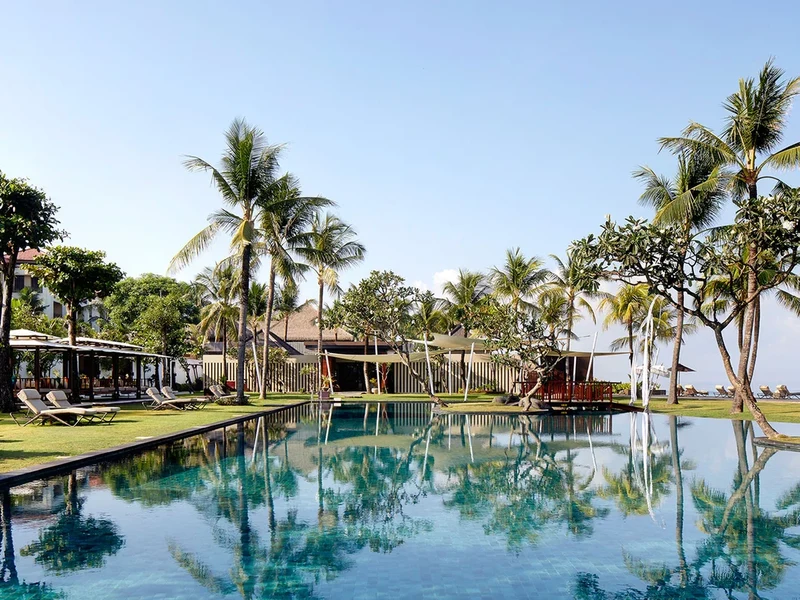
Walk along this stretch of sand and you pass through thirty years of ideas about what a luxury hotel should be. The oldest idea is The Samaya's, the one shared by the island's small Balinese hotel groups: handsome, timeless villas without ornament, one good restaurant instead of seven, and staff who stay long enough to remember you. It sells no concept, just a good bed on excellent land, in one of the busiest parts of Bali.
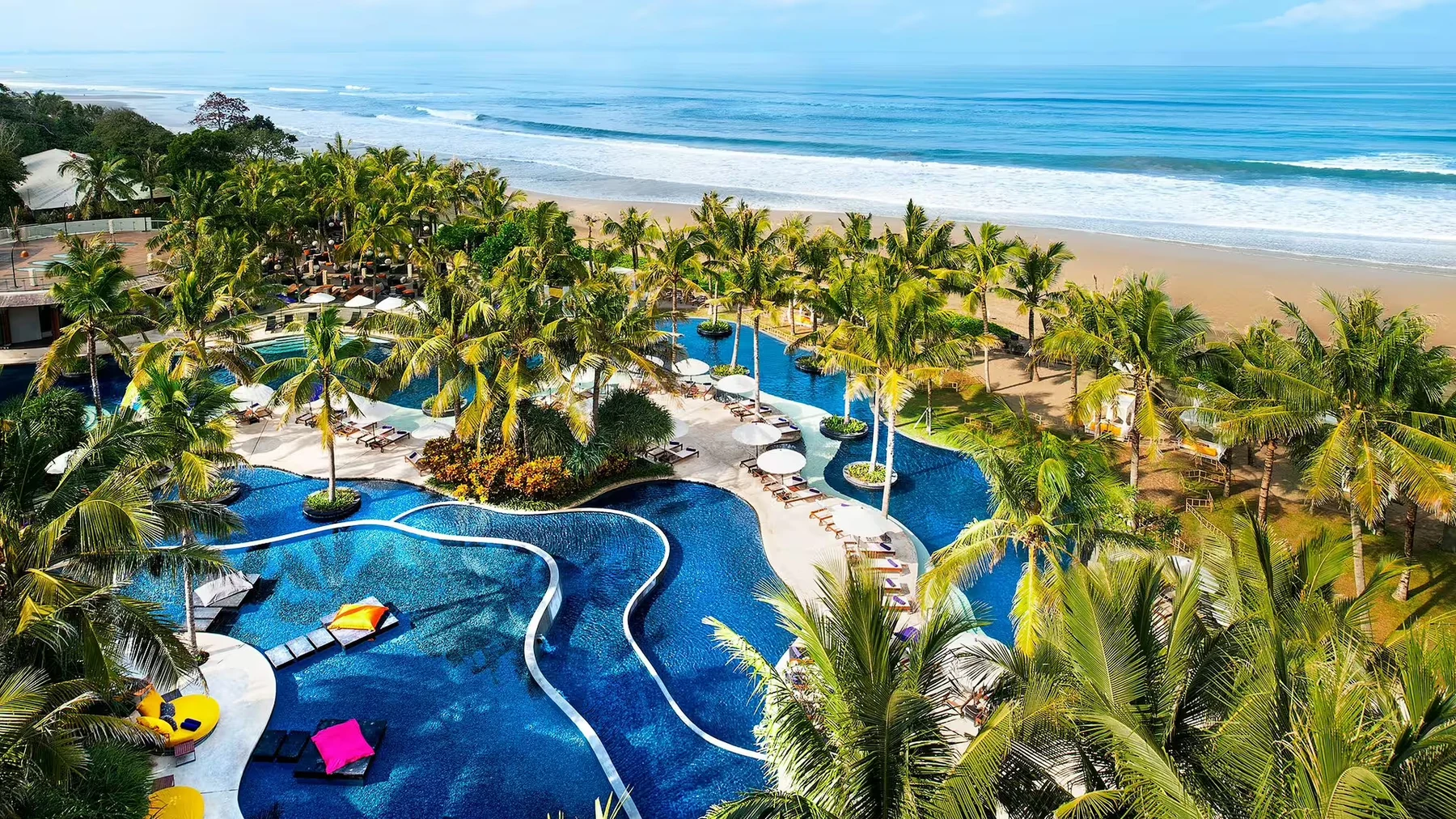
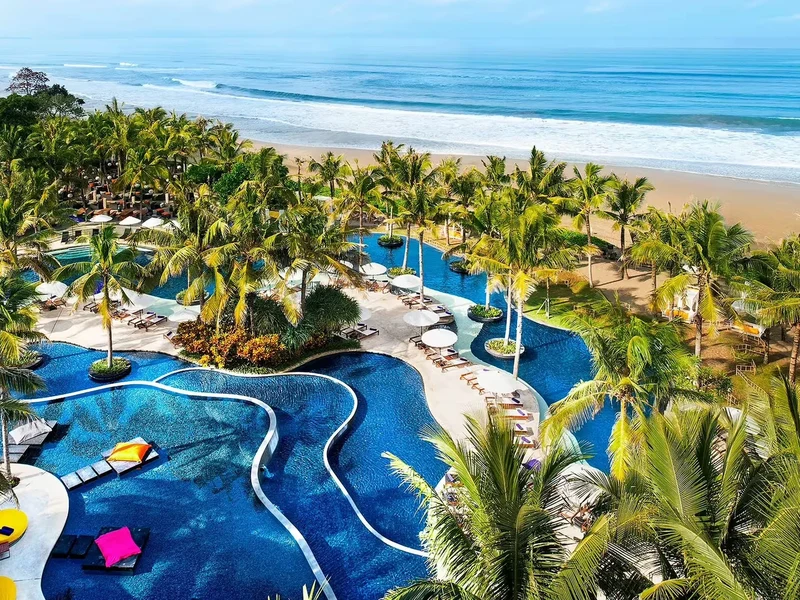
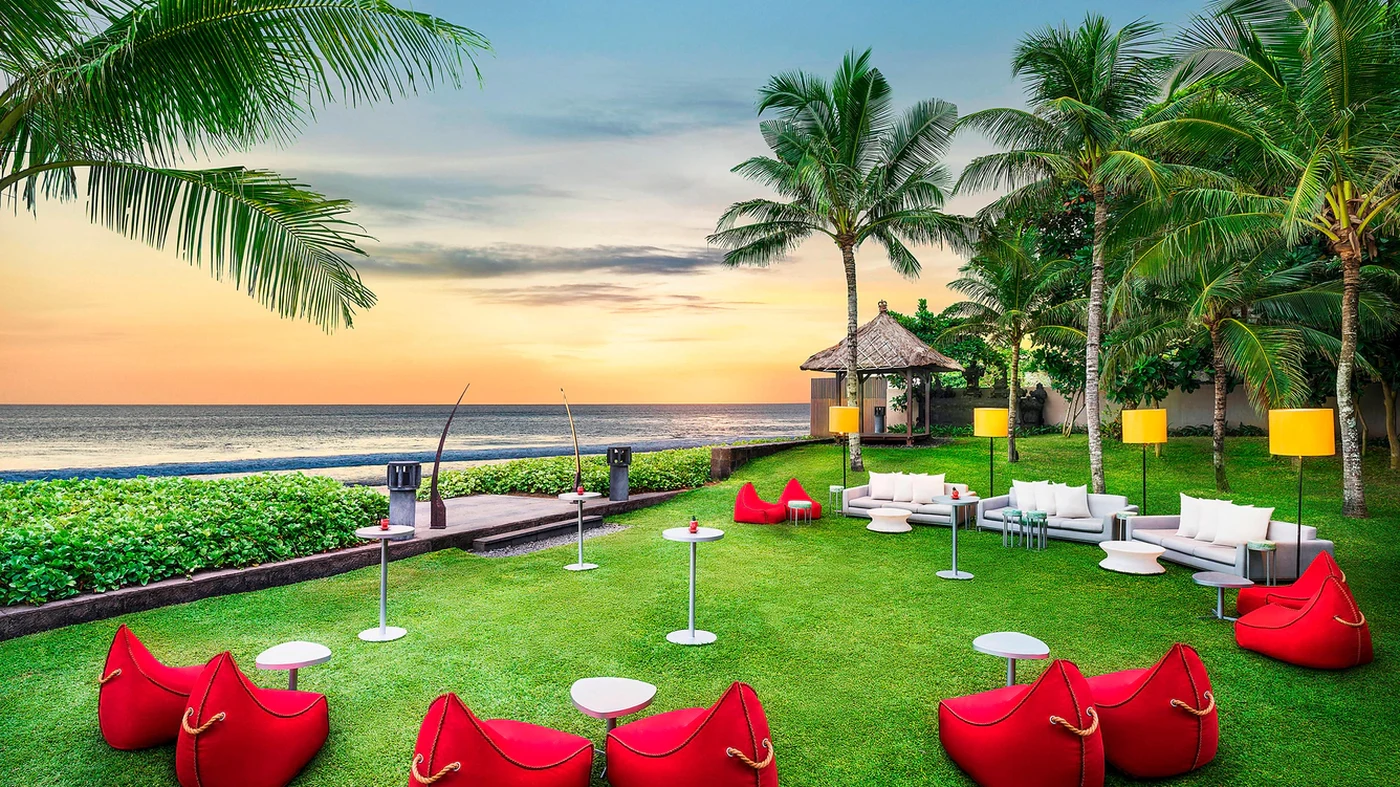
The W arrived in 2011 as the first W in Indonesia, with luxury as a party: playful, adventurous and fun, built around WooBar, the three-storey beach bar where the sunset and the DJs happen. It's hip without the fermented yoghurt. A great many fashionable places in Bali are exhaustingly fashionable; somehow the W never crosses that line. And with your own quiet villa a short walk from the busiest bars and restaurants on the property, it's one of the most dynamic places to stay on the island.
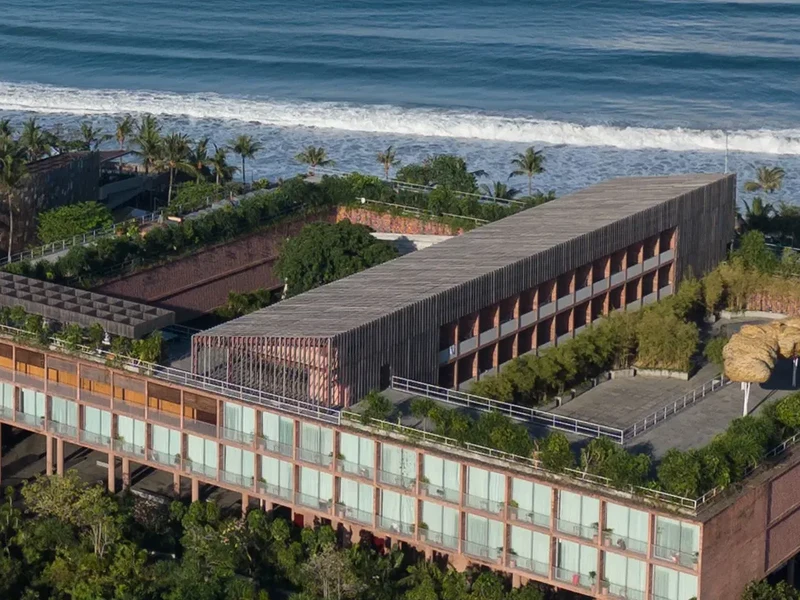
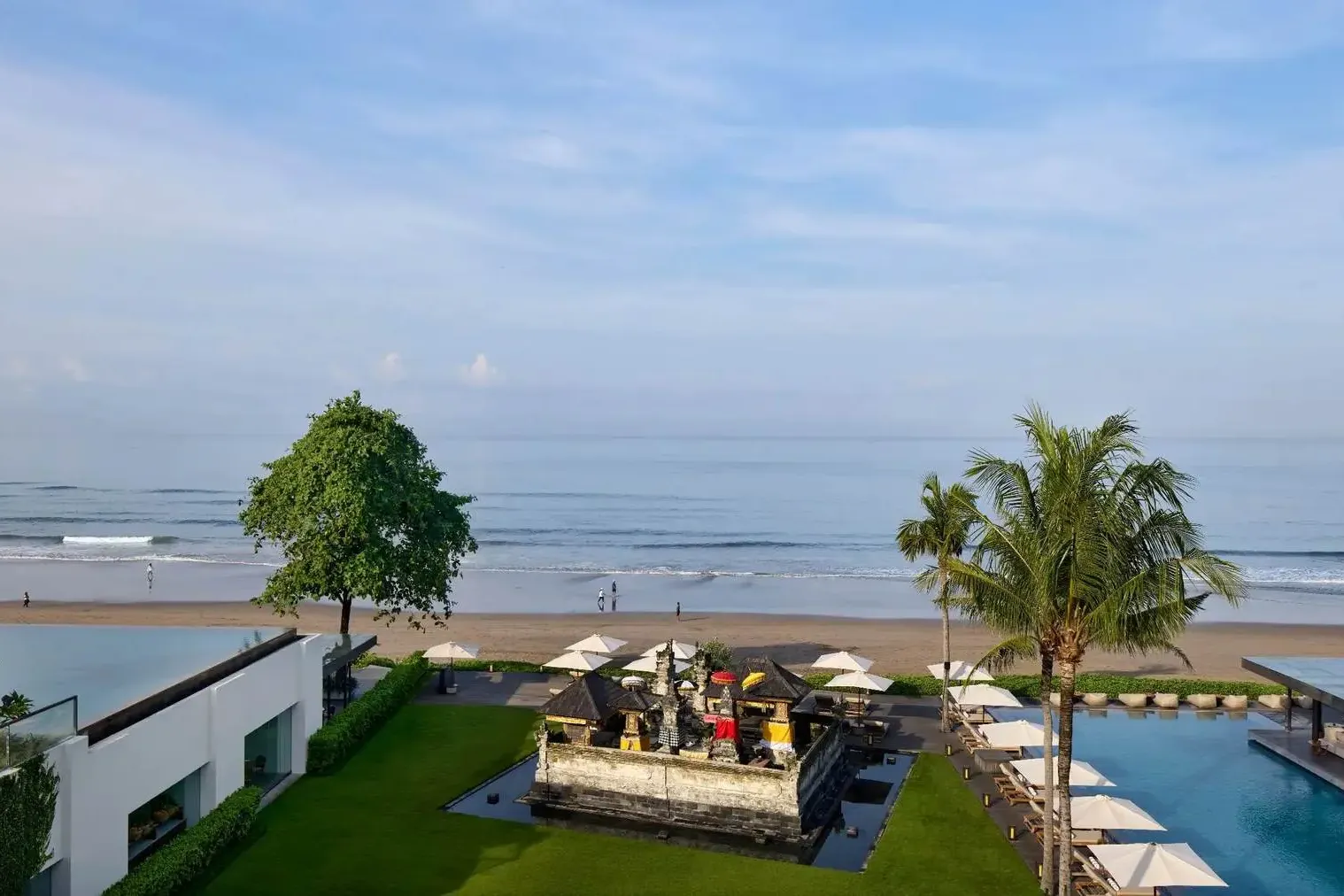
Alila came in 2015 with a cooler idea: clean, robust and modern, on just two hectares, built upwards with vertical gardens, green roofs and stacked pools, and more sustainable than almost any five-star on the island. It hands you no story, only a great-looking base, with one exception at its heart: a five-century-old family temple, still active, which the original owners insisted stay put when the hotel went up around it.
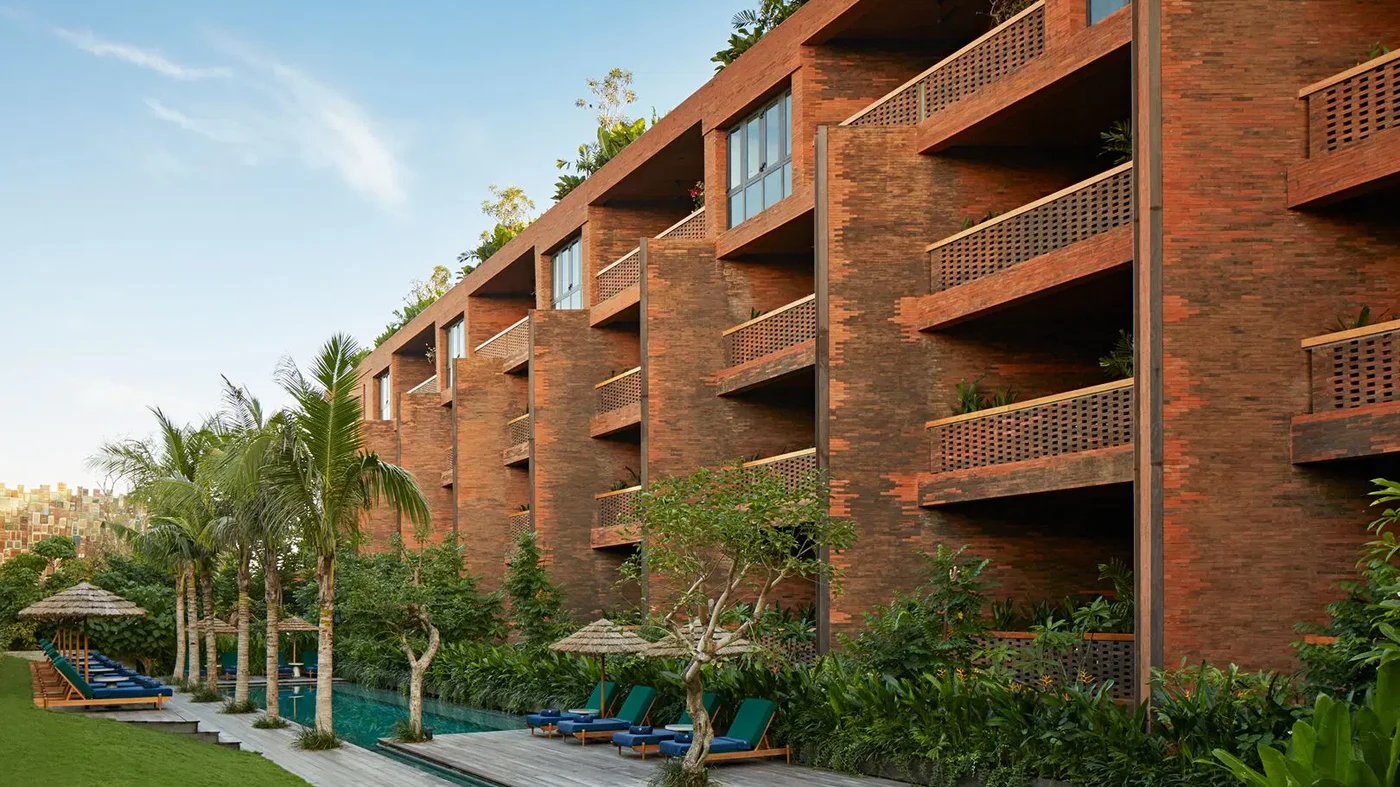
Desa Potato Head is the newest generation, and the one that made me feel it. I'm in my early forties with two young daughters, and the moment I walked in, I felt old: not unwelcome, just aware that this place was built by and for people whose reference points aren't quite mine. Rem Koolhaas's OMA designed its newest building, its pink façade coloured with powder from broken bricks; the earlier suites were built by the Indonesian architect Andra Matin from 1.8 million hand-pressed terracotta bricks, and the art is everywhere. Arriving feels less like checking into a hotel than turning up at a festival. And its idea of luxury is something else entirely: design intelligence, a building that consumes almost nothing, and more thought applied to your rubbish than anyone else in the industry. It became the first hospitality business in Asia to go carbon neutral, back in 2017.
Which has the best spot on the beach?
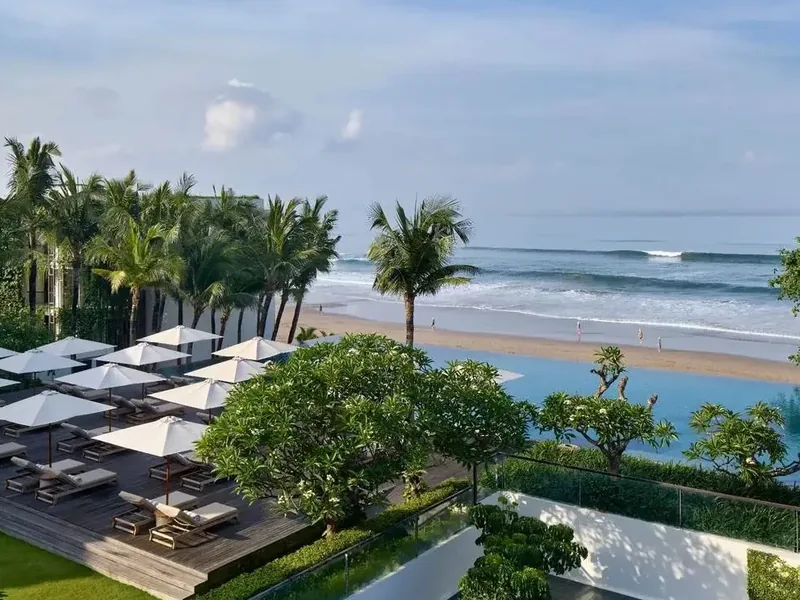
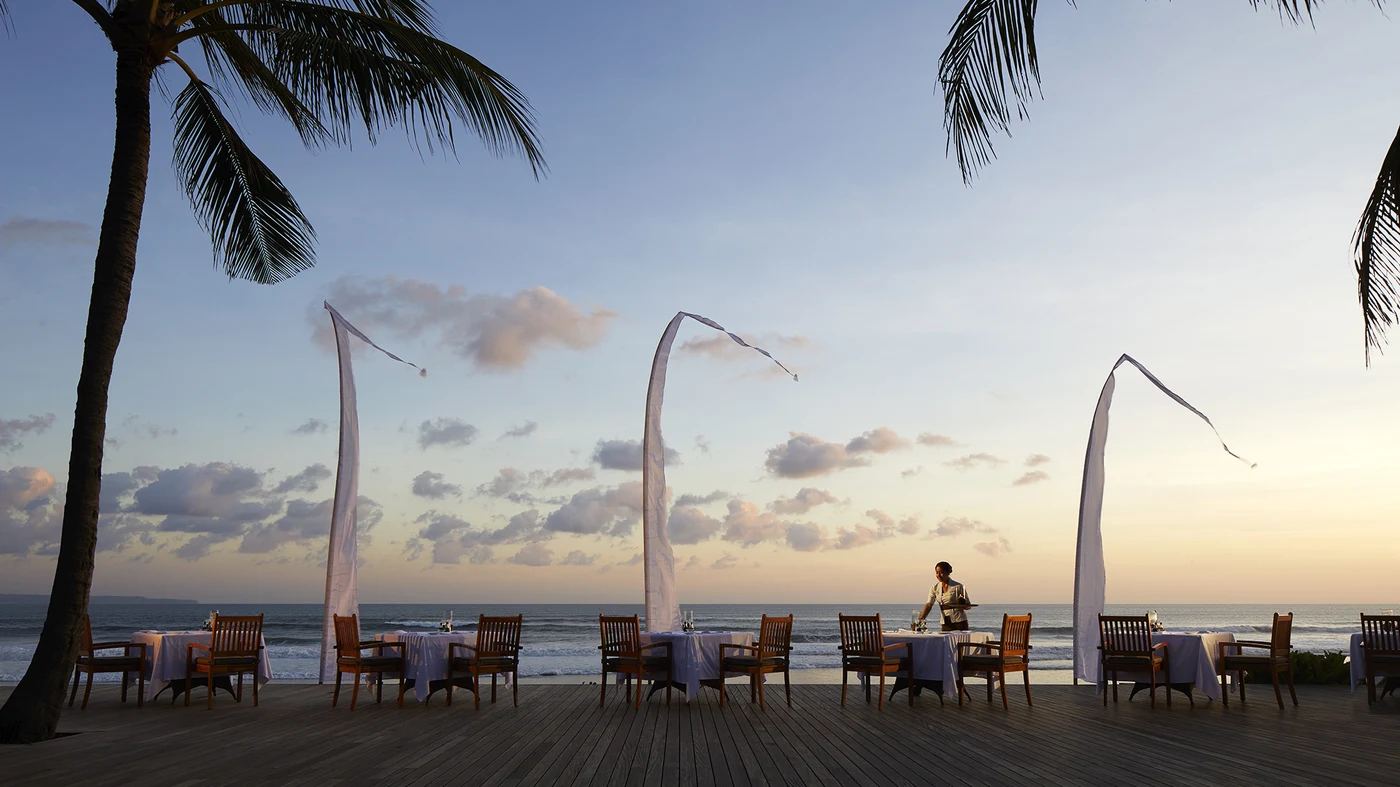
The Samaya, for the best sunset position in Seminyak. Its wooden deck runs along the seaward edge of the garden and looks straight out over the sand, and I spent most of a week on it, dropping into the pool when it got hot and walking the beach when it didn't. At the W, the sunset belongs to WooBar and comes with a DJ. Desa Potato Head has the famous beach club, and staying there gets you privileged access to its best daybeds, the ones everyone else pays serious money to secure. At Alila, the beach out front is rough, better for walking than swimming, which suits a hotel built for going out. None of the four is a swimming beach; for calm water, Sanur is a short drive away.
Which room should you book?
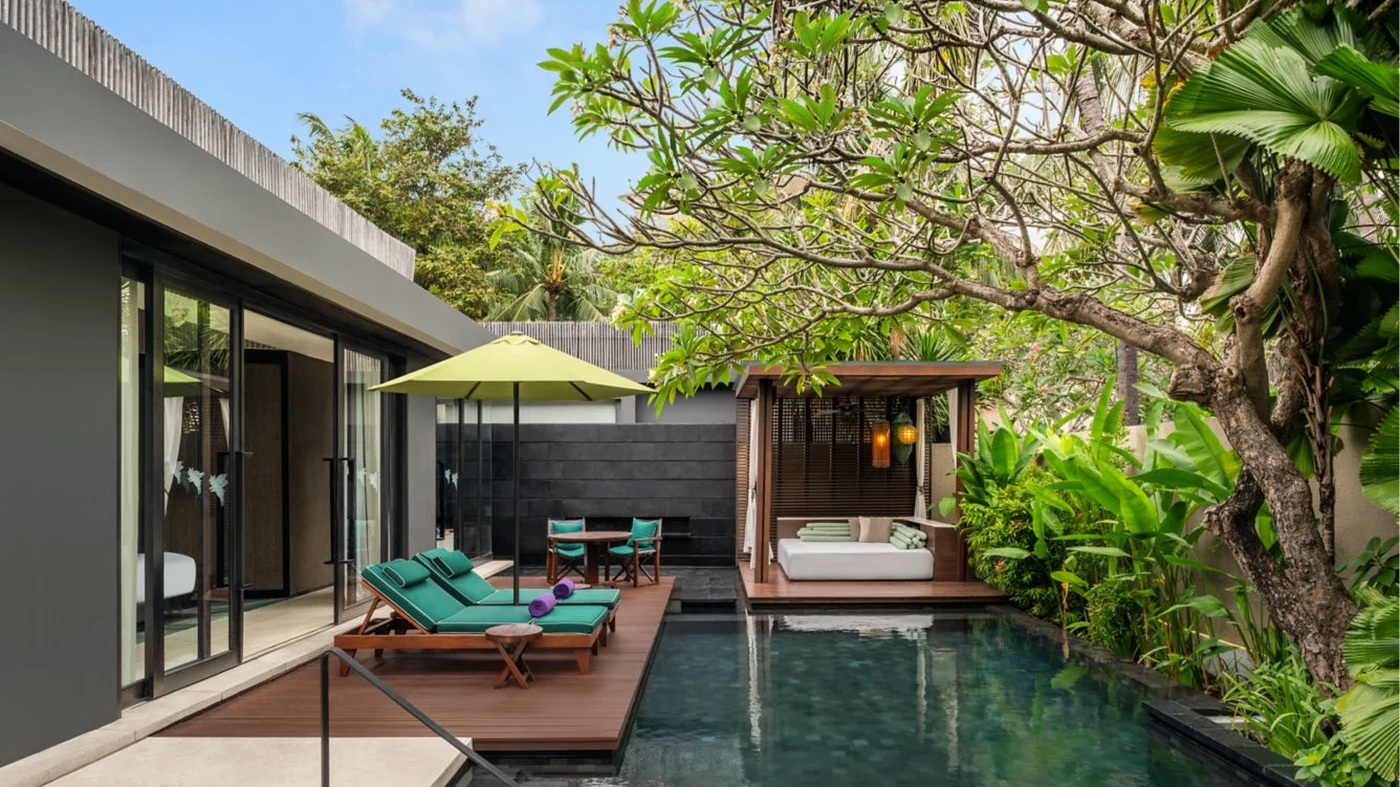
At the W, a villa. At The Samaya, any villa. The W's entry rooms start from around $325, but they sit close to the noise and the crowds. Spend a little more on a one-bedroom villa, 225 square metres with its own pool in a lush, quiet garden, which is exceptionally well priced for what you get. The villas also feel more expensive than the brand: this was one of the first Ws anywhere, and it has the feel of a project where the designers were handed a real budget. At The Samaya, every room is a villa with its own pool; the Royal Courtyard villas across the road trade a short walk for more space and privacy.
Alila's 240 rooms are clean, modern and comfortable, and around four in five have an ocean view: nothing wrong with any of them, and nothing you'll remember either. At Desa Potato Head, the rooms are beautifully minimal, and the pool looks straight over the sea. Look closer and the room itself becomes the story: the tissue box, the soap dispenser, even the slippers were made from the hotel's own waste.
Where will you eat best?
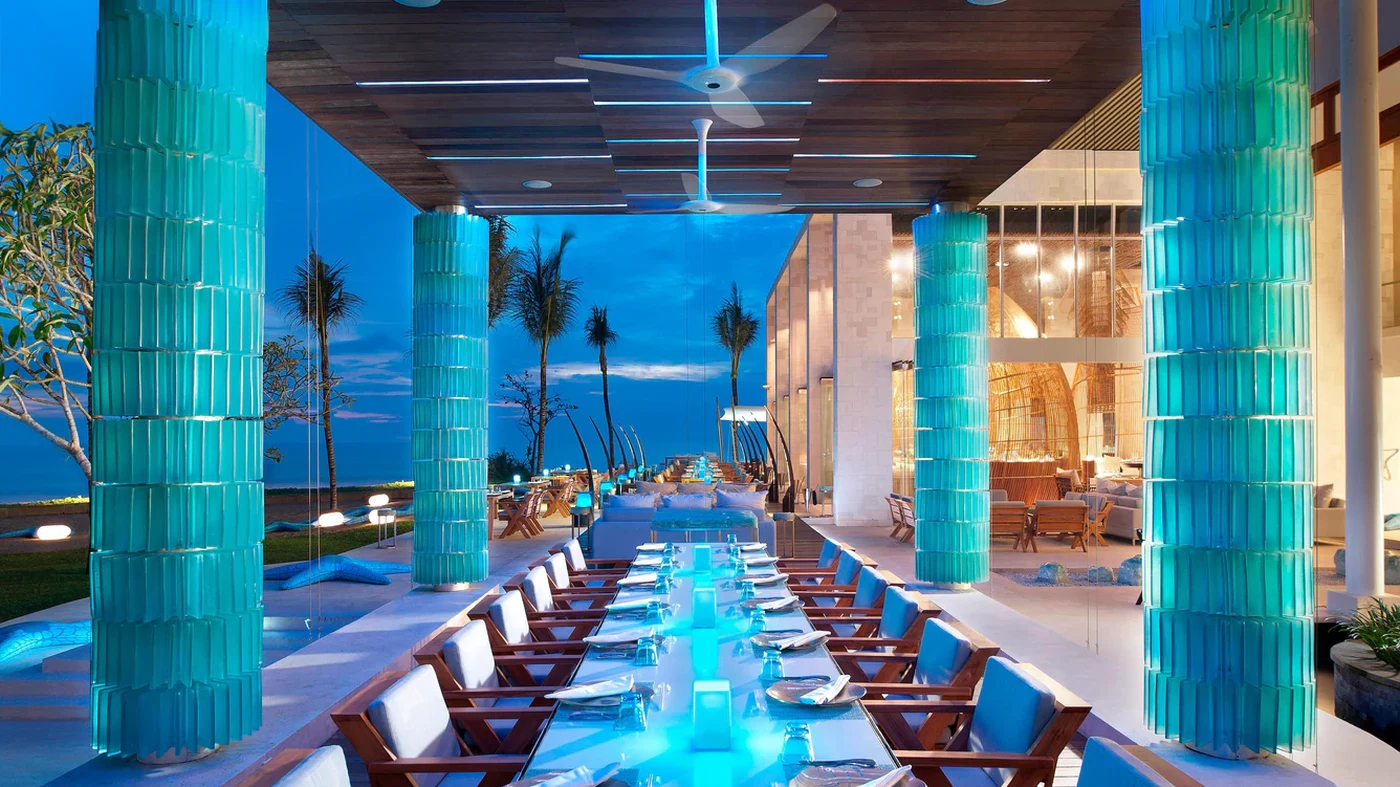
At the W, though Desa Potato Head gave me one of the best meals of the trip. The W takes its food seriously. Starfish Bloo, on the beach, does Mediterranean with an Asian accent inside an oversized fish basket with aquamarine columns, and hosts the Sunday brunch that, years ago, ruined buffets for me forever. Fire is the grill I'd send a carnivore to: twelve cuts brought to the table and a meat sommelier to talk you through them. Breakfast alternates between the two, and I still think about the babi guling omelette. Desa Potato Head feels more cosmopolitan than almost anywhere else on the island, with restaurants and bars stacked around the property.
Alila's Seasalt does good seafood, but the point of the hotel is where it sits: a short walk from La Lucciola, where my lunches usually ended up, and Bambu, one of the finer contemporary Indonesian restaurants on the island, where my evenings almost always did. The Samaya has one restaurant on the sand, Breeze, and on our last night the chef handed us a menu printed just for us, with our names at the top, only the dishes and wines we'd enjoyed most that week, and a handwritten thank-you from the kitchen.
Where is the service best?
The Samaya, and the reason is simple: its staff stay. What they do best is intercept rather than announce. Lie on a lounger long enough anywhere in Seminyak and a hawker will find you; here, somebody deals with that before it reaches you. One evening a staff member came past the villa with mosquito spray, unprompted, because that's when you'd want it. There's a German couple who have been coming for years and now leave a suitcase of their things behind when they fly home. The Samaya stores it, and when they return, everything is washed, pressed and waiting in their villa. None of that can be installed by a brand standard.
At Desa Potato Head, the staff are extremely well trained, but not in the register of a classic luxury hotel: it feels less like being served and more like being among the crew of something. The W's staff are visibly under pressure at peak times, but they keep trying to give you real attention. They also drive the buggies over the cobbled villa paths at a speed I can only describe as committed. I'm two metres tall with a Burgundian build, and I held on with some conviction. They thought that was extremely funny. So did I. At Alila, the service is consistently professional, and nothing fumbled. Nothing turned into a story either.
Which is the best value?
The Samaya, once you count what's included, though all four are close. The four sit within about a hundred dollars of each other, with Desa Potato Head at the bottom of the range and the W at the top. From around $300 a night you get a villa with its own pool in one of the busiest locations on the island, plus airport transfers, afternoon tea, a minibar that's restocked rather than metered, laundry and more. Desa Potato Head is the most affordable, from around $225, and the access to its best beach-club daybeds alone is worth a good part of that. Alila Seminyak, from around $250, is one of the better-value five-stars in this part of the island. The W starts from around $325, but it's only really good value if you book the villa. One tip for Desa Potato Head: do the Follow the Waste tour on your first day, not your last. It's where the place clicks, and you'll look at the whole hotel differently for the rest of your stay.
W, Alila, The Samaya or Desa Potato Head?
The Samaya to come home, the W to be in the middle of it, Alila to go out, and Desa Potato Head to see what's next. On most big beaches, the luxury hotels are variations on one formula, and they compete for the same guest. Here each has found its own niche, and none of them gets in the other's way. Together they're more than the sum of their parts, and between them they make Seminyak what it is.
The full reviews are here: The Samaya, W Bali, Alila Seminyak and Desa Potato Head.
You see it best at the end of the day. Everyone spends it in their own bubble: in a villa garden, at a DJ set, by a stacked pool, at a festival. Then, towards sunset, almost everyone walks down to the beach at the same time, because Seminyak at that hour has one of the finest sunsets in Asia. And for half an hour, everyone walks the same sand, and there are no more generations, no more ranks, and no more walls between the four hotels behind them.
We can book all four at the hotels' own rates, with the benefits attached.
PLAN A SEMINYAK STAY →