Let me get the complaint out of the way first, because I'm not going to quietly withdraw it at the end of this piece the way these things usually go.
Desa Potato Head sits high on The World's 50 Best Hotels list, above properties on this island that spent forty years earning something close to mythical status, and when I first saw that I was genuinely angry about it. I still am. I think any placement on that list, anywhere in the top hundred, is ridiculous, and not because the hotel is bad. What I have to take back is everything else, because I've since become fascinated by this place, and getting there required my head to rearrange itself in a way no other hotel in Bali has ever asked of me.
Everything on arrival tells you this isn't for you
Or at least it told me that, and the first signal is demographic. I'm in my early forties with two young daughters, hardly ancient, and I felt old the moment I walked in. Not unwelcome. Just aware that this concept was built by and for people whose reference points aren't quite mine, and that I was going to have to work slightly harder than usual to understand what I was looking at.
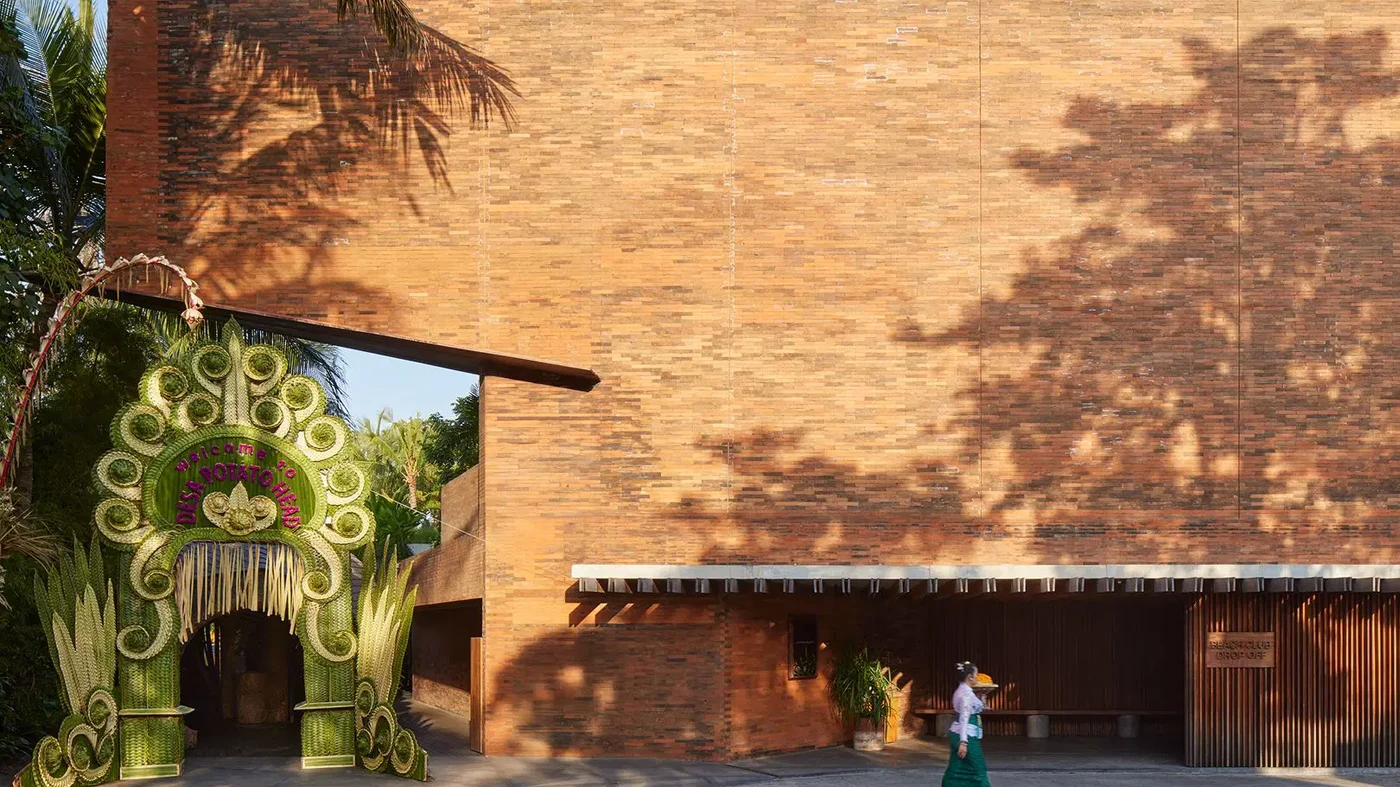
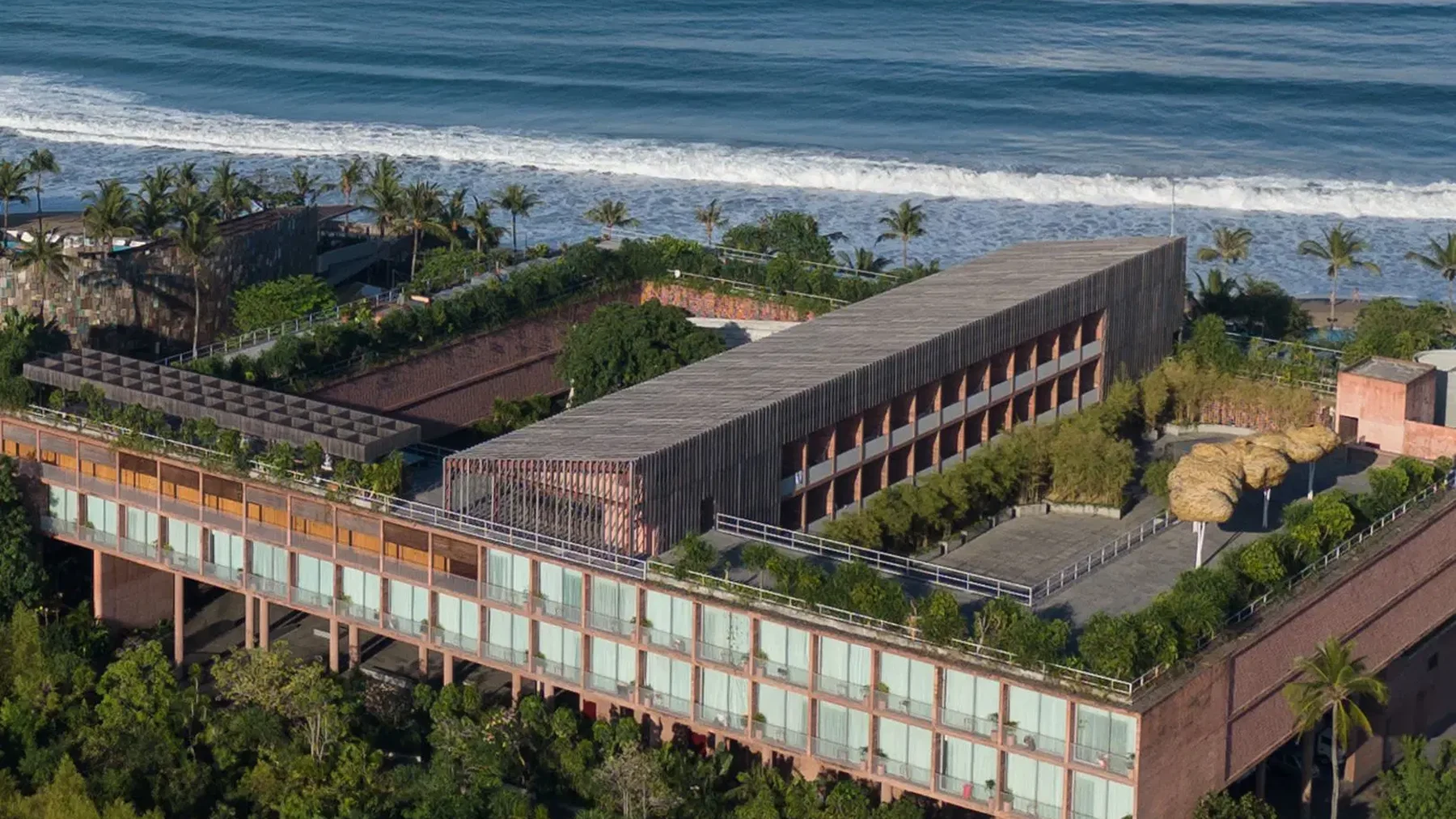
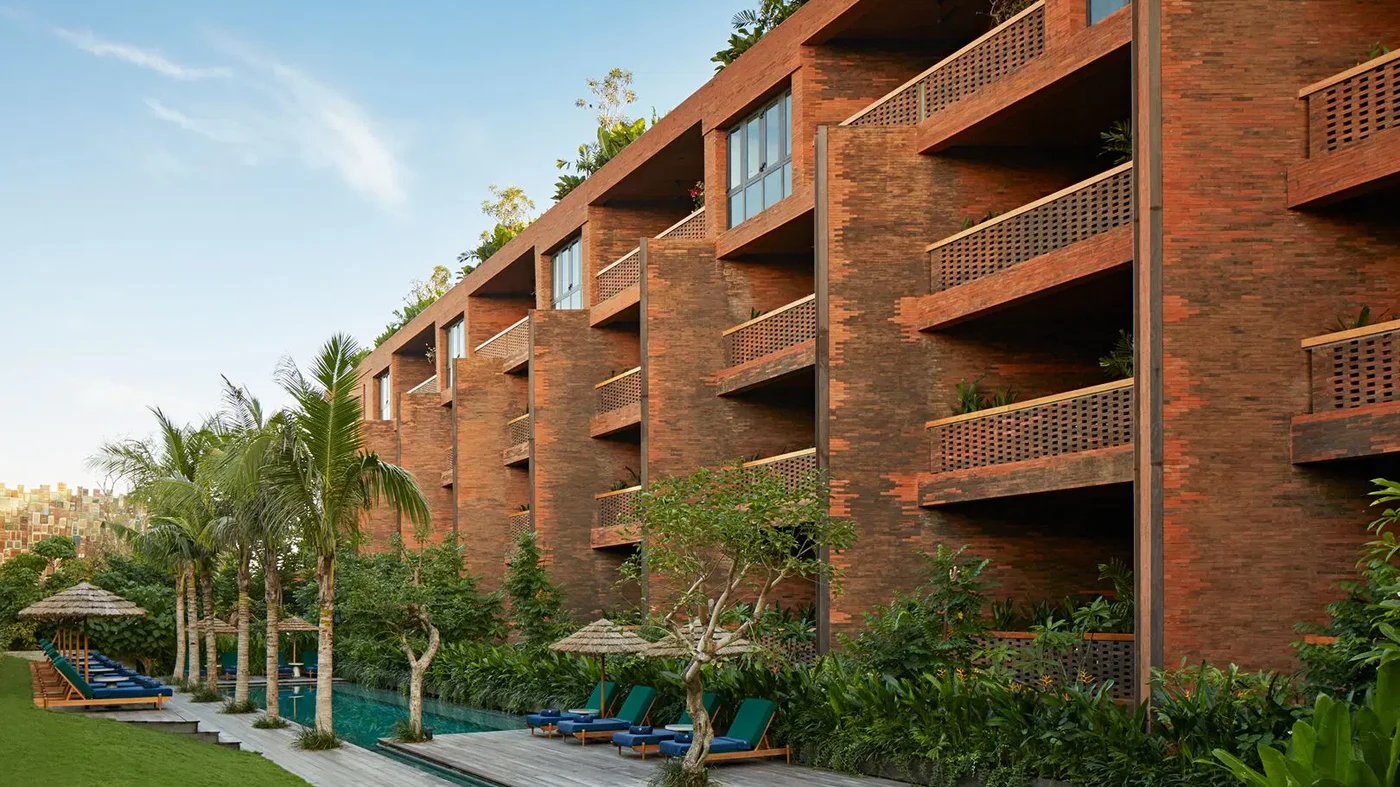
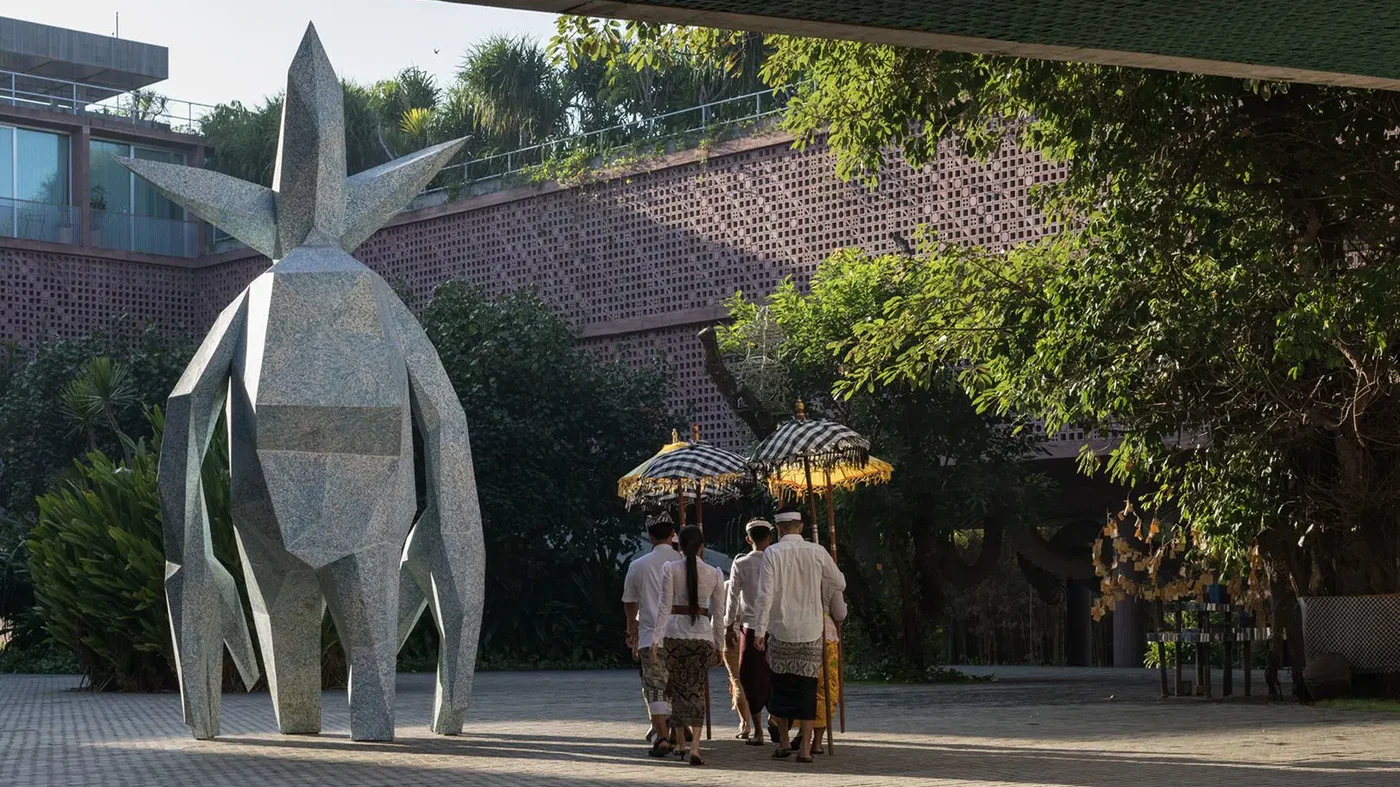
You come in through the courtyard and the art sets the tone before anyone has spoken to you. The accommodation splits across two buildings: Potato Head Studios, 168 rooms by Rem Koolhaas's OMA, opened in 2021, its pink façade coloured with the powder of salvaged broken bricks, and the earlier suites by the Indonesian architect Andra Matin, built from 1.8 million hand-pressed terracotta bricks. Brutalism at full volume with an enormous quantity of art hung on it.
At check-in they hand you a zero-waste kit, which turns out to be sunscreen and insect repellent packaged so as never to become rubbish, and we were also given two beautiful stainless steel bottles and a handmade beach bag. None of this feels like arriving at a hotel. It feels like arriving at a festival, and that note holds for the entire stay.
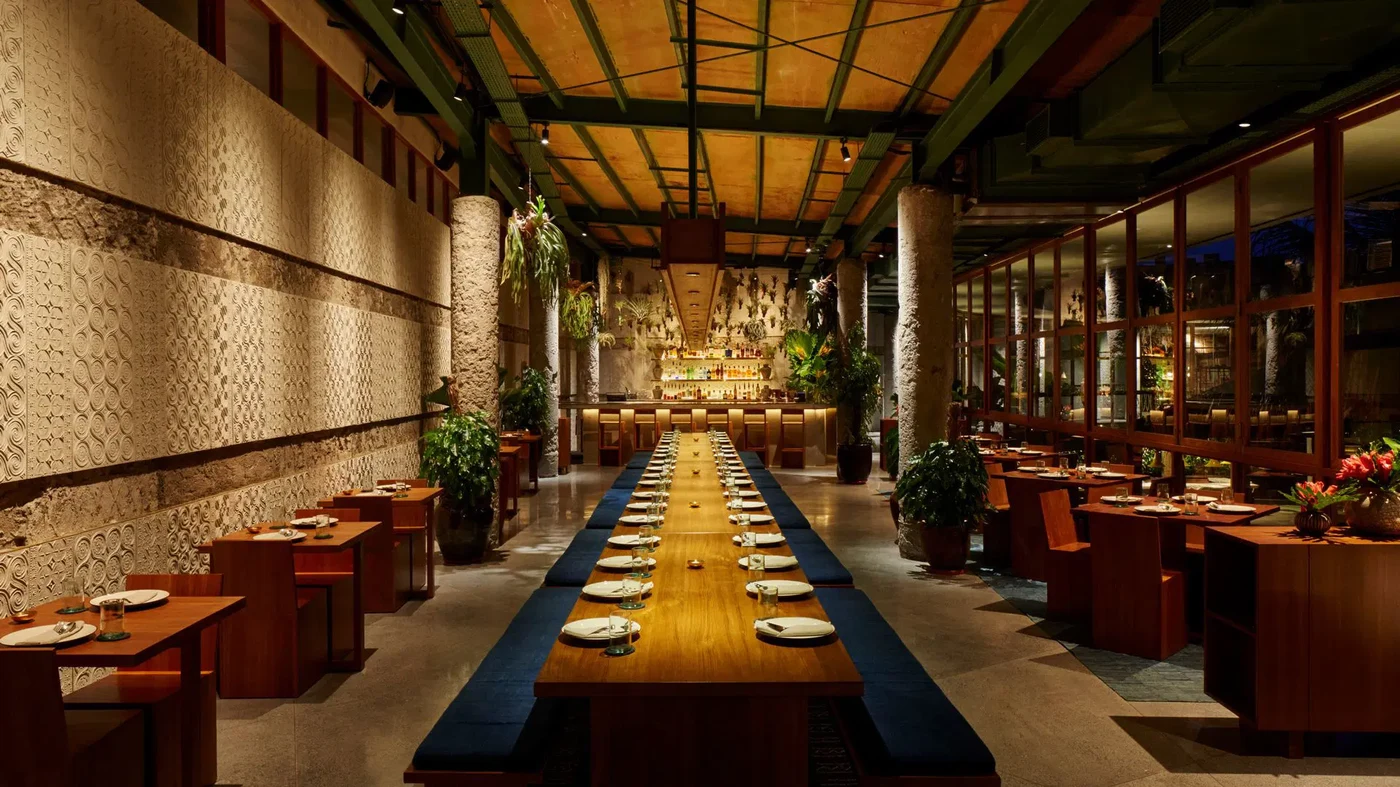
Then you start wandering, and the wandering is genuinely fun: bars, restaurants, shops, pools, the famous beach club, the beach beyond it, party and health stacked on top of one another without any apparent sense of contradiction. And at no point does it feel like Bali. It could be anywhere on earth.
A permanent wow, and no holiday feeling whatsoever
For the first day and a half I walked around admiring everything and understanding none of it.
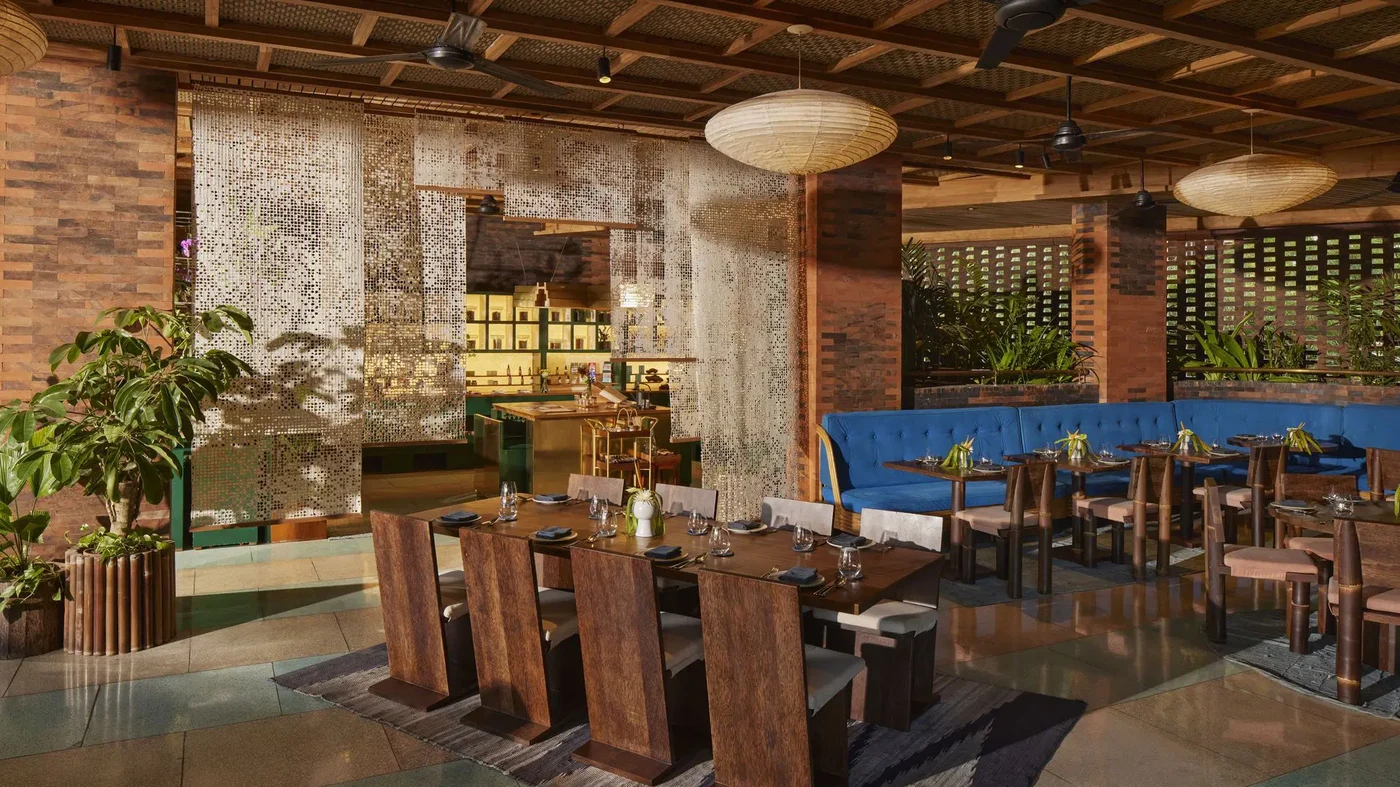
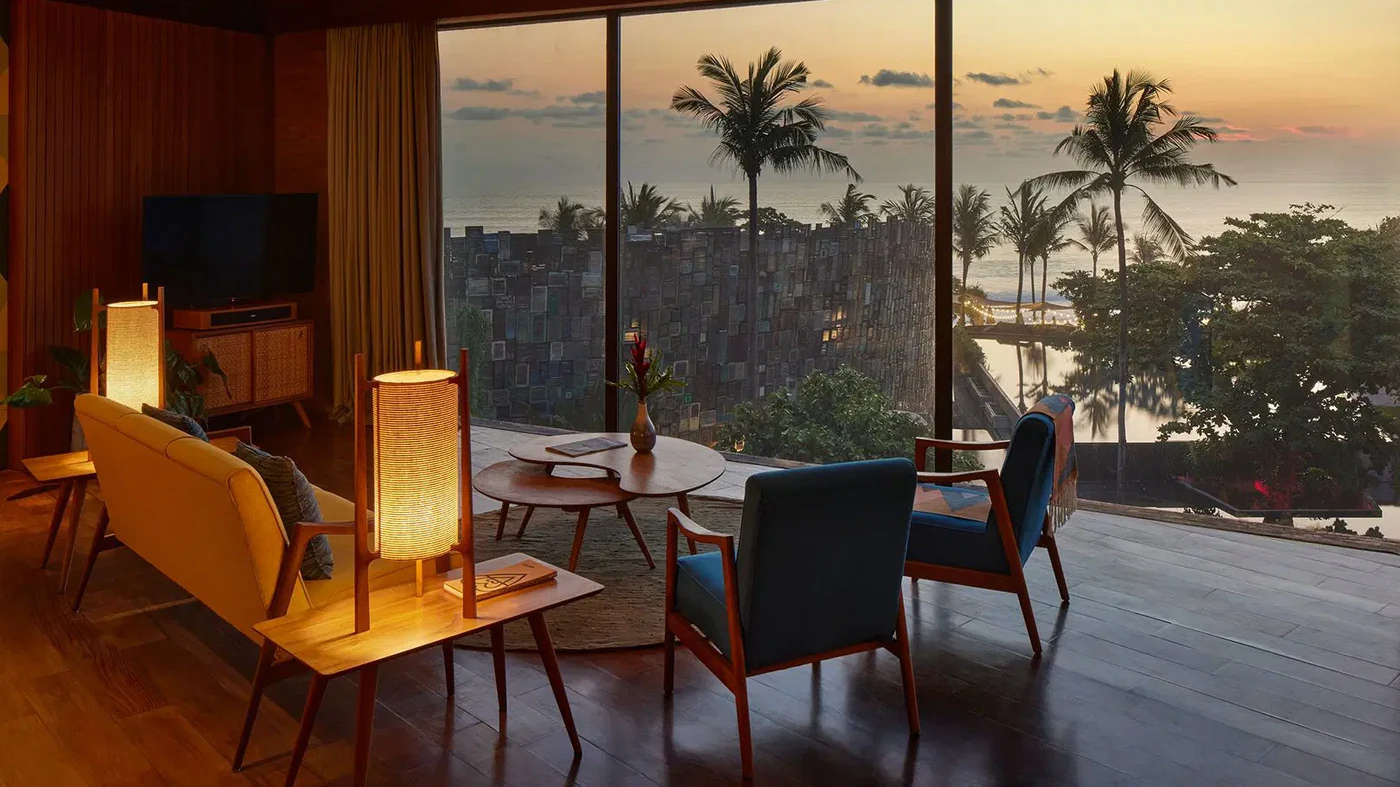
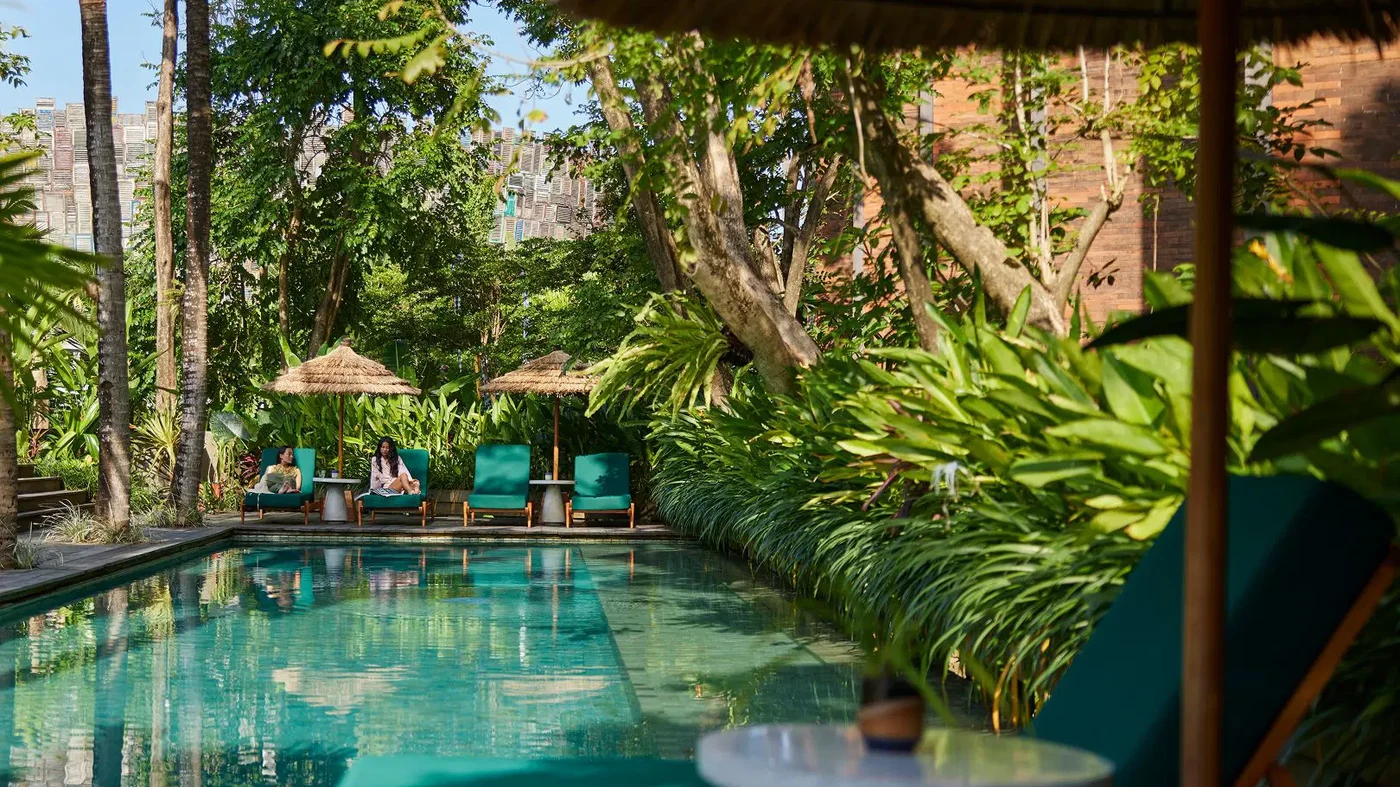
The room is beautifully minimal. The pool looks over the sea, and the loungers around it make it easy to stay put. I had one of the best meals of that trip in one of the restaurants here, and the whole place feels cosmopolitan in a way very little else on this island manages. The staff are extremely well trained, though not in the register of a classic luxury hotel, and I still find that difficult to name precisely. Less formal, warmer, more like being among the crew of something than being served by the staff of somewhere.
What I couldn't reconcile is that all of this produced a constant wow and absolutely no holiday feeling. Everything is so engineered, so thoroughly resolved, that it registered as a new world rather than a break from my own. At The Mulia that same engineered quality left me faintly uncomfortable; here it was a warm bath, and the fact that I couldn't explain the difference bothered me for two days.
Then I followed the waste, and it clicked
Every hotel on this island will tell you about sustainability. I've been walked past solar panels and water treatment plants with real pride at a dozen properties and nodded politely at all of them. So when they explained the zero-waste programme at check-in I filed it as a nice story, promised to do the Follow the Waste tour later in the week, and thought no more about it.
That tour is the reason this article exists.
The founder, Ronald Akili, was surfing with his son in 2016 when they paddled into a field of floating rubbish, and the direction of the entire company changed from that afternoon. In 2017 it became the first hospitality business in Asia to reach carbon neutrality. When their environmental consultants first audited the beach club, half of everything it produced went to landfill; by 2023 the property generated close to half a million kilos of waste and sent 2.9 percent of it to landfill, with the target set at zero.
None of which is what makes it land. What makes it land is standing in the Waste Lab being shown where the other 97 percent goes. Bottle caps get broken down and mixed with powdered limestone, ground oyster shells from the restaurants and the styrofoam that arrived wrapped around deliveries, then pressed into the tissue boxes and soap dispensers sitting in your room. Coloured plastics become terrazzo chairs that would hold their own in a design gallery; discarded coconuts become fibre for regenerative farming; old towels and decommissioned bedding are dyed and turned into bags. The disposable slippers are coconut fibre and woven palm fronds, so they can be composted, and staff bring their own household plastic in to exchange for new ones. Down at the beach club there's an installation made from five thousand flip-flops collected off Bali's shoreline by the artist Liina Klauss, which is either an artwork about waste or simply waste, arranged, depending on how you're feeling that afternoon.
I spent the rest of that day looking at the hotel completely differently, because suddenly I could recognise things: that chair, that tissue holder, the carpet. My room stopped being a nicely designed room and became the physical evidence of an extremely complex and genuinely elegant piece of engineering, and I had never seen circular design executed at this level of finish anywhere. Most of it I would happily buy for my own house, which is not a sentence I expected to write about a bin.
Luxury, defined by somebody else
Once that clicked, the rest of the property clicked with it, including the parts I'd been quietly filing as eccentric.
The wellness programme runs alongside the party in a way that ought to be contradictory, with sound healing among the offerings, and after a day here it simply isn't. The most valuable perk of sleeping over is that you get privileged access to the best daybeds on the beach, the ones everyone else pays serious money to secure, which is the one place where luxury here looks like the version I recognise. Everywhere else it doesn't, and that's the point: this hotel is proposing that luxury might mean design intelligence, a building that consumes almost nothing, and more thought applied to your rubbish than anyone else in this industry is close to matching.
It is not proposing seclusion, or silence, or the feeling that Amankila and Amandari give you at seven in the morning. It has no interest in that at all.
Which is exactly why the ranking is wrong
Here's the uncomfortable part. I judge every hotel against a reference frame I've spent decades assembling: rooms, service, food, setting, the feel of a place at dawn. That frame is useful and it is most of the reason this site exists. But it's a ruler, and a ruler only measures the dimension it was built to measure.
For a day and a half I was marking an essay for its handwriting.
Which is precisely my objection to the list. My problem was never that this hotel is unworthy of attention, because it plainly isn't. It's that ranking Desa Potato Head against the great serene hotels of this island does exactly what I was doing on day one, only with more authority and a wider readership. Both projects can be excellent, and neither is a version of the other. Pretending otherwise flattens what makes each of them worth the flight.
I'd go back. I'd tell you to go. And I'd still take the list off the wall.
Desa Potato Head is available through The Banjar Collective.
GET IN TOUCH TO PLAN A STAY →